


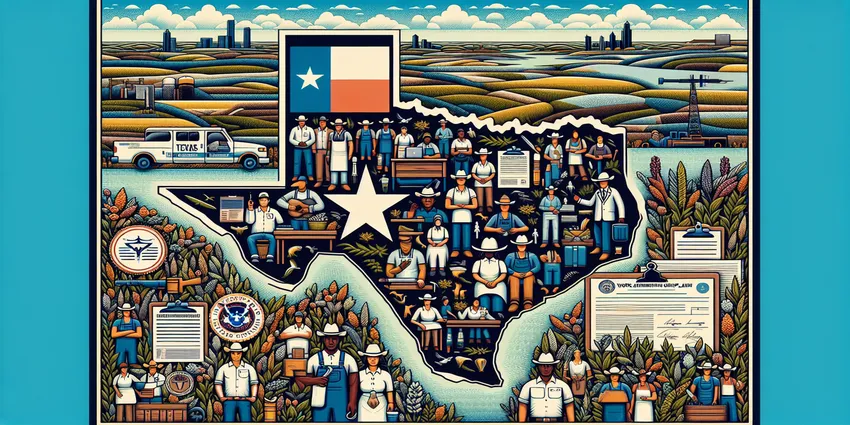

Texas Immigration and Work-Authorization Compliance for Hospitality Employers: Key Takeaways
- Employers must complete and maintain Form I-9 for every new hire to verify work eligibility.
- Texas requires certain public contractors to use E-Verify, though it's not mandatory for all private hospitality employers.
- The H-2B visa program enables hiring temporary foreign workers for non-agricultural roles, crucial for hospitality labor shortages.
Texas hospitality employers face strict federal and state immigration compliance requirements essential for lawful hiring practices.
This guide provides key insights on work-authorization obligations and best practices in the Texas hospitality industry.
Recruiting for leadership roles? Review the Restaurant Manager job description to align duties with compliant hiring practices.

1. Form I-9 Compliance in Texas Hospitality
Every employer in Texas, including those in hospitality, must complete Form I-9 for each new employee to verify identity and authorization to work in the U.S.
The form requires careful completion and proper retention. Employers should conduct regular internal I-9 audits to detect errors or omissions and correct them promptly.
Failure to comply can lead to hefty fines from $272 up to $27,018 per violation, so diligence is vital.
Best practices include training HR staff on document verification and setting policies to ensure consistent I-9 handling across all locations.
For compliant postings and documentation, see our overview of job posting compliance.
You can find current Chef job openings in Austin on OysterLink and apply in just minutes!
If you’re considering other cities or positions, visit our main jobs page to browse all hospitality listings and filter by role, city, or state.
2. E-Verify Use in Texas Hospitality Employers
Texas does not require all private hospitality employers to use the federal E-Verify system. However, public agencies and universities must utilize E-Verify.
Contractors working with public entities in Texas are also mandated to enroll in E-Verify per Executive Order RP80 (2014).
While optional for many hospitality businesses, participating in E-Verify can demonstrate good-faith efforts to maintain lawful workforces and may provide additional hiring security.
Understanding workforce realities is easier with insights on immigrant labor in hospitality.



The Fastest Growing
Restaurant & Hospitality Job Platform
Looking for top paid jobs? Or Hiring for your business?
3. H-2B Visa Program in Texas Hospitality
The H-2B visa program is invaluable for Texas hospitality employers needing temporary non-agricultural workers during labor shortages.
To participate, employers must prove insufficient availability of U.S. workers and that hiring foreigners won’t lower wages or working conditions for domestic employees.
The process involves obtaining temporary labor certification from the U.S. Department of Labor, followed by filing a petition with U.S. Citizenship and Immigration Services.
Utilizing the H-2B program helps fill seasonal and temporary roles critical to hospitality operations.
For peak seasons, explore proven seasonal hiring strategies to complement H-2B planning.
Roles commonly supported by seasonal recruitment include housekeeping—review the Housekeeper job description when scoping requirements.
4. Penalties and Enforcement for Non-Compliance in Texas Hospitality
Employers who knowingly hire unauthorized workers or fail to properly manage I-9 forms risk severe penalties.
Fines can reach up to $22,363 per unauthorized worker, and criminal charges may apply in egregious cases.
Increased enforcement via workplace audits and raids has heightened the urgency of compliance for Texas hospitality businesses.
Maintaining robust employment verification systems and documentation helps mitigate risks of costly enforcement actions.
For context on compensation issues intersecting with immigration, see immigration and pay.
5. Best Practices for Texas Hospitality Employers to Ensure Work-Authorization Compliance
Effective compliance starts with routine internal reviews of all employment eligibility documents.
- Regular Audits: Conduct scheduled audits of I-9 forms to ensure accuracy and completeness.
- Training: Provide HR and hiring managers thorough training on I-9 compliance and document verification.
- Policy Development: Implement clear hiring policies and protocols across all locations to standardize practices.
- Legal Consultation: Consult immigration law experts to stay updated with evolving regulations and compliance strategies.
These steps create a strong compliance culture and protect hospitality businesses from legal and financial risks.
Clarify responsibilities and compliance touchpoints with the Hotel Manager job description.

6. Government Resources for Texas Hospitality Immigration and Work Authorization
For authoritative information and updates, hospitality employers should access these key government resources:
- U.S. Citizenship and Immigration Services (USCIS): Form I-9 Employment Eligibility Verification
- U.S. Department of Labor: Foreign Labor Certification
- Texas Workforce Commission: Foreign Labor Certification for Employers
Texas Immigration and Work-Authorization Compliance for Hospitality Employers: Conclusion
Texas hospitality employers operate within a complex regulatory landscape that demands strict immigration and employment verification compliance.
By consistently completing and auditing Form I-9, understanding E-Verify participation requirements, and leveraging the H-2B visa program effectively, hospitality businesses can maintain a lawful and efficient workforce.
Proactive training, clear policies, and legal guidance further enhance compliance efforts, minimizing risks related to penalties and enforcement.
Operational leaders can strengthen compliance execution by aligning duties in the Kitchen Manager job description.




Loading comments...