


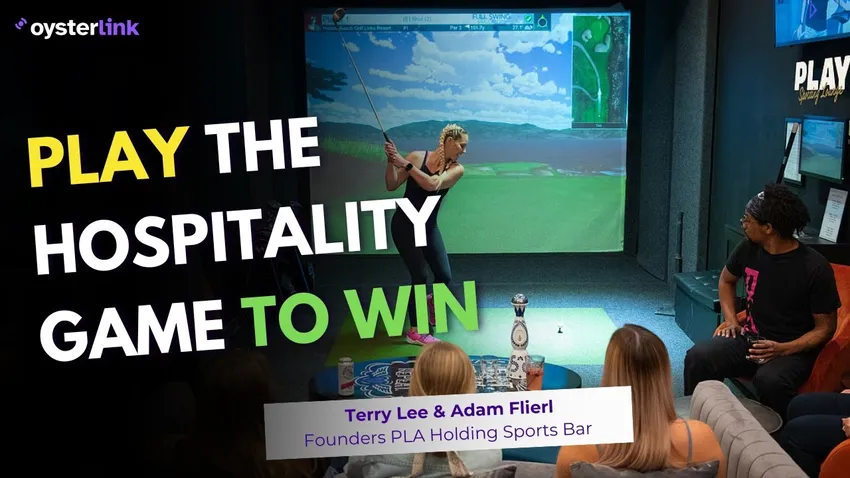

The heart of PLAY Sporting Lounge comes from the personalities behind it — two veterans in their respective industries whose paths and approaches aren’t identical but undeniably complementary.
We at OysterLink recently sat down with PLAY Sporting Lounge Founders Terry Lee and Adam Flierl to talk about their journey, including their flagship location opening at CityPlace Doral.
Please introduce yourselves and tell us a bit about your career paths
Terry Lee: I’ll go. My name is Terry Lee. I am the Co-Founder of PLAY Sporting Lounge. For career paths, mine is very different than Adam’s, and that’s what makes a good partnership. A lot of my background is very eclectic, but a lot of it is in real estate and business in general — running businesses and building and selling them. And it’s just very diverse from Adam’s, which is 100% hospitality, and I’ll let him jump in there.
Adam Flierl: I’ve been in the hospitality sports entertainment world my entire career, from washing dishes when I was 15 years old to where we are now with Terry and me founding this company almost six years ago. As a young man, I moved to Hawaii with my dad, and, fortunately, there was an unknown Chef at the time named Roy Yamaguchi who opened his first Roy’s Restaurant right down the street from where I was living. At 17 years old, I started as a Busboy in the Roy’s Restaurant empire as part of its first opening staff.
Twenty-two years later, I was a part of a group that had built 60 restaurants around the country internationally. Roy himself had won James Beard awards and just became the celebrated Chef that he is today. And then, when we exited Roy’s, I was living in Dallas at the time, and I was introduced and recruited to a small company in Dallas that no one had heard of called Topgolf.
And so I was in the very early days of Topgolf when we still thought we were just a golf driving range. We didn’t even understand this media sports entertainment monster that Topgolf has become. And my time at Topgolf is ultimately what led Terry and me to play. We saw this amazing “eatertainment” brand, combining sports and entertainment and technology, and, ultimately, it turned the wheels for us on how we could take that approach, but do an indoor version — a smaller version that didn’t need $30 or $40 million to open each one. So my experience at Topgolf with that restaurant background is really what is driving the play concept today.
Terry Lee: I had a front row seat with Adam and another friend of ours, Brian O’Reilly. They’re the two who spearheaded Topgolf’s flagship in Vegas. But I watched that from the ground up and watched these guys work on it. And from my real estate background, I was thinking we need to capture this magic of entertainment and activity. But to Adam’s point, we don’t have to spend $30 or $40 million to deliver it. And so that’s kind of where this concept was born out of. Shrink it down, make it a little more manageable, a little more financially accessible and then duplicate it tens or hundreds of times. And that’s what we’re trying to achieve here.
We’re not surprised Adam is in this business, but we’re surprised you are, Terry. Can you tell us more about that?
Adam Flierl: You know, it’s interesting because Terry, not coming from the hospitality background early on, would ask every question about everything, right? And so, at times, it almost got annoying because he would ask, “Why did we put the fork on the left side?” or “Why do we do this?”
And sometimes the answer was, “That’s just how we do it.” And eventually it became “Why do we do it that way?” It was a really interesting, fresh perspective from his eyes that really has helped us rethink just how we do some of the most simple, basic things in our brand.
Terry Lee: A perfect example is when we first opened. We were in a casino, and we were ordering to-go cups, and my management at that time said we needed to order lids. And I asked, “Why? Are we serving toddlers? Aren’t these adults getting adult beverages and walking into the casino?” And they go, “Well, that’s just how we do it.” I go, “Why? It makes no sense.” And they finally realized that we don’t need lids and straws for to-go cups for adults who are drinking adult beverages. So those are some of the conversations that we’ve had.

Speaking of different perspectives, what’s one thing no one warns you about when it comes to owning a restaurant?
Terry Lee: Well, the biggest thing, from my seat, is those unknown expenses. Because unless you’ve done this over and over and over again and you have a very detailed path laid out, you don’t understand the different types of insurance that you have to have, the different expenses that come your way and the cost of hiring really good talent.
Because doing it on your own and just having random people who are out of work send you their resumes is not how you get the job done. There are a lot of different areas that people don’t realize until it’s too late that if you don’t get these right up front, you’ve sunk yourself before you even started.

“The biggest thing is going in undercapitalized. And that happens quickly if you don’t have a handle on every expense needed to open a business.”
Then would you say that expenses are one of the reasons that many restaurants fail?
Terry Lee: That is in the top. The other is the staff that you hire and the culture that you lead with.
Adam Flierl: I think not understanding the full business picture and all the operating expenses is a big issue. People who aren’t in this business go, “Why do I need to manage my labor cost?” “Why do I need to manage my food costs correctly?” And they really don’t understand all the other true business expenses that come along.
I’ve seen so many restaurants, bars and entertainment concepts start off with a great commitment to culture, their community, what they want to do and how they’re going to do it, saying they’re never going to sacrifice quality. But when you start running out of money, you’re forced into a conversation where you have to make really hard decisions. Sometimes that means compromising what you set out to do. That’s when it becomes, “All right, we’re only going to train for three days, not a week, because we can’t afford it,” or “We can’t make that donation to the local charity because we just can’t.” And that’s unfortunate.
“Because I see so many people in this industry start with the best intentions. But if they don’t have a real business plan and a game plan, and give themselves enough runway and capital to support that, the best intentions can very quickly get compromised.”

While we’re on this topic, what are the metrics that you keep an eye on to ensure that you’re profitable?
Adam Flierl: I’ll start. As I mentioned, people talk about labor costs and food costs and things like that — 100%, those are the biggest things you have to track. Labor is the number one expense in this business. So we do a number of things. We’ve actually created our own daily sales reports, often referred to as DSRs in our industry. We track everything on a daily basis. We track how many guests are showing up, what the spend is, how much we’re spending on labor, what the comp tab was last night and how much retail we sold.
We look at where the revenue is coming from. Is it game revenue to play in our simulator suites, food revenue or beverage revenue? We track everything on a daily basis, and we give full access to all of our management. We don’t hide these numbers. We actually force our management team to understand the numbers and understand how things like managing overtime, or having enough staff to avoid overtime hours, affect the P&L at the end of the month. We’re very active in not only tracking but helping our team understand how to react to the numbers.
And comps are a great example. Comps are part of doing business. We should be buying a drink for a new guest, a regular or whoever it might be. We look at comps differently than many. You’d better use your comp tab. Use it for the right reasons. It doesn’t mean Terry, the regular, gets a drink every single time he comes in. We call it good comps versus bad comps. And when I don’t see comps happening, I ask, “Why aren’t we buying people a drink? Why aren’t we shaking hands? Why aren’t we introducing ourselves?”
So we track every metric. But the most important part is making sure your team understands what the metrics are, what the goals are and how to react — whether good or bad.

Terry Lee: Let’s just talk liquor costs. Unless you’re looking at these numbers every day, every week and every month, and you know the trends and know where you’re supposed to be and where you’re not, things slip. We started having high wine costs. And obviously, that means either somebody’s stealing or they’re simply overpouring. So we switched to little carafes so they couldn’t overpour anymore. Miracle! Wine costs fell into place.
Another time in the past, our liquor costs started to slowly ramp up. Same thing. We told the staff, the Bartenders, “Hey, get it in line, or you’re going to be using a pour.” And nobody wants to do that unless they’re forced to. They didn’t get it in line quickly enough, so we forced them to measure every single pour for a month. And guess what? We haven’t had any problems with that pour for a very long time. They got the message that it needs to be in line.
And again, we’re not looking to underserve or over. There’s a correct amount that needs to be poured. If you’re not doing that or not trained to do that, you shouldn’t be in that position. So they get it. They get it right back in line. And again, to Adam’s point, you don’t get to resolve these things unless you’re aware of them. You have to know your numbers inside and out.
Adam Flierl: The last thing I’ll add to that is on a higher level, from Terry and my seat, we have weekly, monthly, quarterly and annual budgets and forecasts. We look at our year-over-year sales trends. We are very clear with our management that they know what the goal is. What did we do last year? What do we need to do to beat that? What do we actually think the realistic budget is? And we measure against that all the time.
“I was taught very early in this business that if you’re not managing your business every day, there’s no way you can manage it at the end of the month.”
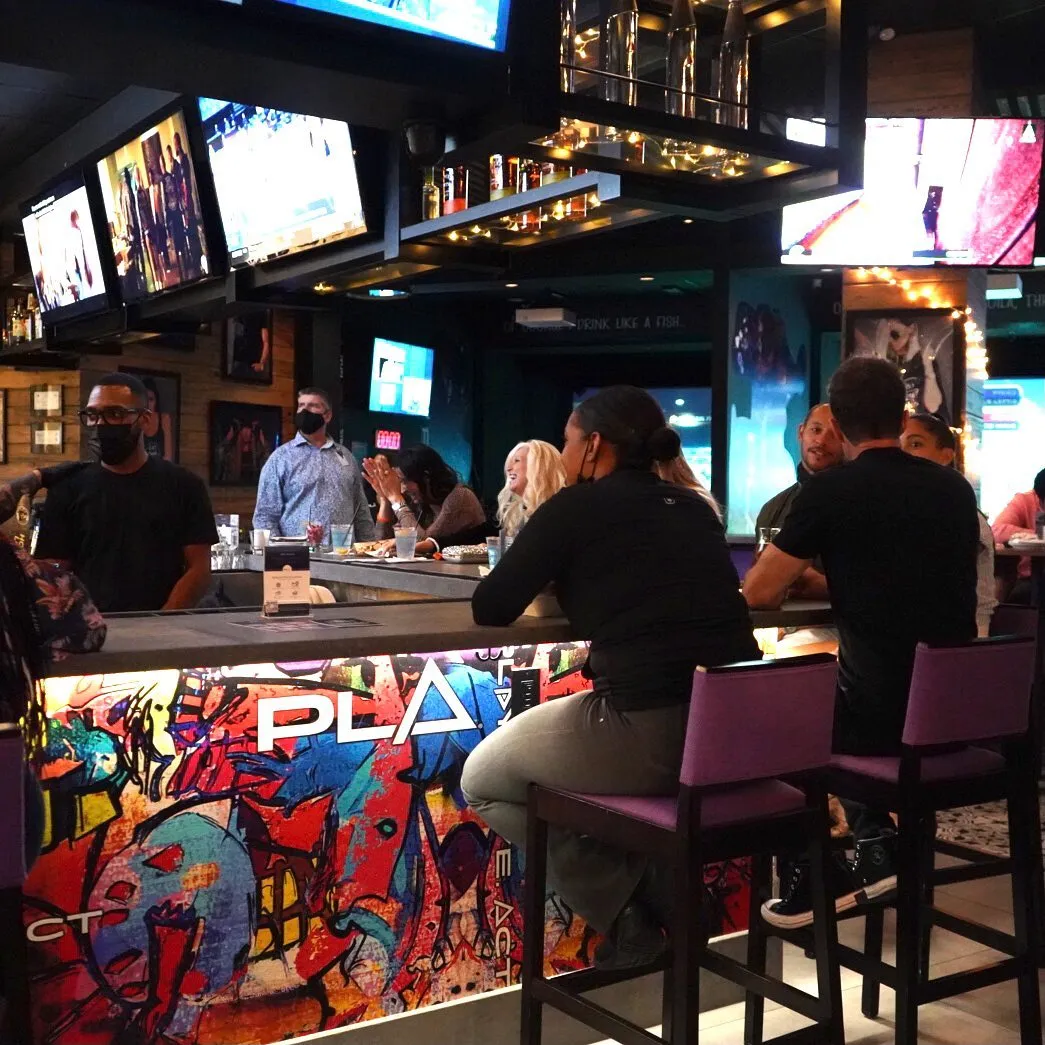
So you see these things from a higher level, but what about the guest side of things?
Adam Flierl: I think the even more dangerous part is when we’re not pouring what we should be, and the guest isn’t getting what they’re paying for. And that’s where Terry talks about finding that balance where our guests should feel like they’re getting a good pour and that the food has the quality that they’re paying for. I see this as a very bad trend in our industry, as people are fighting rising commodity costs and things like that. All of a sudden, that $10 drink has less liquor in it. Or the burgers are now $5 more, but the quality didn’t go up.
“At the center of our business is making sure that there’s always a value proposition for the guests — that they believe what they’re paying for, they’re getting. We’re very careful to monitor the underpour as much as we are the overpour.”
You mentioned labor costs. With all the talk about automation and AI replacing staff, have you actually seen anything in the real world that works, or is it mostly just hype at this point?
Adam Flierl: No, it’s 100% in my mind. It’s here now, it’s going to continue to come and you need to embrace it. But we think about it differently. For us, we’re this combination of sports, entertainment and technology that we started out to be, so we embrace technology. I think the robot Bartender is really cool once or twice. But at the end of the day, our guests and our community are leaving their houses to come play because they want human interaction. They want social interaction. They want someone to take care of them. They want to have a conversation with the Bartender. We will never lose that as long as Terry and I are around.
That said, if we didn’t embrace technology, we’d be missing the boat. There are ways it can help us in the kitchen. There’s incredibly high-powered, high-tech kitchen equipment nowadays, and we’re installing some of the very expensive equipment in Doral as we’re building it today. Maybe that allows us to have three Line Cooks, not four. In the bar, things like cocktails on tap or self-pouring wine stations are worth evaluating if they allow our staff to do their jobs easier and faster. That then allows our staff to turn around and spend more time with our guests.
“We think of technology as enhancing our staff’s jobs and what they need to get done so that we can hang around with our guests more.”
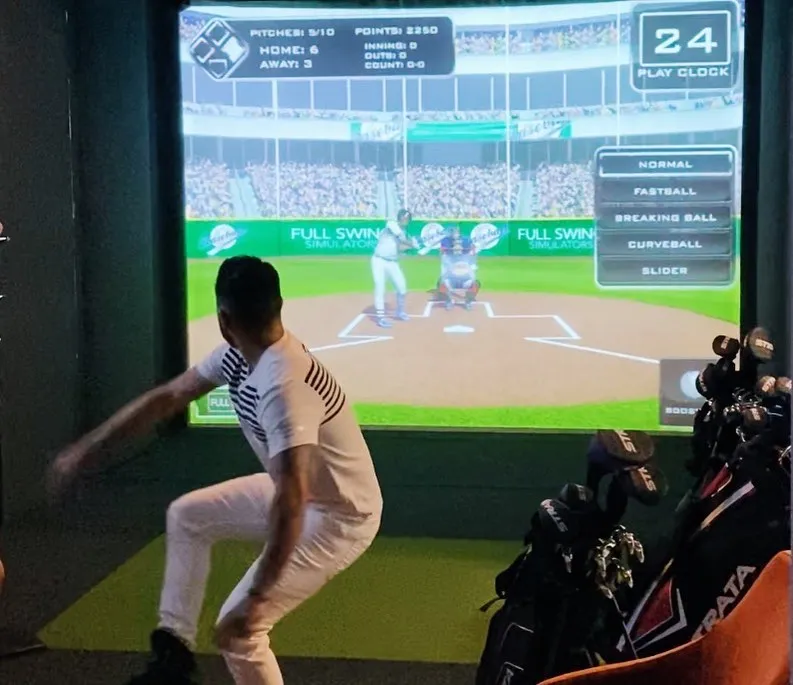
Terry Lee: Again, we are technology-based, but on the front line, we’re social creatures. We come out to be social. We want to meet new people, sit down and spill our guts to a Bartender, or have someone who’s experienced what we’ve experienced share that with us, or even introduce us to the cute girl across the bar, or a cute guy, depending on what you’re looking for.
I’m sure someday that’ll change. We’ve seen Star Wars. It’s coming down the road. But it’s not anytime in the next few years. Right now, we really lean into the technology side for our entertainment. I’m one of those people who likes to do things and be active, and I’m as competitive as anyone you know.
I have so many useless skills in my repertoire, from beer pong to quarters to anything like that. I love to compete and bet, and that’s kind of the concept. You come in, it’s this competitive socializing where you can connect with your boys, talk shit and place bets. We have a golf league. That’s the nature of it.
It’s kind of like a “man cave” on steroids, or a “she shack,” whatever you want to call it. From that perspective, on that side of the business, we lean heavily into technology to attract people, keep them entertained and constantly evolve that and have the latest and greatest for people to come in and be entertained.

Now we want to ask about Terry’s perspective on the hospitality industry’s high turnover rate as someone from a different background.
Terry Lee: We have been very blessed in our first location, but it comes from how you treat your staff. First and foremost, everybody’s there to make money. And if things turn and people aren’t making money, they tend to go look elsewhere for that.
We actually opened our business six weeks before COVID shut us down. So, lesson learned, don’t ever open right before COVID or any other pandemic. That’s not a good way to start your business. But through that, it really made us focus on every aspect of our business. As we came out of that, it was a grind. You had to look at every expense, how we could get more people in there, being six feet apart. It was the craziest thing any of us has ever been through. But through that, we really connected with our staff and stayed in touch with them and made sure they were okay. And through that whole thing, I think we might have lost two people. Everybody else waited and came back with us. And it really depends on how you treat your staff.
Because we make them number one, they can turn around and make our guests number one. They can treat them right. There are certain things that we do in our business that actually make our staff more money and us less money, but we do them because we know the staff is going to be well compensated, which helps us as it keeps them happy, keeps them engaged, keeps them motivated, keeps them on task with our hospitality theme, because you’re not going to see another sports bar that attacks hospitality like we do.
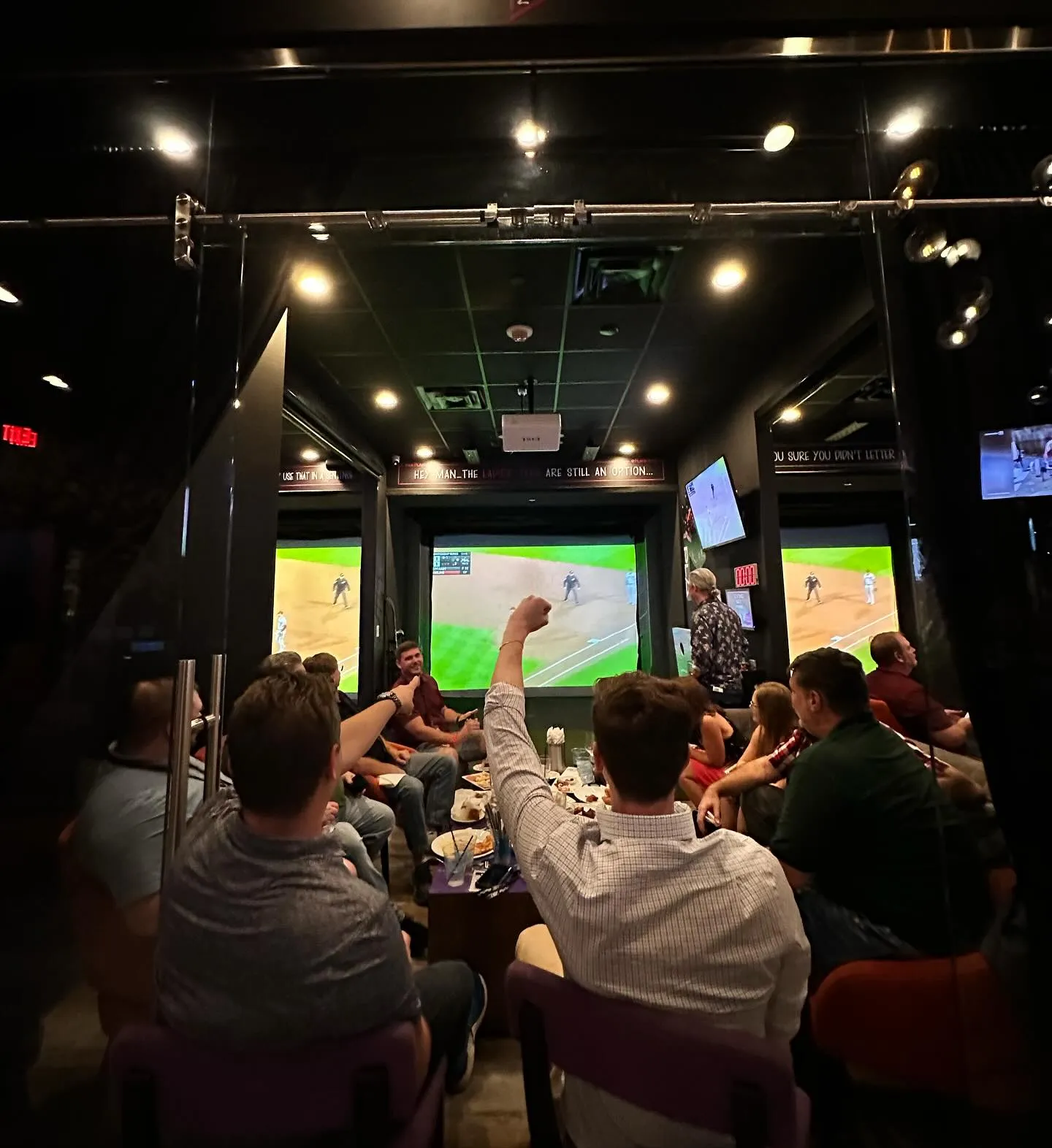
Adam Flier: And I think to add on the COVID piece, we created loyalty. We still have staff members who have been with us since day one. Because we stood by them during COVID, they came back. Ongoing, it’s about knowing our people. This is a people business.
And I know that it’s a first-name basis for every single person who’s in our venues. We ask how their lives are, how their kids are. That personal attention of knowing who they are as people not only shows that we’re vested in them, but allows us to run our business better because we know that if Sam hates working late nights, well, let’s let Sam work during the day or the middle shifts. And if Sally loves late nights, let’s not force Sally to work the morning shifts. Knowing our people is critical.
But I think the one thing that a lot of places miss, which we spend a lot of energy on, is celebrating people. And celebrating people is when a kid gets promoted, or it’s their work anniversary, it’s their birthday or they’re just doing the right thing in the moment. I remember the story, and forgive me, I don’t recall the CEO’s name, but every time he walked into a restaurant, he’d have a stack of five-dollar bills, and his goal was to give them away whenever he caught someone doing the right thing in the moment. Too many times, we focus on correcting or calling out bad behavior.
I think so many businesses miss the mark by not celebrating the good behavior and reinforcing when someone is just doing the right thing. That’s a really big part of our staff strategy. It’s also about providing a fun and safe environment. In today’s world, “safe” can mean a lot of things, but to us, it means an environment where staff feel trusted. If we’re doing the wrong thing, they feel safe to tell us, “Hey, you guys are wrong. This is what we should be doing.” And we listen.
Accountability is also key. This isn’t a free-for-all. It’s not a party at work. We still have a job to do, and most people who want to succeed want to work beside others who share that work ethic and work mentality. If we let someone like Sally constantly get away with things just because she’s the nicest person among the staff, that’s wrong. An environment of accountability, where people know their jobs and are doing their jobs and are held accountable but treated in a humane way, is what this business is all about
Terry Lee: I’ll add one thing. Virtually every one of our staff has their personal cell phones. And when I go in there, I’m not operating the business day to day. I check in, but when I do, I go talk to them. I check in on their personal lives. I check what’s going on. I encourage them to call or text me if there’s something that’s not going well or they don’t feel like it’s getting past management, and it’s up to us to address. I encourage them to bring it up because it’s important. They have the pulse. They’re the ones who are greeting and serving and providing that hospitality every single day. And we need that feedback to make sure that we are moving in the right direction.
With that in mind, what gets you to hire someone immediately?
Adam Flierl: It’s attitude and personality. Back in my Roy’s days, we had this amazing culture at Roy’s that’s still very alive and well in Hawaii. We call it that spark in the eye — that sparkle when you talk to somebody. You knew they were a people person. They wanted to be around people and talk with people. Too many times, hiring mistakes are made when you’re hiring based on a resume or experience. I would much rather have the completely inexperienced ball of clay with the great attitude, and we’ll teach them the rest. We’ll teach them the way to do it, as opposed to someone saying, “I’ve worked in the biggest restaurants” or “I bartended in the biggest nightclub.” Too many times, resume and experience get put ahead of attitude and personality.
Terry Lee: One of my favorite stories is, and she’s been with us from almost the beginning, Megan started at the door. I think it was her first job in the restaurant business, and she had the best attitude, the best personality, greeted everybody with a smile, talked to a wall, would stop people walking by and get them to come in.
She was there for probably a year and was constantly asking if she could be a Server. And finally, we didn’t want to move her from the door. She was so good at the door. But when we finally did, the first night after her training, when she was solo, she was sitting in one of the bays, counting her tips, and just started bawling. She had made $800 on her first night on her own and was just so overwhelmed and grateful.
She’s still, to this day, one of our best employees, best Servers, always smiling, always joking around and having fun with the guests. She never lost it and just added so much value to us, not in that door position, but as a Server where she should be and earning a lot more money. And it’s one of my favorite stories to tell.
Adam Flierl: She’s a trainer for us now. But even when she became a Server, she was the first one to say, “Hey, if you guys need help training the Host on the front door, let me know.” Like that type of attitude — “You guys gave me a chance, how can I help in return?”
We see why you’re proud of that story. Knowing all that, what do you think is the biggest mistake that restaurants make when hiring?
Adam Flierl: I think when hiring, there’s a balance of career experience, have you been a Bartender before and all that. But I think the mistake is made when people don’t understand their business, who they are, their culture and who they want to be. I’ll tell you, we’ve had some of the best Bartenders, best Servers, even Managers in the six years at PLAY, who were great at what they did, great at the service aspect of their job, but they didn’t have the hospitality piece. Or they lacked the attitude or personality that would fit with us.
I’ve told people candidly, “Hey, this just isn’t the right fit. What you think is important isn’t what we think is important.” That doesn’t make you a bad person; it just means we’re not a good fit together. And we’ll help you find another job. Use me as a reference. I think understanding the culture, being able to articulate the culture and explaining that to people before they’re hired is key. This is what we expect. This is what we want. This is the type of staff member who’s going to be successful. That’s probably what gets missed a lot.
“You’re putting a band together, and you have to have the chemistry right for all the notes to be played correctly. It’s the same thing in our business. You have to have great chemistry on your team. Sometimes, the greatest guitarist isn’t a good fit for the band.”
Terry Lee: Yeah, and we’ve been through that a few times, and you’ve got to be able to recognize it quickly. We’ve had people behind the bar who could put out more drinks than you could ever ask for. They could make it so that two people could work a busy night. But guess what? That hospitality is missing.
“We preach it over and over again: our job is not just to serve; our job is to make our guests feel something when they come in, before they leave.”
If you don’t make them feel something, they’re not going to go home and tell their friends, they’re not going to bring a friend in next time and they’re not going to come back. So I don’t care how fast you can get a drink out. To Adam’s point, that’s not what gets someone to come back.
It’s making them feel special. It’s remembering what they drank, remembering their name and asking them something personal. It’s engaging with them, making them laugh, grabbing one of our games and having them play. That’s what’s important. We’ve found — and I’m sure you’ve seen this — that Bartenders or Servers often want there to be fewer of them so they can make more money. But it doesn’t work that way.
It actually works better the other way. You add staff, deliver on that hospitality and everybody makes more. And guess what? People come back, and you make even more. They tell friends, and you make even more. It’s a hard lesson to learn, but it’s a very important one.
Adam Flierl: One of my favorite interview questions is “Tell me what service is”, and get a response. Now, “Tell me what hospitality is,” or “Tell me the difference.” We preach this; it’s in our DNA. There are two books we cite all the time: Setting the Table by legendary restaurant guide Danny Meyer and Unreasonable Hospitality.
We make our Managers read them when they’re hired and during training, and we talk about them. The difference is this: Service is what you do for someone. You took their order correctly, made their drink correctly and their check was correct when you brought it — the steps of service were done correctly. That’s very important. But, to Terry’s point, hospitality is how you make someone feel. If you understand the difference between service and hospitality, you can execute service with this hospitality element. It’s the secret sauce.
Let’s shift gears a bit. What do you think about owners being hands-on with operations? Should they focus on day-to-day tasks or stick to strategic priorities?
Terry Lee: There’s a balance, and when you have ambitious goals of growing your business and opening multiple venues, when you get up to three, four, five, 10, 20 — you want to get to 100 — you can’t be in a particular venue, and you can’t duplicate yourself. What you need is an incredible staff that can grow with you.
It doesn’t mean you leave completely. We’re always in and out of the venue, communicating with them on a daily basis with the GM there. Our presence is definitely felt. We check in. You have tools today, camera systems, that let you watch. And it’s amazing what you can get — people’s body language, their faces and the staff. Just by checking in, you can get the vibe of the place and what’s going on.
So there are ways to stay connected, but if you are growing or have the vision of growing quickly in multiple units, you have to find a way to get the right people in the right seats on this bus, and then systems to check and make sure you’re checking in and staying connected with everybody. If you can do that correctly and get the right staff, you’re just setting the table for a successful venture.
Adam Flierl: And I think we, especially Terry and I, need to understand our lanes, right? Probably 75% of Terry’s mind is on the future — he’s thinking development, growth, technology. Probably 50% of mine is on the future, and I still have 50% on day-to-day operations, helping and supporting the team. Our GMs in the venues are 100% focused on the day-to-day.
So, to Terry’s point, you’ve got to have great people. Hiring great people to start with, whether using external recruiters or not, is key. We do background checks, personality profiles and assessments. We use all the tools we can to vet someone early. Once they’re hired, my number one job is onboarding management. Getting management trained, focused and developing a relationship in the first 30, 60, 90 days is critical. Then my job becomes getting out of their way and letting them do their job. I become their number one resource. Let me help you solve problems.
Terry mentioned cameras. We can log in and see every inch of our venue on my phone or laptop at any time. We don’t use it as a gotcha. I’m not looking to catch the Busboy eating in the bus station. If I see it, I might tell a Manager, “Hey, we can’t eat in the bus stations. Please remind everybody.”
“Staying connected is key. If owners don’t stay connected to day-to-day operations, it’s the kiss of death. If you try to overmanage or micromanage the day-to-day operations, you’ll never get anywhere.”
Finding that balance — finding people you trust and letting them run your business with your guidance and support — creates the opportunity to be successful.
Terry Lee: Generally, if I see something, unless it’s truly an emergency, I don’t talk to the staff member, whoever that team member is. I generally talk to Adam and then to Adam, and it goes down to Bob, the GM. That way, everybody’s in the loop because if I address it and then I have to tell this person and this other person, it’s just again, those gentle nudges to keep us on track. You just get everybody in the loop, and it’s just an efficient way to deal with something or that slight course correction.
Adam Flierl: We also want people, when Terry and I come into the venues, to be happy to see us. We don’t want them to pucker up thinking, “My God, Terry’s here and I’ve got to…” We don’t want that. Using that chain of command is key to course-correcting behavior or rewarding behavior.
I tell the staff all the time, “Hey, I want to do this or that — did you talk to your boss?” Your boss is your GM, not me. Go talk to them. If they don’t give you the answer you want and you disagree, then let me know, and I’ll talk to them. That chain of command is really important and the staff trusting their management team, the management team trusting us and me trusting Terry. I think that’s really important Business 101.
Terry Lee: And it keeps, especially me, from being an asshole. Everybody loves me because I don’t discipline everybody. I’m just the guy who comes in and has a cocktail once in a while and checks in on them and has fun with them.
Check Our Career Growth Tools


You’ve got a solid operation going. What’s next for your business?
Terry Lee: Well, we’ve got quite a few. We’re just starting. Our general plan for the future is to expand wherever the Hard Rock goes and has room for us. We just started the conversation about going into the Las Vegas venue. Pretty much everybody knows by now that the Hard Rock, or the Seminole Tribe that owns it, bought the Mirage from MGM a few years ago, and it’s to open in November 2027.
We just started the conversation there, and they’re doing space planning for other venues like ours. So we’ll start working on that one. That’s two years off. We’ve got one in Sarasota we’re looking at. We’ve been looking at West Palm for a while. Adam actually lives just north of Dallas, so we’re looking at his backyard. We’re open to different locations. Hopefully, someone on this podcast hears that. We would love to entertain it.
We love Gen 2 spaces, keeping that upfront budget down when we open. We look for probably 6,000 to 10,000 square feet; 6,000 to 8,000 is typical for a national chain that might turn over. But we can go larger. The one down in Doral is over 12,000 square feet with a large patio as well. So we’re pretty flexible.
From my real estate background, when we plug in all the entertainment elements, it’s very flexible and modular. If something gets out of date or boring, we want to quickly switch it out for something else for people to do. So yeah, we’re constantly looking for locations, and obviously, anyone interested in investing in this concept, we’d love to entertain that as well.
Adam Flierl: Right now, we’re primarily focused on the Florida and Texas markets for a number of reasons. Both are very pro-business states to start with. As Terry mentioned, I’m in the Dallas market, so the Dallas-Fort Worth area, and we’re also looking at markets like San Antonio, Austin, and potentially Houston at some point.
We’ll get outside the Florida and Texas markets fairly quickly as we start to expand. One of the things we’re probably most proud of is some of the people involved with our organization who will help us grow. I mentioned Roy’s Restaurants earlier and how I spent 20+ years there. Roy Yamaguchi, the Chef and Founder, is an investor with us today. It’s cool that my old boss believes in what we’re doing.
On top of that, Ken May, the former CEO of Topgolf, the one who brought me into Topgolf originally, is an investor with us and sits on our board of directors. Ken is probably the most active investor we have. Terry and I have weekly calls with him to think about strategy, growth, development, people and resources.
So we’ve got big plans to grow. We think we could do 30, 40, 50, 100 of these around the country eventually. We’re just embarking on this growth and expansion path, literally as we speak, with Doral opening in January.
Terry Lee: One other notable thing, I was blessed years ago to get introduced by a mutual friend to Tony Robbins. He actually wrote one of the first checks to get us started.
Adam Flierl: We’re trying to think small, right? We’re acting local, thinking global. We’re trying not to get ahead of ourselves. We know the most important thing we’ll ever do is open number two successfully, and then hopefully numbers three and four. If numbers two and three aren’t right, you’re never going to get to 20 or 30.
So we are heavily focused on making sure Doral gets all of our support, attention and every opportunity to be successful. We think our location at CityPlace in Doral and the Doral community is a perfect fit. We believe the Doral community is really going to love what we do, who we are and the great jobs we provide. We’re incredibly excited that Doral is number two for us.
Find available Restaurant Manager jobs in Miami, or check out more interviews like this brought to you by OysterLink to learn more about the industry. You can also get them straight to your email by creating an OysterLink account and joining our newsletter.

Loading comments...