


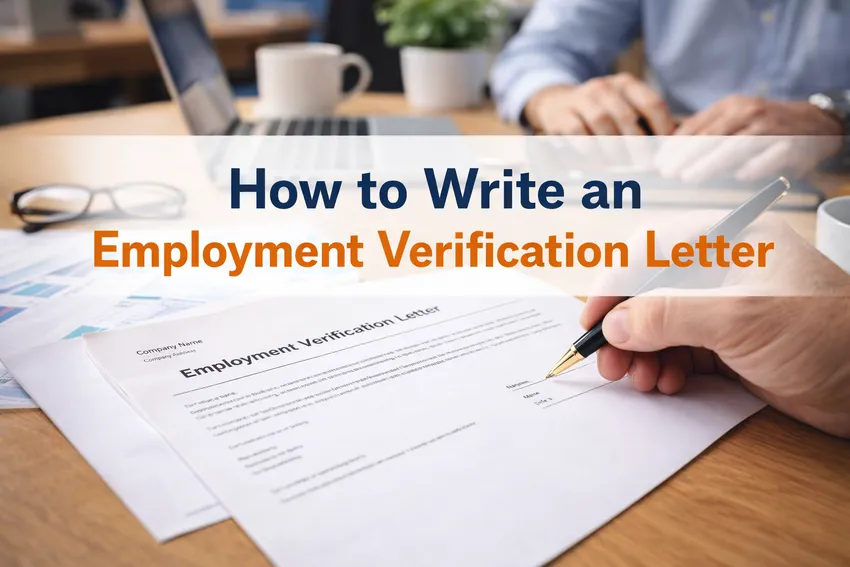

An employment verification letter might seem like a simple administrative document, yet it plays a surprisingly important role in modern business.
Employers frequently receive requests to confirm a worker’s job status, income or length of employment. These letters are used for everything from mortgage applications and apartment leases to visa requests and background checks.
For employers, knowing how to write a clear and professional employment verification letter helps maintain credibility while protecting sensitive employee information.
A well-structured verification letter confirms essential details without oversharing private data. It also ensures that the company responds to requests quickly and consistently.

What Is an Employment Verification Letter?
An employment verification letter is an official document provided by an employer that confirms a person’s job status. It verifies that an individual works—or worked—for a company and usually includes details such as job title, employment dates and sometimes salary information.
These letters are sometimes called:
- Proof of employment letters
- Employment confirmation letters
- Job verification letters
- Income verification letters
Although the terminology may vary, the goal remains the same: to confirm a person’s employment status with accurate, verifiable information.
Employers typically issue these letters on company letterhead and have them signed by an HR representative or manager. Because third parties rely on them for financial and legal decisions, accuracy and clarity are essential.
Why Employers Are Asked to Provide Employment Verification Letters
Requests for employment verification are extremely common across many industries. Organizations outside the workplace often need confirmation of someone’s employment before approving certain applications.
Some of the most frequent scenarios include:
Mortgage or Loan Applications
Banks and lenders often request proof of employment before approving loans. The letter helps verify that the applicant has stable income and job security.
Apartment or Housing Applications
Landlords frequently request employment verification to confirm a tenant’s ability to pay rent.
Visa and Immigration Processes
Government agencies may require employment confirmation as part of visa or immigration applications.
Background Checks
Employers conducting background checks sometimes verify past employment to confirm the accuracy of a candidate’s resume.
Government Benefits or Assistance
Certain benefits programs require proof of employment or income to determine eligibility.
Because these letters may influence financial or legal decisions, employers must ensure that the information provided is accurate and up to date.



The Fastest Growing
Restaurant & Hospitality Job Platform
Looking for top paid jobs? Or Hiring for your business?
Key Information to Include in an Employment Verification Letter
A strong employment verification letter is concise but informative. It should include only the details necessary to confirm employment.
Here are the most important elements to include.
Company Contact Information
The letter should begin with official company details, such as:
- Company name
- Business address
- Phone number
- Email address
This information allows the recipient to verify the authenticity of the document if needed.
Date of the Letter
Including the date ensures the information is current and helps the recipient understand when the verification was issued.
Employee Identification
The letter should clearly identify the employee whose employment is being verified. This usually includes:
- Full name
- Job title
Some letters may also include an employee ID number if relevant.
Check Our Career Growth Tools


Employment Dates
Employers should specify when the employee began working at the company. If the individual is no longer employed, the letter should include the end date of employment.
Example:
“John Smith has been employed with our company since May 2021.”
Employment Status
The letter should confirm whether the employee is:
- Full-time
- Part-time
- Contract
- Temporary
This detail helps organizations understand the employee’s work arrangement.
Salary Information (Optional)
Salary details are sometimes requested but should only be included with the employee’s consent.
Example:
“John Smith currently earns an annual salary of $65,000.”
Employer Signature
The letter should end with the name, job title and signature of the person verifying the employment, typically an HR representative or manager.

Employment Verification Letter Template
Employers often use templates to ensure consistency and save time. Below is a simple example of what an employment verification letter might look like.
[Company Letterhead]
Date: [Insert Date]
To Whom It May Concern,
This letter confirms that [Employee Name] is employed with [Company Name] as a [Job Title].
[Employee Name] has been working with our organization since [Start Date] and is currently employed on a [Full-Time/Part-Time/Contract] basis.
If requested and authorized by the employee, their current annual salary is [Salary Amount].
If you require any additional information, please feel free to contact our office at [Phone Number].
Sincerely,
[Name]
[Job Title]
[Company Name]
Using a structured template like this allows employers to respond quickly to verification requests while maintaining professionalism.
Best Practices for Writing Employment Verification Letters
Although the format is relatively simple, there are several best practices employers should follow when writing employment verification letters.
Keep the Letter Concise
The letter should only include information necessary to verify employment. Avoid adding personal details or unnecessary commentary.
Verify the Request
Employers should confirm that the employee has authorized the verification request before sharing information.
This protects employee privacy and ensures compliance with company policies.
Use Official Company Letterhead
Using company letterhead helps establish credibility and makes the document appear more professional.
Maintain Consistency
Companies that frequently receive verification requests should develop standardized templates to ensure consistency.
Respond Promptly
Timely responses help employees complete important processes such as housing applications or loan approvals.
Common Mistakes to Avoid
Even though employment verification letters are straightforward, certain mistakes can cause confusion or delays.
The Fastest Growing
Restaurant & Hospitality Job Platform
Looking for top paid jobs? Or Hiring for your business?
Including Too Much Information
Providing excessive details—such as performance evaluations or personal comments—can create legal risks.
Failing to Verify Employee Authorization
Sharing employment details without employee consent may violate privacy policies.
Using Informal Language
Employment verification letters should always maintain a professional tone.
Forgetting Contact Information
The recipient may need to confirm the letter’s authenticity, so clear contact information is essential.
Digital Verification vs Traditional Letters
While traditional verification letters are still common, many companies are shifting toward automated employment verification systems.
Digital verification platforms allow employers to confirm employment electronically without drafting individual letters. These systems can speed up the process and reduce administrative work.
However, many lenders, landlords and government agencies still request formal letters, so HR teams should remain prepared to provide them when necessary.
When Employers Should Refuse an Employment Verification Request
In certain situations, employers may need to decline verification requests.
Examples include:
- The request lacks employee authorization
- The request asks for confidential information
- The requester cannot verify their identity
Employers should always follow company policies and legal guidelines when responding to verification requests.


Loading comments...