
The U.S. food delivery market is experiencing rapid growth, with major players like DoorDash, Uber Eats and Grubhub leading the charge.
This article examines key food delivery market statistics, trends, tipping behaviors, and platform dynamics that are shaping the future of the American food delivery landscape.
Food delivery growth is creating new opportunities across hospitality. OysterLink helps connect restaurants hiring staff with people looking for service industry work.

Food Delivery Market Size and Growth Trends
- In 2025, the online food delivery market reached a staggering $1.40 trillion in revenue (globally).
- With a steady CAGR of 7.63% between 2025 and 2030, the market is projected to hit $2.02 trillion by 2030.
- The U.S. is the second-largest online food delivery market after China, generating $353 billion in 2024.
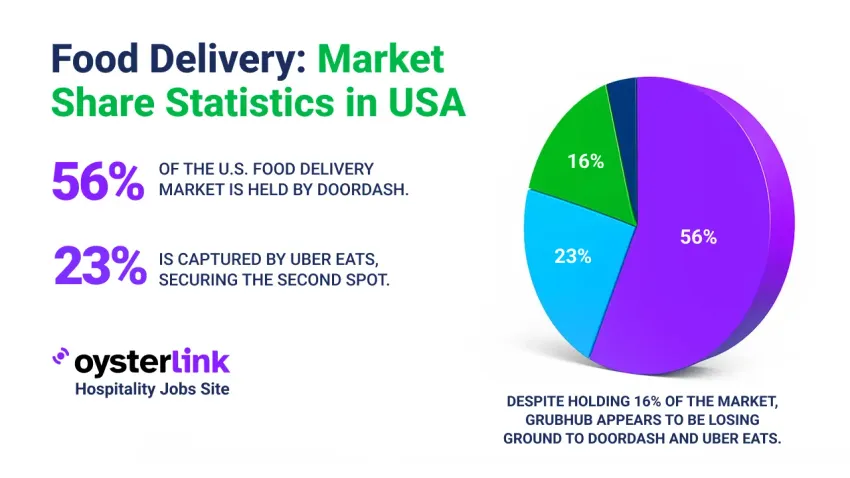
- DoorDash dominates the U.S. food delivery market with 56% share, followed by Uber Eats (23%) and Grubhub (16%).
Tip: Check the "Deals" section in the Uber Eats app before placing your order, since you can often find 15%-20% discounts on orders over $20.
Americans' Food Delivery Habits
- Food delivery costs the average American an astonishing $1,850 every year.
- Americans order food delivery once every 6.7 days, which equals about 1.1 times per week.
- On average, each customer using grocery delivery spent about $548.49 per annum in 2025.
- In the U.S., average grocery costs range from $579 in Mississippi to $784 in Maine.
Top U.S. Food Delivery Services
- In Q4 2024, DoorDash (with Wolt) hit $21.3B in order value, topping Uber Eats at $20.1B.
- A surprising 62% of all food delivery app users are paying for a premium subscription, with UberEats leading the charge at 61%.
- The most downloaded food delivery apps in the U.S. are DoorDash (54%), Domino's Pizza (47%) and UberEats.
- In 2021, DoorDash dominated U.S. app downloads with 37 million installs.
Food delivery apps such as DoorDash, Uber Eats and Grubhub dominate the U.S. delivery landscape, each competing for restaurant partnerships and customer loyalty.
The video below explains how these platforms operate and why certain apps have managed to capture a larger share of the market.
Food Delivery Market: Economics and Wages
- Uber Eats drivers earn around $24.68 per hour, while DoorDash drivers average $18.93 per hour, factoring in bonuses and tips.
- On average, DoorDash drivers make an extra $114.84 per week and $356.33 per month through bonuses and tips.
- 56% of Delivery Drivers stated they’ve received non-cash tips from passengers.
- Uber Eats is considered the best for tipping by the largest percentage of respondents (35%).
Trends in Food Delivery and Tipping Habits in the U.S.
- The most popular days for ordering delivery were weekends, with 5-7pm being the top time for scheduling a delivery.
- As of now, bananas are the U.S.'s number one grocery item by sales.
- 36% of Americans don’t use food ordering apps at all.
- 59% of people always tip when food is delivered.
Food Delivery User Demographics and Behavior
- The majority of Uber Eats users are between 18 and 44 years of age, with this group accounting for 74.5% of the platform's users.
- Over 34% of U.S. consumers have used an app at least once to get restaurant food delivered.
Check Our Career Growth Tools


- Gen Z and Millennials are the most engaged in app usage, with nearly 4 in 10 using restaurant apps weekly.
- Urban residents lead the way in restaurant app usage, with nearly 40% using food delivery apps weekly.
Food Delivery Platform Operations and Infrastructure
- Uber Eats went from 120 cities in 2017 to 11,500 cities across the world by 2024.
- Uber Eats operates in 45 countries, whereas DoorDash is present in 30 countries.
- With 74% market share in San Francisco, DoorDash outpaces all other food delivery services in the city.
- Uber Eats also has the largest share of the food delivery market in Miami, with 55% of sales, but only 11% in San Francisco.
General Delivery Statistics
- The average delivery time is approximately 12 minutes.
- 61% of customers prefer home delivery over other delivery methods.
- 58% of consumers expect deliveries to arrive within 40 minutes or less.
- 70% of these customers are satisfied with the most affordable home delivery option, while 23% would pay a premium for same-day delivery.
OysterLink: Uncovering Key Trends in Food Delivery for 2026
Navigating the evolving food delivery market in 2026 requires more than just numbers – it’s about understanding the forces shaping the industry.
With OysterLink, you get access to in-depth market analysis and real-time updates that are crucial for staying ahead in the competitive food delivery landscape.
Plus, OysterLink offers exclusive insights, expert opinions and valuable career resources to help you make smarter business decisions.
If you’re looking for work in restaurants, hospitality or food delivery, you can also browse open roles and connect with employers on OysterLink, a job platform focused on the restaurant and hospitality industry.