




Best time to post restaurant jobs can make or break your hiring success.
Missing the optimal posting window means losing 50% of potential candidates in today’s competitive hospitality market.
In this guide, we’ll walk you through exactly when to post your restaurant jobs to maximize visibility and attract top talent consistently.

Understanding Peak Restaurant Job Posting Application Times
Restaurant job seekers follow predictable patterns, and aligning your postings with these rhythms boosts hiring success and candidate quality.
The “golden window” for restaurant job posts falls between 2:00 - 3:00 p.m.
This is when both managers and job seekers find the time to focus.
Posting during certain times, such as this golden window, can significantly increase your job listing's visibility and application rates.
You’re no longer caught in the lunch rush, and candidates can finally browse job boards during their break or downtime.
On the flip side, posting during peak service hours means competing with clattering dishes and full tables.
Your perfect candidate might never even see the listing because they’re deep in the weeds, managing their own shift.
Timing is crucial; a job post that goes live during this golden window stands a far better chance of attracting quality applicants.



The Fastest Growing
Restaurant & Hospitality Job Platform
Looking for top paid jobs? Or Hiring for your business?
Weekly trends in job search behavior
One of the most significant trends in the industry is weekday job search patterns.
According to OysterLink data, Monday through Thursday consistently prove to be the prime time for job seekers in the restaurant space.
At the start of the week, restaurant workers tend to reassess their jobs after the weekend, which is typically the most demanding stretch of their schedule.
Employers can expect a noticeable increase in job search activity and application volume during these days, as workers are more likely to look for new opportunities.
They might be considering better hours, higher pay or a new work environment, which drives them to look for new opportunities.
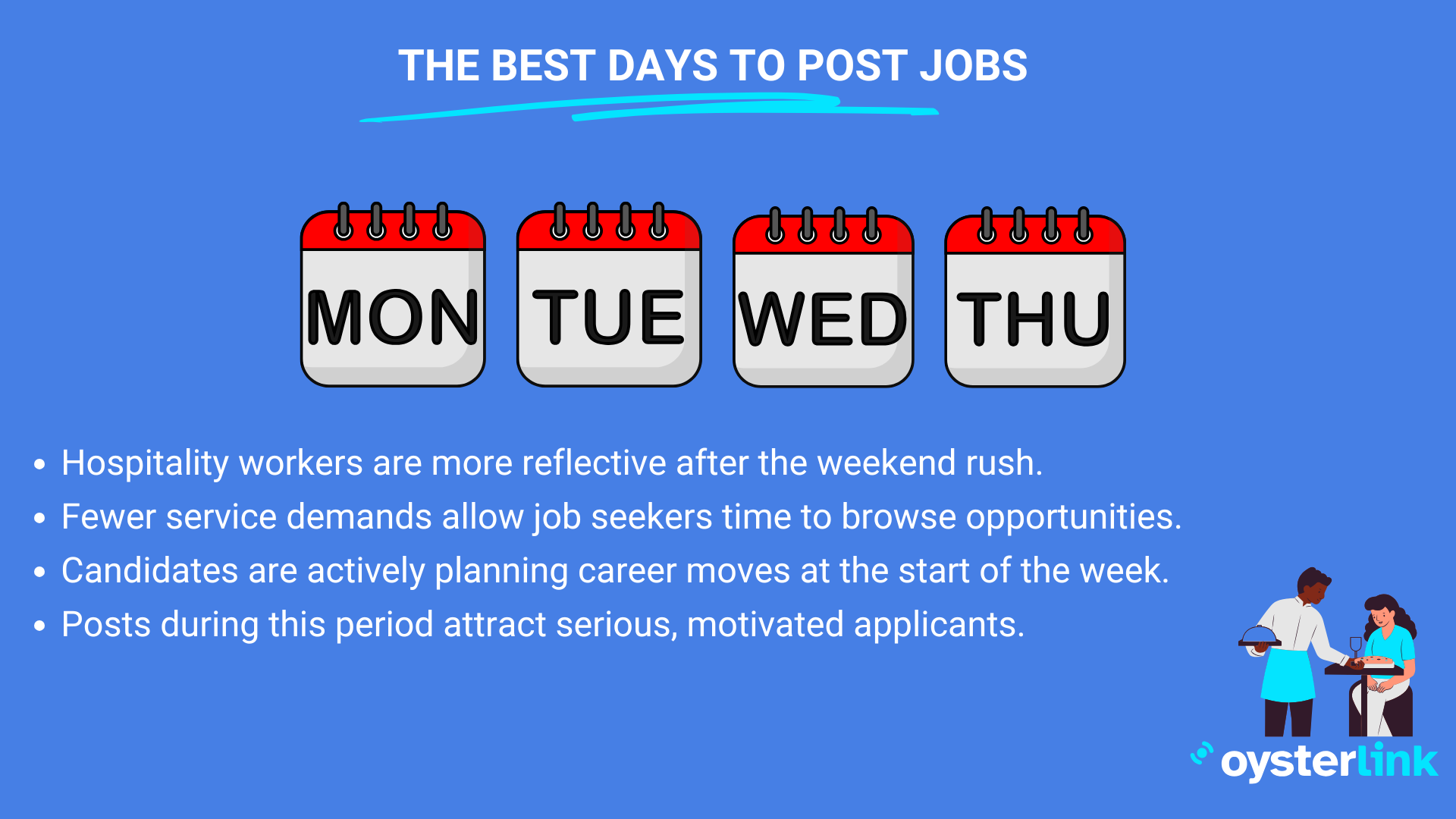
Additionally, Mondays through Thursdays are typically quieter for most restaurants.
With fewer service demands during these days (especially between lunch and dinner shifts), potential applicants have the breathing room to explore new opportunities.
It’s during this window that your job post is more likely to resonate with experienced, serious candidates who are actively searching, rather than casually browsing.
By Friday and into the weekend, the dynamic shifts. Restaurant workers are back in full swing, laser-focused on the busiest service days.
The idea of job hunting takes a back seat as they manage packed dining rooms, late nights, and heightened customer demands.
Posting a job on Saturday afternoon is likely to get lost in the shuffle, overlooked as candidates are too busy to notice it.
Monthly and seasonal variations
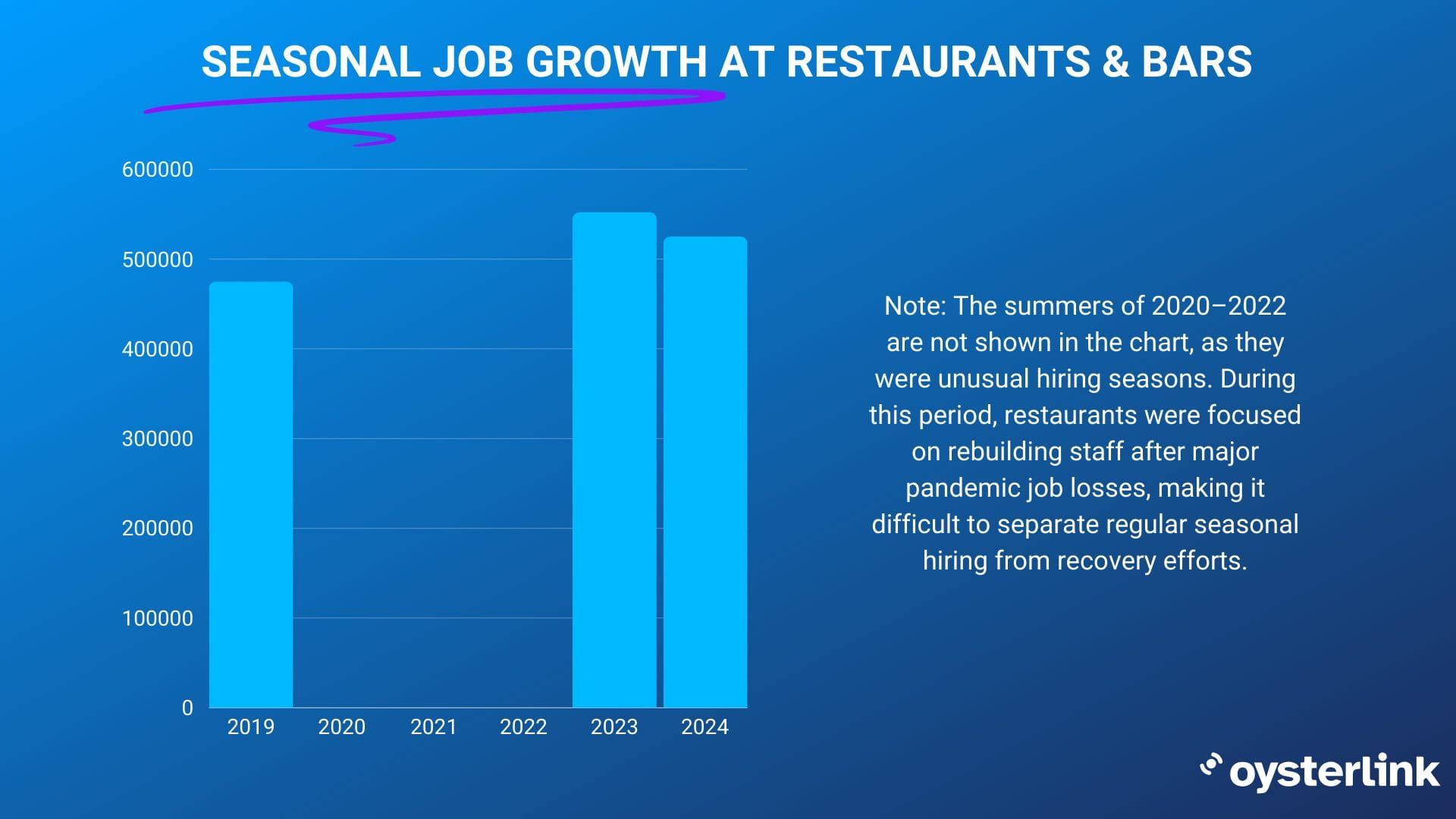
Seasonality plays a huge role in how restaurants operate, especially when it comes to staffing.
In the summer of 2024, the restaurant industry added approximately 525,000 seasonal jobs, reflecting the steady rise in consumer demand.
Warmer months consistently bring packed patios, bustling dining rooms, and a surge in foot traffic, making summer the busiest hiring period for restaurants.
Early spring is also a key period for increased job opportunities and hiring activity in the restaurant industry, as many establishments prepare for the upcoming busy season.
Key hiring periods for hotels and restaurants
Here are the key periods when most hotels and restaurants need extra staff members, making them the best time to post jobs.
During these times, there is a surge in job opportunities for restaurant workers.
January
January is a pivotal month for hourly hiring as the job market shifts post-holidays.
Many seasonal workers, having completed their holiday roles, are actively seeking a new job and new opportunities.
This creates a rare window where a large pool of experienced candidates is available.
For employers, this influx of talent offers a chance to strengthen teams with fresh hires who already have recent, relevant experience.
The hiring landscape in January is also less competitive than peak seasons, as many businesses are still easing back into operations.
April to September
From April to September, things really heat up — the sun’s out, patios are packed and holidays like Mother’s Day and Father’s Day bring in big crowds.
Family gatherings and celebrations during these times lead to increased restaurant traffic and higher staffing needs.
This busy stretch is a great time for profits, but it also means you need the right team in place to handle the rush.
Hiring early and keeping staff engaged can make all the difference in keeping things running smoothly.
September to November
On the flip side, the slower months from November to January offer a chance to regroup as diners shift to home-cooked meals and holiday gatherings.
This period is also ideal for focusing on employee retention, providing training, or onboarding new employees to strengthen your team for the upcoming busy season.
Knowing when to ramp up or scale back helps you stay ahead of the curve, whether it’s adjusting your menu, staffing smarter or tweaking your marketing.
By planning around these natural ebbs and flows, you can keep your restaurant humming year-round and avoid scrambling when things get busy.
[Source: National Restaurant Association]
Best Job Posting Sites for Restaurants: Social Media Windows
Platforms like Instagram see the highest engagement between 9 a.m. and 12 p.m. early in the week, making it the perfect window to capture attention.
Facebook, on the other hand, aligns best with standard business hours, catering to users checking in during breaks or after work.
If you’re looking to connect with younger audiences or potential hires, TikTok peaks between 4 - 5 p.m. on weekdays, right when users unwind and browse.
With 37% of diners researching restaurants through social media, these channels have become essential tools not just for attracting customers.
By staying consistent and engaging across platforms, as the restaurant owner, you get to position your establishment as a desirable place to work.
In short: smart, well-timed posts don’t just fill seats; they help you fill open roles with the right talent.
The Fastest Growing
Restaurant & Hospitality Job Platform
Looking for top paid jobs? Or Hiring for your business?
Optimizing Your Restaurant Job Posting Schedule
Posting job openings at random times can mean missing out on great candidates.
And as many of us know, timing is everything in the restaurant industry.
A structured posting schedule not only helps you reach more qualified applicants but also saves valuable time during your busiest hours.
Keep in mind that consistency is key to keeping your talent pipeline full, even when operations are running at full speed. To optimize your job posting schedule, consider the following tips.
Crafting a job posting calendar
Your posting calendar should align with your restaurant’s specific hiring needs. Mapping out your hiring course ensures you don’t miss key recruitment windows and helps you stay organized throughout the process.
A two-week planning window tends to hit the sweet spot, giving you enough lead time to stay ahead while keeping things flexible so you can adjust if needed.
On average, you’ll need about 62 applicants to land one solid hire.
Posting at the right times helps you hit those numbers without the headache. Here are the best times to put your listings out there:
- Morning Rush (8 a.m. to 11 a.m.): Catch early risers and job seekers starting their day.
- Mid-Day Sweet Spot (2 p.m. to 3 p.m.): A lull in the day when applicants are actively browsing.
- Evening Window (6 p.m. to 8 p.m.): After work hours, when potential candidates have time to apply.
Tracking application rates
Believe it or not, your career page could be one of your biggest assets.
It can bring in 40-60% of your most qualified applicants when used effectively.
The trick lies in watching your conversion rates and source reports closely.
These numbers tell you exactly when potential candidates are most engaged, giving you the insight to adjust your posting schedule and maximize results.
However, data isn’t your only resource — your current staff can also provide valuable insights.
Line Cooks, Servers and Hosts/Hostesess often spot hiring trends that management might overlook, like when new hires tend to stay longer or which roles are harder to fill.
Using their experience can help improve your hiring strategy. It's also important to focus on attracting the right person for each role, considering qualities and personality traits that fit your team. That said, manual tracking can only take you so far.
Quality job platforms like OysterLink make the process much easier and more accurate than spreadsheets ever could.
With job posts reaching qualified candidates in just 24 hours, you’re tapping into a network of over 400,000 hospitality professionals.
OysterLink also offers free job description templates and other valuable tools that help you save time and reach even more potential hires.
It’s a simple, effective way to connect with the right talent, so you can focus on running your restaurant while OysterLink handles the heavy lifting.
Maximizing Restaurant Job Advertisement Application Quality
Exceptional candidates often disappear quickly, so the difference between hiring great staff and settling for average lies in how (and when) you engage them.
Smart timing and quick follow-up can help you secure the best fit for your team. It's important for the hiring manager to respond promptly to applications to keep candidates engaged.
Scheduling the interview as soon as possible is also a crucial step in securing top candidates before they accept other offers.
Smart timing and quick follow-up can help you secure the best fit for your team.
Mastering screening efficiency
Screening efficiently isn’t just about speed; it’s about knowing exactly what to look for to save time and cut down on hiring costs.
During application reviews, focus on key qualities that predict success in a fast-paced restaurant environment:
- Complete Applications – Attention to detail matters.
- Team Player Potential – Hospitality thrives on collaboration.
- Proven Reliability – Consistency keeps shifts covered.
- Professionalism – First impressions often reflect future performance.
- Emotional Stability – Staying calm under pressure is essential in service.
The race to respond
One of the most common hiring mistakes that employers make is waiting too long to respond.
The restaurant industry moves fast, and so do job seekers. Data shows that most top candidates are gone within days, sometimes hours.
Hiring managers should aim to respond within 48 hours to avoid losing quality applicants.
Even better, reaching out via text boosts response rates by 7.5x compared to email. Texts fit seamlessly into the busy lives of restaurant staff, with 90% read within three minutes.
Avoiding Common Mistakes
Even experienced hiring managers can fall into common traps that slow down the hiring process or limit the pool of qualified candidates.
One of the biggest mistakes is posting jobs during the busiest times—like the lunch or dinner rush—when both managers and potential applicants are focused on service, not job hunting. Instead, schedule your job postings for quieter periods to maximize visibility.
Another frequent error is using generic or poorly optimized job descriptions that fail to highlight the unique benefits of working at your restaurant.
Make sure to include relevant keywords, showcase your company culture, and clearly outline the advantages of joining your team.
By steering clear of these pitfalls and focusing on what makes your restaurant stand out, you’ll attract more qualified candidates and fill open roles faster, keeping your business running smoothly even during the busiest seasons.
Industry Considerations
Every industry has its own hiring rhythms, and the restaurant industry is no exception. For hiring managers in hospitality, understanding these patterns is key to successful recruitment.
Unlike tech or corporate sectors, where hiring may align with fiscal quarters or project launches, restaurants and other hospitality industries often see job posting spikes around holidays, tourist seasons, and local events.
For example, the lunch and dinner rushes are not just busy times for serving customers—they’re also periods when potential candidates are least likely to be job hunting.
Instead, focus your job posting efforts during quieter hours, when candidates have the time to consider new opportunities.
Additionally, keep in mind the financial needs of restaurant workers, who may be motivated by the promise of steady hours or seasonal bonuses.
By tailoring your hiring strategy to the unique demands of the hospitality industry, you can attract candidates who are not only qualified, but also ready to thrive in your restaurant’s fast-paced environment.
Conclusion: Use Simple and Proven Restaurant Job Boards Strategies
Successful restaurant hiring isn’t about luck — it’s about having a plan that works with the natural flow of the industry.
By understanding when job seekers are most active and aligning your posts with those moments, you can consistently attract the right talent.
Weekdays between 2 - 3 p.m. and the start of the week provide the best windows to catch experienced candidates who are ready for a change.
Avoid the weekend rush, and remember that seasonal trends play a big role in staffing needs.
A thoughtful posting schedule keeps your hiring pipeline full and helps you avoid the scramble when things get busy.
The right strategy not only saves time but also ensures your team is staffed with people who are the right fit — exactly when you need them.

Written by Lidija Misic
Content Specialist
Lidija holds a BA in English Language and has lived in five different countries, where she has worked in various roles, including as a flight attendant, teacher, writer and recruiter. Her biggest passion is crafting great content and reading. She is particularly passionate about creating punchy copy that inspires people to make positive changes in their lives.

Reviewed by Stefan Petrov
With over 10 years of experience as a writer and editor, Stefan has worked in the automotive, IT, health and hospitality industries. Familiar with Google Search Console and other SEO tools like Ahrefs and Semrush, Stefan uses his experience to create content that's visually appealing to the user but also ranks in the SERPs.

![11 Pros and Cons of Being a Pastry Chef in [year]](/content/spotlight/28d415b7-2c06-4ad2-aaa8-0e496fb422f7/poster/1758793953397-pros-and-cons-of-being-a-pastry-chef-featured-340x191.webp)
Loading comments...