


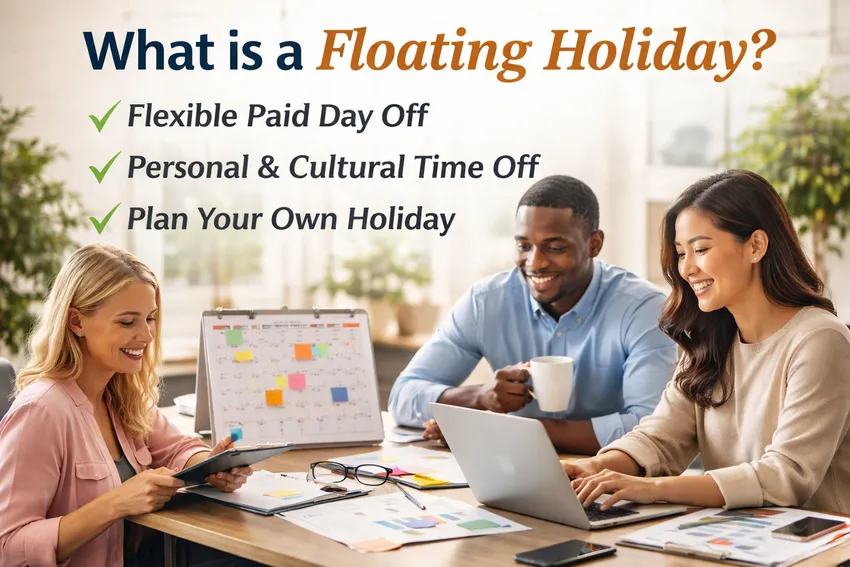

Floating holidays provide employees with flexibility to take time off for personal reasons or events that are not included in a company’s official holiday schedule.
Unlike fixed holidays such as Christmas or Independence Day, floating holidays can be scheduled at the employee’s discretion, often with prior approval from management.
This type of leave supports diversity, inclusivity, and work-life balance in modern workplaces.

What is a Floating Holiday?
A floating holiday is paid time off that employees can use at their discretion. Unlike standard holidays dictated by federal or state law, floating holidays are designed to accommodate personal, cultural, or religious observances that may not be part of the official holiday calendar.
Many employers provide one to three floating holidays per year as part of their benefits package.
Key Features of Floating Holidays:
| Feature | Description |
|---|---|
| Flexible Timing | Employees choose when to take the day off (subject to approval). |
| Paid Leave | Floating holidays are typically compensated at the employee’s regular rate. |
| Inclusive | Supports religious, cultural, and personal observances outside standard holidays. |
| Accrual | Some companies allow floating holidays to carry over year to year; others require use within the calendar year. |



The Fastest Growing
Restaurant & Hospitality Job Platform
Looking for top paid jobs? Or Hiring for your business?
Common Floating Holidays in the U.S.
While floating holidays are flexible by design, many employees use them for:
- Religious observances not recognized as federal holidays, such as Yom Kippur or Ramadan.
- Personal milestones like birthdays, anniversaries, or family events.
- Civic or cultural observances like Juneteenth (if not officially observed by the company) or Pride Day.
- Mental health days or personal wellness time.
Employers often allow employees to request floating holidays in advance, ensuring coverage and minimal disruption to operations.
Mapping Floating Holidays for 2026
Here’s an example of how employees could plan floating holidays around the 2026 calendar in the U.S.:
| Month | Suggested Floating Holiday Use |
|---|---|
| January | Personal New Year’s planning day, birthday |
| February | Observance of Lunar New Year or President’s Day flexibility |
| March | Personal day, or religious observances like Holi |
| April | Good Friday (if not recognized) or Passover day off |
| May | Mental health or family day near Memorial Day |
| June | Juneteenth (if company does not observe officially) |
| July | Flexible day around Independence Day weekend |
| August | Summer personal day or birthday |
| September | Religious observances like Rosh Hashanah |
| October | Yom Kippur or personal milestone day |
| November | Observances like Diwali or flexible day around Thanksgiving |
| December | Religious holiday or year-end personal day |
This flexible approach ensures employees can take time off for meaningful occasions while aligning with company scheduling and operational needs.
Benefits of Floating Holidays
- Flexibility for Employees – Employees can take time off for personal or cultural reasons without waiting for a scheduled holiday.
- Inclusivity and Diversity – Supports a range of religious, cultural, and personal observances.
- Work-Life Balance – Encourages employees to recharge, attend life events, or manage personal responsibilities.
- Employee Satisfaction and Retention – Companies offering flexible leave are more likely to retain top talent.
Check Our Career Growth Tools


How Companies Manage Floating Holidays
- Eligibility: Often offered to full-time employees after a probationary period.
- Approval Process: Employees request the day off in advance, ensuring workload coverage.
- Carryover Rules: Some organizations allow floating holidays to roll over to the next year, while others require use within the calendar year.
- Tracking: HR systems track floating holiday usage to maintain compliance with PTO policies.
Conclusion
Floating holidays provide a valuable way for employees to take time off for personal, cultural, or religious reasons while maintaining workplace flexibility and productivity.
By offering and managing floating holidays effectively, U.S. employers can promote inclusivity, improve work-life balance, and enhance employee satisfaction.
They are a simple yet powerful tool in modern human resources management, helping organizations support diverse teams while maintaining operational efficiency.

Loading comments...