



The restaurant industry is evolving quickly, with automation offering new ways to tackle ongoing challenges.
As labor costs rise and staff turnover nears 80%, traditional methods — such as manual order-taking and paper-based scheduling — are becoming increasingly ineffective.
These old-school approaches can no longer keep up with the growing demand for efficiency, consistency and cost control.
Restaurant automation presents a valuable opportunity to streamline operations, cut costs and improve service quality.
Read on to explore eight solutions that can revolutionize how your restaurant operates.

1. Smart Kitchen Robotics
Kitchen robotics have transformed how food is prepared and served.
These systems handle repetitive tasks like cooking, portioning and cleaning with precision, improving efficiency and safety.
Many models now feature AI-powered cameras and sensors for consistent quality.
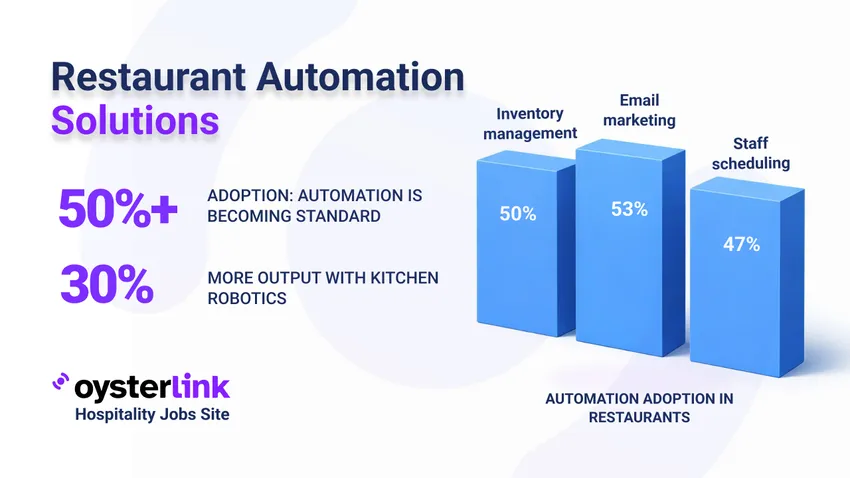
A prime example is White Castle’s Flippy 2, which can fry up to 60 baskets of fries per hour — 30% more than human workers.
This allows staff to focus on guest interactions and creative culinary tasks.
Learn more about Flippy 2 by watching the video below:
The advantages of using kitchen robots are clear: They create safer work environments by handling hazardous duties and significantly boost efficiency.
They also reduce food waste through precise portioning, leading to meaningful cost savings.



The Fastest Growing
Restaurant & Hospitality Job Platform
Looking for top paid jobs? Or Hiring for your business?
2. Digital Menus and Ordering Systems
In an age where customers expect speed and convenience, digital menus and self-ordering kiosks are becoming the norm.
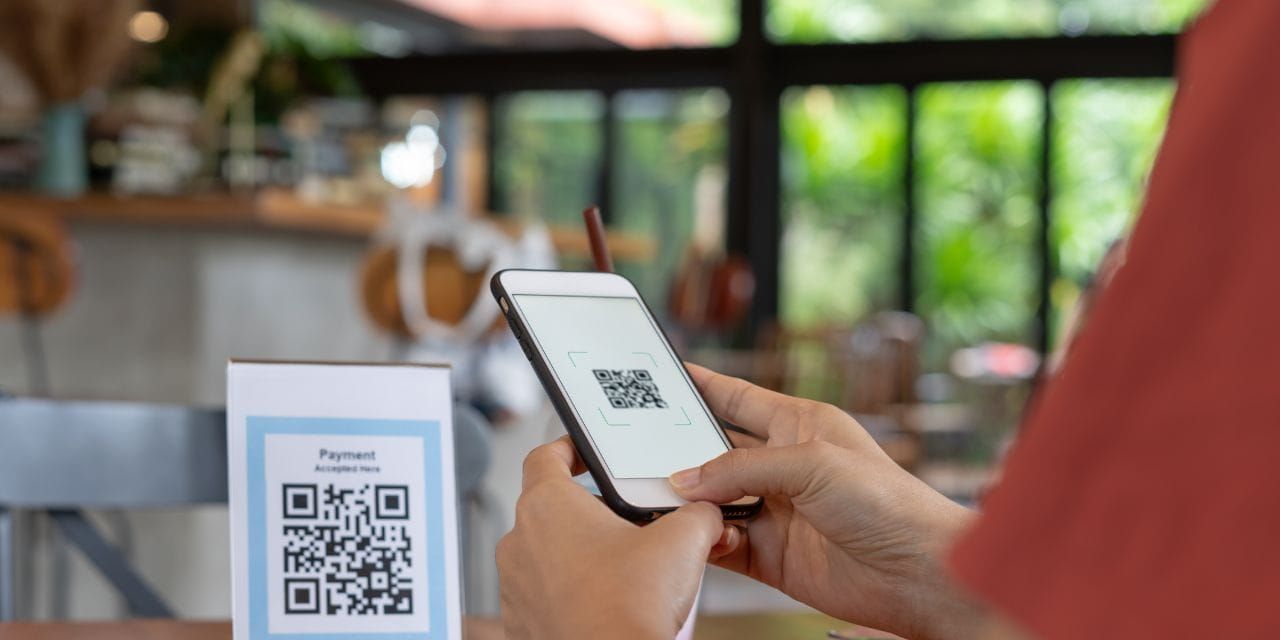
QR codes are increasingly used to give customers easy access to digital menus, allowing them to place orders directly from their phones.
This not only speeds up the ordering process but also reduces reliance on Servers for basic tasks.
In a busy restaurant, this means fewer mistakes and faster service. For customers, it provides a contactless, efficient and more enjoyable dining experience.
In addition to streamlining the ordering process, digital menus can easily be updated with specials, new items or nutritional information.
This makes it easier to manage your menu and communicate changes to your customers in real time.
3. AI-Powered Inventory Management
Inventory management is one of the most tedious parts of running a restaurant, but automation is making it much more manageable.
By implementing AI-powered systems, you can track stock levels in real time, predict demand and automatically reorder items when they’re running low.
No more guessing how much of a certain ingredient you’ll need or manually counting stock.
This shift toward automation is already well underway. Industry data shows that 50% of restaurateurs have automated their inventory management, making it one of the most widely adopted automation solutions in the restaurant industry.
Automated inventory management helps optimize purchasing decisions, reduce food waste and ensure that you never run out of key ingredients.
These systems can even adjust your orders based on sales trends, so you’re always prepared for busy times.
AI-powered inventory management frees up valuable time for your staff and allows them to focus on providing better service rather than worrying about whether you have enough flour for tomorrow’s orders.
Rosie's Family Restaurant implemented the FoodMetrics system to predict food needs based on past sales, weather and local events. It tracks supplies in real-time and automates orders, requiring only computers and phones to operate. After using the system, Rosie's saw a 63% reduction in food waste, saving about $750 each week.
4. Kitchen Display Systems (KDS)
Communication between the front-of-house and kitchen staff is vital to the smooth operation of any restaurant.
Kitchen Display Systems (KDS) solve this issue by providing real-time order processing, helping the kitchen prioritize tasks and reduce mistakes.
As soon as an order is placed, it appears on the KDS in the kitchen. This allows kitchen staff to focus on preparing the right dishes at the right time. With KDS, you eliminate the need for paper tickets, which can be lost or misread, and help ensure that orders are fulfilled quickly and accurately.
Play the video below to see how a KDS works.
5. Staff Management Software
Staff management software simplifies scheduling, performance tracking and training.
Automated systems save Restaurant Managers from 10 to 15 hours per month, improve morale through transparent and flexible scheduling and provide consistent training across teams.
Features like mobile schedule management and real-time updates ensure restaurants maintain optimal staffing levels, even during unexpected demand spikes.
Some of the most popular staff management software tools widely used in the restaurant industry include:
- 7shifts: A restaurant-focused tool known for its easy interface, strong scheduling features and built-in labor cost tracking.
- Deputy: An intuitive workforce management platform with automated scheduling, real-time updates and mobile access.
- When I Work: A simple, mobile-friendly tool for scheduling, time tracking and team communication.
6. Delivery Robots
Autonomous delivery systems are becoming a game-changer in restaurant automation, enhancing operational efficiency while elevating customer satisfaction.
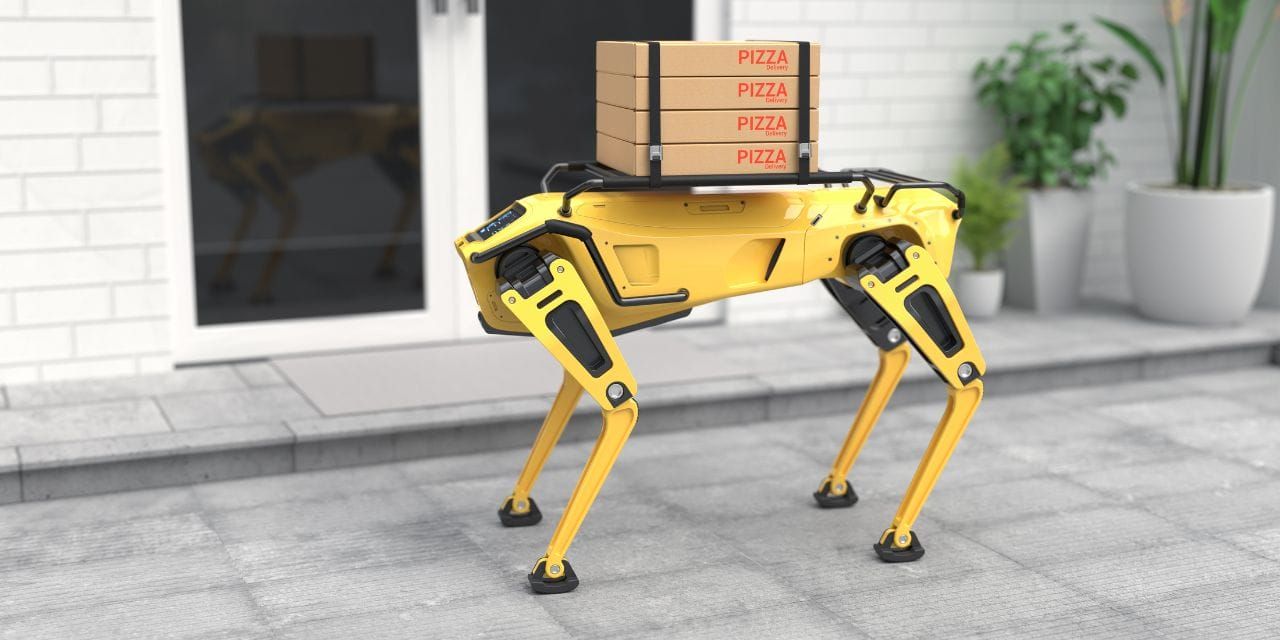
These robots are designed to transport food from kitchens to tables or even deliver takeout orders to customers’ doorsteps.
By automating the delivery process, restaurants can significantly speed up service, reduce errors and meet the growing demand for convenience.
For example, McDonald’s has implemented delivery robots in select locations where Pudu Robotics’ BellaBot assists in table service.
This innovation allows human staff to focus on more dynamic tasks, improving the overall dining experience.
Check out the following video to learn more about the BellaBot:
7. Automated Quality Control
Automated quality control systems utilize IoT (Internet of Things) sensors and AI to monitor critical factors like temperature, humidity and cooking times in real time, ensuring food safety and consistency.
These systems send instant alerts if there are deviations, such as temperature fluctuations, preventing spoilage or contamination.
By continuously tracking data, automated systems help maintain HACCP (Hazard Analysis and Critical Control Points) compliance and reduce the need for manual checks, making audits easier and more accurate.

Let’s say a restaurant is using an automated quality control system to ensure food safety during food preparation.
The system is equipped with IoT sensors that monitor the temperature of cooking equipment, like grills and ovens.
For example, when grilling chicken, the system tracks the cooking temperature in real time.
If the grill's temperature deviates from the desired range — say, it gets too high or too low — the system sends an immediate alert to the kitchen staff.
8. Customer Data Analytics
Customer data analytics platforms help restaurants understand guest preferences by tracking order history, peak dining times and responses to promotions.
By analyzing these data, restaurants can offer personalized service and marketing that help improve customer satisfaction and loyalty.
Examples of such offerings and initiatives include customized menu suggestions or targeted promotions.
Some popular platforms that offer customer data analytics for restaurants include Toast, Square for Restaurants and SevenRooms.
These platforms collect and analyze data from customer interactions, reservations and ordering patterns to provide insights into guest preferences.
Streamlining Operations and Hiring With Automation
In a world that’s moving toward efficiency and convenience, embracing automation isn’t just about keeping up with the times — it’s about getting ahead of the competition.
Whether you're looking to speed up service, reduce costs or improve customer satisfaction, restaurant automation offers the solutions you need.
But automation doesn’t just stop at operations — it can revolutionize your hiring process as well.
With OysterLink, the leading job board and platform for the restaurant industry, hiring can be automated too.
OysterLink offers a streamlined, efficient way to find top talent with its advanced job posting tool.
The Fastest Growing
Restaurant & Hospitality Job Platform
Looking for top paid jobs? Or Hiring for your business?

Written by Sasha Vidakovic
Sasha is an experienced writer and editor with over eight years in the industry. Holding a master’s degree in English and Russian, she brings both linguistic expertise and creativity to her role at OysterLink. When she's not working, she enjoys exploring new destinations, with travel being a key part of both her personal and professional growth.



Loading comments...