


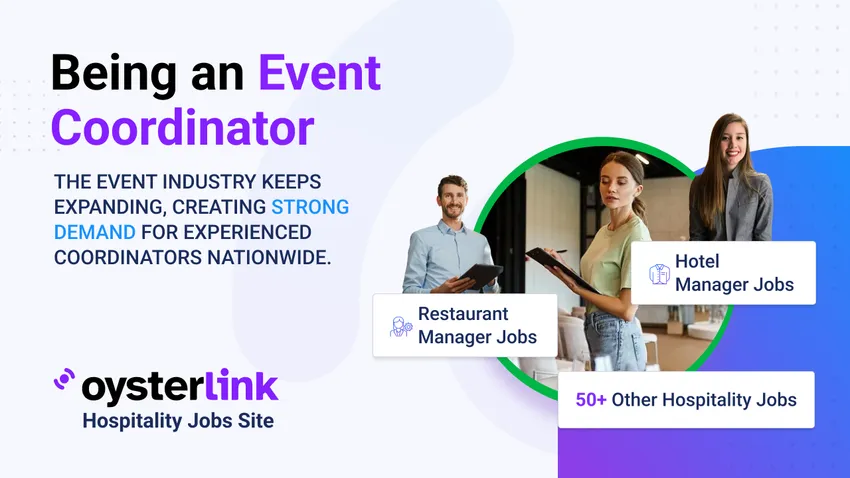

Being an Event Coordinator isn’t your typical nine-to-five — it’s part logistics, part creativity, and part controlled chaos.
In this article, we’ll break down the real pros and cons of being an Event Coordinator so you can decide if this fast-paced career is the right fit for you.

Who Is an Event Coordinator?
An Event Coordinator is a professional responsible for planning, organizing, and managing all aspects of events.
Event Cooridinators act as the bridge between clients, vendors, and venues, ensuring that every detail runs smoothly.
As you can see in the graph above, the market is expected to only continue growing.



The Fastest Growing
Restaurant & Hospitality Job Platform
Looking for top paid jobs? Or Hiring for your business?
Pros of Being an Event Coordinator
Below, we’ll explore the key benefits of working as an Event Coordinator, from career flexibility to creative opportunities and industry growth.
1. Exciting and Creative Work Environment
Event Coordinators bring ideas to life, making this career perfect for individuals who enjoy:
- Designing unique event themes and experiences
- Choosing décor, entertainment, and catering options
- Problem-solving to create unforgettable events
2. Variety in Daily Tasks and Work Settings
Unlike desk jobs with repetitive tasks, an Event Coordinator’s workday involves different challenges and projects. Responsibilities often include:
- Meeting with clients to discuss event goals
- Visiting venues and coordinating logistics
- Managing vendors, contracts, and event timelines
- Supervising event setup and execution
3. Strong Demand and Career Growth Opportunities
The event planning industry continues to grow, with companies, nonprofits, and individuals constantly needing professional coordinators to organize large gatherings. Career paths include:
- Corporate event planning (conferences, networking events, company parties)
- Wedding and private event planning (birthdays, anniversaries, reunions)
- Hospitality and tourism industry events
- Nonprofit and fundraising event management
With the right experience and networking skills, Event Coordinators can move into event management, director-level roles, or even start their own event planning business.
4. Opportunities for Travel and Networking
Many events take place in different cities, countries, or exclusive venues, giving Event Coordinators a chance to travel while working.
Additionally, planners interact with:
- Top executives and corporate clients
- High-profile vendors and hospitality professionals
- Celebrities, influencers, or keynote speakers
5. High Job Satisfaction and Seeing Your Work in Action
Few careers offer the instant gratification of seeing a successful event come to life. Event Coordinators witness:
- Guests enjoying the experience
- Clients expressing gratitude for a well-executed event
- The impact of their hard work and attention to detail
6. Flexible Career Options and Self-Employment Opportunities
Event Coordinators can work for corporations, hotels, event agencies, nonprofits, or become independent consultants. Many professionals launch their own event planning businesses, allowing them to:
- Work with a diverse range of clients
- Set their own schedules
- Charge premium rates for specialized event planning services
The Fastest Growing
Restaurant & Hospitality Job Platform
Looking for top paid jobs? Or Hiring for your business?
Cons of Being an Event Coordinator
While being an Event Coordinator comes with many rewards, it also presents challenges such as high-pressure deadlines, long hours, and demanding clients.
1. High-Stress and Fast-Paced Work Environment
Event planning is one of the most stressful careers, requiring:
- Strict attention to detail to avoid logistical issues
- Handling last-minute problems (vendor cancellations, weather changes, technical failures)
- Managing multiple events and deadlines simultaneously
2. Long and Unpredictable Hours
Event Coordinators rarely work a standard 9-to-5 schedule. Instead, they:
- Work nights, weekends, and holidays when events take place
- Spend long hours on-site managing event logistics
- Handle last-minute client requests, sometimes at odd hours
3. Physically Demanding Work
While the job isn’t physically intense, it does require:
- Standing for long hours at event venues
- Overseeing event setup and breakdown
- Carrying supplies, managing décor, or assisting vendors
4. Dealing With Difficult Clients and High Expectations
Many clients expect perfection, and managing their expectations can be challenging. Common issues include:
- Unrealistic budgets vs. event goals
- Last-minute changes or indecisiveness
- Demanding clients who are difficult to please
5. Income Can Be Inconsistent in Freelance Roles
While salaried Event Coordinators at corporations or hotels have stable pay, freelance planners may experience:
- Seasonal income fluctuations (especially in wedding planning)
- Difficulty finding high-paying clients when starting out
- Unpaid time spent marketing, networking, and securing clients
6. Managing Vendor Relationships and Contracts
Event Coordinators work with multiple vendors, including:
- Caterers
- Florists
- Entertainers
- Audio/visual technicians
- Transportation providers
Any mistake by a vendor can affect the entire event, meaning planners must:
- Double-check contracts and delivery schedules
- Handle conflicts if a vendor fails to meet expectations
- Find last-minute replacements in case of cancellations
This adds extra stress and requires excellent negotiation and organizational skills.
Check Our Career Growth Tools


Event Coordinator Salary
Event Coordinators in the United States earn competitive pay that varies by location, experience, and employment type.
- Hourly wage: $26.14 per hour
- Weekly pay: $1,045.60
- Monthly salary: $4,530.17
- Average annual salary (full-time): $54,362
Event Coordinators working on large-scale or high-profile events often receive bonuses or commissions based on event size, client satisfaction, or company performance.
Top-Paying States for Event Coordinators
Event Coordinator salaries vary significantly across the United States. The highest-paying states tend to be those with larger event industries and higher living costs:
- Washington – $55,523 per year
- California – $54,487 per year
- New York – $53,585 per year
- Hawaii – $53,307 per year
- New Jersey – $52,890 per year
Conclusion: Is Being an Event Coordinator Worth It?
The answer depends on your passion for event planning, ability to handle stress, and career goals.
If you love organizing, networking, and creating memorable experiences, this role can be incredibly rewarding. The opportunities for travel, creativity, and career growth make it an exciting field.
However, if you prefer a structured work schedule, less client pressure, and predictable income, event planning may not be the best fit.
For those willing to work hard and build a strong network, becoming an Event Coordinator can be a fulfilling and lucrative career.


![11 Pros and Cons of Being a Pastry Chef in [year]](/content/spotlight/28d415b7-2c06-4ad2-aaa8-0e496fb422f7/poster/1758793953397-pros-and-cons-of-being-a-pastry-chef-featured-340x191.webp)
Loading comments...