



A Beverage Director oversees a venue’s entire drink program, combining creativity, leadership and business strategy.
This role offers high earning potential and career growth — but also comes with challenges that require industry knowledge and strong management skills.

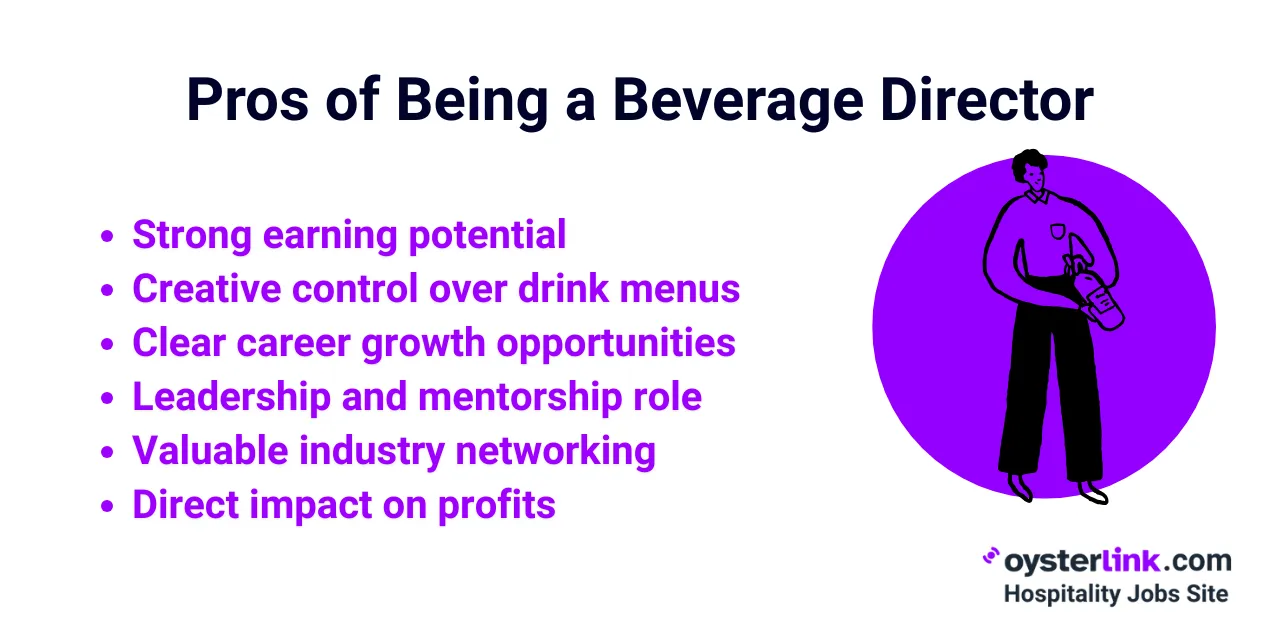
Pros of Being a Beverage Director
Below, we’ll explore the key benefits of working as a Beverage Director, including high earning potential, creative control and career stability.
1. Strong earning potential and performance-based bonuses
Beverage Directors earn competitive salaries, with additional incentives based on sales performance.
Average salaries include:
- Casual dining or chain restaurants: $55,000–$80,000 per year
- Fine dining restaurants and high-end bars: $80,000–$120,000 per year
- Luxury hotels, resorts, and corporate beverage programs: $120,000–$180,000 per year
Bonuses may be awarded for meeting beverage sales targets, reducing costs, and introducing successful new drink programs.
2. Creative control over the beverage program
Unlike Bartenders who follow set recipes, Beverage Directors design and curate entire drink menus, including:
- Seasonal cocktail lists
- Wine and spirits pairings for food menus
- Non-alcoholic and specialty beverage offerings
For those with a passion for mixology, wine and innovative drink trends, this role offers creative freedom and the ability to influence the guest experience.



The Fastest Growing
Restaurant & Hospitality Job Platform
Looking for top paid jobs? Or Hiring for your business?
3. Opportunities for career growth and prestige
Beverage Directors often work in high-end hospitality settings, such as:
- Michelin-starred restaurants
- Five-star hotels and resorts
- Major event venues and stadiums
With experience, many Beverage Directors move into corporate beverage consulting, open their own bars, or become sought-after industry experts.
4. Leadership and mentorship role
Beverage Directors train and mentor Bartenders and bar managers, helping them improve their:
- Cocktail-making skills and mixology techniques
- Wine knowledge and pairing expertise
- Customer service and upselling strategies
For those who enjoy teaching and leadership, this role provides the opportunity to shape a team and improve overall beverage service.
5. Networking with industry professionals
Beverage Directors build strong relationships with:
- Liquor distributors and brand representatives
- Celebrity Chefs, Sommeliers, and restaurant owners
- Beverage industry leaders at trade shows and tastings
This networking can lead to better product pricing, sponsorship opportunities, and career advancements in the beverage industry.
6. Ability to influence profits and business success
An effective Beverage Director can significantly increase a restaurant or hotel’s revenue by:
- Developing high-margin drink programs
- Training staff to upsell premium wines and spirits
- Reducing waste and optimizing inventory management
For those who enjoy business strategy and problem-solving, this role offers a direct impact on a venue’s financial success.

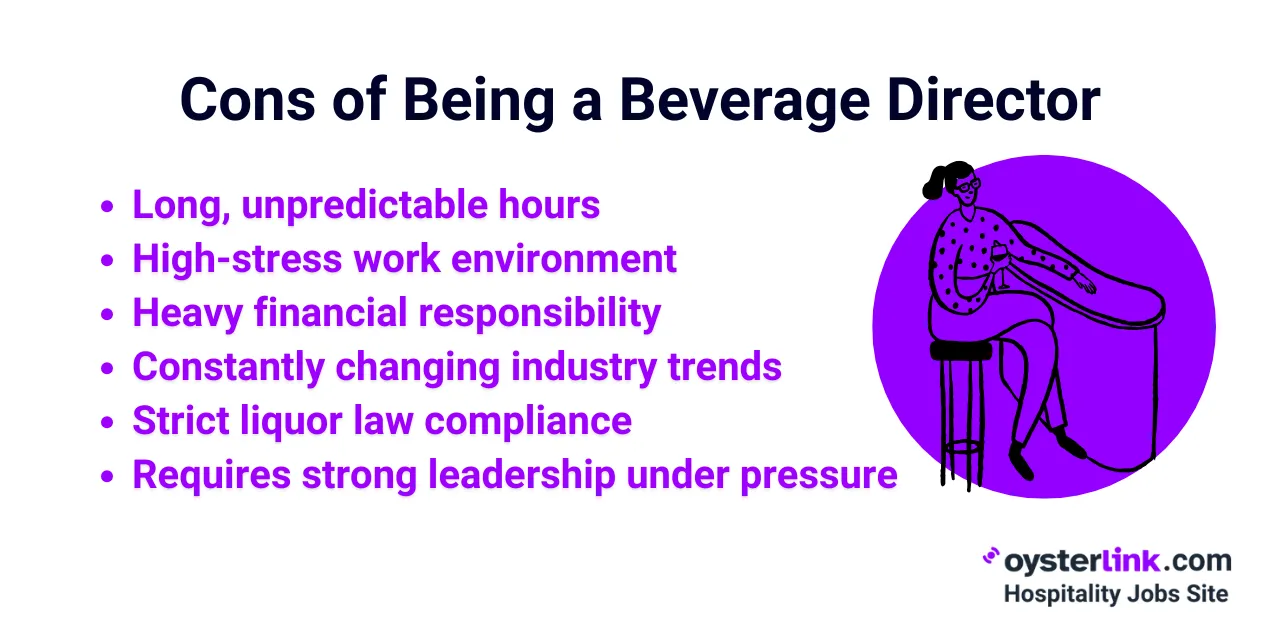
Cons of Being a Beverage Director
While the role has many benefits, it also comes with challenges, such as long hours, high responsibility and financial pressure.
Here’s a video sharing some challenges a Food and Beverage Director often faces in their day-to-day role.

1. Long and unpredictable hours
Beverage Directors often work late nights, weekends, and holidays, especially in:
- High-volume bars and nightclubs
- Fine dining restaurants with extensive wine programs
- Hotels and resorts with round-the-clock beverage service
The job may require early morning meetings with vendors and late-night quality control shifts, making work-life balance difficult.
2. High-stress and fast-paced work environment
Managing a beverage program means dealing with:
- Staff shortages or Bartender call-outs
- Customer complaints about drink quality or service
- Unpredictable supply chain issues affecting product availability
For those who don’t handle stress well, the pressure to maintain smooth operations and high service standards can be overwhelming.
Check Our Career Growth Tools


3. Financial responsibility and cost management
Beverage Directors are accountable for the profitability of the bar program, requiring expertise in:
- Controlling liquor costs and minimizing waste
- Negotiating contracts with distributors for better pricing
- Ensuring proper portion control and pricing strategy
If sales decline or costs rise, the Beverage Director may be held responsible for financial losses.
4. Constantly adapting to industry trends
Beverage trends change rapidly, and successful Beverage Directors must:
- Stay updated on new mixology techniques, wine regions, and spirits innovations
- Experiment with trendy cocktails and non-alcoholic beverage offerings
- Continuously update menus to keep guests interested and engaged
For those who prefer a predictable and stable job, the fast-evolving nature of the beverage industry may feel overwhelming.
5. Enforcing liquor laws and compliance
Beverage Directors must ensure strict adherence to:
- Alcohol serving laws and responsible service policies
- Proper bartender training and certification requirements
- Health and safety inspections related to beverage storage and preparation
Failure to comply with regulations can result in fines, license suspensions, or legal issues, adding extra pressure to the role.
6. Requires strong leadership and conflict resolution skills
Managing a bar team comes with challenges, including:
- Handling conflicts between bartenders, servers, and managers
- Enforcing rules on portion control and alcohol safety
- Dealing with intoxicated or unruly guests in a professional manner
For those who struggle with staff management or high-pressure situations, this job can be demanding and stressful.
What a Beverage Director Does
A Beverage Director oversees the entire beverage program of a restaurant, bar or hospitality group. Their duties include designing drink menus, sourcing ingredients, negotiating with vendors and managing inventory to keep costs under control.
They also train bartenders and servers, ensure consistency and quality across all beverages and maintain compliance with alcohol regulations.
This role blends creativity with business management, making it a key part of a venue’s overall guest experience.
A YouTube video featuring a Food and Beverage Director at a retirement community also offers a real-world perspective, showing what the role looks like in a senior living setting and what he enjoys most about working there.

Who Should Consider Becoming a Beverage Director
This role is ideal for those who have a strong passion for beverages — whether wine, cocktails, spirits or coffee—and enjoy combining creativity with operational leadership.
Successful Beverage Directors tend to be organized, detail-oriented and comfortable overseeing a team.
It’s also a great fit for individuals who enjoy analyzing sales, managing budgets and shaping a venue’s beverage identity.
For people who thrive in high-responsibility roles and want to influence a restaurant’s brand, this position can be deeply rewarding.
Is Being a Beverage Director Worth It?
Becoming a Beverage Director is a great career choice for those who:
- Have a passion for wine, spirits, and mixology
- Enjoy leadership, business strategy, and staff development
- Thrive in fast-paced, high-energy hospitality environments
- Want a high-paying career with opportunities for advancement
However, this role requires long hours, financial management skills, and adaptability.
If you prefer a more structured schedule or hands-on Bartending role, working as a Bar Manager, Sommelier, or Private Beverage Consultant may be a better fit.
For those looking to make a lasting impact on the beverage industry, being a Beverage Director offers strong career growth, creativity, and financial rewards.
Being a Beverage Director: Conclusion
Becoming a Beverage Director can be a highly rewarding career for professionals passionate about mixology, wine, and hospitality operations.
With strong earning potential, creative freedom, and opportunities for advancement, this role appeals to those who thrive in fast-paced environments and enjoy leading teams.
However, it also comes with high expectations — including long hours, financial accountability, and the need to stay current with evolving trends and regulations.
If you’re ready to balance creativity with business strategy and leadership, a Beverage Director role could be your ideal next step in the hospitality industry.
For those seeking more stability or fewer responsibilities, exploring roles like Bar Manager, Sommelier, or Beverage Consultant may offer a better fit.





Loading comments...