




Backwaiter roles are often overlooked, but they’re the backbone of smooth restaurant operations.
Understanding the pros and cons of being a Backwaiter can help you decide if this fast-paced, entry-level position aligns with your career goals.

Pros of Being a Backwaiter
Below, we’ll explore the key benefits of working as a Backwaiter, including job accessibility, teamwork and career growth opportunities.
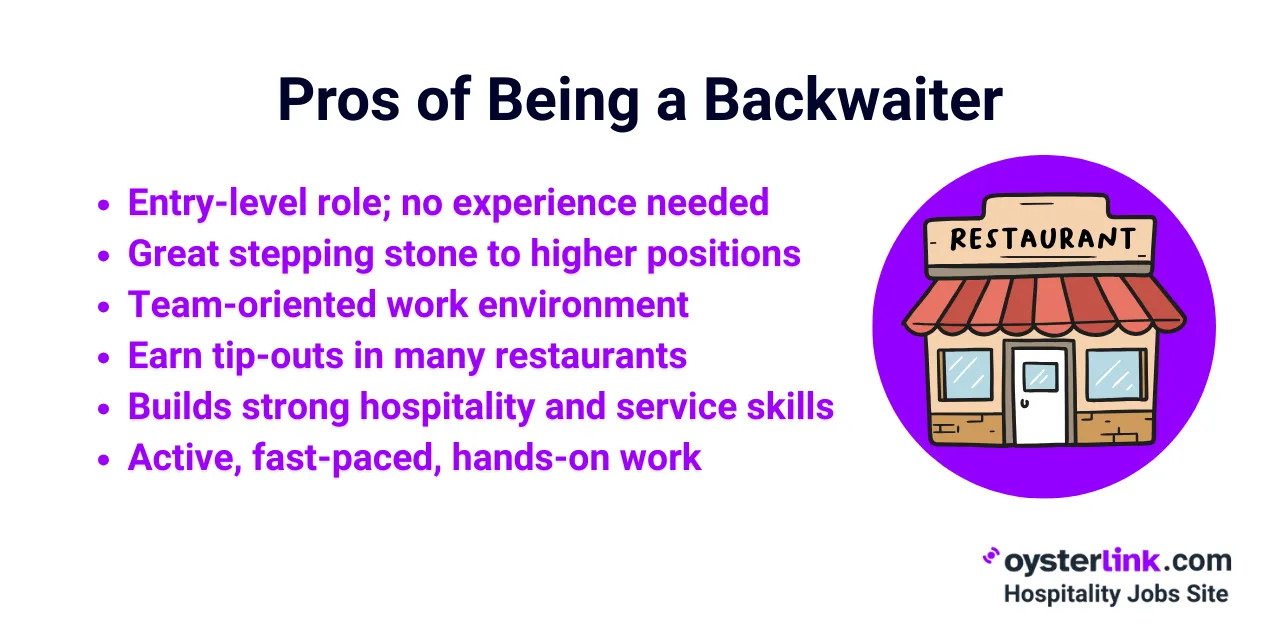
1. Entry-level position with minimal experience required
Most restaurants do not require prior experience for Backwaiter positions, making it an excellent way to enter the hospitality industry.
This job is ideal for:
- High school or college students looking for part-time work
- Individuals seeking their first restaurant job
- People wanting to gain experience before becoming a Server or Bartender
Many fine-dining establishments train Backwaiters on the job, so it’s a great way to learn restaurant service basics without formal education.
2. Great stepping stone to higher positions
Backwaiters gain valuable front-of-house experience, which can lead to promotions in:
- Server (Waiter/Waitress) – taking customer orders and earning higher tips
- Bartender – mixing and serving drinks, often with higher wages
- Sommelier – for those interested in wine and beverage service
- Restaurant Management – for those wanting to oversee service operations
For those interested in long-term hospitality careers, starting as a Backwaiter provides foundational experience that opens doors to higher-paying roles.
3. Team-oriented work environment
Backwaiters work closely with:
- Servers and Bartenders to ensure smooth service
- Kitchen staff to deliver food quickly and accurately
- Management to maintain guest satisfaction
This team-based role helps develop communication skills, multitasking abilities and efficiency under pressure, which are valuable in any hospitality job.



The Fastest Growing
Restaurant & Hospitality Job Platform
Looking for top paid jobs? Or Hiring for your business?
4. Earn tips and potentially increase income over time
While Backwaiters don’t usually receive direct tips from customers, they often receive a percentage of the server’s tips (known as "tip-outs").
Depending on the restaurant and its tipping structure, this can add $50–$150 extra per shift in high-end establishments.
In fine dining restaurants, tip-outs can be substantial, making this role financially rewarding despite being an entry-level position.
5. Develops strong customer service and hospitality skills
Backwaiters learn the fundamentals of hospitality, including:
- Guest interaction and etiquette
- Proper table setting and serving techniques
- How to anticipate customer needs before being asked
These skills are highly transferable to future jobs in luxury hotels, event planning, catering and high-end dining.
6. Physically active work (No Sitting at a Desk)
For those who dislike desk jobs, being a Backwaiter offers constant movement and activity. Daily tasks include:
- Carrying trays and clearing tables
- Refilling drinks and assisting with service
- Running food from the kitchen to tables
This fast-paced role keeps you engaged and active, making it ideal for people who enjoy hands-on work.
See also: Backwaiter Interview Questions
Cons of Being a Backwaiter
While this role offers many benefits, it also comes with challenges, such as low starting pay, physically demanding work and limited direct customer interaction.
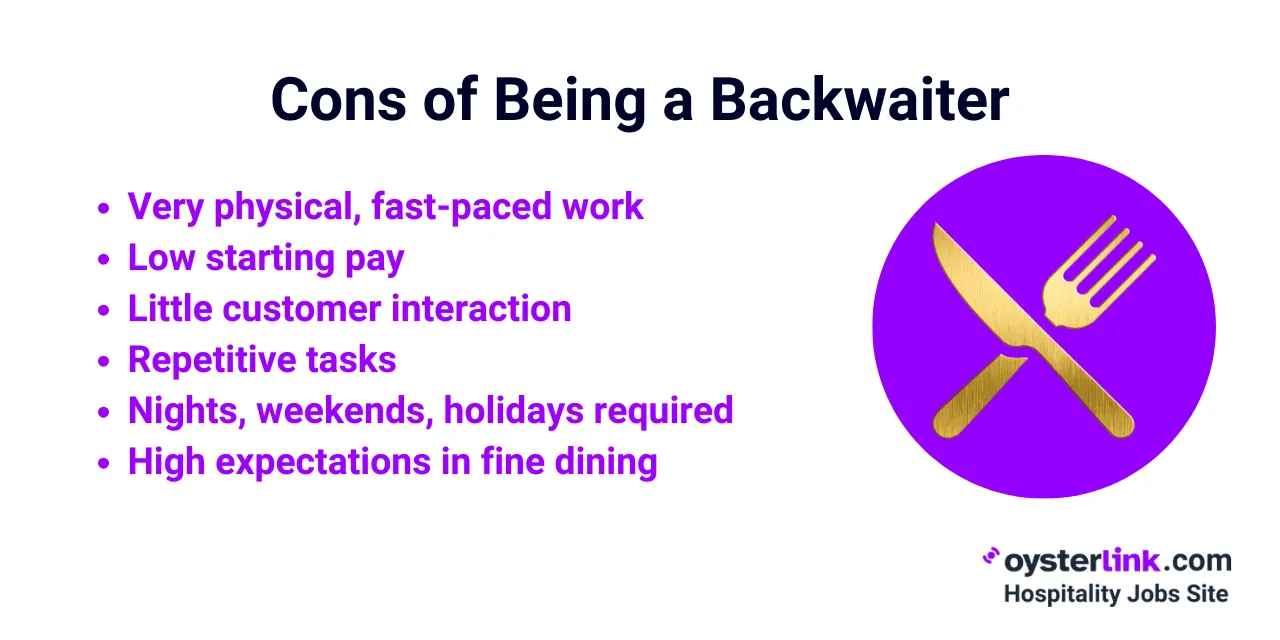
1. Physically demanding and fast-paced
Backwaiters are constantly on their feet, performing tasks such as:
- Lifting heavy trays of food and drinks
- Clearing and resetting tables multiple times per shift
- Walking long distances in large restaurants
For those not used to physical labor, this job can be exhausting, especially during long shifts or busy dinner rushes.
2. Low starting pay compared to Servers
Backwaiters typically earn minimum wage or slightly above, with lower tip-outs than Servers.
The earning potential is lower compared to:
- Waiters (who get full tips)
- Bartenders (who receive higher tip percentages)
However, with experience and promotions, pay increases as Backwaiters move into Server roles.
3. Limited direct customer interaction
Unlike Servers, Backwaiters have minimal guest engagement, mainly focusing on:
- Clearing tables and refilling drinks
- Bringing food to tables without directly taking orders
- Supporting the Server rather than leading service
For those who enjoy customer service and building relationships with guests, this role may feel less engaging.

4. Can be repetitive work
Backwaiters often perform the same tasks repeatedly, including:
- Wiping down tables and resetting silverware
- Carrying dishes back and forth between tables and the kitchen
- Refilling water glasses and condiments
For those who prefer variety in their work, the repetitive nature of the job may feel monotonous over time.
5. Requires late nights, weekends and holiday work
Since restaurants are busiest during evenings, weekends and holidays, Backwaiters often:
- Work late-night shifts, sometimes past midnight
- Miss out on weekend plans or holiday gatherings
- Have unpredictable scheduling, depending on restaurant traffic
For those seeking a traditional 9-to-5 job, the irregular work hours can be a drawback.
6. Higher expectations in fine dining establishments
While casual restaurants have relaxed service expectations, fine dining restaurants expect:
- Flawless table service and polished presentation
- Knowledge of wine pairings, menu details and luxury dining etiquette
- Professional demeanor and strict attention to detail
For those new to the industry, adjusting to these high standards can be stressful.
Check Our Career Growth Tools


What To Expect Day-to-Day as a Backwaiter
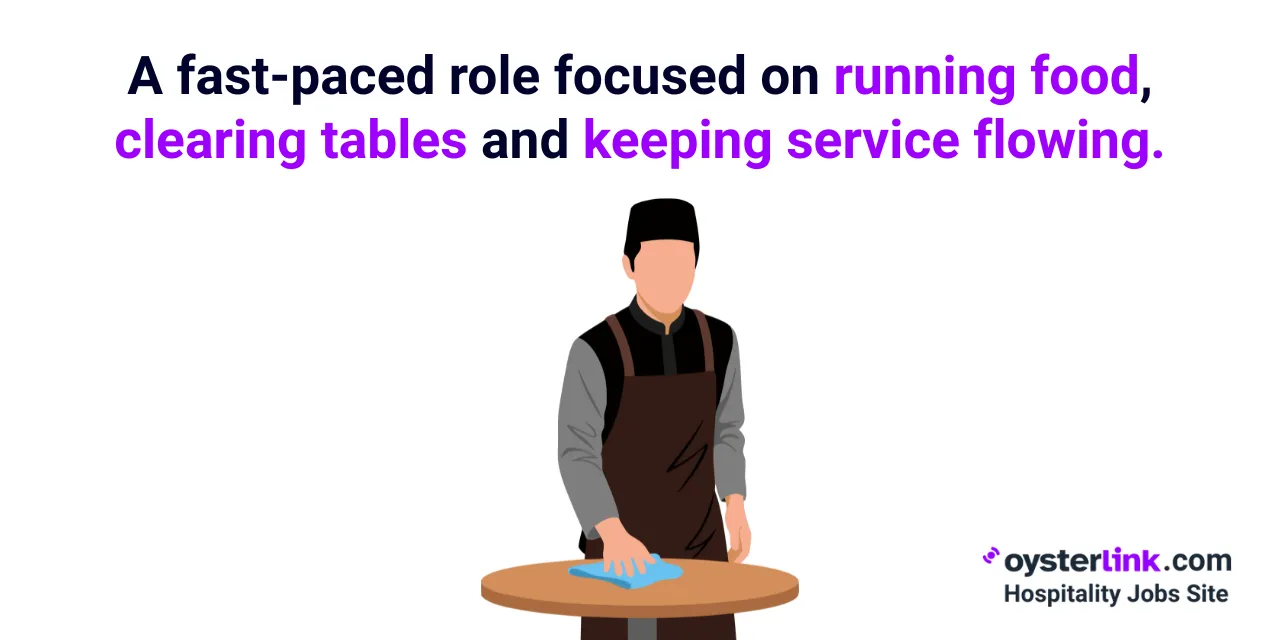
Backwaiters work in a fast-paced environment, supporting Servers by running food, clearing tables, refilling drinks and resetting sections throughout the shift. The role involves constant movement, teamwork and staying organized during busy service periods.
Who the Backwaiter Role Is Best For
This role is ideal for people who enjoy active work, thrive in team settings and want to gain hospitality experience without direct customer responsibility. It suits those who are detail-oriented, efficient and looking for a pathway to higher front-of-house positions.

Is Being a Backwaiter Worth It?
Becoming a Backwaiter is a great career choice for those who:
- Want to gain experience in the hospitality industry
- Enjoy teamwork and working in a fast-paced environment
- Plan to move up to a Server, Bartender or Restaurant Manager role
However, the role requires physical endurance, patience and a willingness to start at a lower pay level.
If you prefer direct guest interaction or higher wages from the start, working as a Host, Bartender or Server may be a better fit.
For individuals looking for a stepping stone into high-end restaurants or hospitality careers, being a Backwaiter is an excellent entry-level position with strong career growth potential.
Pros & Cons of Being a Backwaiter: Key Takeaways
Becoming a Backwaiter is an excellent starting point for those looking to enter the restaurant industry with little or no experience.
While the role offers lower initial pay compared to Servers, tip-outs can supplement income significantly — especially in fine dining settings.
Although customer interaction is limited, the position provides valuable front-of-house experience and a strong pathway to higher roles like Server, Bartender, or Manager.
However, it’s important to consider the trade-offs, including irregular hours, late-night shifts and a repetitive workload.
If you're motivated, team-oriented, and eager to grow in hospitality, working as a Backwaiter can be a smart and strategic first step in your career.



Loading comments...