



New York City Living-Wage Comparison: Key Takeaways
- Average Server salary in NYC is about $60,329 annually (~$29/hr), 8% above the national average.
- The living wage for a single adult in NYC is $33.31/hr, rising sharply with dependents.
- NYC’s minimum wage is $16.50/hr; tipped Servers receive $11/hr plus tips, expected to make up the difference.
New York City Servers earn above minimum wage yet often fall short of the living wage needed to cover essentials.
This article explores how server salaries align with NYC's high cost of living and living-wage benchmarks.

1. NYC Server Salaries Versus Living Wage
Servers in New York City generally earn about $60,329 annually, or roughly $29 per hour. This wage sits comfortably above the $16.50 minimum wage but remains below the living wage of $33.31 per hour for a single adult.
The salary spectrum varies widely — those in the 25th percentile make approximately $23 per hour, while the top 25% earn around $37 per hour. Despite these figures, the earnings gap remains substantial when compared to the cost of basics required for financial stability in NYC.
Check out our Server job description to understand roles that help meet business needs while addressing wage expectations.
2. Defining the Living Wage in New York City
The living wage represents the income necessary to cover essential living costs such as housing, food, transportation and healthcare without dependence on public assistance.
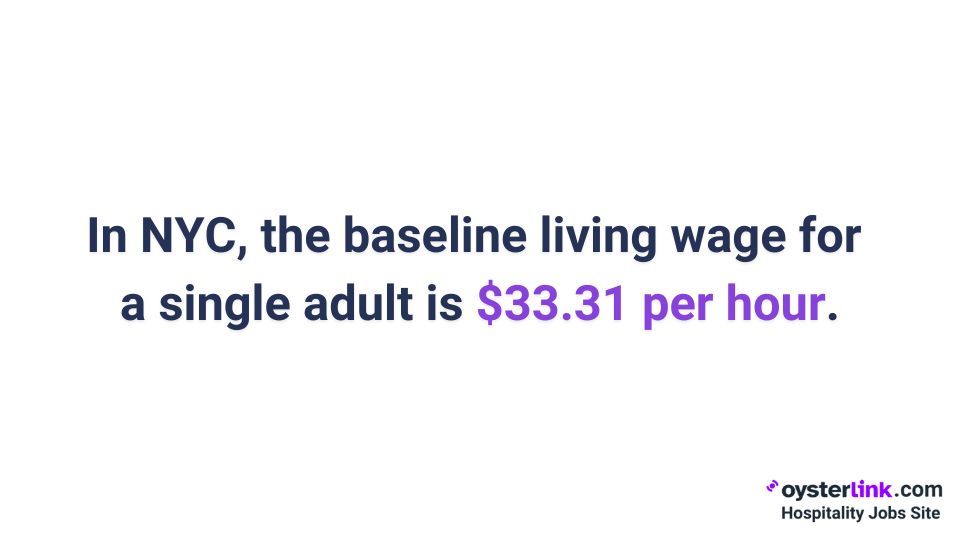
According to MIT’s living wage calculator, the baseline living wage for a single adult is $33.31 per hour. This escalates dramatically for family situations:
- Single adult with one child: $56.42/hr
- Single adult with two children: $71.80/hr
- Two working adults with two children: $38.27/hr per adult
These elevated requirements reflect New York City’s costly housing and living environment.
Employers can benefit from exploring cost of living in New York insights to make competitive compensation decisions.
3. Minimum Wage and Tipped Wage Context for Servers in NYC
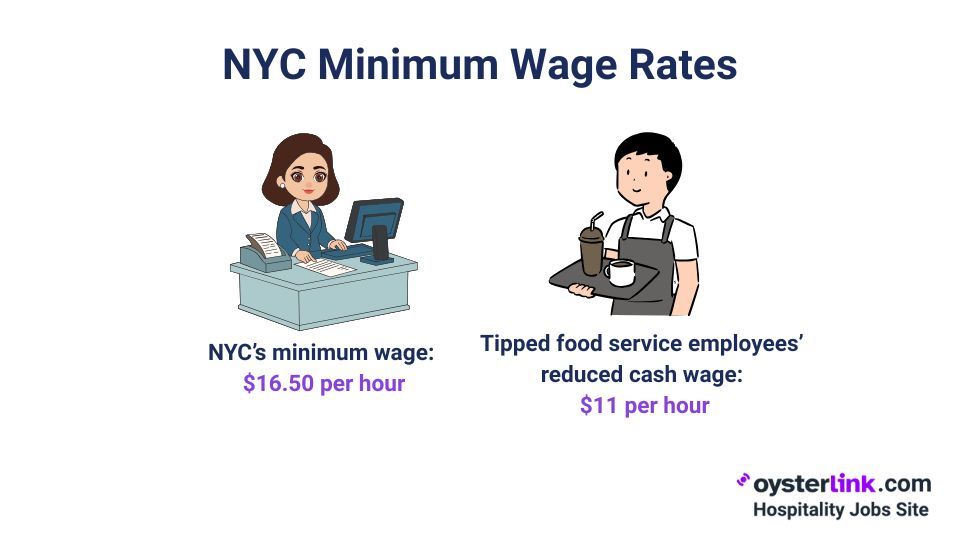
NYC’s minimum wage reached $16.50 per hour as of January 1, 2025. However, tipped food service employees receive a reduced cash wage of $11 per hour, with the expectation that tips will make up the difference to the minimum wage level.
This tipped wage structure can present financial instability, given fluctuating tip amounts and inconsistent work hours.
How Tip Earnings Affect a Server’s Take-Home Pay
Tips are a significant portion of a Server’s income, but the variability depends on numerous factors like shift times, restaurant type and economic conditions.
A consistent, reliable tip pool or individual tipping generosity is crucial for servers to approach or exceed the standard minimum wage.
Learn about how to hire Servers effectively and manage staffing challenges that affect wages.



The Fastest Growing
Restaurant & Hospitality Job Platform
Looking for top paid jobs? Or Hiring for your business?
4. Cost of Living Impacts on NYC Servers
New York City’s reputation for high living expenses is well-earned. Housing alone imposes a major financial strain; the 2024 median rent for a one-bedroom apartment in Manhattan was $4,443 monthly.
Combined with other necessary expenses — utilities, food, transportation and healthcare — this leaves many Servers with challenging budget constraints.
In essence, earning near the median Server salary may not provide sufficient disposable income for comfort or savings in NYC.
Employers facing these economic realities might consider our restaurant staff hiring strategies to improve recruitment and retention amid cost pressures.
5. The Economic Challenges Facing NYC Servers
The disparity between actual wages and living wages illustrates significant financial stress for Servers, especially those with dependents or relying solely on their Server income.
While salaries exceed federal and state minimum standards, this does not translate into economic security within NYC’s housing market and overall cost landscape.
Servers may need to augment income with secondary jobs, careful budgeting or subsidized housing, which can affect quality of life.
To better understand the career outlook for servers, see our Server salary overview and trends.

6. Strategies to Bridge the Living Wage Gap for Servers
Several measures could alleviate financial pressure on Servers in New York City:
- Enhanced tip pooling practices: Fairly distributing tips among front-of-house and support staff to increase stability.
- Employer wage supplements: Businesses voluntarily supplementing wages to better align with living wage benchmarks.
- Policy advocacy: Supporting legislation to raise minimum wages or provide housing assistance targeted at service workers.
- Financial literacy and support programs: Offering guidance on budgeting, savings and accessing benefits.
Explore our ultimate tip pooling guide to improve employer practices and staff income stability.
7. Useful Resources for Servers and Employers in NYC
For up-to-date information and support relating to wages and worker protections, consider these reliable sources:
- New York City Department of Consumer and Worker Protection: Living Wage Law Information
- New York State Department of Labor: Minimum Wage Information
- U.S. Department of Labor: Fair Labor Standards Act (FLSA)
Employers can also gain insights from our employer branding tips to attract and retain quality hospitality staff.
New York City Living-Wage Comparison: Conclusion
Although Servers in New York City earn salaries above federal and state minimum wage levels, these earnings typically fall short of the living wage required to comfortably cover the city's high costs.
This gap highlights the ongoing economic challenges faced by service workers trying to achieve financial stability in one of America's most expensive urban centers.
Meaningful progress will likely require coordinated efforts by employers, policymakers and community organizations to ensure wages better reflect the realities of NYC’s cost of living.
For restaurant owners looking for effective staff management, our spotlight on managing restaurant Servers offers valuable advice.




Loading comments...