



A letter of application is your chance to explain why you’re the right fit, not just what you’ve done.
When written well, it strengthens your resume, shows intent, and can move you closer to an interview.

What Is a Letter of Application?
A letter of application (also called a cover letter) is a one-page document sent with your resume to express interest in a job.
It introduces you, summarizes your background, and explains how your skills match the role.
Its goal is to persuade the employer to invite you for an interview. Despite mixed opinions, nearly half of professionals still consider application letters relevant today.
Source: Resume Genious
A recent LinkedIn survey found that 43% of job seekers believe that cover letter is still relevant.
How To Write an Application Letter in 9 Steps
- Understand its culture, values, and recent achievements to align your letter.
- Include your contact info, the date, and the recipient’s details.
- Address the hiring manager by name or use a professional default.
- State the role and why you’re a strong candidate.
- Highlight relevant skills and achievements with tangible results.
- Emphasize abilities that apply if switching roles or industries.
- Show measurable results to back up your qualifications.
- Explain why the job and company excite you with specific examples.
- Reiterate interest, thank them, and invite further contact.



The Fastest Growing
Restaurant & Hospitality Job Platform
Looking for top paid jobs? Or Hiring for your business?
Job Application Letter Examples
Below are three examples of application letters tailored to different roles and industries.
General Example
Below is a sample application letter for a Marketing Associate position.
To Whom It May Concern,
I’m applying for the [Job Title] role at [Company Name]. I have [X years] of experience in [field/skill area] and focus on [main strength or outcome].
At [Previous Company], I [key responsibility or achievement], resulting in [measurable result or impact].
I’m interested in [Company Name] because [short reason tied to values, work, or industry], and I’d welcome the chance to contribute.
Sincerely,
[Your Name]
Hospitality-Specific Example
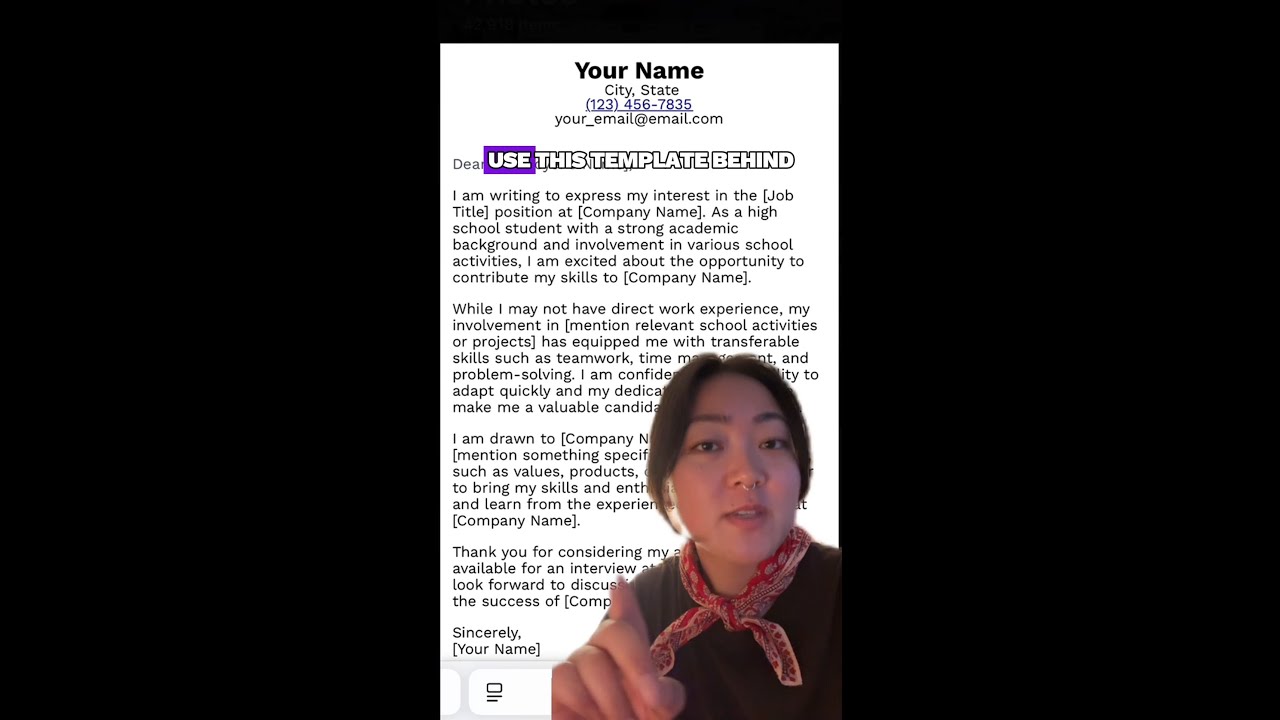
This sample letter below demonstrates an entry-level application for a Front Desk Associate position.
Dear [Hiring Manager’s Name],
I’m applying for the Front Desk Associate position at [Hotel Name]. With [X months/years] of experience in [front desk/reception/customer service], I’m focused on delivering friendly, efficient guest experiences.
In my role at [Previous Company], I handled [check-ins/check-outs, guest requests, reservations] and successfully [key achievement—problem solved, praise received, peak-period support]. I’m known for staying calm, organized, and professional under pressure.
I’m excited about [Hotel Name] because [brief reason tied to service, brand, or values], and I’d love to contribute to your guest-first approach.
Sincerely,
[Your Name]
Example for Managerial-Level Roles
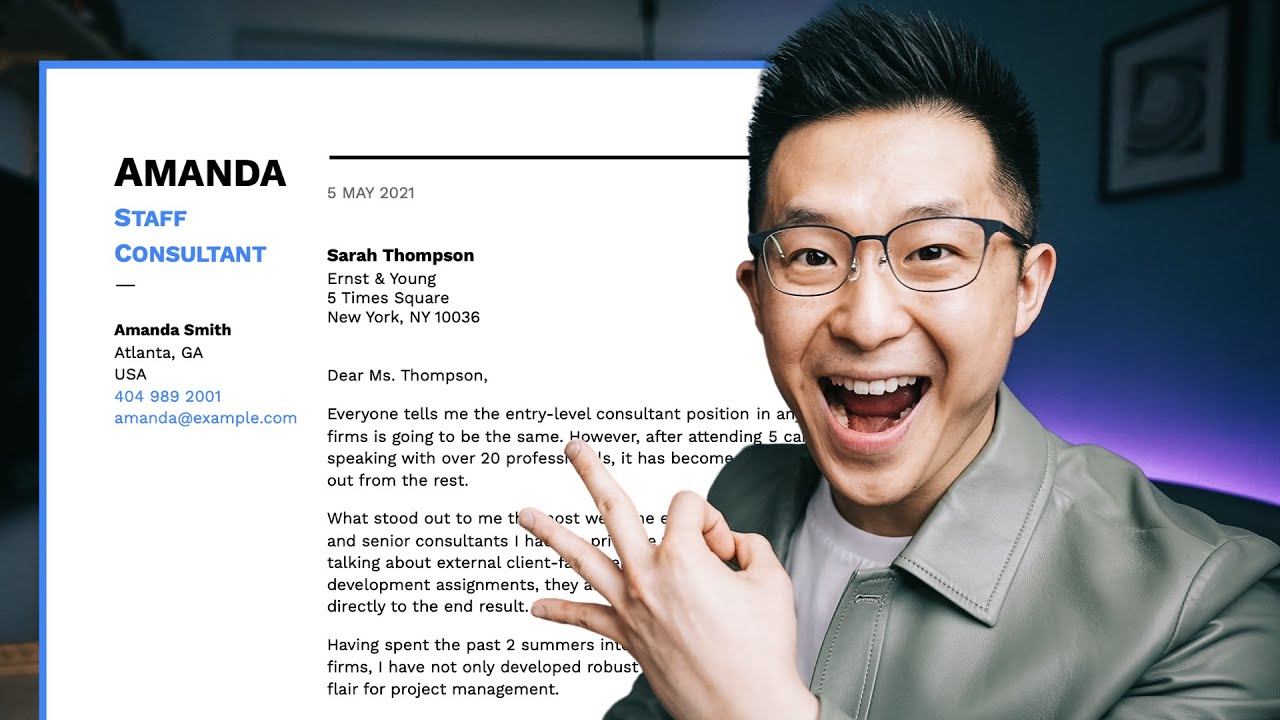
In this example, the applicant is applying for a managerial-level position, specifically a Restaurant Manager role.
Dear [Hiring Manager’s Name],
I’m applying for the [Job Title] role at [Company Name]. With [X years] of experience in [industry/management area], I’ve led teams to improve [key results: operations, sales, guest satisfaction, etc.].
In my role as [Current/Previous Job Title] at [Company Name], I [major achievement #1] and [major achievement #2], resulting in [measurable outcome if possible].
I’m excited about [Company Name] because [reason tied to company values, culture, or goals] and would welcome the chance to contribute my leadership and experience.
Sincerely,
[Your Name]
Sending Your Job Application Letter
Here are some tips for submitting your application letter efficiently and professionally:
- Add a subject line
- Include properly labeled attachments
- Make sure to attach your CV or resume in an easily accessible format
- Follow submission guidelines
The Fastest Growing
Restaurant & Hospitality Job Platform
Looking for top paid jobs? Or Hiring for your business?
Common Mistakes to Avoid in Your Job Application Letter
When crafting your job application letter, it's essential to steer clear of common pitfalls that can undermine your chances:
- Tailor your application to each specific role and company.
- Your letter should complement your resume, not duplicate it.
- Instead of stating you're a "team player," provide an instance where your collaboration led to a successful project outcome.
- Strike a balance in your language. Being too formal can seem impersonal, while being too casual may come off as unprofessional.
- Always review your letter multiple times and consider having someone else proofread it.
Final Tips for Writing Your Application Letter
- Do your homework: Highlight only the most relevant skills and achievements.
- Keep it short: Limit the letter to one clear, one-page document.
- Format professionally: Use a readable font (11–12 pt), 1-inch margins, and clean spacing.
- Customize it: Tailor each letter to the role, job description, and company values.
- Proofread carefully: Fix typos, grammar issues, and generic wording before sending.
Check Our Career Growth Tools


Conclusion: Letter of Application
Your application letter isn’t a formality, it’s your first impression. A tailored, focused letter that highlights relevant skills and real enthusiasm can set you apart instantly.
Make every word count, show why you’re the right fit, and move one step closer to landing the job.
The Fastest Growing
Restaurant & Hospitality Job Platform
Looking for top paid jobs? Or Hiring for your business?


Loading comments...