


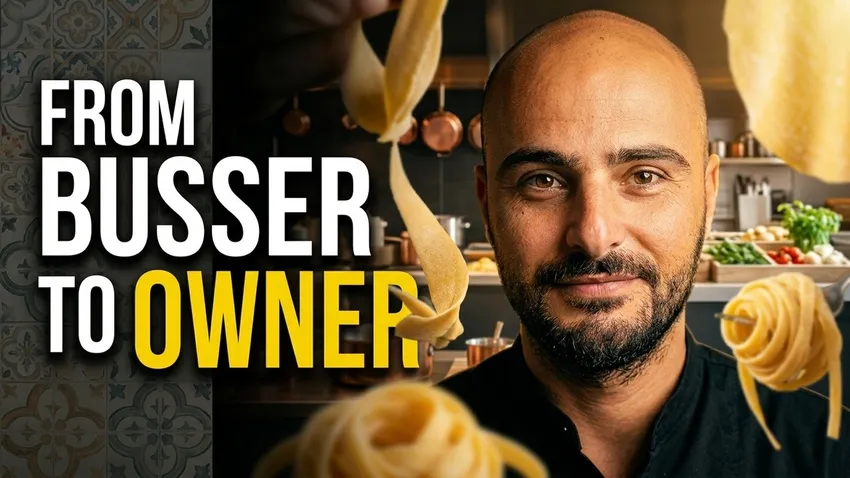

From launching Miami’s first food hall to bringing authentic Mexican flavors to Paris, Samuel Ghouzi’s entrepreneurial journey is truly international. Now, the French-born restaurateur behind Otto&Pepe reveals the "secret sauce" to mastering authentic Italian pasta in the heart of Wynwood.
Please introduce yourself, tell us a bit about your career path, your journey.
Samuel Ghouzi: I am a French citizen. I moved to the US about 15 years ago to go to college. So I did my undergrad in Boston and focused on hospitality and entrepreneurship mainly. After that, I decided to move to Florida and this is where I started my career as a busser, runner, cashier, and a server in a restaurant here in Miami. I learned the basics and the ground of operations within the restaurant. A couple of years after that, I partnered with three friends and mentors to open a food hall, the first food hall of Miami actually, that is called 100 Lucky.
So we opened that about eight years ago. And this was an amazing launch for my career as an entrepreneur and as a partner inside the hospitality business. And after that, I decided to move back to France for a short period of time where I opened and took the license of Coyotaco, a famous chain here in Florida. And so I opened it in Paris for three years. It was right in between COVID and the COVID years. So was a really challenging period for me, but it was overall a great history and a great parenthesis of my career. And I got back to Florida, I would say four years ago, three years ago now, and I partnered with Gabriela where we opened Otto&Pepe and this is my latest project up to date.
You were recently named as one of the best Italian pasta restaurants in Miami.
Samuel Ghouzi: So this project started about six years ago. We wanted to open an Italian restaurant in Wynwood. And we were looking and thinking of ideas. And we decided to focus on pasta. Thinking that this was something that will change the Italian cuisine locally here in Wynwood. And myself being a fan of pasta personally. I thought it was something that could work. So we started our research and development about the project and we opened it about two years ago now.
I have to ask from a business owner's perspective, what is the simplest roadmap to becoming one of the best Italian pasta restaurants in Miami?
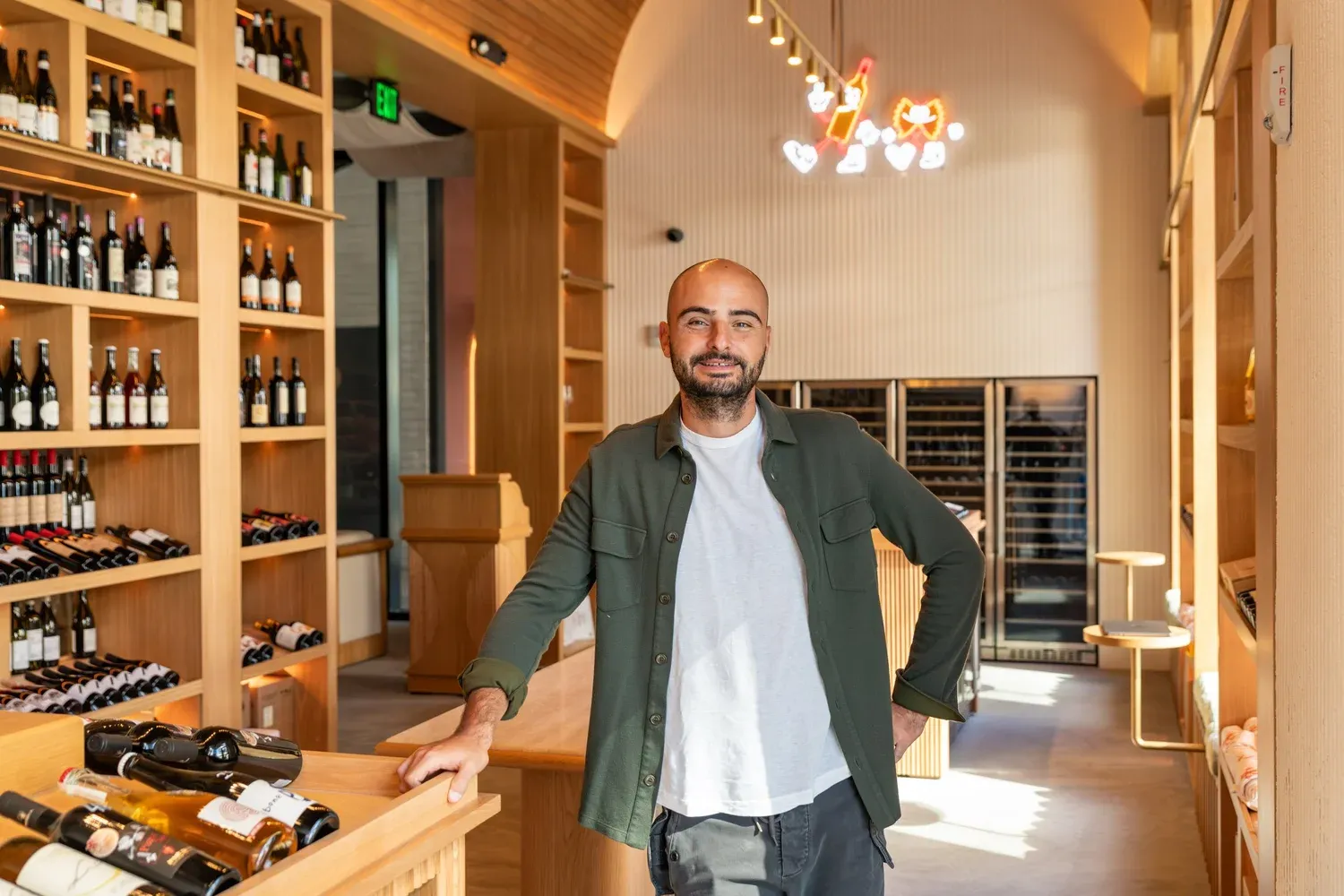
Samuel Ghouzi: I will give you my personal thoughts on that, being an entrepreneur and a restaurant owner. For us, the advice to the roadmap to become one of the best Italian restaurants in the city was to put together the best team. So for us, first of all, create the concept, research the concept, then build the team around that concept. And luckily, we met a couple of years ago, one of the most incredible and talented chefs of Italy. Her name was Viviana Varese. And we proposed to her to be on board with us for this project.
And I will say that was the start of us becoming one of the most popular and one of the best pasta restaurants in Wynwood. So I will say again, the team, the team behind the project and the team that is actually making the project happen locally here. And that's all the merit to our local chef, Nancy that is like daily focusing on respecting all of the recipes, the ingredients and the tools that our main chef Viviana Varese gave her to make this project happen.
Do think that engaging the Italian chef from the beginning that was let's say the let's call it the secret ingredient or the success factor
Samuel Ghouzi: It is one obvious and super important factor for the success of our restaurants. Being Italian, you grow up eating pasta, creating pastas, making pastas and you know exactly what the flavor needs to be, how you need to create those like those pasta with the right ingredients, the right quantities of each ingredient and mainly it's also like the experience of the cooking of that pasta, you know, like the time, the balance with the water, the sauce, all of that together obviously needs to be mastered by an Italian chef. That's my perspective. That being said, that doesn't mean an American chef cannot master pasta as well. It's just like for sure initially.
Those chefs need to have experience from the Italian culture, whether it is from previous jobs or videos or classes or whatever it can be. But for me, authentic Italian cuisines need to be taught initially by an Italian chef.
It's impressive that you're a French entrepreneur who succeeded in Italian cuisine in the United States. This is a very nice mix.
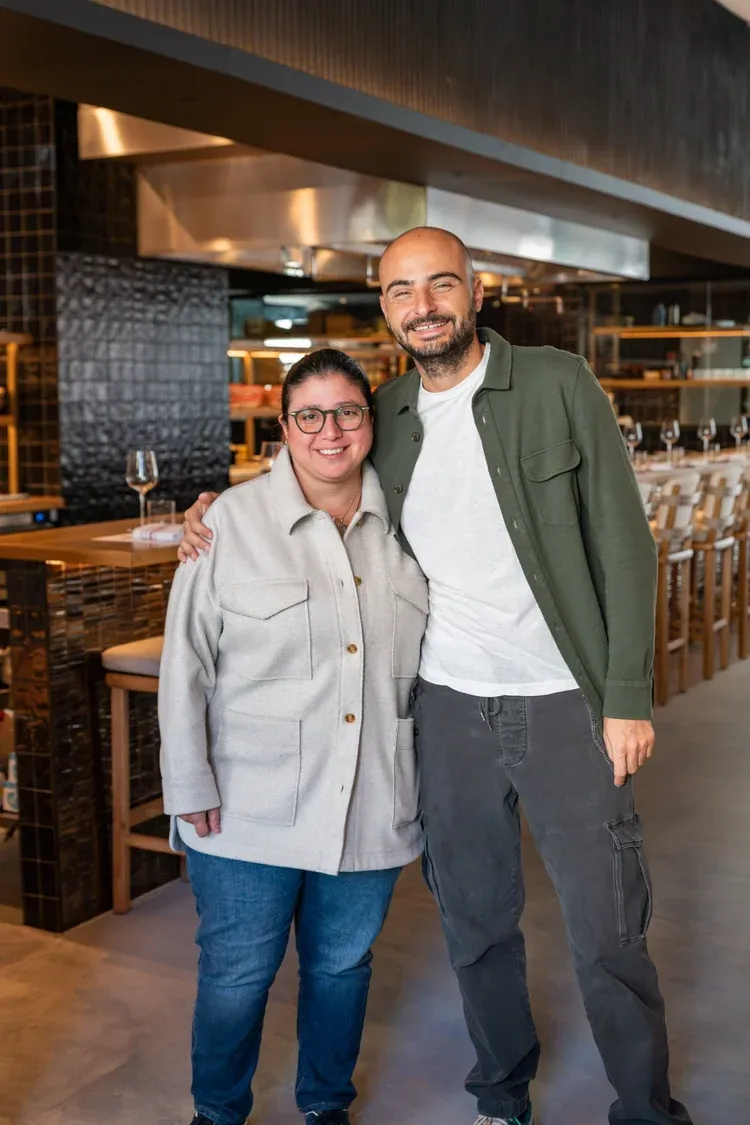
Samuel Ghouzi: You know in the end entrepreneurship is putting together a lot of elements. And I think once you have something in mind and you have a vision of a project, again I go back to creating the best team around your project to make it happen. And I think when we decided together with Gabriela, my partner, to create an Italian restaurant focusing on pastas, once all of the research for the concept was created and was put together. For us it was logical and our main focus was to find an Italian chef to be our partner to come up with the best recipes for that project.
So, I mean, obviously I'm initially from France, I lived 20 years of my life in Europe and in Paris. And I had the chance to travel a lot of times to Italy with family and friends. And also in Europe, in Paris, you have a lot of incredible and amazing Italian restaurants and Italian driven concepts. And that already built my love for Italian cuisine. And when I moved to Florida, I realized back then that there was a gap. Growing up in Europe being close to the Italian culture and Italian cuisine and when I moved back to Florida I realized that there was a gap between like the quality of the Italian restaurants that you could find down your house anywhere in Paris and in Europe and Versus the ones that you could find in America, especially in Florida back then so living in Miami. I realized that there was definitely a need of opening authentic Italian restaurants and Italian recipes in Miami.
Do you face any staffing issues in Miami these days? Is it hard to find talent?
Samuel Ghouzi: I will say that recently, again in my young career, there's always challenges in recruitment. But I will say that recently it has been more challenging with the amount of new restaurants opening. I think they're all trying to hunt for the best chefs and the best cooks and the best servers for all of the restaurants. And I think there is definitely a need for more employees inside our industry currently. And it became a challenge. Definitely became a challenge.
So how do you keep your staff from leaving to another place just because of higher payment?
Samuel Ghouzi: So we try and obviously we try to be as cool as possible with them. We try to be flexible in terms of their day offs and if they have some requests as soon as it doesn't impact the business itself, we try to be flexible. And we always want to offer them growth within our company. We currently have one of our dishwashers that stepped out as a prep cook that's almost becoming a cook.
We try to offer them those things. Being in independent restaurants and without the budget of a larger corporation and bigger groups, we try to fight within our own level of leverage that we have within the restaurants. And I think right now this is what allows us to keep some of our strong employees that have been with us since the beginning.
Can you tell me something that a lot of people get wrong about managing a pasta restaurant?
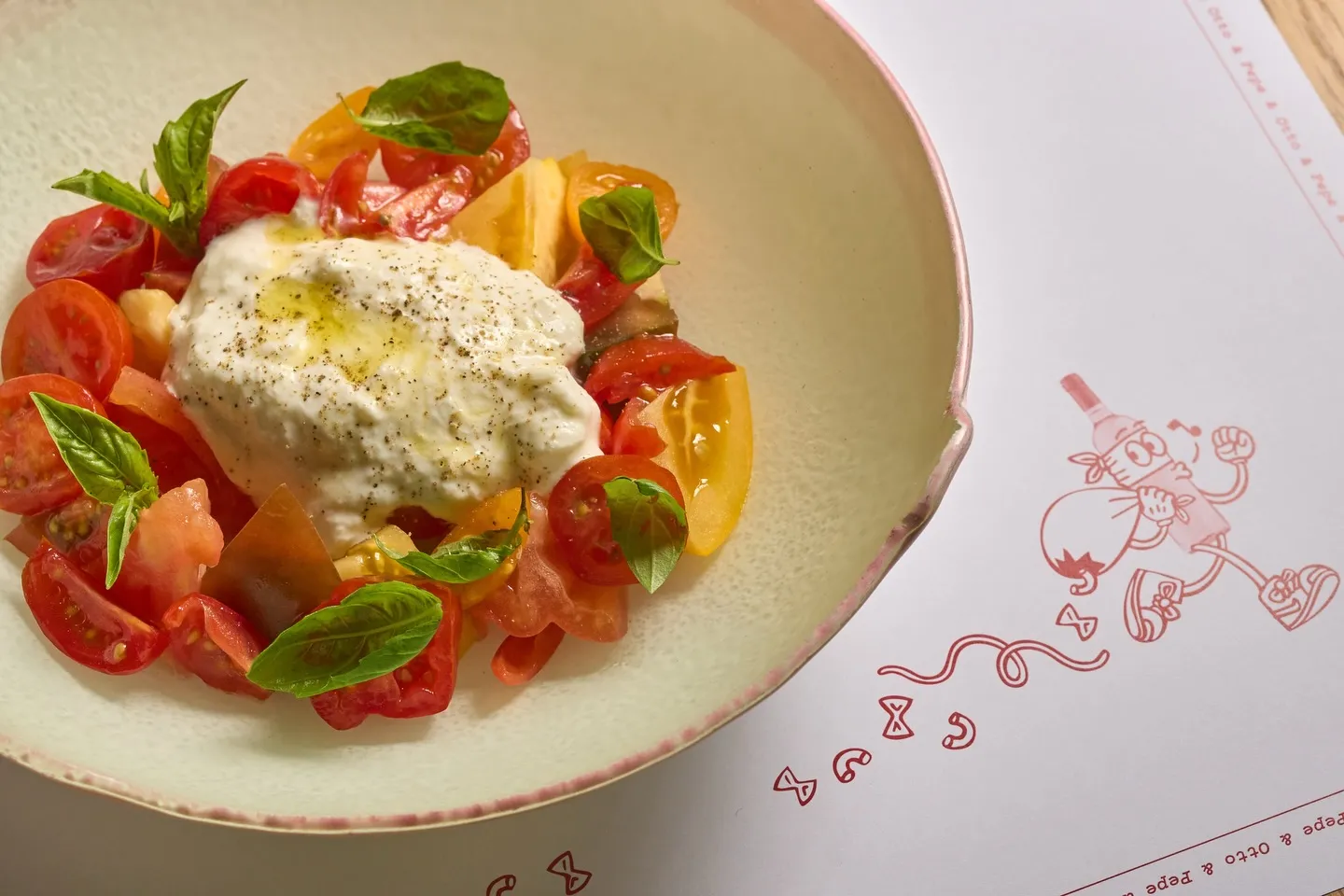
Samuel Ghouzi: I'd say in general Italian cuisine falls down to a really small amount of ingredients. And I would say the biggest challenge here in Miami to run an Italian restaurant and a pasta restaurant is first of all, find the right products and source locally the best tomatoes, the best basil leaves and all of those fresh ingredients that basically make your food different from others. I will say this is one challenge. The second one is really like how from 10 seconds of additional cooking, a pasta can go from being perfect to being undercooked or overcooked. So it is in the end a super simple product. is boiling pasta in boiling water.
and then putting them together with the sauce but the balance of the amount of water versus the amount of sauce that you put and also the timing difference between having a perfect cooking time for pasta and not like an overcook or undercook I would say that is the biggest challenge of our restaurant.
Check Our Career Growth Tools


No one knows how much effort and hard work the back of the house put into making one dish of pasta.
Samuel Ghouzi: It's definitely not that there is like, for example, like for us, the tomato sauce, our Doppio Pomodoro recipes goes through like two different ways of cooking only cherry tomatoes that can last for, that can take half a day just doing so. And after that, like just the time of prepping the pastas hand by hand, some of them.
What is the number one sign that a restaurant is failing?
Samuel Ghouzi: Obviously if you see a restaurant empty on the weekends that's definitely a sign that things need to be changed. I would say like every restaurant and every business always has a way out. The biggest challenge is that all entrepreneurs don't have enough time to find the way of making their restaurant work.
For me, there is always a way of having a restaurant work and it's just like how you can last in time until you find the key of success and that is the biggest challenge. And that being said, the biggest sign of failure will probably go not in operations, but mainly in cash flow perspective. Like if you fight every day, daily on how you're going to be able to pay your vendors, your salaries and your rent.
That is already a sign that although the business is not going in the direction it should be, and this is a sign that it's like an alert on how quick things need to be changed. Without adding more funds into the company, usually restaurants cannot last more than a year if they're dealing with cash flow issues on a day-to-day basis. Definitely not more than a year.
If you have a chance to hire one of two chefs, one of them is let's say average skills just you know average but has a million followers on social media. The other one is a Michelin level chef but with zero followers on social media. Which one would you choose for your restaurant?
Samuel Ghouzi: I can, I will take the right arm of one and the left arm of the other. For me, it's a combination of both. But personally, I will go for the Michelin star. It's a big question. It depends on the market, where you are located, etc. But for me, I will always go for... I will always prime food over marketing. Because for me, the niche, the most important part of a restaurant, if you go back to history and eating, is what you serve on the plates. And if the food is right and the food is good, whatever time it takes, at the end people will come back and word of mouth will work. And like in the long run, you'll be a winner. If you have the best team possible for marketing purposes and millions of followers on social media, you're going to have your business successful, definitely ultra successful, but for a short period of time because over time, food will always prime over trend and marketing, etc.
Check out more interviews like this brought to you by OysterLink to learn about the industry. You can get them straight to your email by creating an OysterLink account and joining our newsletter .

Loading comments...