


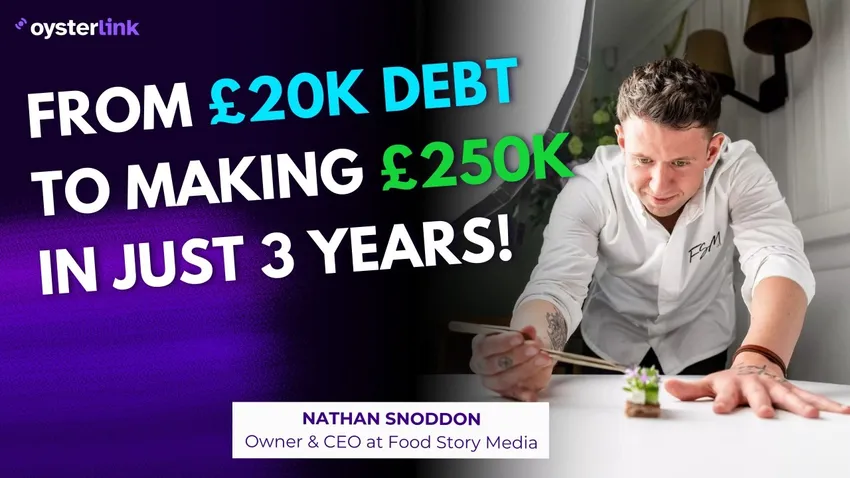

What separates successful restaurants from those that fail within a year? Industry expert Nathan Sno breaks down the transition from cooking to storytelling and why invisibility is a chef's greatest risk.
Could you please introduce yourself and tell us a bit about your career path?
Nathan Sno: I spent 10 years as a cook all over the world. I'm from Ireland. I was fortunate enough to work across 23 Michelin stars around the world. My last job was as a sous chef, as a cook in a London restaurant in Mayfair called Bonhams. And I guess that was the pivot moment.
when I started a company called Food Story Media, which is a global creative business. Started that from my small flat with zero, nothing but an idea, a lot of spit and duct tape. And then that turned into something substantial. And now we work all over the world with different people from celebrity chefs to billion dollar companies in the food industry and everything in between. So we're fortunate enough to be able to work with people and help them, first understand what their story is, and then secondly, help to communicate it. So that's what led me there.

And I guess the start of that career ultimately shaped the rest of it because one of the key differentiators of us compared to others, I suppose, is my background as a cook in the industry and the ability to relate to people in the industry because I stood where they stood. I understand those challenges, those pains. I'm still recovering from the PTSD.
I'm thankful for that. You know, I'm, I never really wanted to step out of the industry as a cook. I loved it. I still love it, but it was almost just this sense of calling the sense of responsibility that I had to be the one to tell those stories that other people didn't see. They didn't get to see it was behind this kind of gate, this kind of wall.

And that's what the world of social media gave us; a great opportunity to communicate those stories that other people didn't ever get to see before.

Do you see yourself one day in the future going back to the kitchen or opening your own restaurant or you're now totally into marketing or communication?
Nathan Sno: A lot of people ask me that. Would you ever go back to the kitchen? You know, there's definitely a part of me that would love that. I would love to be in a kitchen again and cooking again. Miss that little bit of chaos and the intensity, the camaraderie that comes with hospitality. It's unlike anything else.
So I think that there's, you know, maybe at some stage, 10 years from now, I might do something in that space. It would certainly be a passion project of mine. Am I going to do it, you know, to become a millionaire? For sure not. But it's something that fulfills my soul in that way. Hospitality is something that's been ingrained in me from a kid. My mom was a cook. My grandmother owned a small boutique hotel in the Isle of Man, and that's been kind of passed on through generations.
So it's definitely something in me. That said, I think it would probably be in the space of health, because it's another one of my kind of passions. So I think it'll probably be something in that realm. But for now, I'm happy telling the stories of others.
If you were to open a restaurant in the future and you had the opportunity to hire one chef. You have two options. One of them has a million followers on social media and average level culinary experience. The second has zero presence on social media but is a Michelin level professional chef. Which one would you hire for your restaurant and why?
Nathan Sno: That would honestly depend on what my goals are as a restaurant. So if I want a Michelin star restaurant, I'm going to hire a chef that has Michelin star experience. If I want a healthy restaurant, then I'm going to have to hire a, maybe someone that's in that realm and that has an audience existing in that space that can help to attract that audience.
But ultimately if I'm trying for the role as a chef, then my talent acquisition is going to be based on skill set, not brand and so on and so forth. So I'll be based on that and personality traits and things of that sort, which definitely I'll be paying attention to their social media presence and their brand, but I'm not necessarily going to be based on how many followers they have unless they're also a marketer.
But given that also the brand piece is super important because that's what attracts eyeballs, that's what attracts attention, that's what perhaps makes me find them in the first place. So it's also equally important to have that presence out there. And maybe you have a Michelin star chef that also has a million followers.
I can see a lot of chefs these days with average level skills, but they have a lot of exposure on social media and sometimes they might get better opportunities from experienced chefs just because of their social media presence. And I want to hear your take on that. What are the myths that chefs still believe about social media that prevents them from building their presence online.
Nathan Sno: Unseen talent is as good as no talent in this world that we are in right now. So if no one can see your talent, it's as useful as having no talent because that's how we find people.
The single most important thing anyone can be doing right now in this era of hospitality, the digital landscape is building a brand, is building a personal brand specifically. You're going to lose to someone that has half your skill, but maybe double your self belief. And they're making triple your income because you're afraid.
Build a brand, you're afraid to show up on camera, you're afraid to say your opinion, you're afraid to do all of these things that's involved in being present on social media that are not easy, but they are learned skills. And that's why Salt Bae exists. That's why Salt Bae, in my personal opinion, has very little skill. But he is an excellent marketer and that's why he built a $70 million empire from nothing more than his iPhone and sprinkling salt on meat. That's not skill as far as cooking is concerned.
If you have a skill and if you have talent, real talent, then you also have a responsibility to share it with the world. Otherwise you're going to lose to someone that doesn't. And that is painful.
However, that is skill as far as marketing is concerned and that's why he's smarter than anybody else because you can, you know, we can joke, we can laugh, we can do all that, but I bet that Salt Bae is probably sitting on a yacht somewhere and he probably doesn't care about all the people that criticized him and laughed at him because he made his impact. Built his business and he did what he got to do. You know, maybe he's not really like that and maybe he's smarter than anybody else, but either way he had the courage to be seen, to be judged, to be misunderstood. And that's what it takes. And that's my point is that
So do you think it's self-confidence in the first place that gets, let's say, talented chefs to avoid using social media or building their online presence?
Nathan Sno: We call it different things. We blame different things. We haven't got the time. We haven't got the equipment. We haven't got the knowledge. Yes, there's parts of that that are true, of course, but a lot of what stops people starting is the fear aspect. The fear of being judged, the fear of looking cringe.
And, you know, that holds people back a lot. I think that one of the most misunderstood questions in terms of careers today is like this difference between, you know, posting professional content or posting personal content and how much personality do you show versus how much of this polished image do you show?
It really comes down to, know, whether you're brave enough to build the most valuable asset you'll ever own. And that's a personal brand in the modern world.
It's more valuable than a CV, more valuable than a title or a perfectly polished social media feed or picture or video. It's many things in combination, but a brand is something that compounds over time. And it's one of the very few things that you as an individual have control over. And the thing I think most people miss is that who you are personally defines who you become professionally. It's not separate.
And so hiding, think hiding behind this idea of professional content or safe posts or neutral opinions, trying not to offend anybody. Means also being invisible. I think that, yeah, that's where a lot of people stop and don't get started because they're terrified of being judged or terrified of being cringe. And so they'll hide behind these kinds of safe posts.
And the truth is that having the willingness to look cringe is often the cost of doing something that most people are afraid to try.
There will be people that laugh, there will be people that question you. And that's part of the process because everything that's meaningful has been started by someone deciding to put themselves out there before they felt ready to.
You never feel like, okay, now I'm ready; even me today after doing this for seven years. I still have doubts. I still have fears and all the judgment and things like that all the time, but I've got enough evidence to back up now that I'm doing it anyway.
like change in anything, progress in your career, progress in your business, progress in your personal journey, whatever that might be, career. Change comes with critics. Ultimately, change comes with critics and becoming something new always means being misunderstood first because everybody else doesn't know what you know.
You have to be willing to take a bet on your own beliefs.
And I learned that. Also in the early days, you know, I mentioned I was a chef. I was a cook for 10 years. I was still a cook longer than I've been doing this. And that was a big transition, right? Going into the world of brand, of storytelling, of communications, social media. You know, I was living in East London. This little flat, a shared flat in East London, sat up to like 3 a.m. every night trying to build this thing on my computer. I didn't even know fully what it was becoming at that stage.
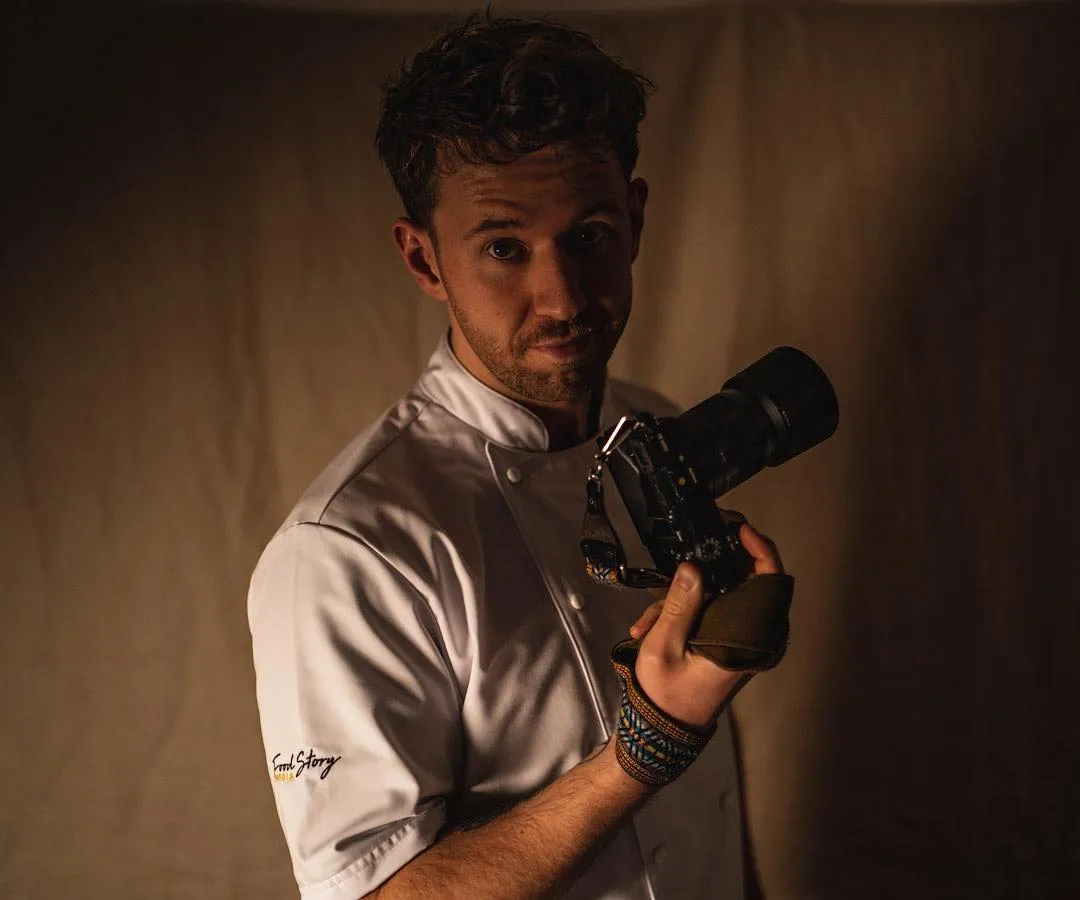
But I was sitting there after work, figuring out what this is going to be, posting online, hoping someone would notice. And alongside that, there were many people that doubted me. There were many people that criticized me. And that was a hard process. You know, it was a hard time, but in the space of doing that solidly for like two years in this little tiny space where everyone was being relatively hard on me to be honest. It was a tough time. But then being flown around the world, working with the biggest names in the industry in a matter of two years, because I had the willingness to be misunderstood, to be critiqued, to be judged.
And the irony is that also, I think a lot of the time you find that those same people that criticize you are the ones that ask to become part of what you're doing later.
You know, I think that's if you're willing to do that, you end up building leverage. That's something that you can't get anywhere else. Leverage over your own path of your own decisions, your own choices. And that's what builds. That's what building a brand does. You get the keys to how far this thing can go yourself, you know?
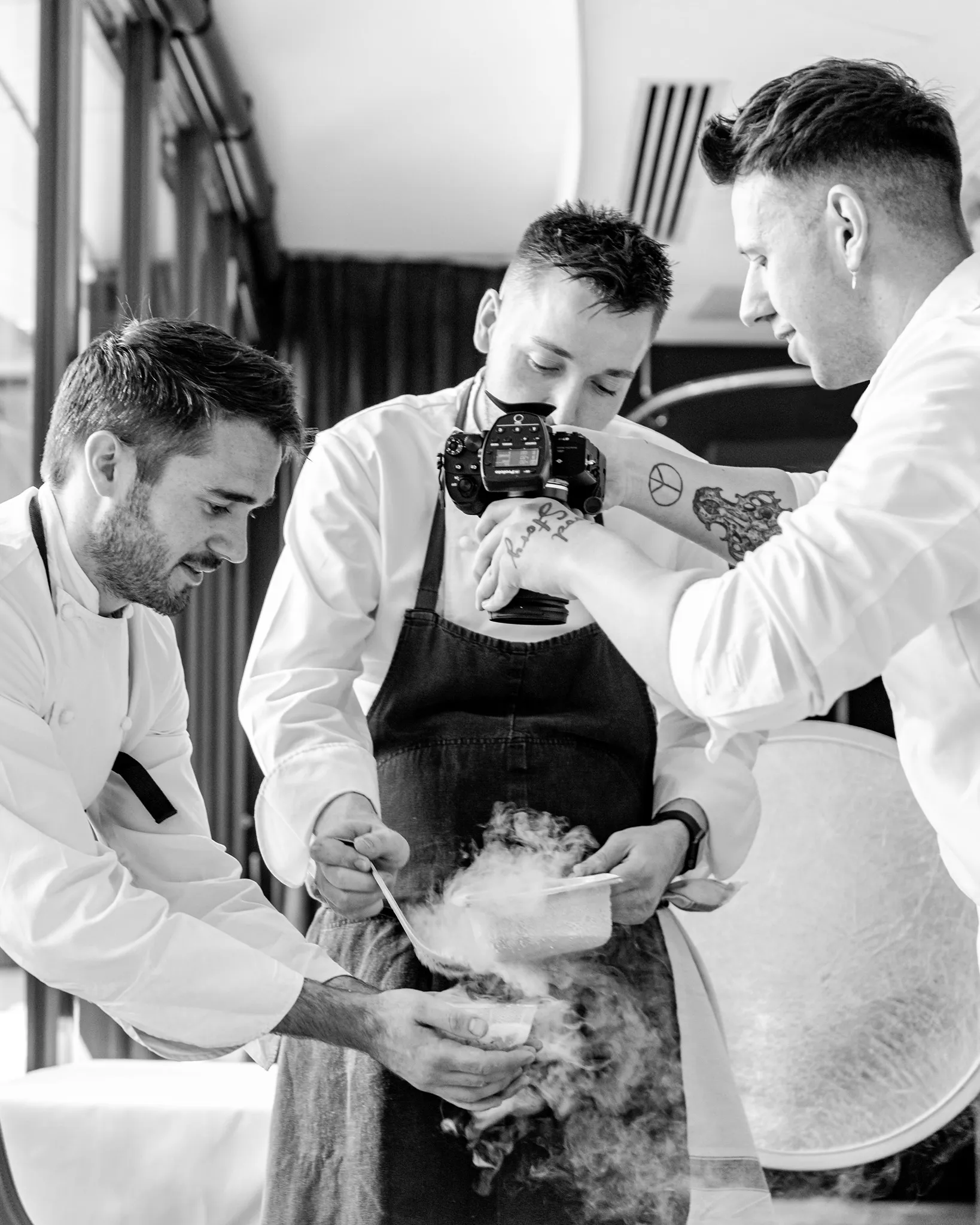
I was listening to a podcast and they said everyone is talking about storytelling and authenticity. Meanwhile, it's paid ads on social media and just discounts. And this is what drives the traffic. And I have to ask you here about what's your take on that?
Nathan Sno: Paid ads and all of that stuff only amplifies what you're already doing. It doesn't replace it. You can't do one without the other. The story comes first. That's the first piece of the puzzle. You need four pillars. One is the skill. Before anything else, you have to have the skill, what you do. Then you have the story. Then you have the systems. And then you have the scale. And it goes in that order.
Skill, story, system, scale. You need the skill to begin because without that you're going nowhere. You need the story to be able to articulate everything that you are and why people should care. You need the systems to execute that and share it with the world. And then that's when you scale it. And that comes from the paid advertising side.
Those are the four pillars. And a lot of people are starting the scale side or they're starting farther down the line and they haven't got the story piece right first.
I do think the biggest mistake in hospitality is never telling your story. But the problem with that statement is that it, you know, is poetic and romanticized as it sounds in my opinion, unless these statements and advice can translate into something we physically do, then it means nothing. So after seven years, as I said, doing this, I guess I've come up with a formula for what telling your story means.
And all that is really is answering three questions, who you are, what you do and why it matters. That's what storytelling is from a tactical point of view
Because I think there's like 50,000 restaurants a year that open in the US alone and 20 % of them are closed in the first year. 50 % of them are closed after five years. And so if you're not injecting those three pillars into your messaging, you're probably going to be the next one. And that may be harsh. And yes, there's many out there that claim to close their food businesses because of rent, because of the cost of goods or labor, or the endless list of things or factors that there could be.
But I honestly think that's just an excuse that sounds intelligent enough for people to blame because if that were true, then every business would be shut. Every food business would be shut if this was the problem. And now I'm not saying that it's not tough. Of course it's tough and prices do rise and all of those things. But welcome to the game of business. Name me a business that's not tough, that's not hard. And so the question then becomes what's the difference between those that shut, those that close and those that become wildly successful.
I think that's a lot of why people get stuck as well because it's great saying that but you know, understanding your own story, everybody has a story but not everybody how to articulate it well or to define it in particular and you know that first piece is like who you are, right? The problem is that if you cannot be clearly compared, you will never be consciously chosen.
All starts with who you are and specifically defining what I call your obvious difference. The differentiator between you and someone else, one business and another, one person and another. And that's the only way to do that is through your own lived experience that translates into an inimitable positioning in the marketplace, something that cannot be replicated easily, something that cannot be copied. It's not.
We're passionate. We're a seasonal restaurant or we're approachable or we're luxury or blah, blah, blah, blah, blah. That's all fluffy. It doesn't mean anything. It's just decorative language that lacks any individuality. We've been a family run business since 1994 and we don't use tweezers or it's no bookings, no influencers. Hospitality comes before algorithms or it's a Michelin star restaurant.
You know, it has a different emotion attached to it and real positioning, real positioning in the marketplace, in hospitality is proven by time, by choices and by constraints, not by adjectives, you know, not by these descriptive decorative words that don't have any real meaning that every other restaurant on the same street is using. And so like the
The next layer that people really are about is about those choices. Choices require comparison. To choose something, you need to be compared. Comparison requires contrast. And so if there's no clear contrast between you and someone else, then you leave no one the opportunity to choose you. So that often means subsequently your brain defaulting in the familiarity of something they already know and trust that they've been to before, or the comparison of cost, which ultimately is just a losing game of commodities.
You don't want to play that game. You know, the words like it's it's that you're asking someone to make a decision in the industry, right? Whatever your business is, a brand, a restaurant, a food truck, whatever it is, you're always asking someone to make a decision. And by definition, the word decision; it comes from a Latin word. I think I'm going to bastardize the pronunciation, but like decider, which means to cut away. And so to choose one thing is to cut away from others. And that is what most people are afraid to do.
They're trying to be everything to everybody. And if your positioning is so similar to everyone else, then nothing can be cut away. Nothing can be different. And you get ignored and ultimately become invisible
Because generic appeal becomes mass irrelevance. Said differently, when you're trying to be everything to everybody, you end up being nothing to nobody, you know? And so I think that's the part that really makes a strong difference. And that requires courage, you know, it really requires the ability to be judged, you know.
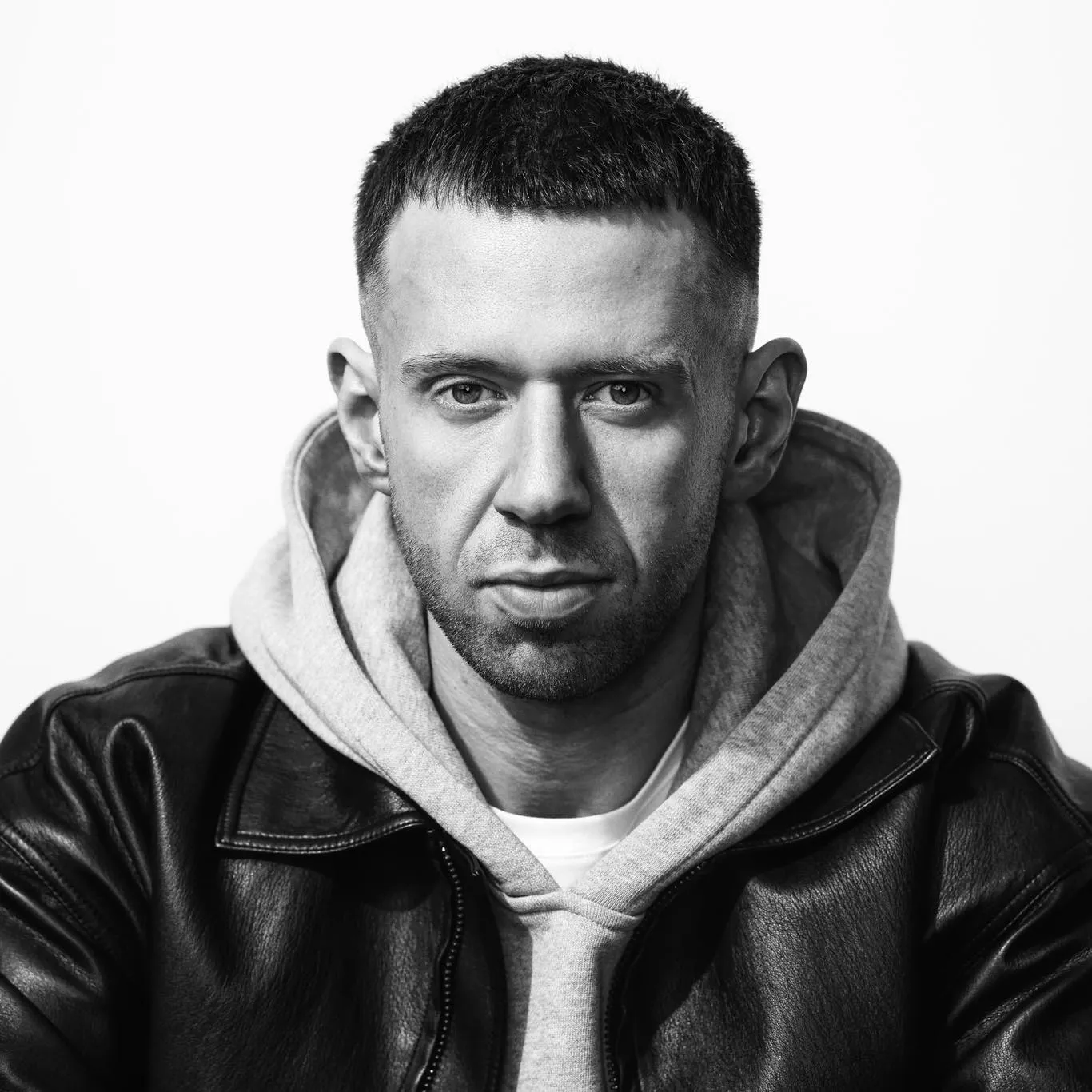
Someone is opening a restaurant and they want to let's say do as much as possible when it comes to branding themselves and they have a limited budget for marketing. What would you advise them to do?
Nathan Sno: I would say do as much as you possibly can or afford. You don't have to be successful on social media. You don't need the biggest agency. You don't yet. You don't need the best equipment. You just need to know the basics. You know, use a phone, get a microphone. That's the two most important things. I would say even audio is more important than video, like the visual. So use a phone, get a microphone and start talking about it.
Just get in front of the camera and get better. Do the reps. Just talk about your story. Talk about what you're doing and show what you're doing. It's, yeah, again, another thing that people think, you know, I have to have this big camera and this big light and all these things. And while that's great, of course, if you have the ability and the resource financially to do it, do it. But you don't need all that.
We talk about story arc. So that arc means authenticity, relevance and credibility. If you're communicating those three things, that's a starting point to help you start to define what your story is. What's the truth that you stand on that does not change with trends? Not like a tagline, but something that you've lived or you believe in and makes you credible to believe, you know, like that kind of give you the earn or you earn the right to lead with that.
You know, if you've lived it, you earned the right to live with it, to lead with it. Relevance is making sure that you're speaking to the right people. So again, not trying to speak to everybody, but knowing who you're who you're, let's say, dream avatar is that's super important. You know, is it a young demographic? Are they teenagers? Are they young professionals? Are they an older affluent market? You know, whatever that might be your relevance.
Making sure you're speaking the language of the people you're trying to communicate with. Like, you know, you don't speak to your mother the same way as you speak to your bro at home, you know, it's a different language. And while we're still the same people, we don't communicate in the same way to different individuals. So knowing who this person is I'm speaking to on the other side of the camera and just speak to them with that. That reality of who you are, you know, that authenticity piece.
And then the credibility. Credibility of backing up your words. It's like showing the process, showing the progress and showing the evidence. Not just making claims, but backing it up with receipts.
So that's the story arc, that's what I would lean into. And you're just documenting, it's like a lot of the time, if you don't know anything else, just document what you know? Film what you're doing, and there's different ways of going about it. You can sit in front of a camera and talk like we're doing now, or you can do a voiceover if you really don't wanna be on the camera. Add some B-roll. It's not complicated, the only important thing is to just get started. Start with what you have and where you are.
You'll get better later. Just that ability. You just need to keep doing it over time. Like I sucked. My first client for the record was one of the most famous chefs in the cold country. I was bad for a very long time and I had no nothing about what I was doing, but it was an obsession to get better.
Restaurant brands versus chef brands: which one should be the goal?
Nathan Sno: I think every brand, every great brand needs to have a personality. The best brands have personality attached to them. That doesn't necessarily mean it has to be one individual, but people connect with people, so it has to have personality behind it, a persona. So always faces for sure are important behind a brand. Otherwise it feels distant. You don't, fail to have the ability to trust someone when you can't see them. If we don't, if I never see, you know, the face of someone I'm going on a date with, I'm probably not going to trust what they're saying if they're hiding their face all the time. You know what I mean? So it's important to show up on that.
And I think that even if it is a business brand, whatever it might be, one of the most important things is having a face attached to it.
Check Our Career Growth Tools


Do you think that culinary formal education still matters?
Nathan Sno: You mean culinary education specific? Yeah, I mean, I guess this is subjective based on where you are. Personally, I did go to culinary college, but I always say I didn't learn to cook until I moved to London.
So I don't put much weight on culinary school. Can it teach you things? Yeah, for sure. You're never going to get the same education reading a book from being in the kitchen. You know what I'm saying? That's the difference between a 2D image and a 3D experience. You can read Escoffier as many times as you want and you can recite it. But when it's 12 o'clock, lunch service begins.
Doesn't matter how much you read. What matters is that you know what the hell you're doing and that you've done it before. Yeah, for sure. Exactly. So I think that, you know, lived experience is incomparable to anything else. And then you're building a brand around the skill that you have. That makes you what I call unignorable.
There's others that will build a brand who maybe are exceptional on social media. They'll build a brand but they won't be able to replicate the skill. So if you have the skill and the ability to articulate the story and build a brand then you're in your own game completely.
Find available Head Chef jobs in Miami, or check out more interviews like this brought to you by OysterLink so you can learn about the industry. You can also get them straight to your email by creating an OysterLink account and joining our newsletter.



Loading comments...