


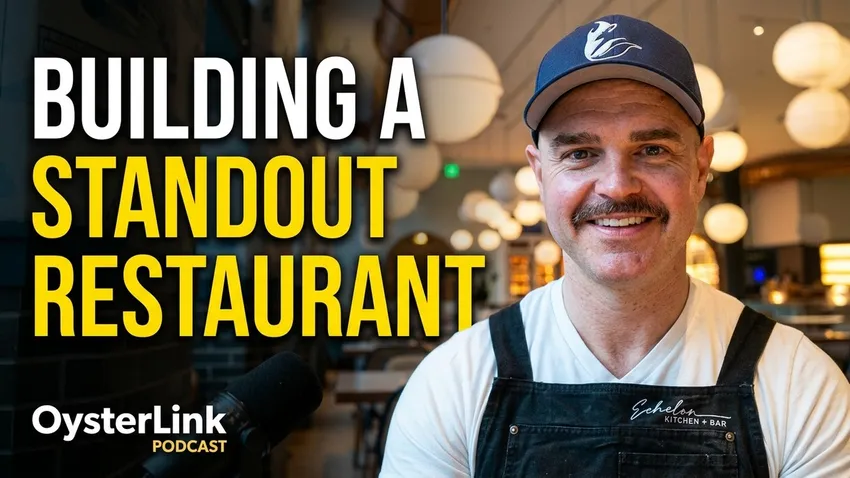

Joe VanWagner went from a "rural fruit belt" upbringing to leading a James Beard-nominated kitchen in Ann Arbor. In this interview, he explains why building a local community is more important than building a social media following for long-term success.
Please introduce yourself and tell us a bit about your career path.
Joe VanWagner: I'm the chef partner here at Echelon Kitchen and Bar in Ann Arbor, Michigan. My career path did not start in a way that I thought I would end up in a kitchen. I grew up in the southwest part of Michigan, which is very rural. They call it the "Fruit Belt" here in Michigan. So I was very connected with farming, hunting, and fishing. I ended up going to college, and I thought I was going to be a professional soccer player. And I very quickly learned that that was not going to be the case. So I studied hospitality business.
I got a degree in hospitality business from Michigan State University and ended up; my first real job out of college was a service management position at a Michelin two-star restaurant in Chicago and I had no clue what Michelin stars were or what fine dining experiences were all about. So I was quickly thrust into that lifestyle and I begged the chef to let me work for him almost on a daily basis, and he assured me daily that I was a silly, inexperienced American boy and that I wouldn't end in his kitchen and, sure enough, one day, I came to work and he said, you're on garde manger today, and the rest is kind of history.
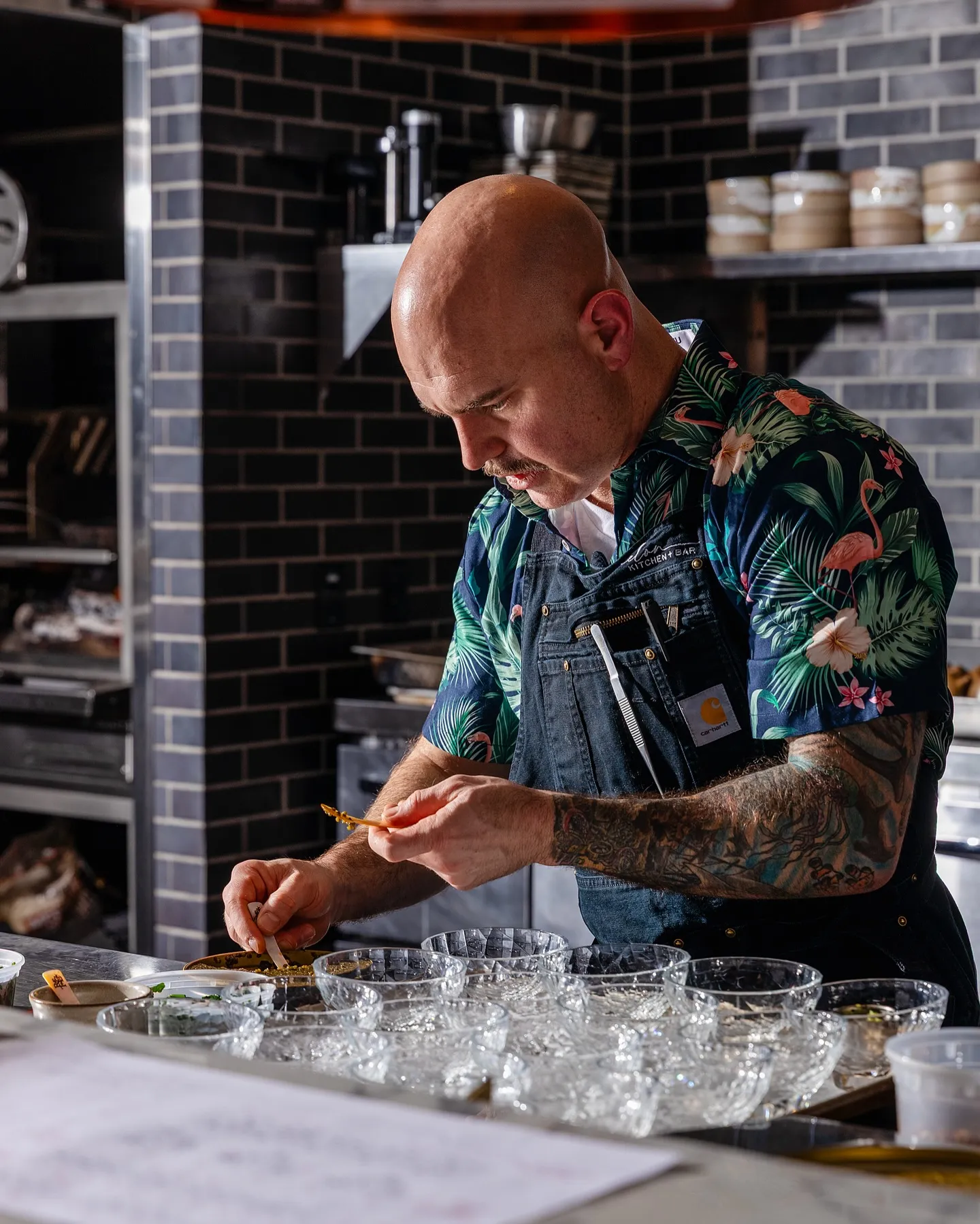
Obviously, my first job in the kitchen was at an exceptional kitchen. And this was a very exciting time for food in Chicago. So, I got to the stage, which is essentially working for free at the time to gain experience. It was very common. When I was young and coming up, I got to stage all over Chicago because it was so commonplace at Michelin three, two, one stars; really, really celebrated restaurants with incredible chefs. So I feel like I was kind of in the right place at the right time. I made my way around Chicago. Spent some years doing that. I was very fortunate. I ended up coming back home for a bit to Michigan and, from there, I would go on to travel and cook in Paris, in Stockholm, New York City. I worked off a little island off the coast of Washington state. So I made the rounds and worked basically at all the best places that would have me.
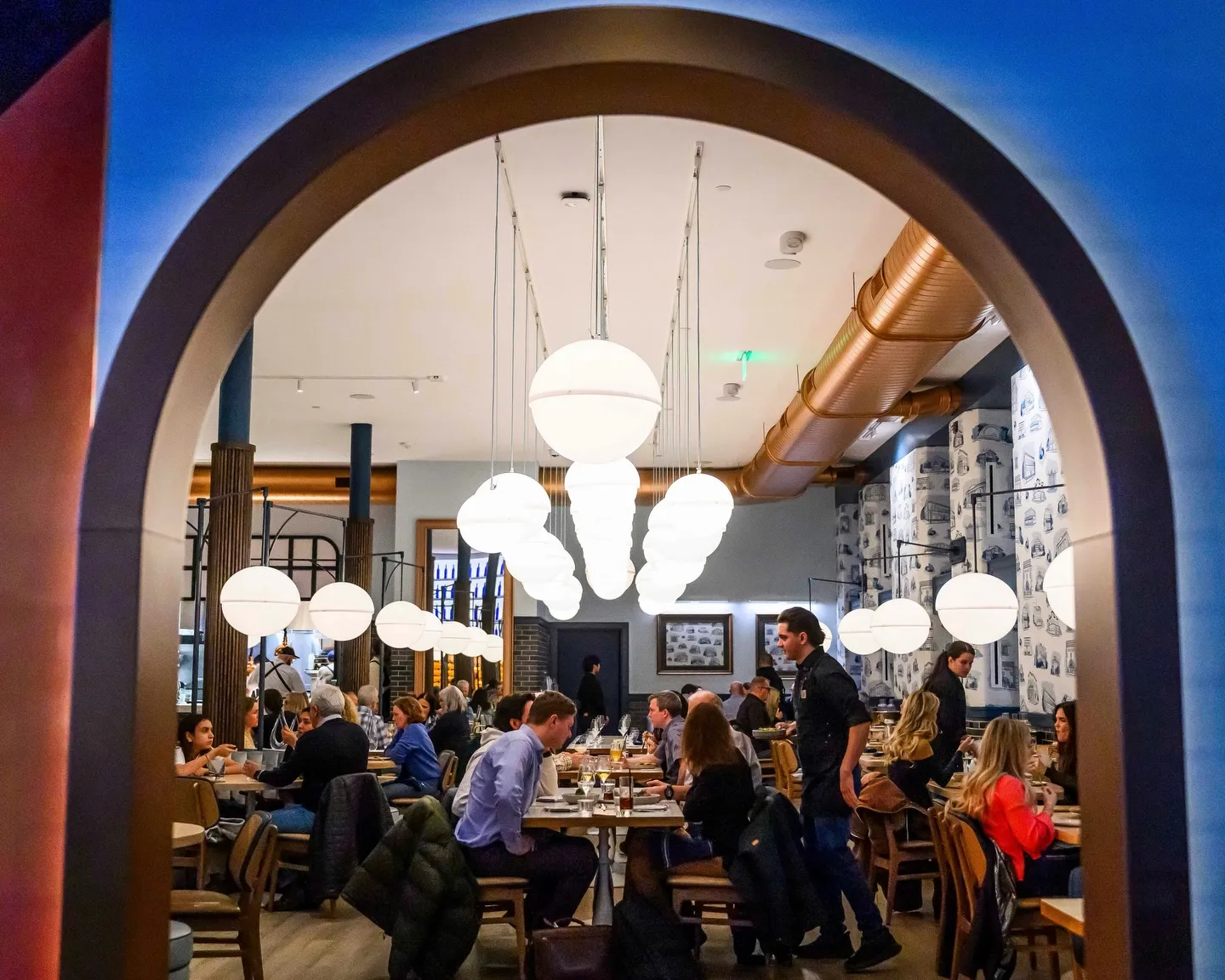
I am currently sitting in Echelon Kitchen and Bar, where I'm the chef partner. We opened our doors one year and 12 days ago. It's been an amazing ride. We call ourselves a wood-fired, vegetable-forward restaurant. We really, really, really try to be Michigan first, which means we look to Michigan for all of our products first. That doesn't mean we don't have scallops or octopus or things like that on the menu, but it means we always pair them with things from Michigan.
And it's been an exceptional ride. We were just nominated as one of the semi-finalists for James Beard Foundation's Best New Restaurants in the country. And we also, just last week, opened a tiki bar in the basement of the restaurant here. So things have been going excellent. We're very busy. We're very grateful to be busy. And it's just, it's been an amazing ride so far.
Can you describe the simplest roadmap to become a James Beard award semi-finalist?
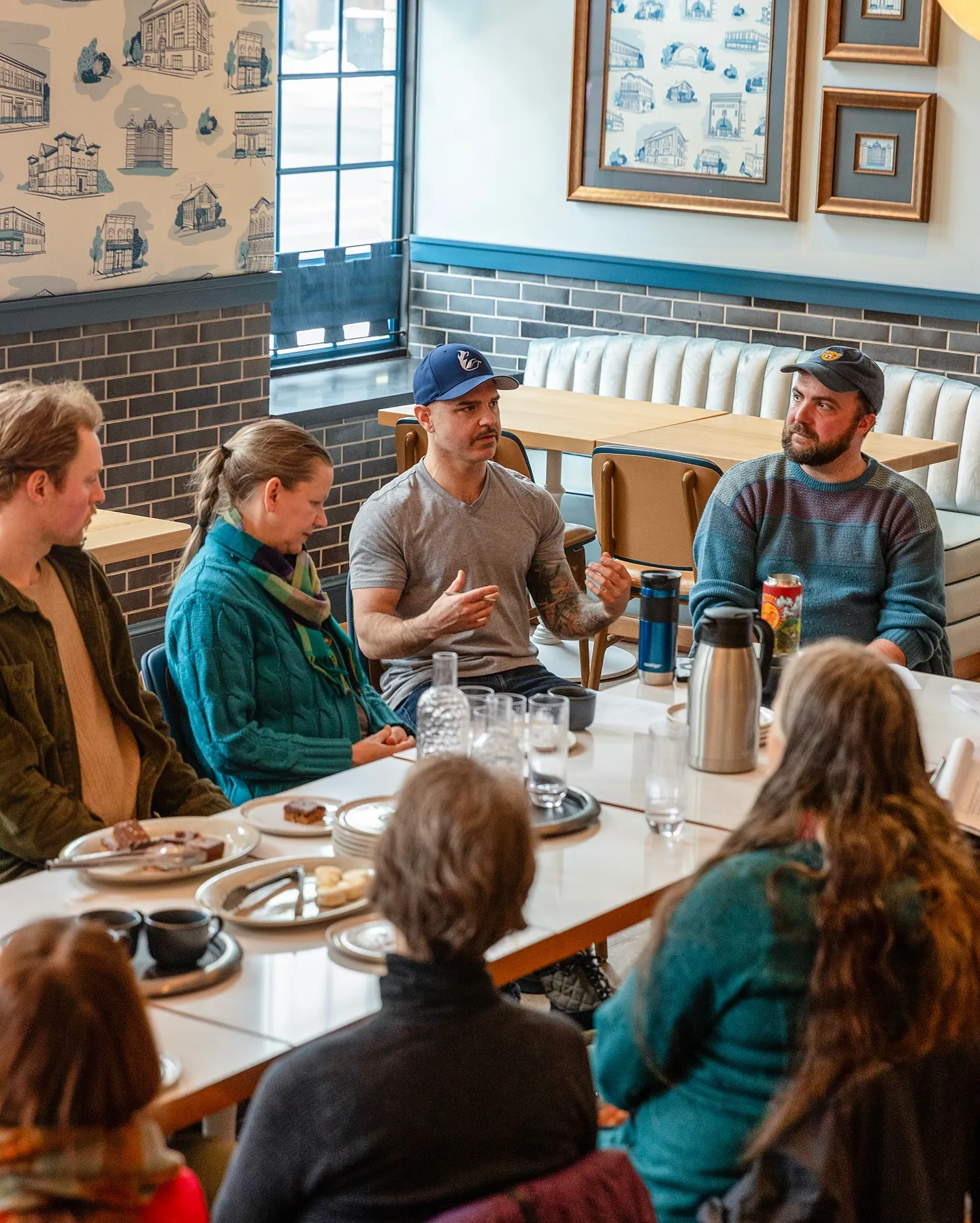
Joe VanWagner: So I would say, invest in your community. Build something in your community. Build a cuisine with the people from your community and with the food that is produced in your community, for your community. And then I would say, do that at a very, very high standard. Because that's what we did here. I can't speak to anybody else's roadmap.
But we got a group of people that were here now. We shared a common goal, and we supported each other in that goal. We held each other accountable to that goal. We adhered to that goal. And we did it all while working within the community, working with products that are right from where the restaurant is. And that's been our path.
Do you believe building a community is more important than building a social media presence?
Joe VanWagner: Absolutely, I think building a community is at the forefront of everything. The community is society, right? So social media will follow, absolutely. If you don't have the story and the content and the soul and the substance, what's the social media worth, right? So building a community for us is like, that's what we were going to do anyways. That's what we set out to do. All the other stuff that came after, it's kind of like reassurance or gratification that what we were doing in the first.
If you could pass one lesson you learned early in your career, what would that be?
Joe VanWagner: So I would say, spend as much time working in the best kitchens as possible. Now, I think, staging is still a thing, but now you get paid for it. It's pretty incredible. Ask as many chefs at restaurants that you admire, can I please come spend a day with you? Can I please learn from you? There's nothing like first-hand experience. So get as many reps as you can in as many good places with as many good people. That would be my advice.
Does having that James Beard tag make it easier to recruit professional talent or does it make it more challenging because of the expectations?
Joe VanWagner: I think that's a great question. I think having the James Beard nomination; anytime you have some sort of national recognition, I think it does make you a little bit more of a target, and it does bring more people and more awareness to what you're doing. But the flip side, as you mentioned, the way we see it, there's a lot of expectations with that. But the way we see it is there's a lot of responsibility with that. We want to do what we say and say what we do. And if we are going to really go for this award, to be one of the best 30 new restaurants in the country, which we have all agreed internally to do, we had a meeting about that, then we want to adhere to the principles that make you one of the best 30 new places in the country to work at. It's kind of two-fold.
You said you had a meeting about that! Can I learn more about this?
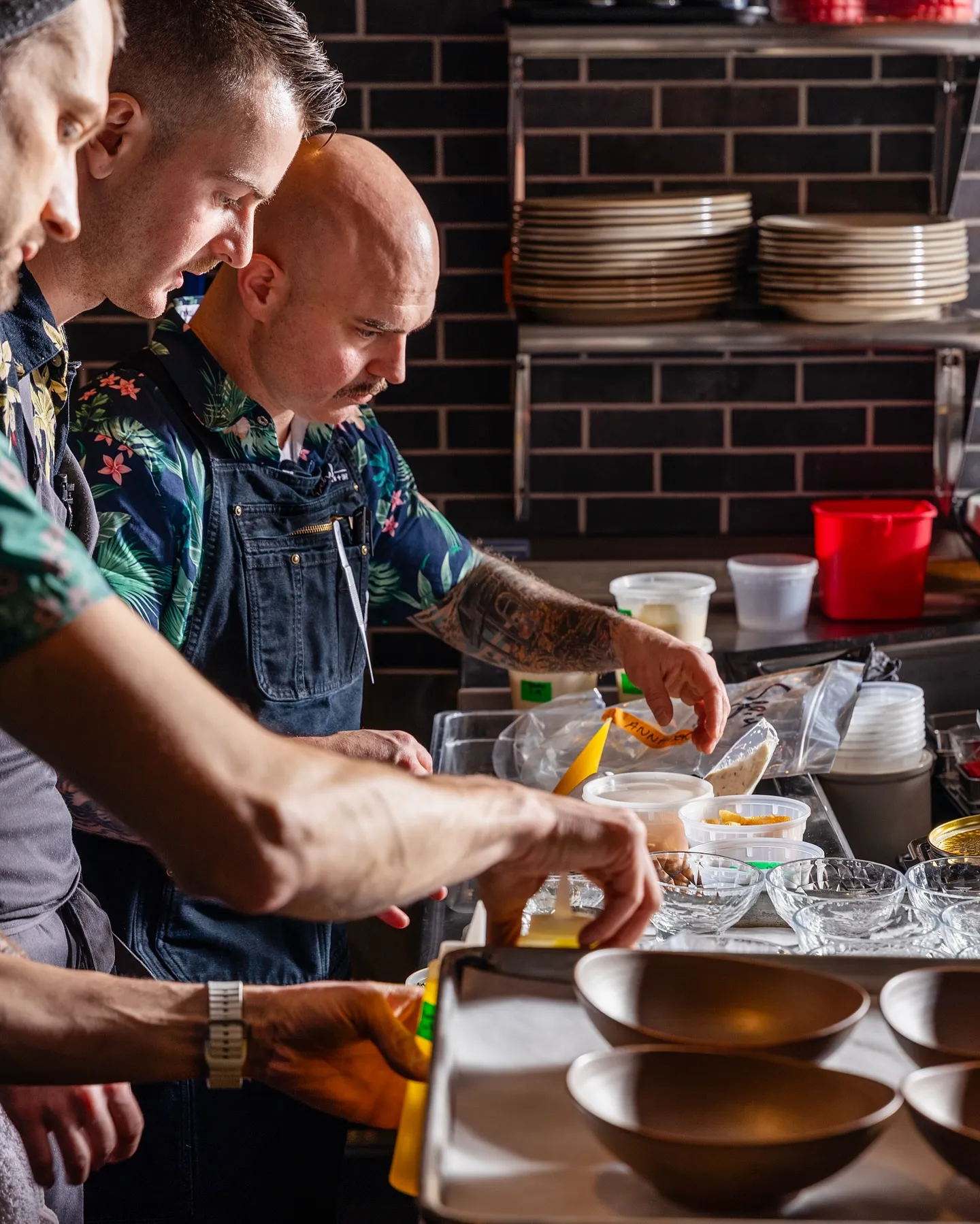
Joe VanWagner: Yes, so this kitchen here, we make a lot of decisions together. It's not Chef Joe's menu. It's not Chef Joe's directive. Because Chef Joe can't do every job, right? I also need Chef Ronnie and Chef Lily and Chef Dario. need, Everybody needs to be bought in. So we had a very serious meeting. We celebrated for a minute. We said, this is wonderful. This is exciting. And then I said, what do you guys want to do now? Do you want to pursue this? Because the reward for hard work in this moment is more hard work.
Do we want to be just happy that we were invited to the party, or do we want to try to win the whole thing? And the answer was overwhelmingly and resoundingly that we want to be our best selves and represent Michigan, represent Ann Arbor. And we saw that as a great responsibility, but a great honor. So we are pressing on.

If a candidate walks in at Echelon with a resume in hand, a printed resume, do they still have a chance to be interviewed?
Joe VanWagner: Sure. That's a great question. I'm a little old school, obviously. I love it when somebody has the dedication, the gumption, the confidence, the determination to walk into the restaurant and say, hey, I'm looking for a job. Here's my resume. It's a tangible moment for me. I'm here all the time. So if I get to meet somebody, shake their hand, and they're willing to do that uncomfortable thing, absolutely. I see that as great, that kind of puts them at the front of the line quite frankly.
What could someone do to impress Chef Joe on their first day, first interview?
Joe VanWagner: So I think being humble and showing willingness to learn. I think every single kitchen in the world is a different place utilizing different techniques, creating different food. A day that you don't learn something as a chef is a very bad day, and a day you're probably not paying attention. But if someone's willing to come in and show a passion for learning and growing, that's the first thing I'm looking for.
What is the one thing that a candidate could say or do in an interview that makes you immediately decide not to hire them regardless of talent?
Joe VanWagner: That's a good question too. I would say when someone acts like they know everything or they are trying to constantly one up or it just seems like they know everything. That's a little bit of a red flag for me because I think walking into every situation is an opportunity to learn. It's not only appropriate, but it just makes sense, especially when you're walking into something new. It's something you don't know. So how could you be expected to know everything about what we do here?
Where do you think it's coming from, this overconfidence that new chefs have these days?
Joe VanWagner: I don't think it comes from a bad place. I think it comes from a place of wanting to perform or wanting to be viewed as an expert. In this instance, wanting to be given the upper hand to be hired. I think it comes from a desire to succeed.
What about your social media? I don't see you as someone going crazy after building a followers base.
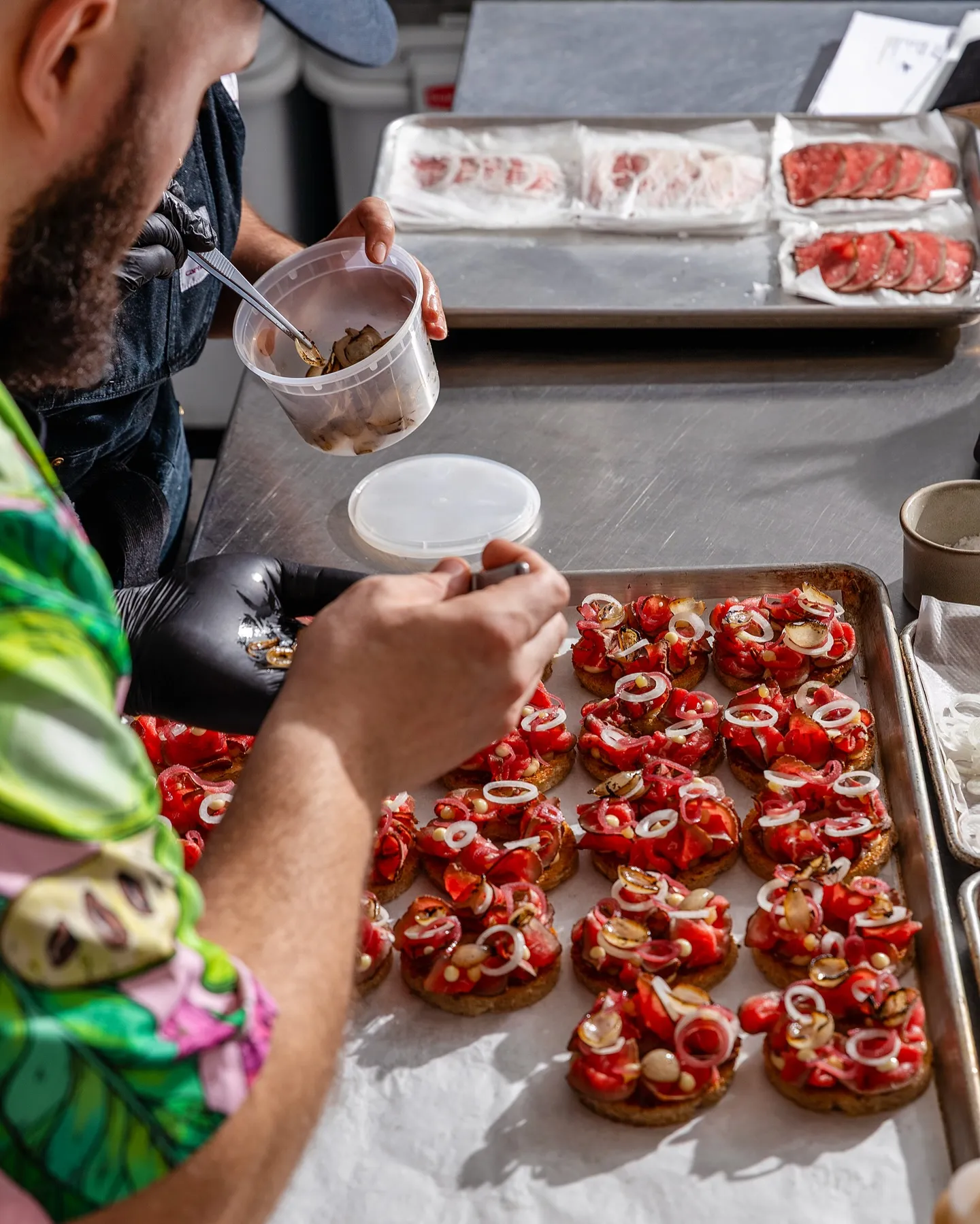
Joe VanWagner: So I think social media, I leave that to the experts, so to speak. And I am not a social media expert. I do love to celebrate what we do in the restaurant, in my personal space. I spend so much time here in the kitchen that I kind of don't have a lot of time to curate social media as well as I could. But I also think. It's a full-time job and the work spent in the kitchen does lend itself to genuine content. So when people look at my Instagram, I think they're really seeing who I am as a person.
Check Our Career Growth Tools


Back to TikTok chefs, since now we're talking about social media. Do they make your life harder in the kitchen because of the expectations?
Joe VanWagner: I think it creates a notion or an ideal in some people's minds. A lot of the shows are very dramatic, and you see a lot of yelling and shouting. So I think it creates a perception. Our kitchen is not like that. We are so busy and what we do is so technically grounded that if anybody was running around screaming and shouting, it wouldn't work. We need to be composed and calm. And quite frankly, we need to love what we do. If people were coming here just for a paycheck, it would be too hard, in my opinion. You really have to love this. And I don't think anybody would love drama or screaming. So that's one take. But by and large, I think food is entertainment. It's not a bad thing. It's entertaining in the very least.

Can you name three chefs you follow on social media and you advise others to follow as well?
Joe VanWagner: Okay, this is a good question. So, I was gonna pick three right now for three different reasons. There is a chef called the Forager Chef, who is very cool. He forages and shows you all different kinds of natural growing, and they might be invasive species, they might be native species all throughout the Midwest. How to locate them, how to identify them, how to harvest them and how to cook them. Really, really cool. He also branches out and makes other unique ingredients. So I think that's a good one.
I like Ron McKinlay because he uses a lot of really old-school techniques in a modern way, and I see some of those techniques being lost a little bit, and he brings it to light in such a practical and beautiful way.
And then I think if you want to see somebody who's like really making an impact in their community and being like what it means to be a chef today. It's not just cooking. It's building people. It's building a community. It's supporting others. It's growing other chefs. It's getting involved in your community. Gavin Kaysen I think is a really great example of that out of Minnesota.
If you want to see three people that are really, really doing, impacting their own community in their own way, I would be very remiss not to mention some people from Michigan. So check out Mamba Hamissi, check out Ji Hye Kim and check out John Yelinek from Ladder 4. Those are three people from the area here that have made a significant impact on their own communities that have reverberated nationally.
Check out more interviews like this brought to you by OysterLink to learn about the industry. You can get them straight to your email by creating an OysterLink account and joining our newsletter.

Loading comments...