


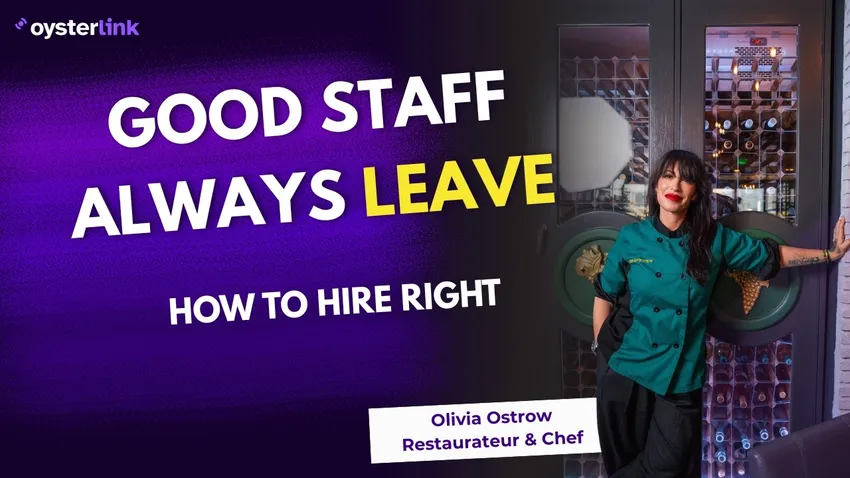

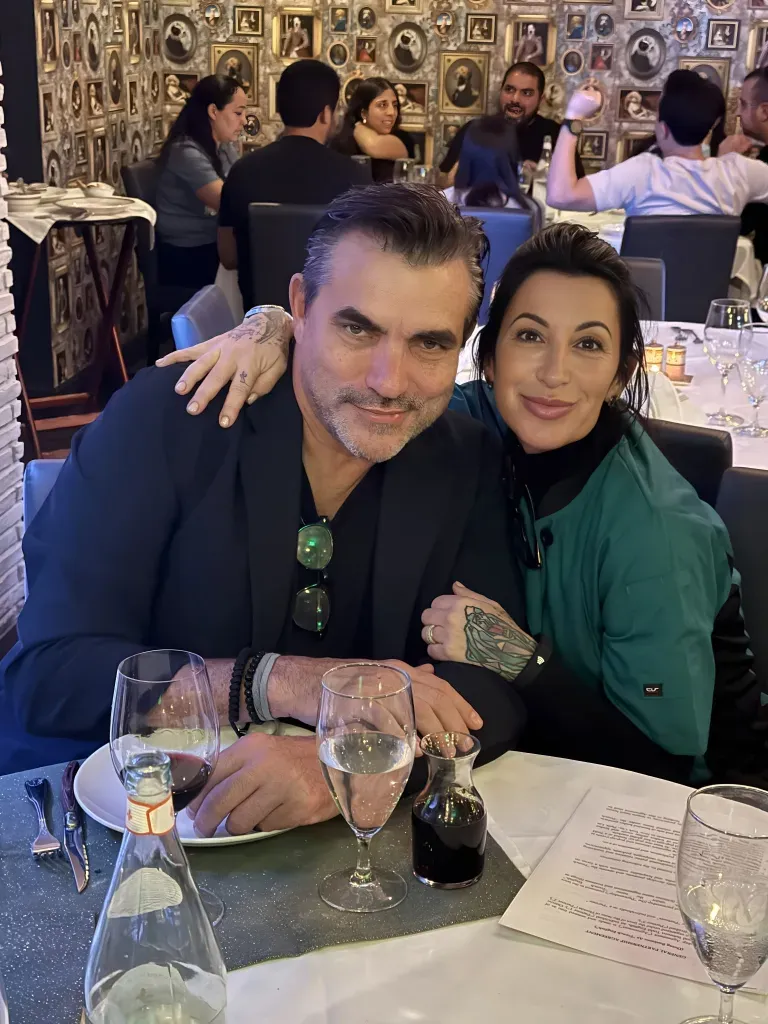
Although Olivia Ostrow’s goal is to redefine kosher dining in Miami, she does so while staying true to tradition. From starting as a Dishwasher to becoming a celebrated Chef and Restaurateur, Olivia has built a loyal team, developed a unique brand and launched ambitious concepts like French English.
We at OysterLink recently sat down with Olivia to discuss her career, insights into staff retention, navigating the front and back of house and her vision for the future of kosher dining.
Please introduce yourself and tell us a bit about your career path
Olivia Ostrow: My name is Olivia Ostrow. I’m the CEO of Ostrow Global Inc., as well as the Executive Chef and Owner of Maison Ostrow, located in Miami. My career path is long, a little bit crazy, very colorful and unusual.
I was born in Paris, so I really grew up surrounded by greatness when it comes to food and art. I actually went to business school, and I’m completely self-taught. So when it comes to the kitchen, it started with my father, who was an investor in restaurants, and I started as a Dishwasher. He hired me when I was in college to be a Hostess.
After the first shift, I went to him, and I said that it was not for me. I had to smile, talk to people and be nice when I couldn’t stand them. And he just said, “Well, you need to make money.” So I told him to put me in the kitchen. And I thought I was going to be the Chef or the Assistant to the Chef. But then, I cleaned dishes instead.
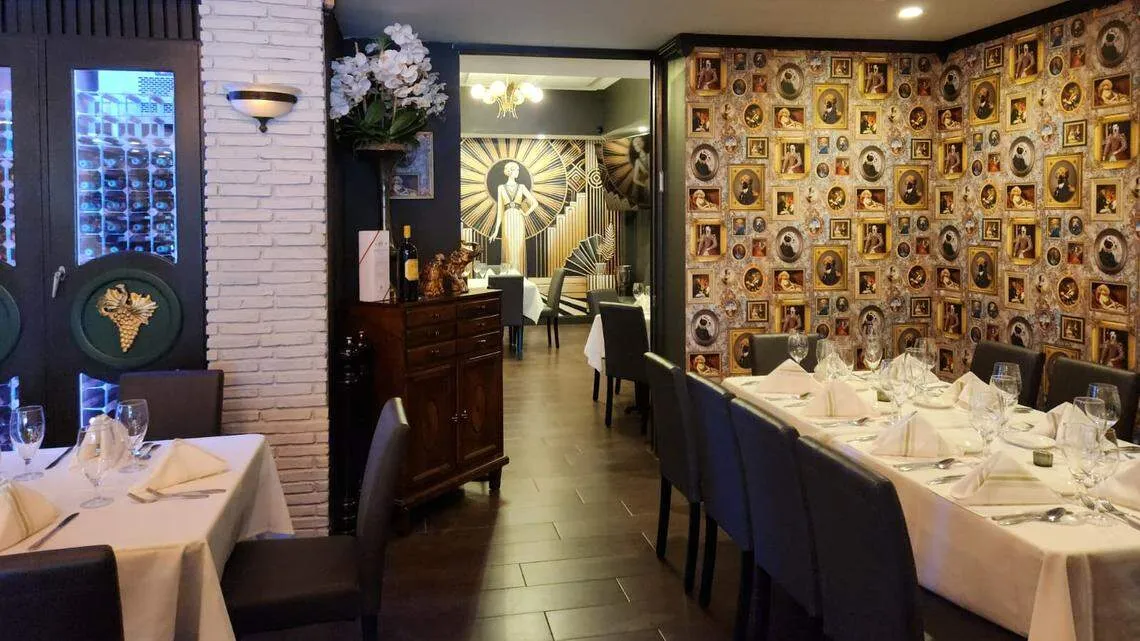
But in all fairness, cleaning dishes at that time was much better than smiling all evening at people. So it worked out to my advantage. I learned to love the back of the house as much as the front of the house. Throughout my career, I owned a restaurant as a Chef, and also ran a restaurant and operations for others, from being the General Manager for Cecconi’s, to being the Food and Beverage Director for the Savoy Hotel and working front of the house for Stephen Starr in management.
Done a lot of learning and broken my back, whether it was by the dish pit and on the line, and I have a few burns and cuts to prove it. So I think I have a good balance in understanding and managing, at least to the best of my ability, the very frequent war that happens between the back of the house and the front of the house. Like when the Server blames the Chef, and the Chef completely hates the Server. I think I have a good understanding of both worlds, and I’m a constant bumper between both of them.

So, from being a Dishwasher to being named one of the best Chefs in Miami, what is the simplest roadmap people can take to have the same success?
Olivia Ostrow: So the roadmap starts with believing in yourself. Don’t be afraid of people who will constantly tell you that you can’t, you’re not and you shouldn’t. I don’t want to make this a whole feminist thing because that’s not who I am at all.

“But as a woman in kitchen culture, either you’re cutting peppers, you’re in the dish pit or you’re in pastry. Well, screw that. You can be whatever you want, and you can do whatever you want.”
I think there’s no recipe, to be honest. There’s never been a recipe for anything I’ve done in my life, even when I got pregnant with my first child. I met all those moms who sent me books about giving birth and everything. I couldn’t even read one. I don’t have the patience to read. If I get a piece of furniture at IKEA, I can’t even fathom reading the directions.
So there’s no map. There is no map for a great dish. There is no map to what’s in your head, and everybody’s different. Just believe in yourself. That’s it. Do what you want. If you love it, you’ll always be drawn to hospitality, whether that’s running a hospitality company, being in front of house or back of house or being the Head Chef of your own enterprise. And you have to love it. It’s a tough business. That’s all I have to say.
You mentioned front of house and back of house. With the recent debate online about front of house feeling undervalued, what’s your take?
livia Ostrow: So it’s a very simple culture. I’m going to tell you how a Chef sees the front of the house. A Chef spends between 12 and 15 hours preparing a dish. A Server comes in at four, cigarette on the side, making sure his tie is right and then sometimes makes as much money as people who have worked 14, 15 or even 17 hours, just by bringing that plate and leaving. So there’s a strong resentment.
Also, some front of the house, in general and in the industry, can be a little lazy. Not in the hard work they put in, but I’m talking about working a double. “My God, a double,” while us in the kitchen, our life is a double. So there’s sometimes a little disrespect because it becomes very competitive about how much you work.
Now, the best Chef in the world, unless he’s serving his family at Thanksgiving or on a date, cannot operate a restaurant without a front of the house. One does not go without the other. A Server can only serve a dish that is made by a great Chef and can only make money if the Chef executes the plate perfectly.
And the Chef, even if he makes the greatest dish in the world, if it’s brought to the table by someone with broken or dirty nails, an attitude, chewing gum or body odor — let’s be real — it’s going to alter the whole experience of that perfectly made dish.
“It’s never going to change. There’s going to be bickering between the back and front, but one cannot operate to their full extent without the other. It’s in the culture. It’s hospitality. It is how it is. Everybody thinks they are irreplaceable, and that’s fine.”
Sometimes, if I’m on the line, I yell at the front of house people. I’ve been called to have “Chef Ramsay vibes” when I’m on the line. I’m a little brutal. But I’m the same person when I’m at expo. If I see my ticket passing 12 minutes, I go crazy in line.
So, you know, it’s only in the eye of the beholder, no matter what. That goes with hospitality, and that goes with everything in life.
Given that reality, how do you retain good people in an industry that’s known for its high turnover?
Olivia Ostrow: I’ve had the same people for three years. I don’t have that problem. So I’m going to tell you this: If you treat people well, it doesn’t mean they will stay. I’ve treated people so well that I gave them a car, and they flaked on me on grand opening day. It doesn’t matter. You can treat people incredibly well, and they’ll shit on you — excuse my French. They don’t care.
I think as you get older, you get wiser, and you start identifying the people you can trust. And the people you can trust might not be the best ones at the beginning. Those are the people you need to give your energy to, invest in and develop. That could be the Dishwasher who is never late, always five minutes early, never complains, always has a smile and is always ready to help others. That’s the person you should pay attention to. That person should become a Food Runner. That person should become a Busser. And that person should become your Lead Server two years later.
“That’s how you retain people. By actually lifting them up and you recognizing talent.”
So it’s a combination. Yes, of course, you can’t go around treating people like shit. But you also need to put your energy into people who are really worth it. If someone comes in and they seem great, but the resume shows they’ve worked at six places in the past year, they’re obviously not the greatest. It’s about knowing where to focus your energy.
In my team right now, my General Manager started as a Host. My number one Server was literally a Busboy. I mean, that’s how it is. You grow your own team. You humble yourself. And you recognize talent.
With that in mind, what makes you fire someone on the spot — and what makes you hire someone right away?
Olivia Ostrow: When you asked me that question, in my head, I visualized Jack Nicholson in The Shining, going from zero to a hundred. It’s like I have this switch. I’m about to turn 51 in a week, and I still don’t know what flips that switch. But when it’s on, it’s done — I’m done.
It’s like the whole “drop in the glass.” First of all, I’m known to have zero patience. It’s sad, but it’s the truth, and everyone knows that. I have no patience. So if I say something, if I ask for something to be done, the people who know me best will get to it before I’m even finished asking.
I’m very nice, but life is short. I could die tomorrow. I literally always feel like I could get hit by a bus. I have a mission, and I want to do it. And before that bus hits me on my way out, I’m an upper, not a downer. Everybody who gets on my bus is going to be lifted, given more responsibility.
“I empower people to make their own decisions. I hate micromanaging. Do your thing. Let’s all shine. But if someone is dragging, I don’t have the time. I don’t have the patience. I don’t have the energy.”
We love that, but let’s switch things up. Your brand puts a strong emphasis on kosher. What inspired you to focus on that?
Olivia Ostrow: So I didn’t really decide. It wasn’t a decision that was made consciously. I’m Jewish, born Jewish. I come from a long line of Holocaust survivors. I’m Ashkenazi, from France, European and I also lived in Israel. When I lived in Israel, I ate fully kosher.
Then I moved back to America, and I dropped it. Then, I started eating kosher again around COVID, and I felt a little like, where was the grandiose food? Where was the duck confit? Where was the incredible plating?
And when I talk about incredible plating, I’m not talking about smoke and flowers on a dish. I mean, plating that makes you understand what you’re eating. Where’s the boeuf bourguignon? Where’s the homemade pasta? Where’s the food? It wasn’t there. So I felt obviously there was a niche, but it was done almost extremely selfishly. I wanted to eat well, and I felt like if I want to eat well, I’m sure some other people want to eat well as well.
That’s why, if you look at my restaurant location, my branding and the people I associate with, they’re not typically from the kosher neighborhood or kosher industry. I don’t see myself as a typical kosher person. I eat kosher, but I just care about great food. I don’t care about great kosher food. I just want great food.
By choosing locations and partnerships outside the typical Jewish or kosher world, we can really have a worldwide vision, not just a little market.
Did you have to introduce kosher food to your diners? Or did your community already know about it?
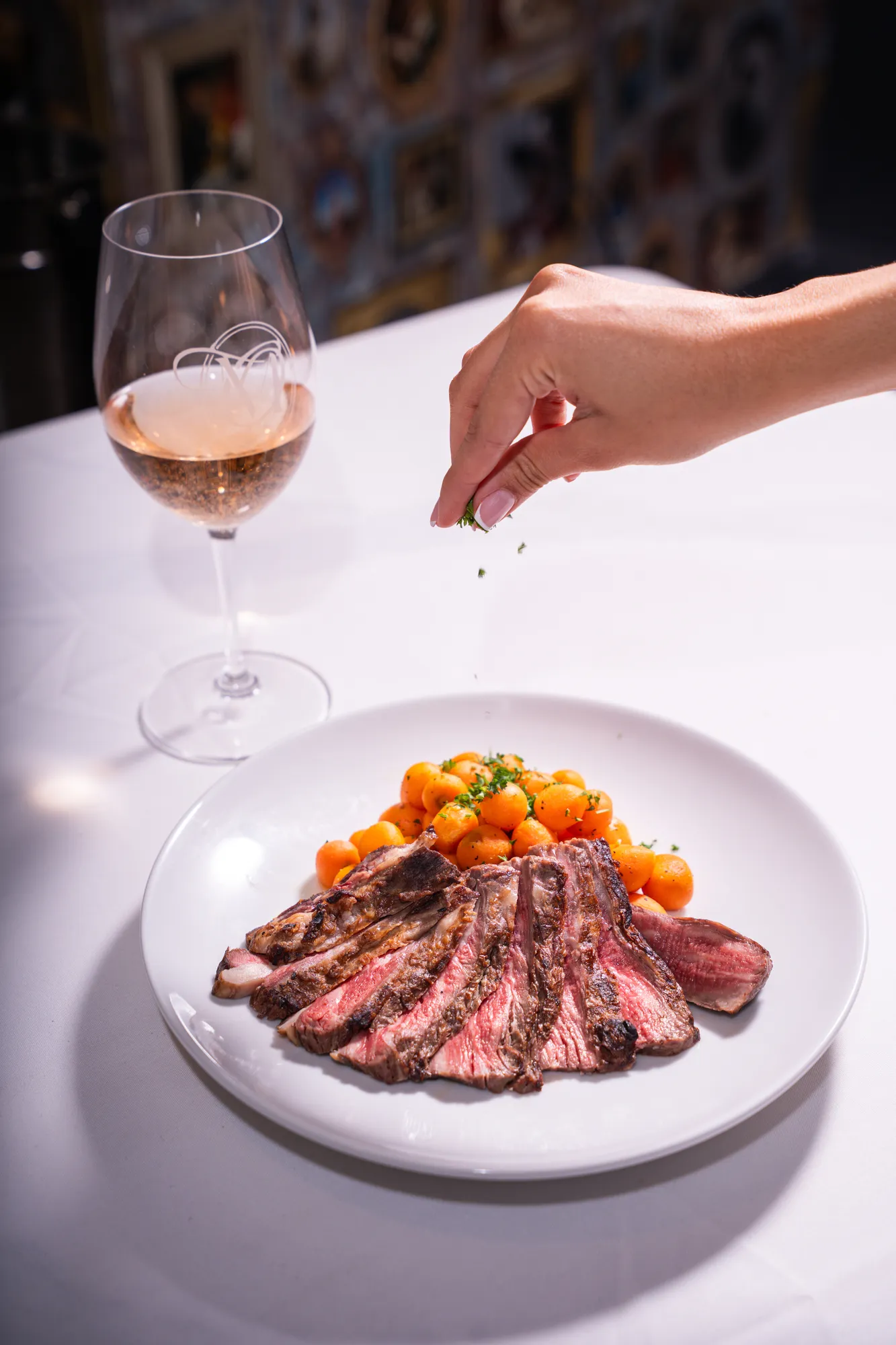
Olivia Ostrow: It’s a very good question. It’s 50/50. A lot of people who come here don’t know kosher, and they get to experience it and enjoy it. A lot of people who come here don’t want to go to kosher restaurants. They’re what we call modern Orthodox, almost. They eat kosher meat only. They eat fish everywhere. So they go out to Nobu, Makoto and all those restaurants that serve fish and then eat meat at home, most likely.
The reason is that there’s this stigma against kosher restaurants. That they’re dirty, the service isn’t good and the Chefs aren’t real Chefs. It’s a little like what I call the “Shabbat club.” And unfortunately, a lot of people don’t like me speaking the truth, which I couldn’t care less about. But that’s how it is. And that’s how it is with, I want to say, 90% of kosher restaurants. It’s bullshit. Then you have the 10% that are struggling because they are real Chefs, but people are missing the “eat moment” because they don’t want to go to the fake restaurants with no real Chefs.
That’s what I offer. Yes, I introduce to the kosher world a different kind of cuisine, which happens to be kosher.
Speaking about your branding, how do you prevent Maison Ostrow from becoming just another regular Miami hotspot?
Olivia Ostrow: So, first of all, I’m not trendy at all. I don’t follow trends. I don’t care about trends. I don’t care about food trends. I’m very much like the horse with the little blinders. As I said, I’m not into smoke coming out of a plate, flowers in a dish or all that. I don’t care about all that.
Following trends can make a lot of money in a short time, but then you’ll end up closing. A lot of big, big, big names in the Miami market keep doing that. They open, close, open, close. It’s the eat place, they close. There’s dancing, there’s this and that, they close and then they reopen. I don’t have the luxury to do that.
I believe I’ve built a following over the last three and a half years since I entered kosher. My customers and guests are loyal. My followers are growing and discovering more of what I’m doing with this new location, and I’m expanding my horizon. I will never fall into the trendy thing. It’s not for me.
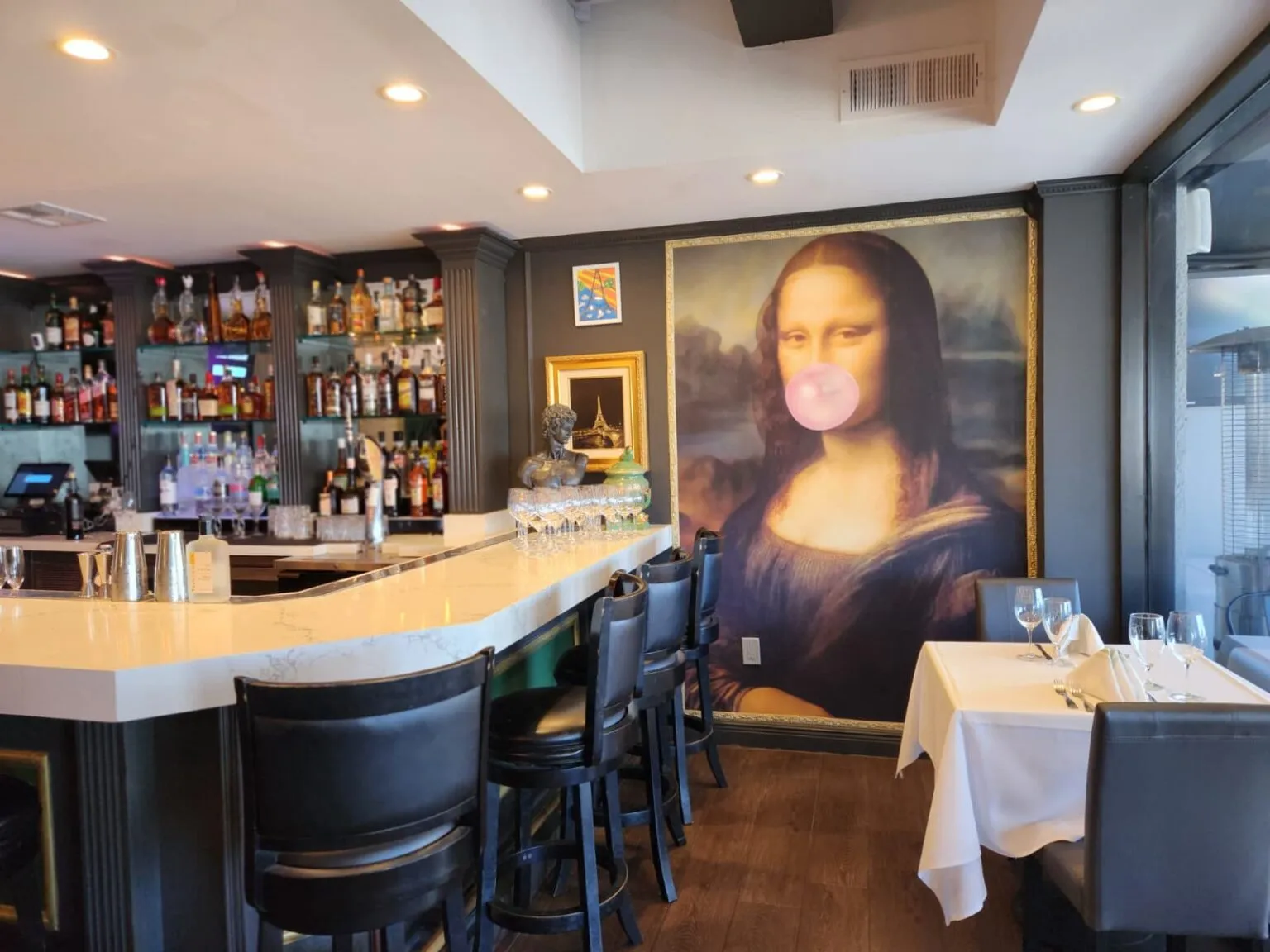
I’m actually very old school. As a woman, I’m old school. People see me completely differently from who I am because, obviously, I’m a woman in a leadership position. I have tattoos, I’m eccentric in my clothes, I speak my mind and I’m afraid of absolutely nothing or no one. But I’m very old school when it comes to respect for my husband, for the food itself and following old-school French food rules and presentation. I’m obsessed with tableside.
When you stay on the path of what you think is the right thing to do, and transmit that, I think you’re fine. As long as I don’t see smoke coming out of anything I ever do in my career, I’ll sleep okay.
Speaking of traditional, we see that you’re not that interested in building a fan base on social media. Why is that?
Olivia Ostrow: I mean, what would be your suggestion for building a fan base? What should I do differently? I get up at six in the morning, go home around midnight and work — whether I’m working on marketing ideas, business development, a dish or a step of service.
The truth is, I think the press and TV like me. I can’t really go into details because I signed a couple of non-disclosure agreements, but I just filmed a new show in LA that’s coming out in the spring. There’s another one on the table that I’m hoping to film very soon as well.
I think it’s all about being confident and being who you are. I think the press likes me because I’m unusual. It’s a good question. I’m questioning myself too. Why don’t I have 50 million followers after all? I don’t know.
I just do my thing. I don’t look at what other people do. I post what I want on my social media. To be honest, until one month ago, my Instagram was private. I turned it public after my marketing team screamed at me: “Dude, you post all this great stuff, and it’s private, come on!” I didn’t want to be public for the longest time, so maybe that’s why.
I love my fan base, my little cult. I love people who love me. I’m a total egomaniac, like every Chef on earth. But I’m so focused on work and work so hard that if you saw me on the street, most of the time you wouldn’t even recognize me. I work a lot. Let me put it this way: I’m not always glamorous.

Given your journey, what do you think is the right time for someone to open their own place?
Olivia Ostrow: I don’t want to quote badly, but there’s a movie called Little Miss Sunshine. The little girl is crying in her bed to her grandfather. She’s so cute, but they’re not making her the prettiest girl. She goes to try a beauty pageant, and she says, “I don’t want to lose. I don’t want to be a loser.”
Her grandfather asks, “Why?” She says, “I want to win for Daddy. I don’t want to be a loser.” And then he explains that a loser is someone who doesn’t try. A loser is someone who doesn’t ever fail. That’s a loser.
In that aspect, there is no right time. There’s going to be the wrong time over and over. There are going to be great memories. If you don’t try, and if you don’t fail, you will never succeed.
“Success can only somehow be linked with failure. How do you know you succeed if there’s not a moment of darkness? How do you know what happiness feels like if you’re never sad?”
I’m not a philosopher, and I don’t want to pretend to know more or be deeper than I really am. But there’s no right time. I’ve failed at a hundred thousand million things in my life. There are moments when I’ve failed as a mom, which is by far the most important job I’ve ever had. I’ve failed so many times, and because of that, when you look back and realize, “I shouldn’t have said that, I shouldn’t have done that, I should have been there,” you become a better person, and you become a better parent.
This kind of mindset will eventually lead you to your own success. Also, who knows what success is? I think I’m successful now because if I get hit by that bus I keep mentioning tomorrow, I have so much TV and press exposure that I’ve left my kids with so many memories. They’ll be older with their own children, and they’ll say, “Look at your grandma, she did so much.” So in a way, I’ve succeeded in leaving them a wonderful image of me, beyond just their grandma cooking.
Success depends on what you want. Opening a restaurant? Go for it. You’re 18? Go for it. You want a food truck? Go for it. Fine dining? Go for it. The truth is, there’s a very big chance you’ll fail, but you won’t be a loser if you get up and keep on going, and eventually get there. That’s what I have to say.
Very insightful. To end this interview, we’d like to ask you about a new concept you announced very recently, which is French English, in collaboration with Todd English. Can you tell us more about it?
Olivia Ostrow: When you listen to my podcast, and I know you will because you’re obsessed with me, obviously, Todd and I have known each other for a while and have been dancing around the idea of doing collabs and pop-ups. Then we finally dropped that idea and decided, let’s just be partners.
Let’s open a kosher lifestyle concept called French English. I’m the CEO, and I have an amazing business partner in Ostrow Global Inc. Todd English is now one of those partners. He has invested in the group, and together we’ve created a sub-brand called French English. We are developing the idea and business plan to open kosher restaurants in Beverly Hills, London, Paris, New York, Chicago and Dubai.
We’re working on butter sauces and non-dairy butter that I’ve been developing for years, which are unbelievable. In January, we’re also opening a new concept called Baguette Maison by French English, which takes the best sandwiches from all over the world — pita, laffa bread, Indian, Greek, you name it — and puts them all in a baguette, all kosher.
The French English brand is an extraordinary step in my career, and I think it’s also a big step for Todd, who’s now fully immersed in the kosher world. We want to open many restaurants. A hotel would be nice. We’re aiming for Las Vegas, Disney — where he already has a restaurant — and more kosher concepts.
Right now, we’ve started pitching to more investors to join the venture, and we already have many leads and spaces we’ve been looking at. It’s very exciting.
Check Our Career Growth Tools


Find available Restaurant Manager jobs in Miami, or check out more interviews like this brought to you by OysterLink to learn about the industry. You can also get them straight to your email by creating an OysterLink account and joining our newsletter.





Loading comments...