


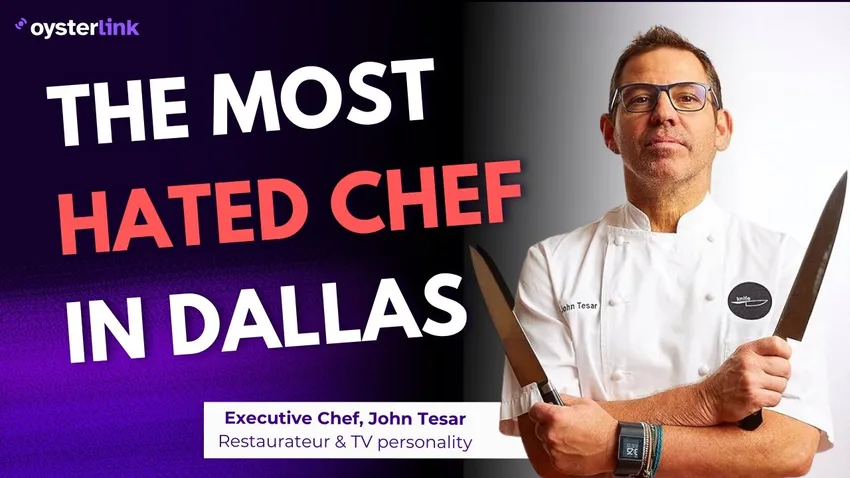

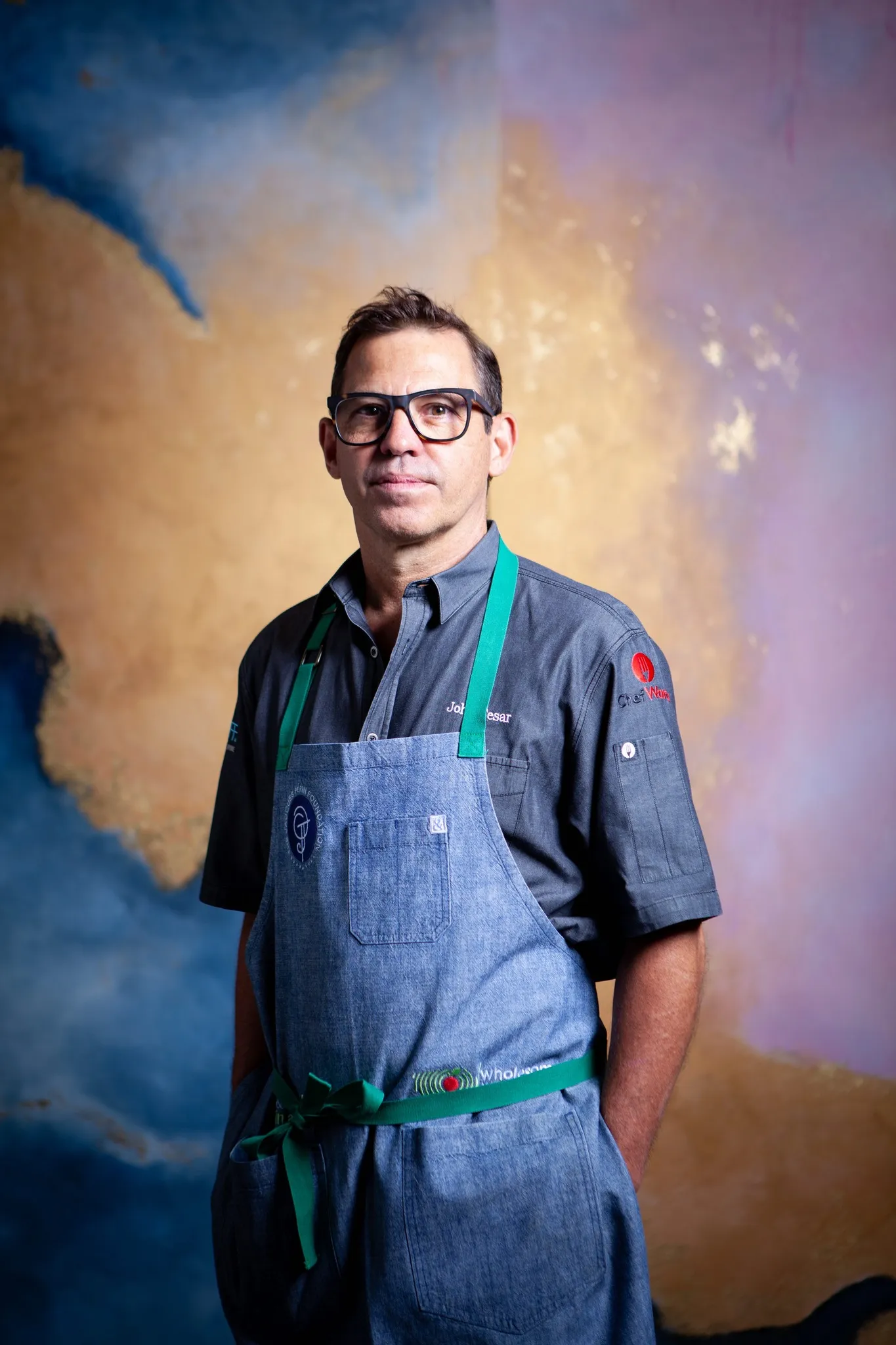
With five decades in the kitchen, John Tesar has seen it all, from the hardcore New York scene to Michelin stars in Texas. The legendary chef behind Knife discusses the "lost art" of cooking, the distractions of fame, and why putting your head down and working is the only path to respect.
Can you tell us about your career path from a job seeker's perspective?
John Tesar: Don't believe anything that you see on the internet. I really have become, you know, this older guy. I'm not the old man screaming, get off my lawn. But I believe that technology is working against us rather than for us at this point. I mean, there are definitely some positive aspects about technology. But I think this generation needs to put the screen away and get out on the street. You know what I mean? Because if you really want to learn how to cook and be in this business, you have to experience lots of different things. You can't just be in your hometown and work for the best chef in town. You can't go to Paris once or peel carrots at the French Laundry or go work at one of Daniel's 35 restaurants. I mean, those are great places to be or great places to learn. Don't get me wrong, but it can't just be one thing and it has to be real. It can't be an image on a screen or a moment.
I've been doing this for 50 years. Luckily, mean, knock wood, whatever it is. I'm still in the game at 68. I'm still relevant. I'm still growing my career, which I want to just, I don't think I'm an example for anybody. I mean, this is my life. You know, I've done good things and I've done some stupid things, you know, for myself. I haven't hurt others. I've only hurt myself, you know. Maybe I've hurt some people with my words, but they probably deserved it. And you know, they're soft to begin with. I just, I apologize. I realize the world we live in these days. I grew up hardcore New York. I was adopted. My dad was an alcoholic. I've raised myself. I have a story to represent my attitude, which most people don't take the time to get to know. And I think that's a relevant analogy to the question you asked is that most people don't take the time to get to know the profession. They want to go work at the fanciest place, the coolest place, the newest place, the innovative place or they want to jump on television and be known because we're human beings.
You know, we're social animals. We need validation. I need validation. So I did all that stuff. But it taught me a lesson in a serpent time way: if you're to be a chef, cook, you know, and that sounds cliche, but I look like Alain Passard every day. He goes to the farm, loads the truck up with the vegetables, goes to L'Arpège and works with these kids and makes all of these wild really classic adaptations of French food with vegetables. And it's a passion. Now that's a very unique situation. Could you recreate that? Maybe with lots of money, you know? But he's done it organically over the course of his life.

And my point is that if you want to be in this business, you are the architect of your profession. The choices you make, if you start out at Shake Shack, there's nothing wrong with that. If you learn how to make a French fry and you make great French fries, there's nothing wrong with that.
Because I can say, I make a great French fry. And trust me, you put a number of years together, you put the French fry together, you put whatever X, Y, and Z together, and then you have a repertoire, and then you can stand in a room and cook with anyone. And that's my judge of a chef. It's like, I don't care how famous you are, I don't care if you've been on TV, I don't care if you hate me because I don't really respect you because you're on TV or playing game shows all the time, you know? And ruining my profession because people want to be on a game show rather than cook, learn how to cook. And then I have anxiety because I don't want to begrudge anybody their success in a different genre. But entertainment is not what we do. You're not going to get a job to become an entertainer. Otherwise, you should just go to acting school and become an entertainer and maybe cook. Bourdain wasn't the greatest chef in the world, but he used cooking to get to his chosen profession.
So what I'm saying to some of those people, this is the beef I had with Bourdain too. At least Bourdain did good with it. You know, because he perpetuated chefs, he created interest, he brought politics and intellect into food, but he was not the greatest chef, you know? So people think Anthony Bourdain was a great chef. Eric Ripert is a great chef. They happen to be great friends. Anthony Bourdain was a great storyteller, a great writer, sometimes a really great person. But was he a great chef? No. And I guarantee you, Eric, Mario, whoever he ran with will tell you the same thing. He made two things every time, beef bourguignon and a Portuguese beef stew. An amazing writer. He was the Hemingway of our time, you know, and did so much for cooking and being cool and all that other stuff, you know? But that's not what's gonna, if you come to me, that's not gonna get me a job.
The fact that you like Bordain and I hung out with him and we kind of, we bro it out, I don't care who you are, what color you are, where you come from, what you've done before. You come into my kitchen and you do the job and you do it well, you're gonna get ahead in life. I don't care who it is. You put your head down and you work, life is going to reward you. Whether you believe in the higher spirits or not. If you work and focus, but if you get distracted, you're gonna have bumps in the road. If you're gonna need constant attention and make it about yourself, you're gonna have a lot more adversity than if you just put your head down at work. You know, I'm speaking from my own personal experience. I mean, this is what I can tell you about the mistakes that I've made, you know, the impulsive actions, the need for attention, you know, thinking that fame was gonna make me a better chef. No, it took me away from what I really wanted to do.
And I'm lucky that I've survived long enough to come back around where, you know, I can still do it. I still do food festivals. I dab it, I enjoy it. But you know, I don't play well with the other kids because I don't want to be on Instagram in a picture with some famous guy that I met five minutes ago. I want to be with my family. I want to enjoy the beach when I'm in Miami. I did my event. I served great food. I'm not going to run to get a picture with Bobby Flay. I'm sorry. I have known him for 40 years. know what I mean? So that's just me. So you have to make a me. Everyone has to make a me or you. You got to figure it out for yourself.
If you get distracted, you're never gonna be a chef. I mean, if we create a generation of chefs that make up shit all day long and they pal around, then that's the food the next generation is gonna be stuck with. Or there'll be a resurgence to go back to retroactively classic food and fine dining instead of everything being so casual, so glitzy. Everything has to be a nightclub. They wanna turn restaurants into entertainment. I mean, these are all trends that I can't stop. I don't have the money or the ability to do it. Nor am I the guy who owns scripts or, you know, whatever network is doing the show today, right? And it's sure, someone called me tomorrow to be a judge on a network television show and paid me $5,000, $10,000 an episode for two or three weeks of shooting. Am I gonna say no? Hell no. So you know what I mean? That's all, it's like a bowl of spaghetti. You gotta just find the meatball in there somewhere or whatever, the clam, whatever your thing is.
And you do it, and you can't do it from the couch. You have to do it from, get in the world, go out to dinner, sit at a counter, talk to a cook, you know? Get a real resume and be honest about it. Be humble. Go in while you're young, especially when you can live in a big city or an exotic place and have a roommate or live with two or three people, because you're still young and you don't have to deal with like that maturation process or desire to have a family and bring a girl, you know, like. All the things that complicate living and work your ass off. Trust me, that's what Daniel did. That's what Jose Andres, well, maybe Jose Andres didn't do that. But a lot of other people, he's a smart guy, his translator, represents the government, he's a brilliant guy. And he does so much good, he brings so much good energy to things. But the real chefs that I respect, and it's not because they did it, it's because of how they did it, but it's about the result that they accomplished from how they did it.
We all started out as apprentices of some sort. Even Bobby Flay worked at the Miracle Grill, flipping pancakes or whatever it is. You know gotta start somewhere, but you can't just insert yourself into something because you watched it on Instagram or you watched Chef's Table or you're a foodie, or even if you have a natural talent, because one day they're gonna pull the rug out from underneath you. Because I'm telling you, after five decades of doing this, I don't forget the James Beard Award. I just want someone to say, you've been in the restaurant business and relevant for 50 years, even though you are a character or whatever people think about you because they don't know you, right? I just want to be respected that I've been in this profession for five decades. I've done a great job 90 % of the time when I've opened a restaurant. I wasn't the greatest businessman at times.
I wasn't the greatest person at times, you know, but you have a talent and you have to protect it because that's the only thing you have in this business. And just like singing or playing a musical instrument, be honest with yourself. Are you really good or you just wanna be good? You know, that's, I think, the most difficult thing for chefs. You see when you walk into a room of lots of chefs that aren't accomplished yet, because they're all young and they're fighting for, like, it's great to see. I love watching it, you really do. It's inspirational. But then when the egos come out, I leave the room because then I know that's where we're.
We're losing space and time there. I think chefs have always had a little bit of an ego. I think once chefs became popular, you know, once chef supermen started to represent chefs from the rock and roll world and became rock stars. Yeah, but back then it was based on accomplishment. Like a James Beard award, you didn't have to write a letter and beg to be nominated for an award. The industry saw a Bradley Ogden in California changing the scene. They saw a Larry For Gione hanging out with Paul Prudhomme and James Beard and bringing American food to the forefront. That deserved recognition. Just because you're the last guy in St. Louis doing molecular gastronomy and you write a letter and you have a sad story and your owner donates 10 grand to James Beard Foundation. But next thing you know, I got a metal hanging around my neck and I get to talk to the industry and all of those egos and energies now, we all come together like some ball of shit.
You know, I mean, that's serious. And then we hate on the other people that are coming up or we want to protect what we have and don't share it. And don't get me wrong, a lot of those people do share, you know, or they bring up other people, but isn't it really always about them? You know, I don't. I've had a transformation in my life where I just want to be a dad and a good, you know, mate and have good restaurants. I feel that the celebrity time is over for us because there's a saturation of everybody that steps into the scene, everyone that gets into the business has to become famous because there's so much money involved in it too. Commercial real estate, corporations, they want to have a horse. You know, I've been a racehorse my whole life, Most chefs wear racehorses. We don't have the money to have five restaurants. We get bought up by, you know, some guys that love our reputation and we get along with, we're lucky. I mean, I have great guys behind me. Trinity that put me in the Ritz Carlton, they believe in me, I make money for them, but they gave me the opportunity and I'm Joe Schmo, you know.
But they gave me that opportunity because I cooked and because I made good food and I'm honest. That's, you know, and you can be honest to a fault because people misinterpret your sentences or your thoughts. I don't begrudge anybody who's famous or successful in any profession, as long as they're a good person and they're doing something to move our careers and our profession forward. And I think we've hit a brick wall with that because you have the same 20 people on television on the same premise of a game show, just a different format, right? And if you do, if you, if you run around with a shopping cart for two days on one show, then you can be a judge on the other show. Yeah. Meanwhile, whatever the production is making is millions of dollars and they're paying you $2,500 or $5,000. And you're giving 30 % of that away to a manager and an agent and then the rest to the government.
So I don't know how that perpetuates a chef's career unless you want the attention and or you have restaurants that people are going to go to. You're the marketing tool or you're selling something because that's what it is. It's an advertisement for you. It's an advertisement for your career. Right. You'll get an opportunity. People will give an opportunity just because they're on TV rather. You could be the best chef on the block, but the guy next to you was on Hell's Kitchen or something or, you know, he did something outrageous.
And for some reason, our society runs to the train wreck rather than the real low-key super talent. So I want to end my career being a low-key super talent because I can now be the architect of my own life. Because even with the licensing that I possess, I realize at a certain age, at a certain time, that's going to run out. No matter how much money I'm making, no matter how fresh I keep the concept, I have to have something for myself. And this is a great lesson for anybody in this business to build a retirement plan for yourself unless you want to work at a country club with a cookboard when you're 50 years old. Which is nothing wrong with that either, but that's not why I worked so hard and went to France and lived in New York and struggled and did all the things I did. I want to be a notable chef. I don't need to be the most famous chef. I just want to be respected that I did a good job and I had a talent. I worked hard and I believed I helped other people in our business too.
I gave other people an opportunity. And it's really tough these days. Kids have a really difficult time accepting, know, they want it all, but they don't know how to link up with you emotionally, you know? Because I'm, you can see I'm open, like I'm a wide open book. Fenny Cook just came up to me and asked me for a recipe or this and that. There's no secrets. I don't own anything. Maybe in my entire career I've come up with three original ideas that were really good, that I would keep and use and I didn't use chemicals or gags to do it. It's real food. Again, you gotta pick a lane these days, but for me, it's like I don't need to learn everything. I don't wanna work with chemicals. I see the advantage of using them sometimes in certain things for a result, like removing dairy, or you want a texture or something like that, but I think nature, I'm like Marco Piero White school, man.
Don't fu** with me or I'm gonna throw you out. And then, Mother Nature is the chef. I'm just the cook. Because I'm only as good as what I work with. We've been through all this whole farm to table shit and then the Cisco truck pulls up at the back of the restaurant. There's so much politics and so much nonsense in our business. If you have the ability to peel back the layers or get a job or a situation where you the architect and you just focus on your kitchen and the quality of your food and being a mentor to the people that you work with, you're a success. You don't need to have a cookbook or be on TV or a million dollars in the bank. You're a chef and you're doing your job. The rest should come. I can't predict what's going to happen for anybody.
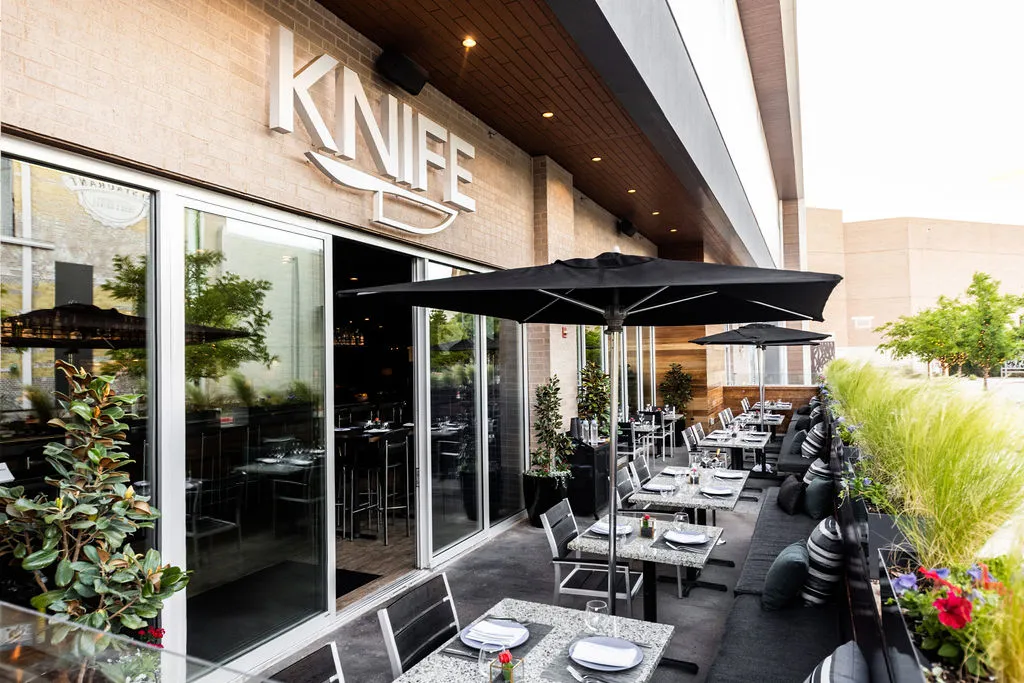
If someone walks into Knife tomorrow with a resume in hand a printed resume asking for a job do they still have a chance or do you just assign recruitment to AI these days
John Tesar: I you know it's so bizarre that I'm in this position but I've been so shunned when I was younger in New York you know because I had a restaurant in the Hamptons for a long time and you know the Hamptons is all glitzy and whatnot but it's only three months and people have a short memory once they get back on the Long Island Expressway and start heading to Manhattan so you know I had this really cool restaurant in the Hamptons for 11 years but in the first few years I didn't have it all year round I couldn't sustain it so I'd go to I'd have to go to New York and get a job to work and you'd be surprised how many doors to slam in your face, right? Because it's really hard to get a job in a really good restaurant because those positions are filled. And when I was coming up, if you got sick or you missed a day, someone might have your line positioned the next day and you're back in garmage or you're back in prep because the machine needs you. But now we have a whole different approach to our profession because we have to take in everybody's sensibilities.
Which I think is a devastating thing, this should be mutual respect and consideration and treating people honestly at work. You know, not berating them like old chefs would throw pans and berate people. I'm not talking about that. I'm talking about this job. We're gonna work at least eight hours today, maybe 10, right? If we get to know each other and trust each other, we're gonna be a family. We're almost gonna be like a cult or a commune because we're like a Swiss watch.
I tell people that a good restaurant, a good hospitality situation is like a Swiss watch. It's like everybody wants it. It's beautiful. You count on it, right? One piece breaks in that watch and then it becomes a useless piece of metal or whatever it is because it doesn't serve its purpose anymore.
So whether you're the dishwasher or the doorman or you're the guy that cleans the bathrooms or you're the star of the show, it's a fucking team sport.
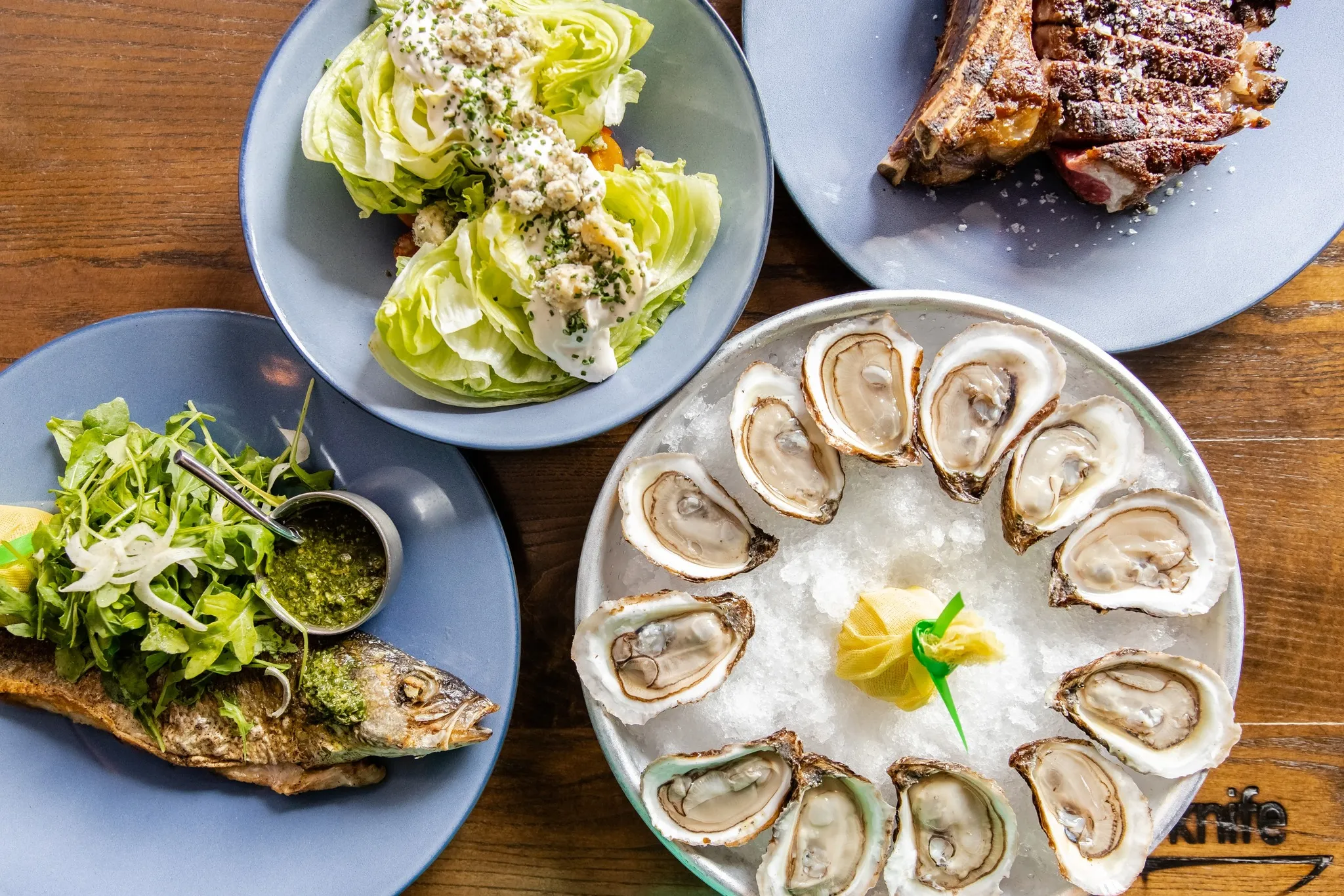
And when we start to forget that, that's when things get rough. Or if we built a whole cult of brats, I call them brats, because some chefs, they have a gang, and they create this ideology, but it's ego-driven, where they roll into events and there's seven of them. They're doing one thing, but they have seven people with them, they're sous-vide machines and epaulettes on their chef coats and stuff like that. I roll in with two guys and we cook right at the station. Give me fire.
Give me my sauce, give me a raw ingredient. I'm gonna cook in front of you, because that's what it is. I'm not gonna give you a cup of custard and ride my laurels. You came to see me, I'm going to feed you. Not sign an autograph, not take a picture with you. I mean, if you like that, who am I to say no to attention or someone who likes me? That's what we all like. But that's not why I cook, and that's not what fuels me anymore. So what I'm saying is I can understand it, because I used to be that way and was probably the biggest deterrent to my career. And I think there's a lot of young people today who are extremely talented that I respect, that I even like as people, but I stay away from them because they're so enveloped in that television-driven thing. It's a distraction for me. And I don't want to be sour with them because I respect them. some of them are really good cooks. Some of them are really good friends. I just can't live in that environment anymore. I can't tell you why, because I just don't think it's real.
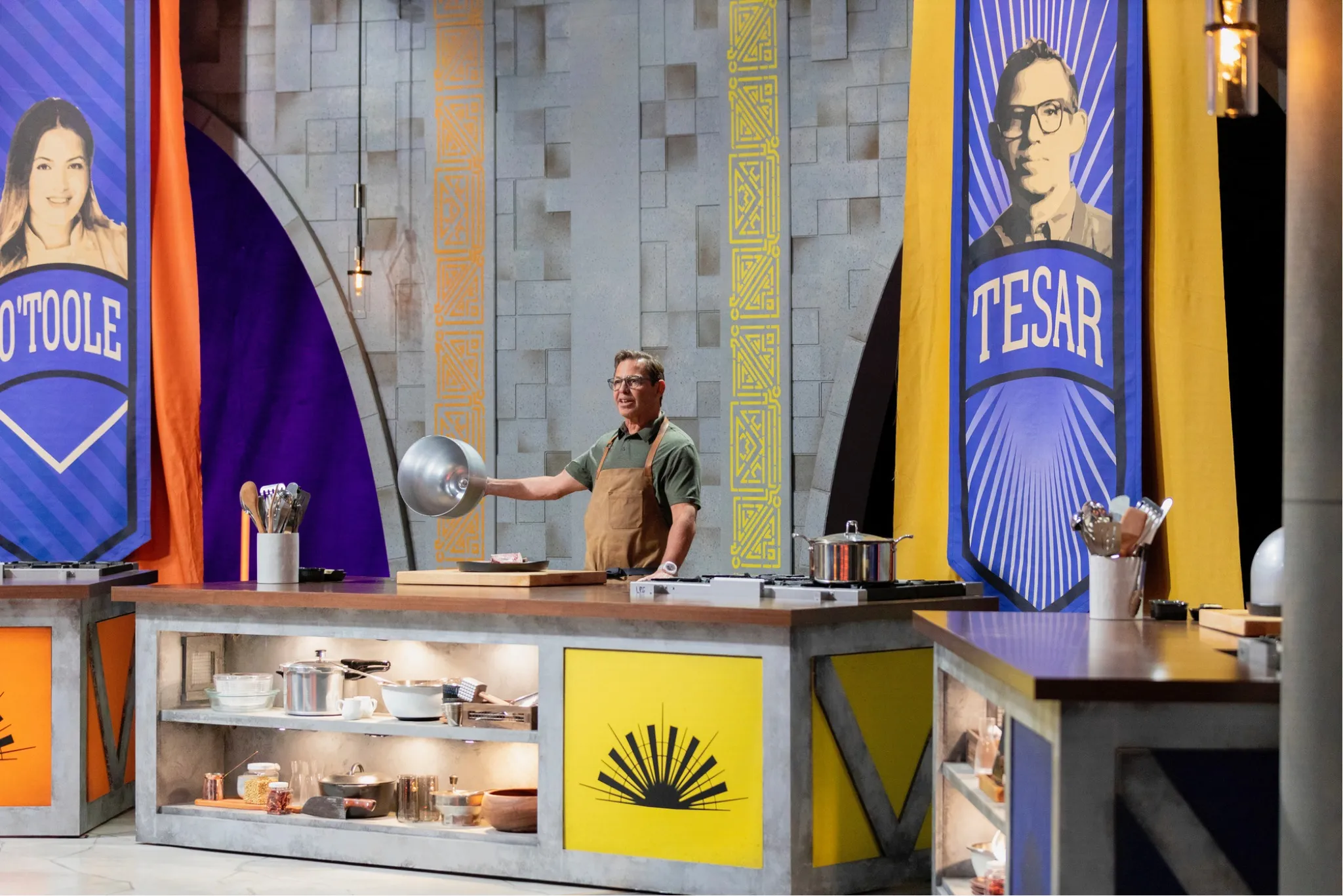
I don't think it serves us as a business. I think it serves a very few small people who have the big contracts and the big money. And then the rest of it, like James Beard too, like the next generation, it's just bait. These people are making money off your ambitions, off of your desires, off of your passion. And do they serve a positive purpose? To a point, yes. But everything that involves money or progression or awards or fame, right?
In America, we're watching it right now, it takes a turn for the worse because then it becomes about ego and money and me and look at me and hey, that does nothing for good food in a restaurant or mentorship for anybody else. It sets all the bad examples. I'm guilty of it myself. We're talking about the real thing. let me ask you about education in this industry. How much does culinary school actually matter to you when hiring today?
Wow, you know, again, I'm not one to be the arbiter of what's right or wrong. I went to La Varenne. I'm dyslexic. I was never a very good student, but I think I'm fairly intelligent. So I used my learning disabilities to my advantage, and I found a profession where I had a God-given talent. So I've been blessed that way. But education is the most important thing in life, period. So I'd never be one to put down a culinary school or anything. I understand how expensive things can be these days too. And I've visited some of these institutions, you know, and my only thing is that somewhere in the world that we live in, you know, you're there to encourage, but you have to be honest. You know what I mean? So just taking people in because it's a business is one thing.
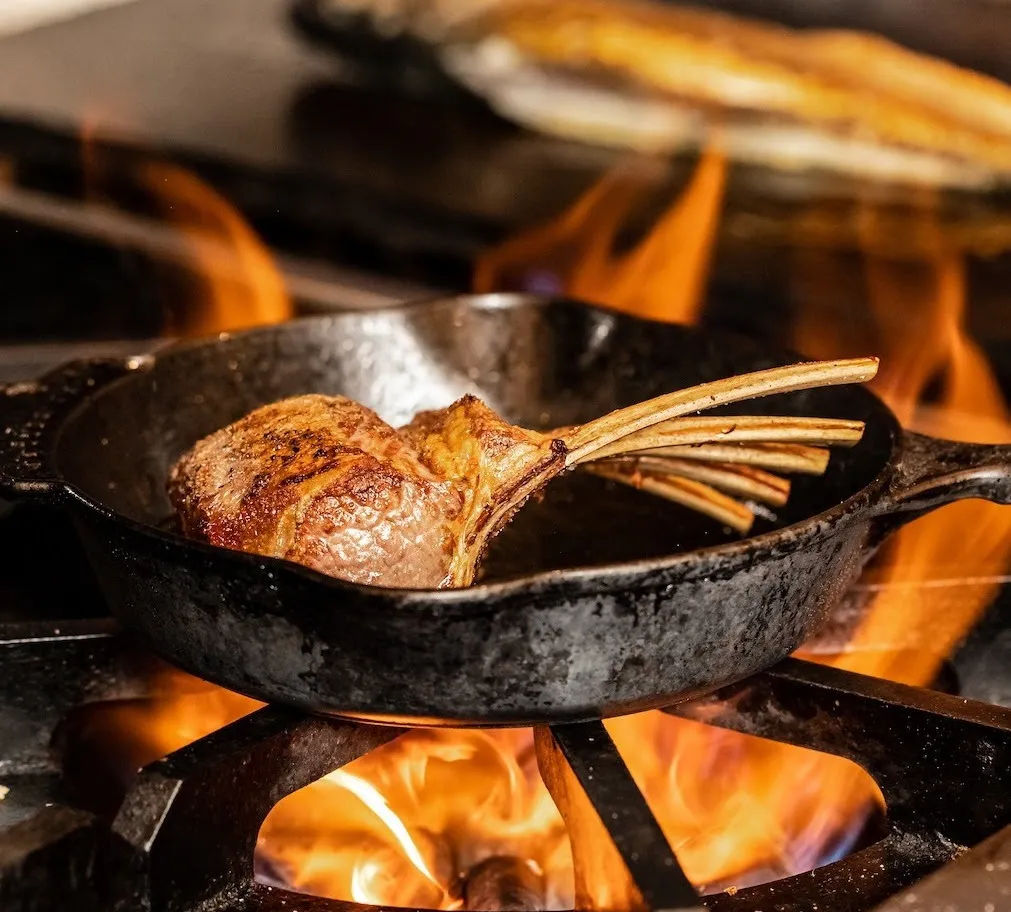
But like when I went to La Varenne I had to be interviewed to go there because it really was a cooking school for women whose husbands were in the foreign service or lived in Paris or they were diplomats' wives and they were learning how to cook French cuisine. And I heard about this cooking school. It was the 80s. I had heard that Jonathan Waxman had been there. Alfred Portale had just come back from Monte Carlo. He wasn't even the chef of the Gotham Bar and Grill yet. And, you know, I'm putting two together. I'm a cook. This is my profession. How am going to make more money? And the answer was to go to Europe and learn a different way than what was going on in America.
And I still believe that. Europe is always more refined. It's smaller, it's more detailed, it's more historic. They don't let people steal history. I mean, we've all gone through these phases, let's face it, there's Asian food, there's Italian food, there's French food, and then you have East, there's so many different foods that we've now put into the culinary world. There's a lot, that's another thing is like, how do we blend all of this ethnic food into the American dining scene and how do you learn that without just being, because some cuisines I think you have to come from that society to really, to master it. Because it's like knowing the flavors, right? I can say, you know, I'm going to open a Chinese restaurant tomorrow.
I don't know, it's just a, it's not the real thing. It's like a Disneyland restaurant. So education is everything in the sense that if you want to open a Vietnamese restaurant, you should maybe live in Vietnam for a year. Not just watch a documentary on Vietnam or go to a Vietnam restaurant when you live in Cincinnati and the lady's really amazing. You know, I've been to some cities where the Thai food and the Vietnamese food is, like, and these are James Beer nominated restaurants and they're amazing. You know, everything is like spot on and you feel like you're at a, you know, in Thailand, you know? So like it's creating, for me, it's always creating the situation that's going to be true, but excite people and be relevant. And the only way you can do that is with history. Otherwise you're just making stuff up.
You know, I can have a lot of money. I can have rich parents. I can rent out a mansion, right? I can make some sushi rice and I can make sushi in front of you with a torch and give you 22 little bites and charge you $1,000. And Michelin would probably give me a star because they love Japanese omakase restaurants. I don't know why. It's the French fascination with Japanese culture to begin with. I lived in Paris. know. This is another thing. like you need to live in places to understand the politics or the meaning behind. Most Americans don't even know what Michelin is. They think it's a tire company, right? And then Michelin, I don't think they handled their introduction to America well.
You know, they should be everywhere, not just places that pay them because then the perception is weird for Americans that it's, you they don't understand the rating system. And then there are chefs who like, like here in Dallas, they're Michelin recommended and they're outside with the Michelin sign, taking pictures with the staff. Like they just got three Michelin stars and like, dude, you don't even have a star. You're in the, you're recommended, which is a good thing, but you're not a star restaurant, like we would save that celebration for when your restaurant gets a star, not when you get recommended. See, it's where you live and how it's so bizarre, this business. It used to be one way and now it's like any way, every way, whatever you can get away with. And I don't think that's gonna last much longer is what I'm trying to say. And if the, God forbid, the economy slows down and cryptocurrency crashes and commercial real estate takes a hit, it's gonna be like the late eighties, early nineties again. There'll be empty restaurants on every corner.
We have so many restaurants in Dallas right now that are half full and every California, every New York corporation has a license with some rich guy from Highland Park or a part of Texas that wants to say he owns a restaurant. We have them all here. It's like, you know, the train, it's like Vegas here, Miami, Vegas, Dallas, it's the same restaurants. And are they good? They're good and expensive and they're inconsistent a lot of them and they employ local talent that hasn't really been trained. I wanna be positive about my business. I love what I do. And I still have a lot of work to do myself, like with focusing and what my next steps are. I need to open another restaurant for myself to replace the original Knife here in the Highland Hotel. Yeah, you can walk into my kitchen with a resume and I'll talk to you. I'll never shut the door on your face. And I don't care what culinary school you went to.
I don't care if you taught yourself, go to that stove and make me something. And every day when you come to work, show me who you are. And that's what time you show up, how prepared you are, how dressed you are, how you set up your station, and whether you can consistently produce the food on my menu without bringing your entire personal life, your family, your girlfriend, your troubles, your addictions, your neuroses into my world. Because I don't get paid to manage your life. I don't need you to manage my life. I just want you to put out the best food that we can do collectively as a team. Because to me, the rest of it is just an illusion.
You know, become Buddhist in that sense. You know, like, what really matters? The food on the plate, the customers in the restaurant, and then I have a bank account. And then guess what? I don't need any of that other stuff we just talked about because I pay my bills, I have my family, I live a very private life, and I'm happy. I don't need to be chasing things to feel better about myself. That's a personal journey, you know? But I think a lot of chefs go through that, because it's hard to find yourself as a chef, because it's hard to become that guy. I can't wake up tomorrow morning and tell some kid you're gonna be the next Thomas Keller. Look at Thomas's story.
If you really know Thomas's story, he struggled, some serious personal problems until his brother yanked him out of New York and took him to California. He closed more restaurants than most chefs did because it was his personal problem. But when you move on, there's life after everything as long as you're honest and you work hard at it. That's my point. You can make mistakes. I don't think any chef makes a dish right the first time. You make it, you see what's wrong with it, and then you fix it. And then you do that over and over and over again until you want to give it to somebody else and say, I'm proud of this, or you should enjoy this. And you'll know because of all the work, because of the history, because of the hard work, because of the education, you will be, I guess, qualified enough in your own brain to know that you're giving somebody that they should like it. And therefore, you can judge your audience too. You're in control of your career rather than just, hey, look at me.
I can make some fancy things on Instagram and I just make the same four things and it's really good. They're really good, but that's not a career. My point is that's not a career. know, five years is not a career in this business. Unless you're gonna go on to something else. mean, modeling, you're a rock star, you're an airplane pilot. I don't know, a lot of people get into this profession for strange reasons. I don't know why. I've met a lot of different people. They leave their Wall Street job or they, you know, they burnt out at another job and they just want to learn how to cook and they're like a 50 year old guy that I work with in the Garmarje station. This happens more like in New York than it does in other places because you know, there's so many people there and they come there for different reasons. They need temporary work. I mean you meet a lot of great people, I mean that's the best part about the restaurant people is you meet really good people. But if you just do your job it turns into such a, it's wonderful, look at me. I'm a dope and I'm you know, like and I'm doing well. I mean I should.
If I wasn't such a screw up in the 80s and 90s or more mature with myself, maybe I'd have a lot more than I have right now. But you know what? I am where I am and I'm still blessed because I've cooked the entire time. I've focused, I've never compromised that. I've compromised myself, but I've never compromised my talent or my reputation as a chef. Or I like to say a cook. know, that the whole chef just happens to be the guy in charge. I'd rather be the cook. I'd rather be the saucier. You know, the saucier is the king of the kitchen. No matter what. And that's a dying art too. So that's, you know, I find that as I'm getting older, I become more valuable. If I behave myself and I'm mature and grounded, I become more valuable because I have history, lessons, stories, experience, food, and vision. And these other guys, they're getting old, you know? They're not going to be around forever.
I still got a good 20 of me, man. I'm just telling stories about the eighties in New York, you know, or the nineties in New York, but it's relevant to how restaurants are. That's why people love restaurants. It's not so much the food, it's the energy, it's the romance. It's the, you know, being on stage every night.
What is the one question that you always ask in a kitchen interview?
John Tesar: Where they've worked. Because then I get a general, because if they've been exposed to people that I know or respect or have some kind of level of notoriety, now I have a little perspective on their desires, right? Then I get to see what they do, what they've done with that. And then furthermore, having been exposed to such immense talent and success,
Has any of it rubbed off on them? And do they really have what it takes to get to the next step? Today. Because everybody gets another chance. I mean, you could come in two years ago and be the worst guy in the station and all of a sudden you got your shit together, two years, I hire you back. know, people come back to work for me too. I have guys that work for me for five years. They get a higher paying job in one of these new, exciting restaurants. And they come back in two months because they don't want to deal with corporate America and the pay gets dropped.
A lot of times these new companies they attract, pay more money to get people and steal people when they come to new cities. And then six months into the restaurant when reality kicks in and the accountants get a hold of the whole thing and the food cost is 45 % and the payroll is 30%, then it shrinks. The opening is always exciting. You know what's exciting? Going to work in a restaurant that's 10 years old because it's an institution and it's been respected and it's been there because you worked hard.
I mean, I've had two restaurants that were there. I mean, still a young man. They've been 11 years. I mean, that's unheard of. How many restaurants do you know that disappear after five or six years? Or they become iconic institutions, I know what I'm doing, and it's just amazing how people's perceptions of you, because when you screw up or you say something or you do something, that they stereotype you as that person. And I'm not. I'm a true lover of the restaurant business.
I like to see everybody get along. I want everyone to be successful and be happy. But don't talk behind my back. Don't think you're better than me just because you're on television. And don't hate me because I'm honest about my profession because I've earned the right to do so. Come and talk to me after you've done something for 10 or 15 or 20 years. Scraped your knees a few times and got up. Show me all your awards. I got a cabinet full of magazines and awards. They don't talk to me.
They don't make me feel good at night. They don't bring me closer to my children. They definitely don't. I mean, they've led to some opportunities, but now that opportunities are so spread out, everyone has these awards. That's the whole thing. These awards have become so diluted, political. Buy the plaque. Buy two plaques and then we'll put you higher on the list. Or I know the inspector, so I know. Two winks, I know when the inspector's coming, or we hire a consultant, or like. I've had 17 Forbes audits and now they're coming on Tuesday. You know what it means?
I'm guessing you already answered my second question that you don't check your candidate's social media when hiring. Do you care about their social media presence? Do you care about how many? Nothing. That's the last thing I look at. I think social media to me is just making people millions of dollars and all it's there is to make you feel less about yourself or in the moment when you post your shit, you feel better about yourself. It's an endorphin machine. There's no difference between cocaine and social media except cocaine's a lot more dangerous. You know what I mean? They'll both kill you.
We can't deny that recently, for example, TikTok chefs sometimes are making more money than professional chefs who have the experience. Although those TikTok chefs have average experience in cooking, they make more money. We don't have prostitutes anymore. They're called OnlyFans. You know what I'm saying? It's like, chefs can prostitute themselves on social media too. I cannot pick up a cell phone and talk in it too like you wanna listen to me. Like I have anything interesting for you to say to the, hey, by the way, I'm here in San Diego today and this is a Spot Prawn and I'm gonna cook it for you. I'd be like, swipe to the left. You know, like I don't, some people love that. I can't do that. I can't hock myself on Instagram because I don't think it's real.
Check Our Career Growth Tools


You know, come to my restaurant, I'll cook for you all night long. I'll make you whatever you want. But there's so many other problems with social media, just the fact that you can be a fraud, you can buy people, you know, all this stuff, and then now you monetize it, you know, and it's shock value. It's just like radio was in the seven, you know, nothing really, you know, if you look at the course of history, nothing really changes. Human nature doesn't change. We're still susceptible to the same behaviors. So technology is only just making that worse because it turns us against each other. It makes you feel insecure. It makes you feel less than it does anything, but brings people together. And then the people that are monitoring it don't give a shit because they're making billions of dollars. They don't care if your kid wants to jump out the window because she thinks she's fat. They don't care if the guy talking about politics is really some guy on a computer in Russia, you know?
And it's the same thing with cooking, know, like filters. I mean, I saw a video the other day of some woman, she was so honest about it like, she goes, check this out. This is me with my beauty filter, and this is me without my beauty filter. What, why does she need a beauty filter? She's who she is. Well, that's fraud, right? So to me, some of this stuff on Instagram when it comes to food is fraud, or it's manipulated, or wait till AI gets involved in this shit. You know what I mean? And now you have a generation that can't believe what they see, or they're going to believe what they see, which is even more dangerous. That to me, I don't think robots are gonna take over the world because if they do, I'll just get a baseball bat and smash the shit out of them more. You know, that's when you take out your AR-15 and start nailing fucking robots, all right?
Because they're machines. If a machine can plug itself in and unplug it, I say bring it on, I want one in my house, right? If electricity can flow through the air without wires, bring it on because that's what it would take for the machines to take over the world. know what it means? These scientists and these tech people talk about egos, you know, and money. And when that crashes, when AI crashes, because the subscriptions run out like social media or like Netflix and all that other shit, right? And it hasn't really done anything except show me that a cat can play the drums under my bed, you know? You know what I mean? We're wasting so much time with useless entertainment.
And how many people just scroll all day long? It's like, or if they don't, they get neurotic about it. I would love to have a social experiment where we take cell phones away for 48 hours. No exceptions. You just shut down the system. You would have to have mental health professionals on every corner in America. People would be losing their shit. Nobody even knows their own phone number anymore. You know, we've created a different brain and having been around for six decades. I see the difference. And I also understand the ability to adapt and move forward with it. But I'm not gonna just senselessly move forward with it. Where's, what was the original? My page, my button, then Facebook, now Instagram, now TikTok, they're all gonna fade away. They'll come up with something new sooner or later. What, AI girlfriends? What do you fucking need an AI girlfriend for? How lonely are you? AI girlfriend, and you're paying for it.
That's what I'm saying is AI is propping up the economy because I subscribe for $35 because I want to make cat videos to send to my friends. Or like a few months ago, was like the two gorillas snorting cocaine in the woods. It was like everywhere. Like I made a fortune selling that app to other people. What purpose did it serve? Nothing. So that's what I'm saying is about social media. I don't care what you do on social media. To me, that's a game. It's a fake world. If that's your world, I don't tell anybody how to live or what to do. But I'm going to tell you what I feel and how I want to live and do it. And then they can judge me for who I am. If you don't want to hang out with me, don't hang out with me. I made great friends. I have a great life. And I'm so anti about this because I think for the most of my career I was so insecure, so empty with who I really was. Even while I was getting the adulation and the success, I wasn't happy as a human being.
You know, so that's, and I realized how I was torturing other people I worked with and were in my life because I wasn't happy as a human being. And when I see it in kitchens, I, you know, I try to point it out to people like, you know, come on, let's, you know, let's talk about it. You know, I think you gotta be, you have to manage people individually and you have to really want to progress their lives, not just your own, you know? And sometimes they just do that naturally because you're like, so I go to work at 11 Madison Park. I work my way up to Sous Chef. Wow.
That's something to be proud of, you know what I mean? I accomplished that. That's what I'm saying is like, know, progression. And then you're not gonna be the owner or the chef of Eleven Madison. You have to figure out how to take that out into the world. How many people do you see in the world that say, I was the sous chef at the French Laundry. I worked with that. And then they go to open their own restaurants and what happens? Right, because it's a team sport first and foremost. Then there's hype. And then there's a lot of money that goes into a really, really fancy, successful restaurant.
Check out more interviews like this brought to you by OysterLink to learn about the industry. You can get them straight to your email by creating an OysterLink account and joining our newsletter.


Loading comments...