


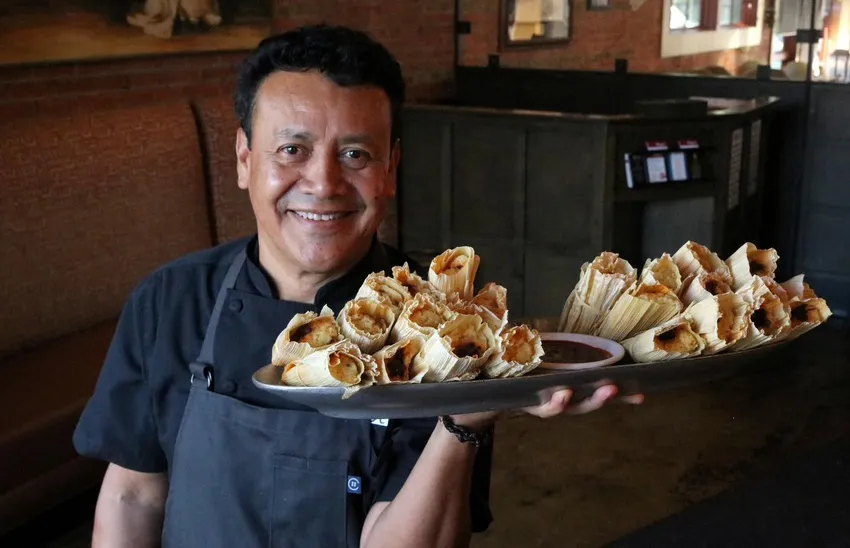

Chef Hugo Ortega shares his remarkable journey arriving in Houston as a dishwasher to becoming a James Beard Award-winning restaurateur. He dives into the realities of the hospitality industry, covering regional Mexican flavors and the logistics of scaling a business.
Please introduce yourself, tell us a bit about your career path
Hugo Ortega: I came here to Houston, to the States in 84. And I navigated myself through the restaurant industry. And then in 89, I was enrolled to attend HEC. And I took culinary education. I went there for two years and in 91 it was the turning point of my career. I got to be the chef in a very small Italian restaurant for a little while. I'm sorry, no, not the chef. I was doing my apprenticeship there in an Italian restaurant. And I did that for a couple years, I think. And then I came to Backstreet in 93, 94, around that time. And it is when I got the position to be the Chef for our beloved Backstreet Cafe.
So then after that, I learned, you know, and I put in paper and into the kitchen what I learned at school. I have a wonderful time doing that, learning and feeling important, you know, being the chef for the small cafe. The turning point was in 2001, at the time my boss and her uncle decided to buy this beautiful old building, built in the 1930s. Tracy surprised me by asking, what about you cooking the food of your country? So that was an opportunity, and it was something wonderful.
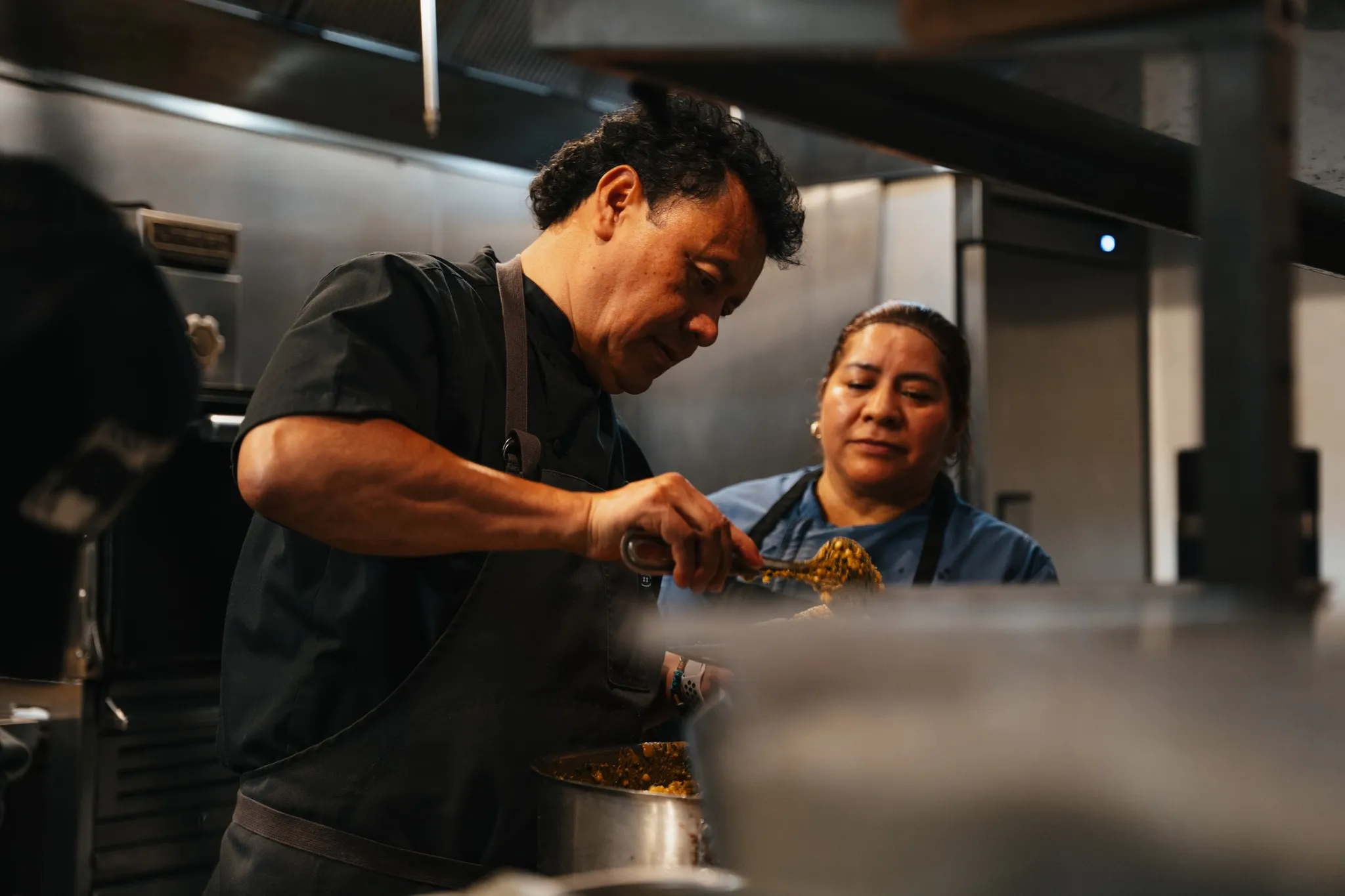
At the time it was very complex to understand. You know, Mexican food is very complex. It's all in my hands. It's all made in the house. It's very time consuming. So my answer to Tracy was, Tracy, it's a lot of work. And the reason I was saying that is because I have the great opportunity to live with my grandmother in the mountains in Mexico. Mixteca region. So basically over there you live to eat. Everything is dedicated to taking care of the cattle, and taking care of the land and cultivating the land. So life is very slow, but it's very, I would say it's a lot of work. Anyhow, when Tracy asked me that question, say Tracy does a lot of work to open a Mexican restaurant and do the food the way I was taught, organic, you know, everything on the house, making the house and very slowly. So I have a lot of trouble figuring it out, you know, how I can speed it out and put all that in a process, you know, to make Mexican food like that. It is so slow on preparing and every single aspect.
So that was a challenging time for me. But I thought that the moment that was very unique, I was encountering a very unique time in my life. So sure enough, I believe in myself better than ever and I remember what I know from my grandmother. Actually, I was talking to her at the time because they were very challenging. I would talk to her and I would ask her some questions. And I would tell her, don't leave me, help me. And her spirit and her and her knowledge, you know, she put on me, it's been with me since then. Sure enough, one thing led to another, and we created the menu, and moving forward, it took us probably the second week, and we ran out of food.
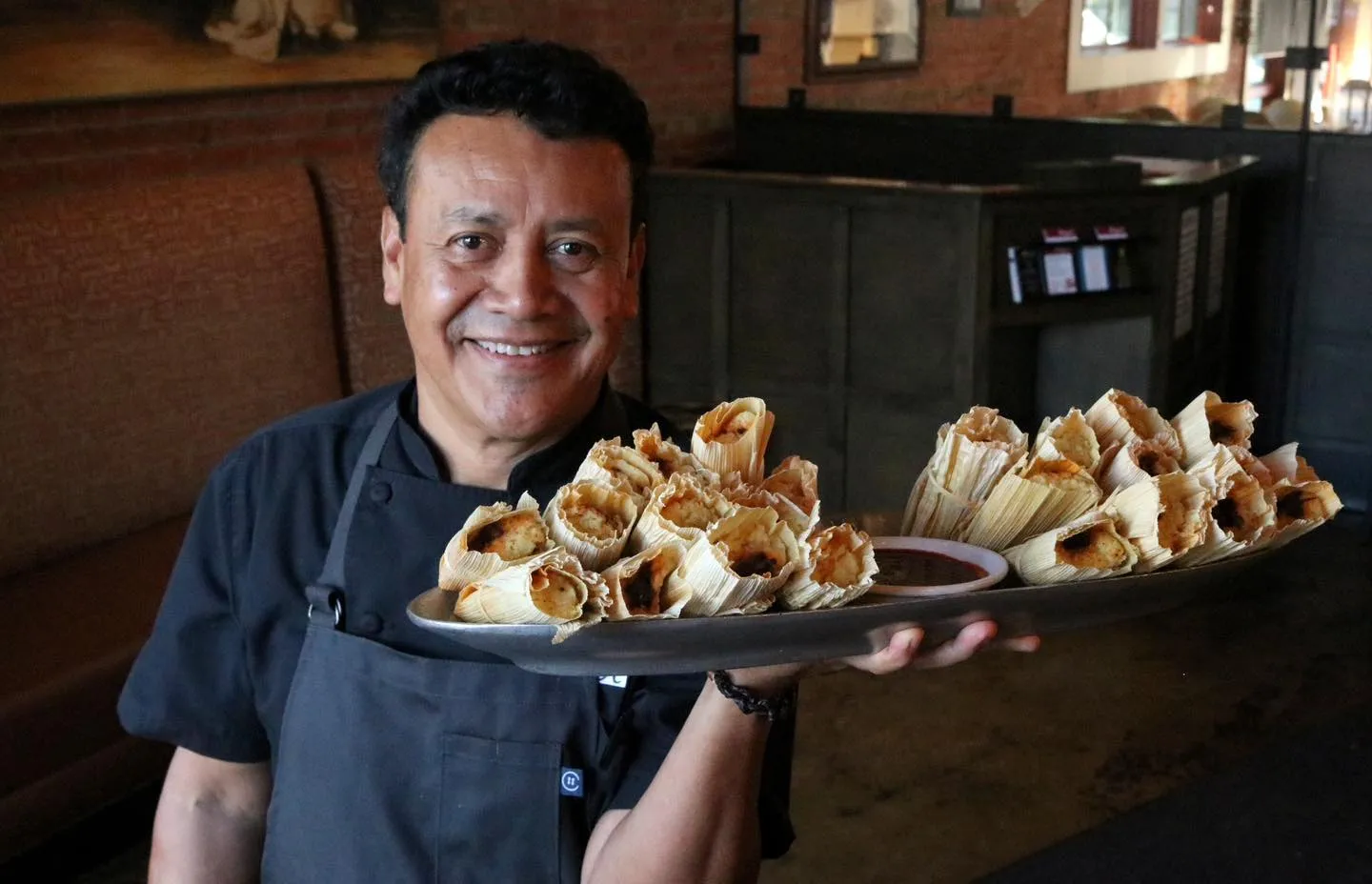
And in the second week there was a line at the door and Hugo's, you know, to come to eat and try this food. You know, this is 22 years ago. And those were incredible times. And to my surprise, in the second week we were out of everything in the kitchen. And then I figured out exactly what I was thinking. You know, Mexican food is about the love of preparing food, the time and everything take time and for example you do Cochinita Pibil is four hours and if you do Barbacoa, goat Barbacoa is four hours and if you do Tamales you know it take two or three individuals to do Tamales and then we sell them by the dozen you know we don't sell by one we sell them by the dozen so anyway it was a time consuming but it was well spent.
What inspired you to put your name on the restaurant? Because that brought a lot of recognition.
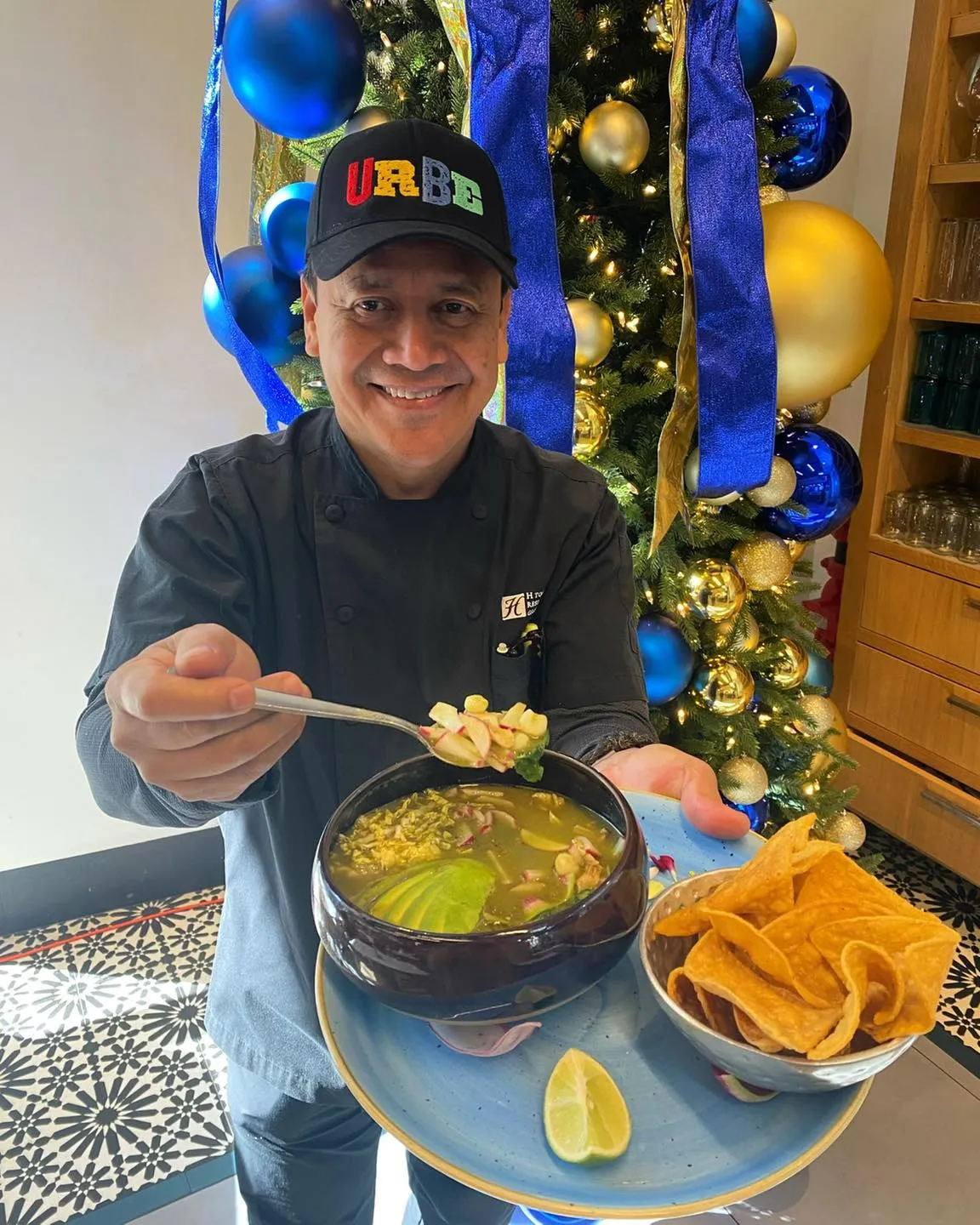
Hugo Ortega: I think that was something that probably Tracy figured out. you gotta have my name. And I think that's how it happens. We were the pioneers in many ways. For example, we make our own chocolate in the house. So we bring the cocoa beans from Oaxaca and we toast it and we make our own chocolate. We make three, five, six moles and every mole.
We debate the papers and so on. So we were the pioneers at the time and in this region to show people, you know, how things are done. So we receive a lot of criticism. Some people say, you don't have the guts to even call it Mexican food. That's the reason you call it Hugo's And I say, well, it might be true, it might not, but things like that happen.
You mentioned this story happened almost 22 years ago. Do you think that the same pathway still works for people entering the industry today? If someone is walking in any restaurant as a dishwasher, do they still have the opportunity to climb the ladder and succeed in this industry despite everything happening in the industry today?
Hugo Ortega: Well, I mean, every time, every year, every decade, you have some challenge. The challenge that I faced 22 years ago, I'm sure, is not the challenge that somebody that started their own restaurant will face today. But it's just everything in your heart. I think if you believe in yourself and if you believe in who you are and what you want to do, I think everything is possible. It might be different challenges, different times, but I think the possibility is still there for anyone and everyone that wants to try that endeavor.
When people look at you today, when people read about you today, all they can see is the successes, the James Beard award and the restaurants. What is the one thing that people don't know about that journey?
Hugo Ortega: Well, I mean, this is funny, but I was homeless, you know, at some point in my life, back in the early 80s. And that is a challenge that you can, if I can overcome that, you know, so do everybody else, But it was a period of time in my life that I didn't have a home where to live. so that is an extreme challenge, but I overcame it and I turned myself into the right way.
Other than that, I think there are many challenges; for example, if you get into a restaurant but you don't have a parking lot for example where people will park. That's a challenge. If you have a restaurant that is way too big for your neighborhood, that's a logistic challenge. I mean you have to understand where you are and what kind of restaurant you want to open. And you always got to measure those things, right? If it's a restaurant that seats 200 plus people, you're going between cooks and dishwashers and prep cooks and butchers and whatever, right? So you have to measure that, you know, what is in you that you achieve.
For me, you know, now, you know 40 years later since I put my first food in that restaurant at Backstreet. It's been four decades, so now I have five restaurants. It's going to be six, we reopen Backstreet in the next few months. And that is a challenge for me, right? To put my DNA in every kitchen and try to teach them the principles of cooking and the belief and the concept. So those are the challenges that I have. This is who I am and I cannot go back and say I want to have only one restaurant. For that matter, I want to have a hundred restaurants if it's possible.

Let me remember that. I have something that Tracy gave me. You gotta work so hard and you gotta be so dedicated. That they can't deny you. They cannot deny success. I think I say it right.
Chef i mean i have now to ask you you managed to build the entire restaurant empire with your spouse so what advice would you give to someone thinking about going into business with maybe a partner or family member
Hugo Ortega: They have to breathe the same air. What I try to say, they have to believe, and they have to be in the same mindset. And now people open restaurants left and right, but I think it's good to do an apprenticeship. You know, go to a restaurant, go, there is, know, you can go to any restaurant. You can go to New York, Barcelona, Mexico City, and do an apprenticeship, and see what it's like. Get your feet wet first, and see what it's like, and then, and travel, and then, after that, hopefully you have your mind clear to see.
I believe we are a bunch of crazy people, Matthew, the ones who are in this industry. And of course, you know, there is some like very bright stars like Danny Myers, for example, you know, they have teaching us so much or Daniel Ballou or perhaps the great James Beard, you know, I assume at some point in his life he thought,
Man, you know, I just cannot believe what happened, you know, to be able to, out of my house, to be able to have cooks, chefs from all over the world, you know, they cooking African cuisine, they cooking Mediterranean cuisine. So I just wonder, and I hope that the great James Beard, you know, had this idea that what he was doing opened up this incredible field for so many people that have come to America since, you know, since he began his journey and started cooking in his house. I think whatever James Beard is, this is the result of one moment of brilliance including everyone because we always have something to give even if we are foreigners. We always have something to offer.
You just mentioned something you said people are opening restaurants left and right. So let me ask you at what point should a chef start thinking about opening their own restaurant and when is it too soon?
Hugo Ortega: I think one specific thing they have to work on is the location of the restaurant. Now you ask me about the age of opening a restaurant, of course it will help when you start very young. Because you will have, I would say, the youth. If things go wrong, we can always back a little bit and go forward, which I think that's what we have done as a company a little bit. When times are tough, we back up a little bit and then we recharge and move forward and it just works good when you are young, helps. Now, the concept is going to be unique. And I have the privilege to understand my country, Mexico, it has so much to offer. It has so many regions.
So when I opened, for example, Hugo's, I thought, you know, Mexico has a region to offer different types of food, microclimates, anything that you call an ingredient that you possibly dream about in Mexico. My thought was, open Hugo's is going to be a regional Mexican cuisine. So I picked the classics for every region and made it work. And some works I didn't do, but that was my passion behind that. Then we have the opportunity to open Caracol, and that is a coastal regional cuisine. And to my surprise, when I toured the country, from the Gulf of Mexico all the way to the Mexican Riviera and the South Pacific and came up all the way to one country in Mexico, Valle de Guadalupe. I noticed there were lots of fish, for example.
And to my surprise, in Mexico, we season the fish with peppers and herbs and garlic and onions. And we're not afraid of that. That's how we treat the fish. So that was an eye-opener for me to learn that. So that's the reason behind opening caracol. The fish don't have to be seasoned and delicate. Some fish take a little bit of punch, a little bit of spice, a little bit of charcoal, a little bit of the smoke. So anyway, when we opened Xochi, I was thinking of doing something for my grandmother, because we're from southern Mexico, central Mexico, where we live and breathe chocolate, and we live and breathe peppers and spices. And so much tradition on the food is just the mega of what is Mexican food. Central Mexico, it is that and more.
So I was thinking. I want to honor Delia, that was my grandmother's name, by putting her mole recipe on the menu and get inspired by her cooking and her making bread in a wood adobe oven and making chocolate on the metate, not on the mortar stone ground in the metate and teaching me the pure flavor of the cacao. She was grounding cacao and then she got a little bit and put it in my mouth and I told her, Abuelita, I don't like chocolate. And she cracked a laugh and she explained to me that the reason was because we are missing the cinnamon and the sugar. We showed her the three ingredients that make cacao. chocolate, cocoa, cinnamon and sugar. But anyway, now, learning these things, it made me feel part of something very unique and offer Houstonians something that they have not seen before. Of course, some insects, like gusano de maguey or chiniquil, chicatana make molens, chikatanas, flying ants, and grasshoppers. You know, deep flavor with a lot of pride, you know, to offer something different and unique. So yes, we've been blessed enough to be able to do that, and we will continue to dig into Mexican food. Mexican cuisine.
Check Our Career Growth Tools


Chef, let me wrap up this conversation with one simple question. What does success look like to you today vs 40 years ago? When you first stepped in a restaurant, what does success look to you today?
Hugo Ortega: I want to say this for the young upcoming chefs. Success as you progress, you have to know what it is. Because as you grow, success can be very tricky because you have to explain yourself and work more hours and delegate and be part of things. You know success is a thing that comes in a very small field, very small quantities. It's just more the responsibility of not laying down your customers day in and day out in your community and consequently that would allow us to my friends, my co-workers, people that I've been cooking with for the past 20 years, some of them, many of them. So anyway, success is to me, it comes in very small quantities.
Check out more interviews like this brought to you by OysterLink to learn about the industry. You can get them straight to your email by creating an OysterLink account and joining our newsletter .

Loading comments...