


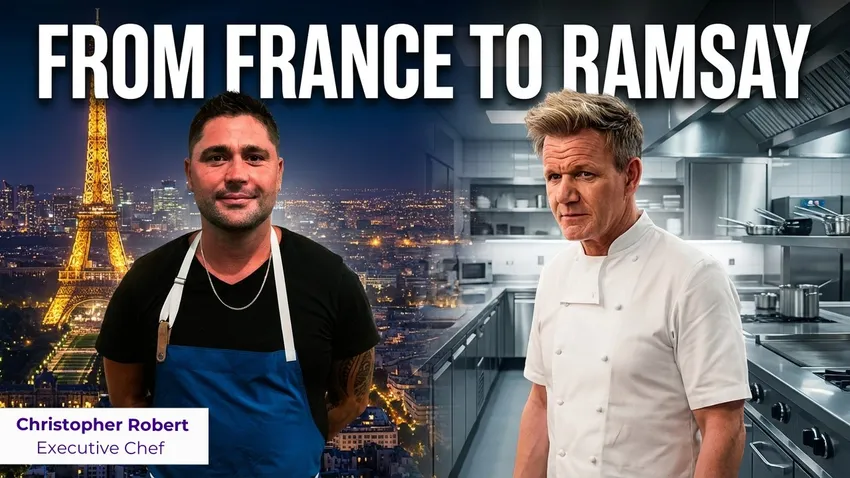

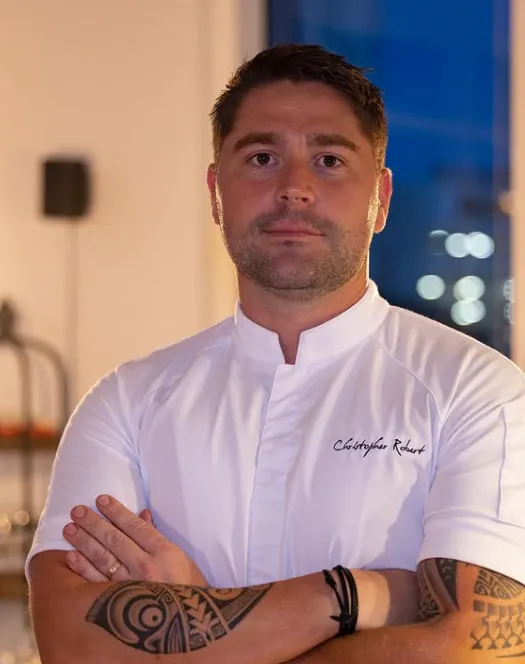
With a career spanning two decades and two continents, Chef Christopher Robert has been through everything from French catering to Gordon Ramsay’s high-pressure kitchens, proving that true culinary mastery requires lifelong learning.
Please introduce yourself and tell us a bit about your career path
Christopher Robert: So my name is Christopher. I'm originally from France. I have lived in the US for the last 10 years now. I started cooking when I was 16 back in France. I worked in some places during summers. And then I decided to go to culinary school at 17 when I got my degree. Besides that, I start to work in some places after a while.
I work in France in different places like Montpellier, my hometown, Lyon as well. La Tour Crayon, it's called. It's a hotel within the Radisson Hotel. So I worked for about a year over there. And then I get back to my hometown, Montpellier. I work from some restaurant by the coast where I worked for two, three years.
My parents are also in the industry. Back then, they used to have a catering company for 15 years plus. So I worked for them for about four to five years, and they were very interesting to work with, both of them. But I learned a lot on my own, on the way to cooking. And you can’t be the same way with your parents than with an employer.
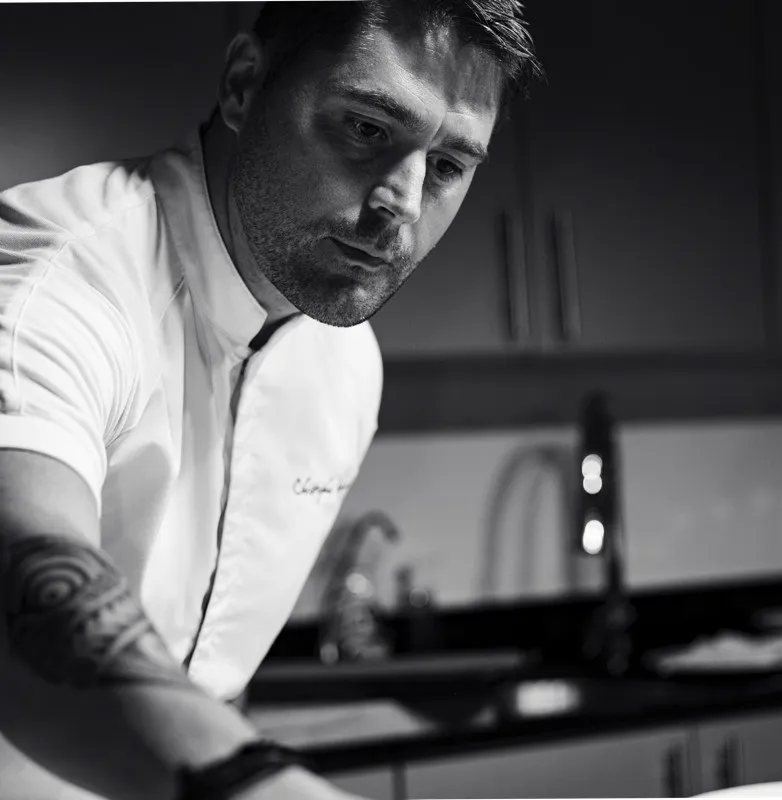
I think that helped me to build something for the future as well. Just because of learning how to speak with your parents, it's still a kitchen. So the environment, my dad was in the kitchen, my mom was in the front, we were in the back and it was fun. But after a couple years, I had the opportunity to come to the US. So my former chef, my first job as a cook, called me 10 years later and he said, listen, I'm going to open a restaurant in Miami. You want to come? said, yeah, of course. Mean who was going to ask me that the second time.
So I did take the job. Unfortunately, after six months, even before I arrived in the US, it's a process, the paper, visa and stuff like that. So when he got there, he opened the place. And unfortunately, after a couple of months, he had to shut it down because it wasn't busy enough. I know that was 10 years ago. The business in Miami was very different. The industry wasn't what it is right now.
Far away from that, the location wasn't great. It wasn't his time. So I'm here and found another job just to be able to keep doing the visa stuff and everything; so I was here at Green Street cafe, which is in Coconut Grove and I worked there for about a year under the G1 visa.
So I learned a lot because my English was zero. I couldn't put one word after the other. So I got to start everything from the beginning again, which was great. I learned a lot from, you know, it was a very American breakfast. What we did at that time was like biscuits. We make our own bread, buns for the burgers.
So it was a very different type of cuisine for me. So I learned a lot on that side. The culture as well, is very different. But I am grateful for this opportunity back then that's helped me to build who I am also right now. After that, I worked for some places in Miami Beach. So it's called Semilla. It's a French bistro. So I worked there for a couple of months as well until I found the opportunity to work at Zuma.
So that's where I start to change completely, the cooking skills and knowledge. I have to start from scratch because I have zero knowledge about Asian food at all. My Asian culture was really low at that time. So I started as a sous chef and I worked there for about two years.
So we work very hard daily. So we can also learn very fast and quicker in that condition. So it's been rough, but it's been good, really good. I'm very grateful again for this position. It helped me grow as a chef and it's different flavors, different ingredients. So I learned again.
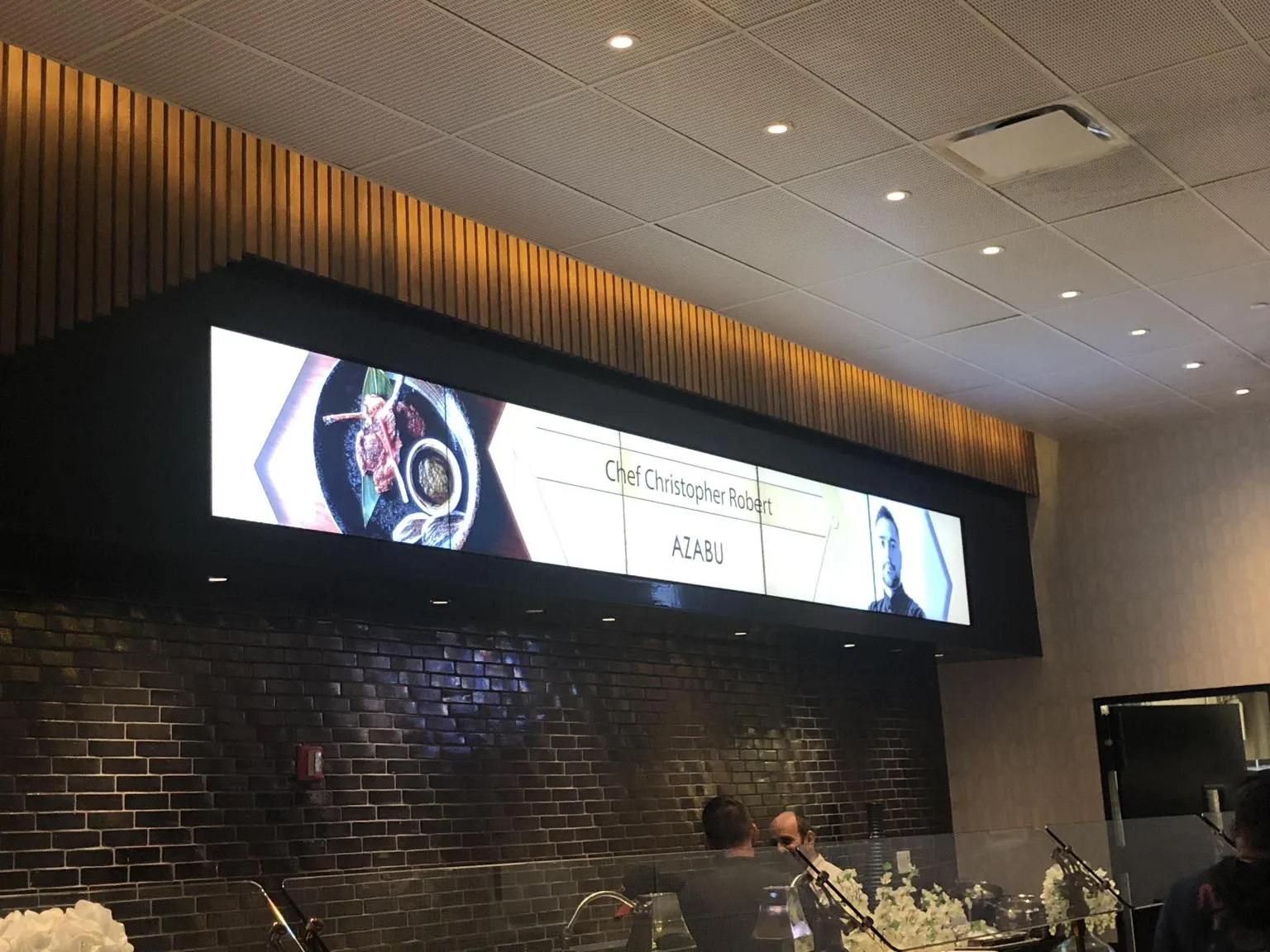
And then I decided to, I have an opportunity to become a chef de cuisine for a restaurant that was opening at that time. It's called Azabu. So we opened this place with the executive chef from Japan. And I stayed about two years again. The chef left and I keep working myself in this position with the sushi room that we had as well with Chef Yasu.
So we worked together for about a year or so. And then I got an opportunity to go to the one hotel. This was right before the COVID. So I took the opportunity because it's a hotel; more management, bigger restaurant, you know. So Azabu was great. It was a good step, a little too small.
So, you know, when you want to grow at some point, you need to have more responsibility. That's the only way you can get to a certain position or to grow yourself. So I decided to go there. But unfortunately, after three months, everything shut down in the whole world. So we have to shut down this place as well. you know, COVID happened. We stayed home. I got my daughter at the same time.
So it was a tricky situation. Should I go back to the restaurant working as hard as I used to? I think your dollar at the same time was maybe an opportunity for me to figure out something else. So with what I did, I became a private chef for about two years, two years and a half. It was the opportunity to try myself on doing something else, trying to find some more time to enjoy my dollar at least for the first few years, you know, which was great
Actually I traveled, I went to the Bahamas, I worked for a family from Coral Gables, so I cooked some dinner from Farrell Williams as well, so they have good connections, so I learned a lot again, you know, different organization, you do your grocery to a whole food, you have your meat supplier, fish supplier, but it's not the same quantity, you know, it's very different, so daily basic, it's pretty much cooking for five people and then they travel a little bit, follow them.
It never stops. You never stop to learn. It's always growing, growing from others, from sous chefs, chefs, cooks, anyone who actually works in these restaurants. You can always learn something new and it does happen. You keep learning and that's how you became better, better to manage, better to cook.
So all this year passing the kitchen and having this now step back doing a private chef thing, now, you have to push yourself to do new things. If you don't, you start to get a little bit lazy, I would say. You just become more simple, you know, they do the same thing more or less, you know, it's like us at home. You want to add your fish on these days, you know, your piece of salmon, you only have your steaks or chicken. So all week around it's rice and, you know, salad and stuff like that.
It's fine at the beginning just because of the flexibility and being able to be home more often. But like I said, it became too simple. It became a little bit boring, to be honest, as a chef. So it's hard to push yourself on a daily basis to create new things from my experience. Maybe others, they have an easier way to push themselves and get better on that thing.
For me was to go back to the restaurant, you know, the craziness of everything that happened daily. There is always something happening. It's never, each day is never the same as the day before. So I miss that, I guess. So I got the opportunity to open a restaurant for Gordon Ramsay at that time. So I took the opportunity of a lifetime, I guess. So they hired me to open Lucky Cat in Miami.
So I got lucky, they hired me long enough prior to the opening to be able to go to London to train a lot. So I spent about six months roughly over there, knowing once, but you know, three weeks there, one month here, two weeks here. So it's been great. I learned a lot from the chefs over there. He reminds me a lot of my friends. So it was my first time in London as well. Never walked or traveled over there before.
So obviously, you know, coming to a new country, it's very close to France. I never realized the chance we have to be so close to London. And, you know, when you start to speak another language, a lot more doors open to you. So I've been lucky. been there. I learned a lot from the chef, a lot of new connections as well. And we opened Lucky Cat in Manchester together.
I worked in Mayfair with them and the Mayfair location and then they helped me out to bring the brand to the US which was, it wasn't easy. It's a lot of different products back to London, back to the UK to replicate as much as we can a brand from another country.
You know, they obviously have recipes, ideas, the decoration, the design, the brand itself was already there. But to adapt it to the US market has been challenging, but we did a good job, I believe. The restaurant was beautiful.
I think we did a good job. Gordon was very happy at that time when we opened the restaurant. He loved the food. He loved the way we built the kitchen and redesigned everything and the equipment. So it was a good experience. Almost two years between the pre-opening, opening and after. Again, a lot of opportunities to grow with this company.
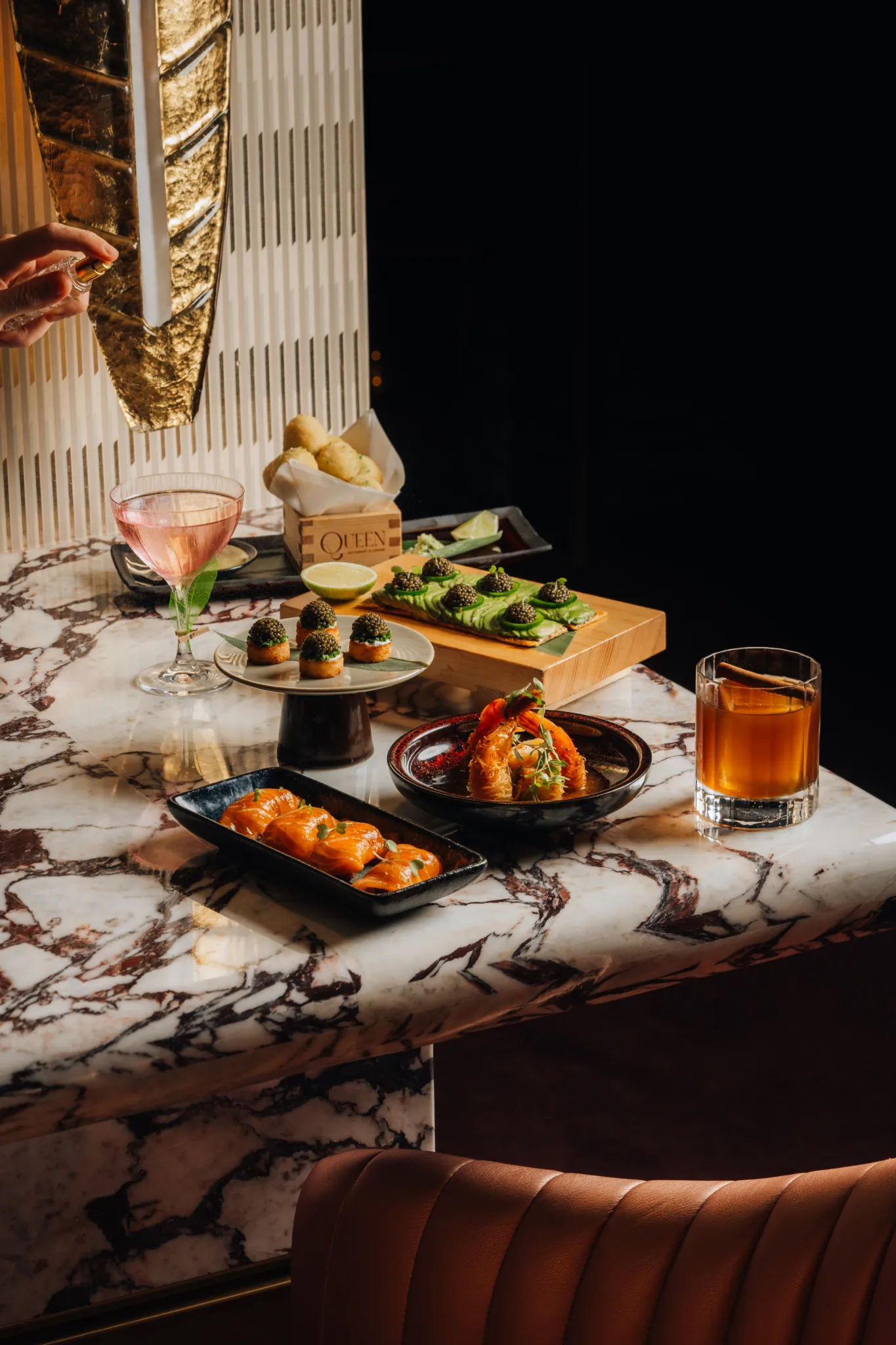
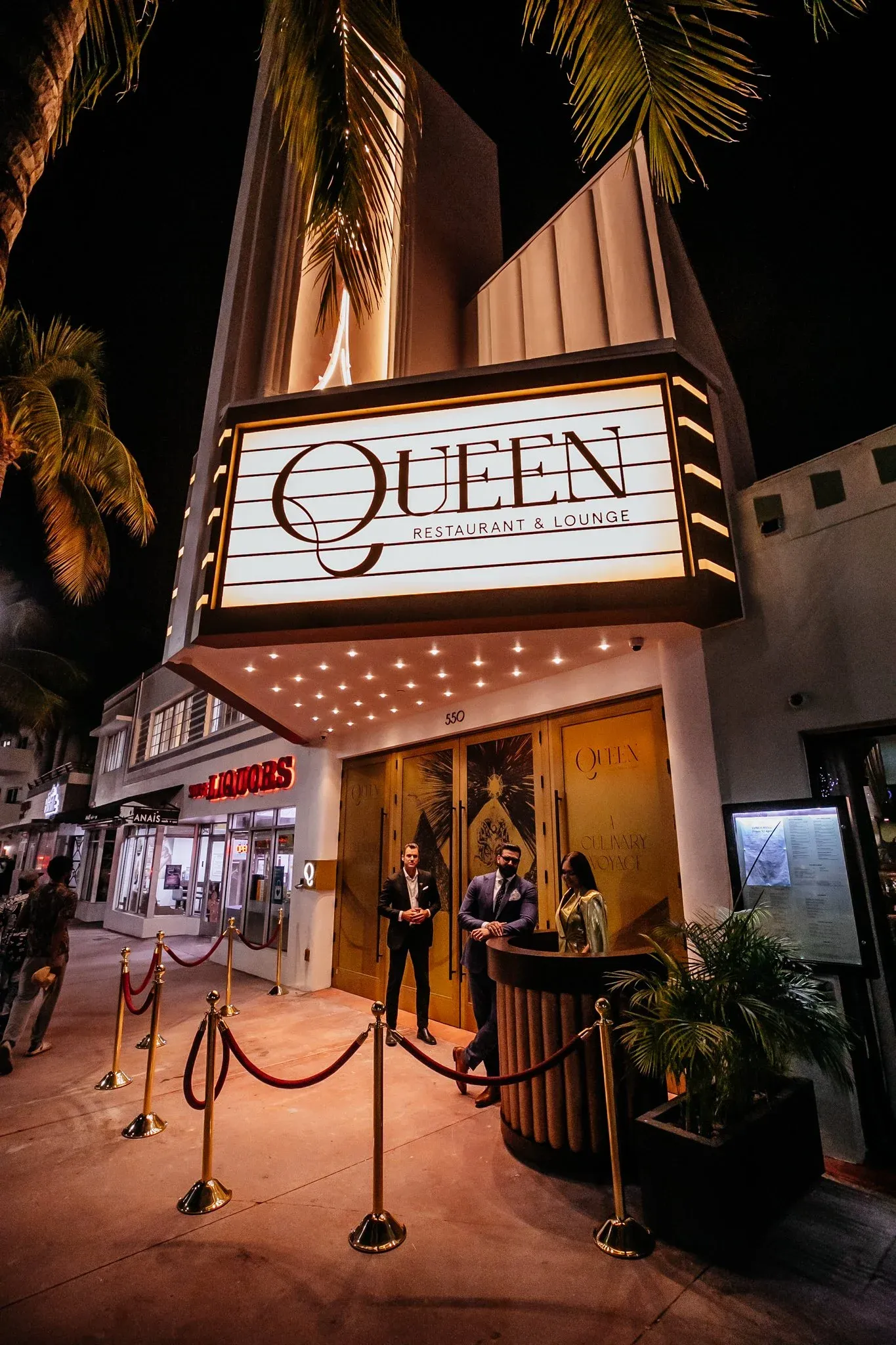
And then I got the opportunity to work here where I am right now at Queen Miami Beach. Very different concepts as well. Something new for me. Again, about the cooking style, but more about the entertainment. So this place is a restaurant, obviously, but it's also an entertainment. So people come for the dinner, but they come for the experience. What we offer here, it really shows.
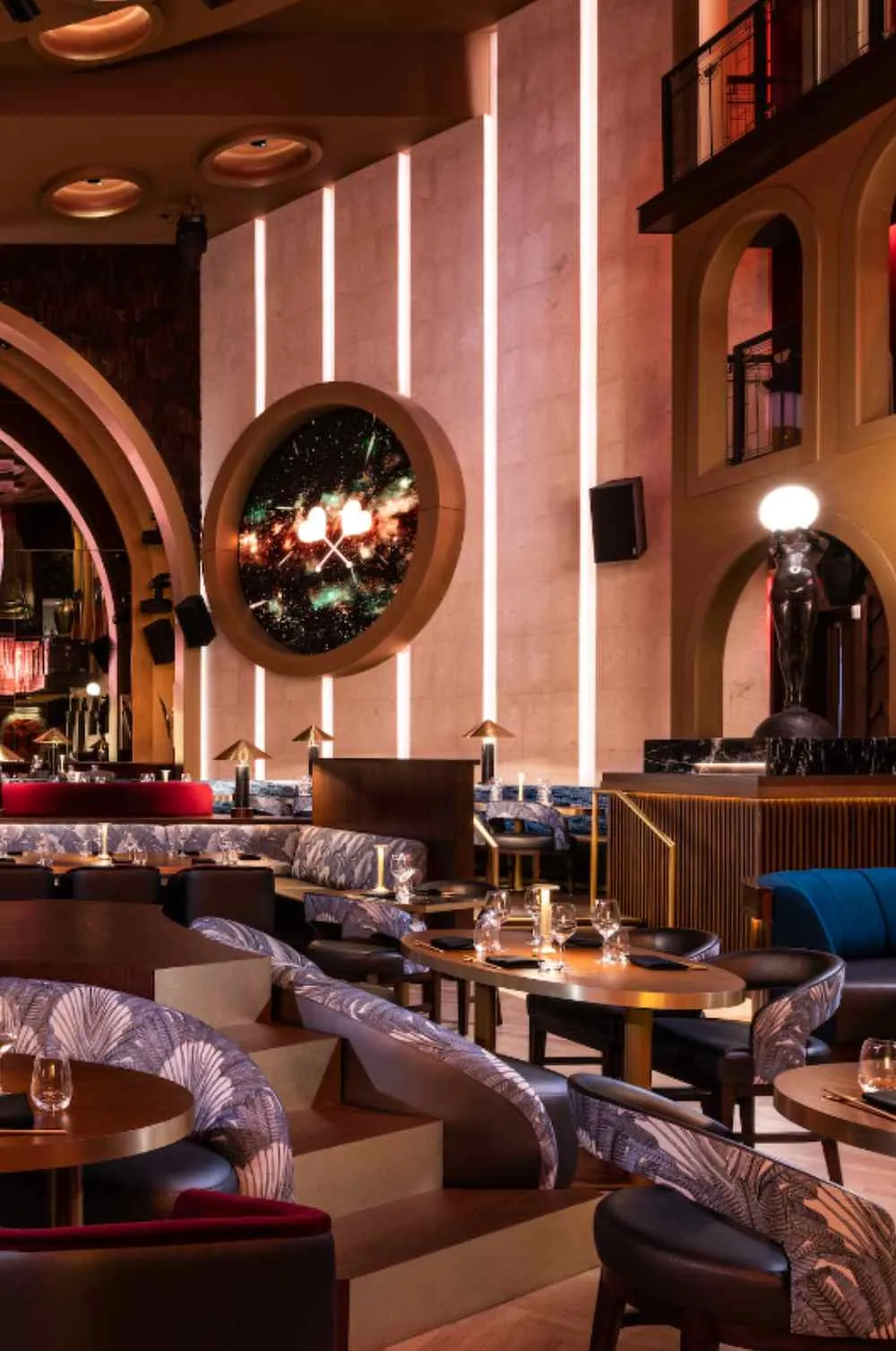
So it's impressive when you get inside the restaurant; big high ceiling; a lot of equipment for lights; sound systems; so the focus is not on the plate anymore only. Obviously you want to eat well and have nice plating and all these things, but everything else comes together. You know, the lights, the show, the people who sing, the saxophonist, the aerialist. So there is a lot going on. So you are always eating but looking around. So waiting for something to happen. There is no specific timing that is happening. So you never know when it's coming.
So it's a very different approach of what I used to do, which was really a food focus, know, sitting down, typically dinner, even if it's a sharing concept or not, but you you sit down, you have some music in the background, the server, the summary, whatever, but this is a little bit different setup and it's been good so far. So this is my story here in Miami.
What an interesting story. While you were talking, I just had one question. Who was easier to satisfy in the kitchen? Your dad or Gordon Ramsay? And give me one piece of advice you got from your dad and one piece of advice you got from Gordon Ramsay
Christopher Robert: My dad for sure!
So my dad was more about showing me how he can enter to have his son working under him without being, like I explained earlier on that situation, it was really an adaptation for both of us because we work daily, 6 a.m. in the morning going grocery. So it was more about learning from him how to act. And this, I guess I realized when I became a dad as well.
I haven't realized that before just because I, you know, you do your thing, it's a daily thing, you go to work. But now that I have a daughter, the way I act with her, even if I go in the kitchen and try to cook something, being patient, maybe that will be a word that I can put on that. So being patient with your kid, I guess. So this will be from my dad.
From Gordon himself and the opportunity, the whole thing that I did over there. Consistency, hard work for sure. This will probably be the advice that I got from this experience. Hard work pays off.
What makes Gordon Ramsey like someone who works in his kitchen?
Christopher Robert: Participate. I think he was about making me try something different that he had tried. I mean, you 're a chef, so he's always trying things. He has a lot of shows, a lot of things to do. Obviously he's trying food daily, but I think he was very proud of the replication of the brand back from the UK to the US. And I think that's what he liked. I mean, all the tasting that we've done, he loves it. So I think that was it. That was probably the fact that we replicate the brand that he very much loves.
This brand Lucky Cat is really the brand that he wanted to put together because of all his experience as a chef and as a chef who traveled the world and learned about other cultures and he wants to bring it back. The story beyond Lucky Cat is that all his travels in Asia he wants to put together in Europe or in the US just to be able to show people who never travel to be able to try this different part of Asia in the same place, which he did very well.
I love the menu, I love the food, the ideas, the chef that worked for him over there. They are all very talented. It's a very good brand and he put it together, something very unique. It's hard, the business here in the U.S. right now, but overall the idea, the brand and the people who work for him are doing a good job.
I mean for someone who worked in these kitchens with let's say all those interesting people you don't seem to be very active on social media. What's your take as a chef on social media?
Christopher Robert: So the thing is that I learned how to cook back then and at that time there wasn't any social media at all. So I haven't been around that from the beginning. So what I see from chefs now is they put social media first and then knowledge, I believe, or learning after that. So I feel like all the chefs now know everything.
So they show it on social media, but I don't feel like that's the reality when you are in the kitchen. So maybe I'm right, maybe I'm wrong. I don't know. It's just my feeling. It's just what I see. So I love social media just because you can see new things as well. As a chef, it's also easier for us, you know, to stay up to date, I will say. But it's hard for me to create content. all the time.
I try to be there, out there, to show what we do on a daily basis. But I know that's something I have to work it out for sure. It's better for us to learn something else than just being behind the kitchen, cooking out stuff. But it's hard to become a professional on social media.
So that's something nobody teaches me and it's just an app that we have on our phone. We are already busy enough with other things, life, work. So adding this is more likely, it's hard, it's hard for me. It's not something that I do easily. It is a full-time job. I mean, some people are getting paid for that, you know, daily and they make much more money than I will probably never make. They all have, you know, we all have our skills. I don't think that's one of mine, but I would love to be able to do a little more, you know, just to show what we do on a daily basis. Everybody knows that is not an easy job, obviously, it's more than a job. It's, you know, it's a choice of life.
You don't become a chef just to become a chef and it's hard enough already to sacrifice family, friends and holidays and that stuff. So you want to make sure that the time you spend in the restaurant, it's worth it. So if you don't have this passion for cooking or offering an experience to a guest, you can do it through the time you spend now. 20 years since I started as of today. So it's quite a ride. It's not finished yet, hopefully. We keep working on that, but yeah, that's the reality.
If you were to open your own restaurant and you have the opportunity to hire one chef. And you have two options. One has a million followers on Instagram, average culinary skills. The other is a professional Michelin level chef with zero followers on Instagram. Which one do you believe would be the better asset for your restaurant in Miami?
Christopher Robert: I will say number two, so the Michelin star chef with knowledge, just because this kind of knowledge. You don't learn it from one day to another. Opening a website or an app and creating content, you can always hire someone on the site to help out to do that. knowledge to be a chef, like I said, you learn every day. I learned on my own years ago about cooking and I'm still learning every day.
So after 15 years of being a cook, the first few years you think you know everything, right? So you know how to do all the basic stuff that you learn at school and then when you get out of school, you have your first job, first year, second year, and then you say, I know everything, I can cook anything. I can cook pasta, cook steak, fish, sauces, and stocks.
So you think you know everything, but then 15 years later, when you go back to your life and think about what you've been doing and what you've done as of that day, there is so much going on, so much that you learn and never stop. yeah, knowledge and you can teach it. So I'd rather have someone with all that knowledge and have someone who can help him or myself or whoever to create content around that and get followers later on and create this content to be able to attract more guests but I still believe that if you're doing something good in your restaurant you don't have to have millions of followers to make it easier.
You mentioned that you went to culinary school when you were 17. Do you think that formal culinary education still matters today?
Christopher Robert: I wasn't very good at school to be honest. So I knew that I couldn't just be somewhere that I don't like and I don't enjoy. So school wasn't the place for me that I enjoy at all. So I decided, I talked to my parents, I said listen I got to do something with my hands, I got to move. I can stand being sitting down all day.
So I tried to become a mechanic at first, which was like nothing from my parents. My parents have always been in the food industry. So I tried myself just because I didn't want to be like them, I guess, at that time. So I tried something completely different for a few months during one summer. And then I say, can do that.
So I started working in the kitchen in some summers to see if I would fit in there and I did it. So that's why culinary school was the answer for me. I believe it's still important to do it, maybe not that young because I think it's very important to have a good, strong personality, you know, no basic knowledge but more in the form of everything else in life, you know, quitting school that early, you're missing stuff.
So I believe it's important to go to school, regular school, at a certain age and then go to a culinary or something else. But yeah, you need to have both knowledge for sure.
Check Our Career Growth Tools


What makes you want to hire someone right away? What do you look for in a potential candidate during your job interview?
Christopher Robert: That's a good question. I like it because this is something that we do often, obviously. So, depending on the position first, I will say, because it's, you know, we don't have the same expectation depending on the position you hire the person for. But let's say if it's a management position, what I'm looking at is knowledge about culinary, obviously.
That's the most important, but also the personality. Very not emotional, but I'm really a reader. I don't know how to say that, but I'm trying to read people the way they act, the way they are, just because when you hire someone in the kitchen, again, depending on the position, you want to hire someone who is going to adapt to the team you've been building. So you don't want someone who comes here and destroys everything because one person can change the whole dynamic, the whole enthusiasm of the team and that can be on a good way or on a bad way.
So you want to make sure you understand the person you have in front of you and to be able to read that person and make sure you make the right choice. So again, you look at the resume, know what they know, where they worked in the past, you ask questions depending if it's a management position from other restaurants, but you want to feel it. You know I'm like that. I would feel if the person is the right person. So I would be more by the feeling of the communication we're going to have the first time.
Check out more interviews like this brought to you by OysterLink to learn about the industry. You can get them straight to your email by creating an OysterLink account and joining our newsletter.

Loading comments...