


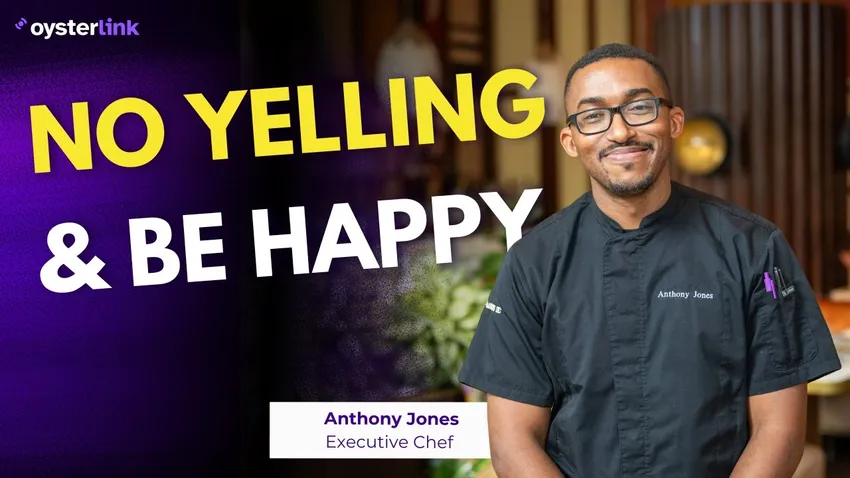

The "dual lane" of education, the importance of the "pivot," and why he’s trading old-school kitchen yelling for a culture of consistent improvement.
Please introduce yourself and tell a little bit about your career path so our audience can get to know you better.
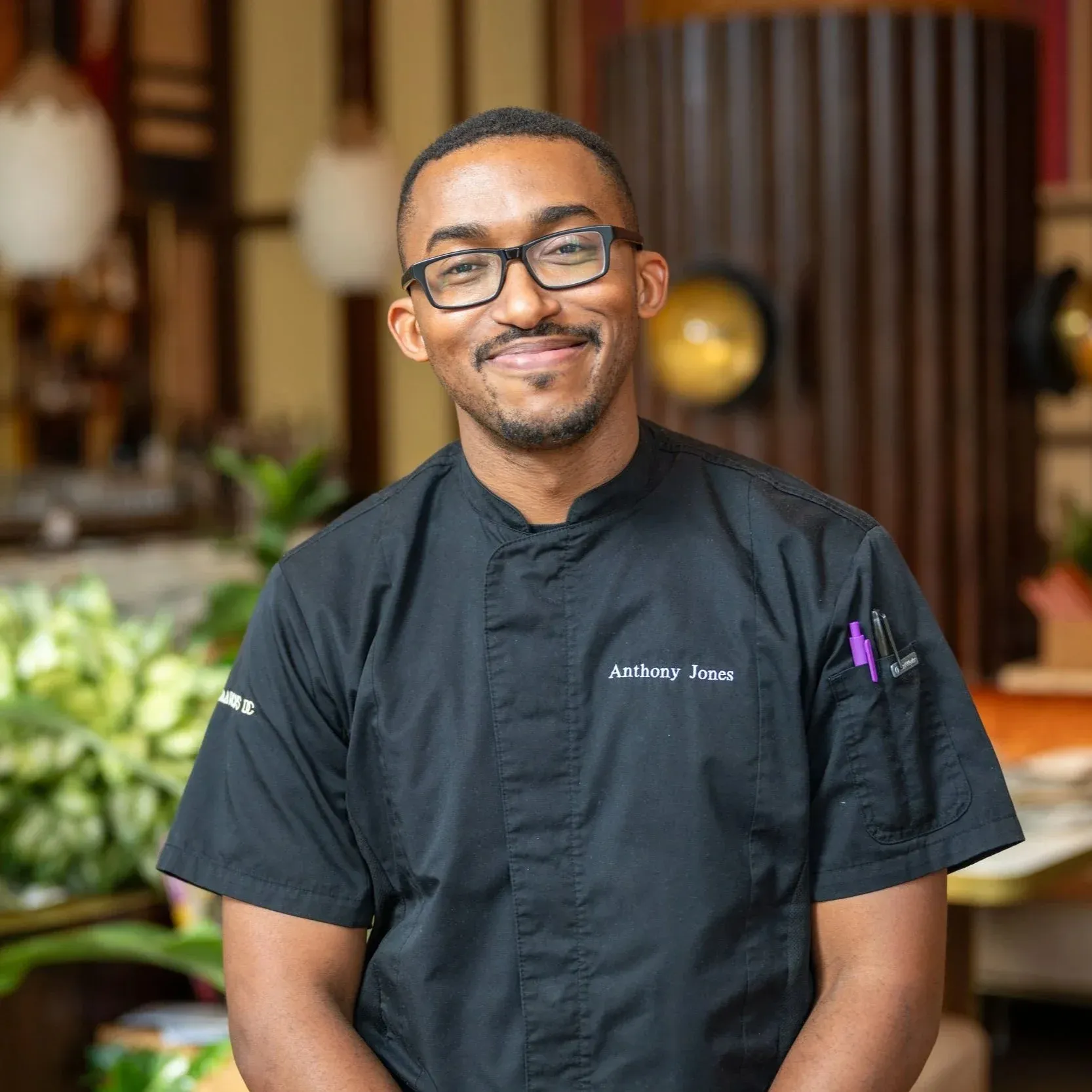
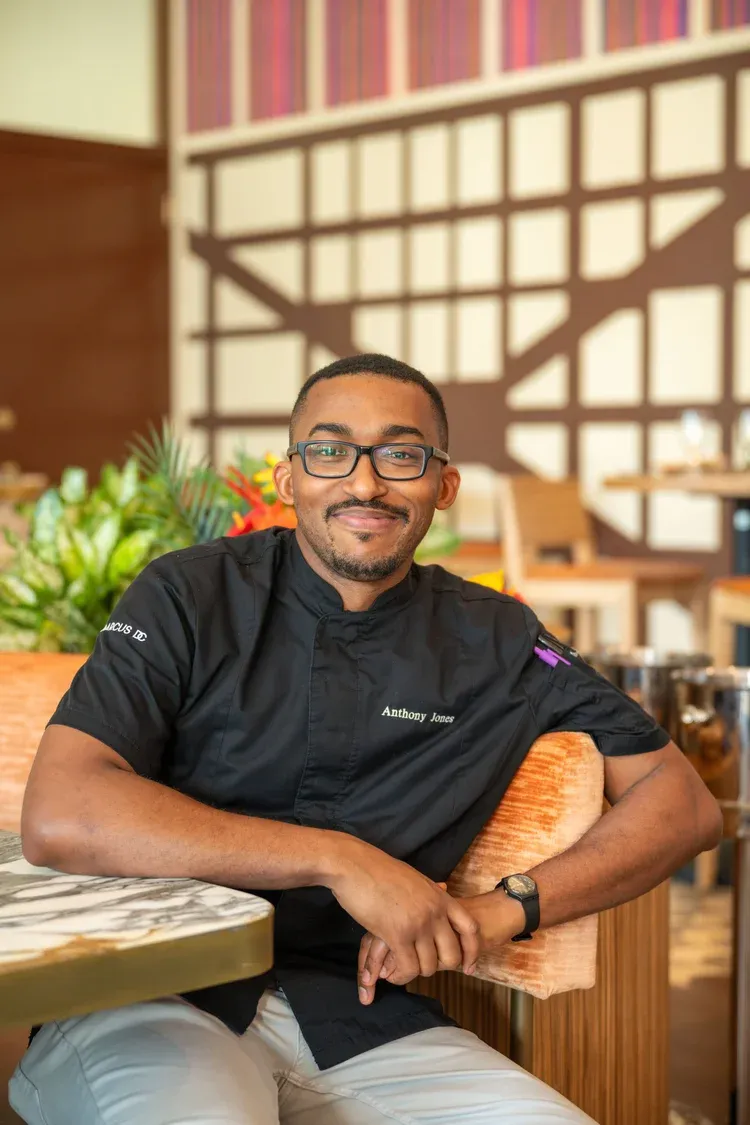
Anthony Jones: I’m the executive chef at Marcus DC in Washington DC. I've been cooking for about 20 years now. So starting out in southern Maryland, next to Chesapeake Bay basically. I went to culinary school and then from there just worked my way up around Annapolis and then eventually coming here into the city in DC and working in Virginia and then getting the opportunity to move to Miami and work for Marcus Emerson.
That's when I first met him and worked with him. It was about four or five years ago actually now I think. And like it was just a great experience for me to learn to grow as a chef and as a person. And then moving back up north, kind of just got tired of Miami; perpetual summer did get annoying after a certain point for me because I just missed the season so much in the seasonality. So I just wanted to come back home and do that and be with my family. And then ended up working with Marcus again now at the current spot, Marcus DC.
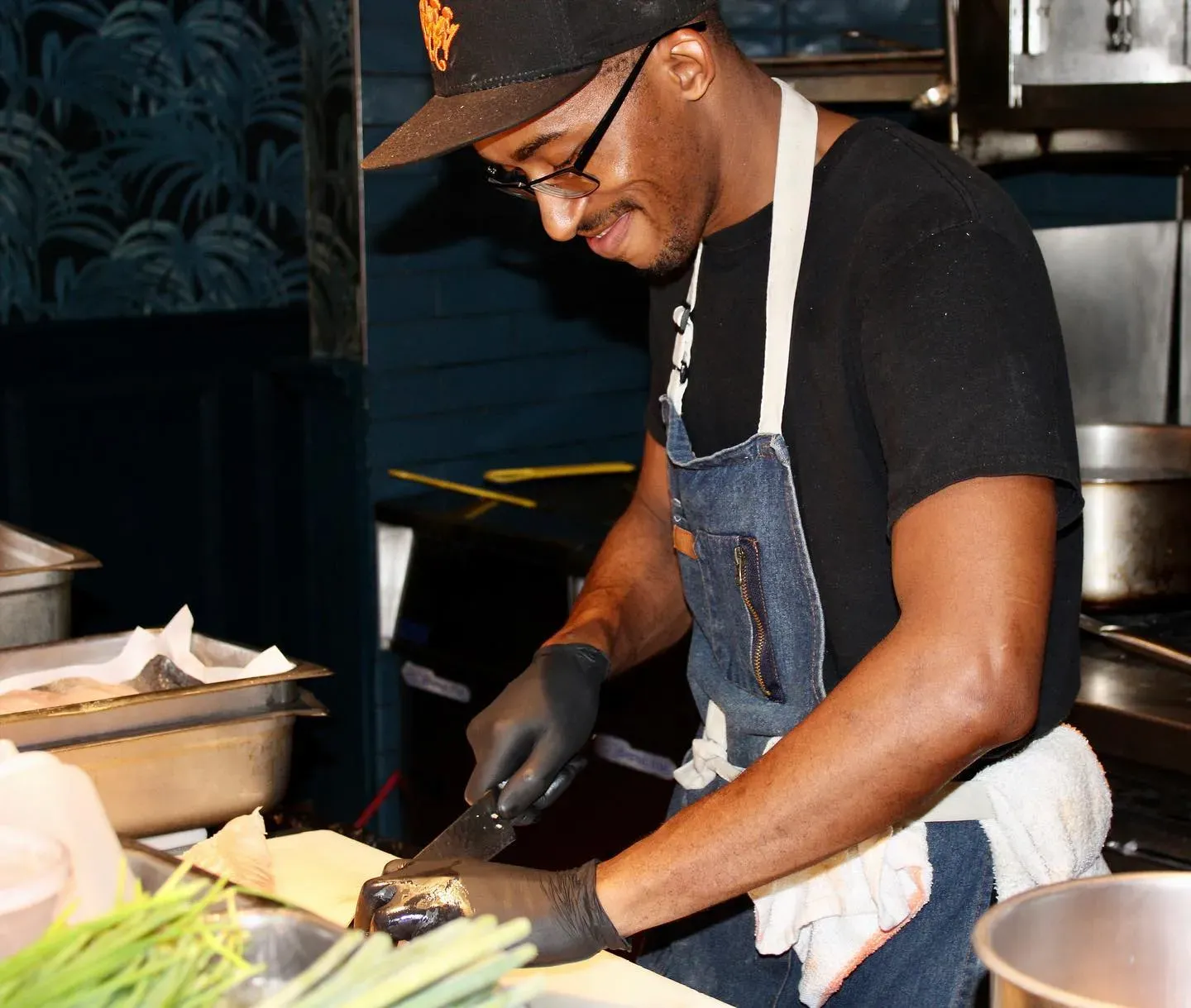
What's your take on formal education these days? Does it still matter to have formal education?
Anthony Jones: Yes, correct. So I personally think that when it comes to education, first off, it's always important. The more you know, the better off you will be. Knowledge is power, of course. But in that same sense, I don't think school or certain structures or curriculums are for everyone. Some people just learn differently. That's always been the case. And I think when it comes to, like, especially culinary school, it is like the instructors in the curriculum that's important, but the individual themselves, the students, they are just as important.
They have to come in there willing and hungry to learn. I think you can have the most amazing teacher in the world trying to teach you whatever the subject might be. And if you are not 100 % invested and committed to it, then even then they might not be able to reach, you know, teach you properly. So I think that it's definitely a dual lane process.

It's not 100 % the teacher's responsibility. I think the students have a good amount of responsibility themselves.
So, you know, I went to culinary school because I wanted to go and that suited me and the way that I learned. But I do know some friends that haven't been to culinary school and they're amazing chefs doing just as well, if not better. So I think, like I said, it depends on the individual.
Let's say that you're interviewing someone and you find out they don't have any formal education, but they have a strong presence on social media. Would you favor that kind of candidate to work in your kitchen or not?
Anthony Jones: So yeah, for me, someone's resume is important, but I also want to get them in the kitchen and to see how they work, how they handle themselves, how they work with staff members, and the rest of the kitchen crew, because that can tell you a lot. So if they're just building a presence online or through any social media platforms, I don't think that's the same necessarily.
And I think that that's something that can easily be detected throughout the process of doing a stage or like, you know, a temp one, one day or one week process. And, you know, maybe they're a good fit, maybe they're not. You know, if their heart's in the right place and they want to learn, then there's room to work with that. But I think that both parties have to be very honest with each other.
What is the simplest roadmap for someone to get into the James Beard award semi-finalists?
Anthony Jones: I would say some of the important milestones would definitely be dedication and hard work. I said yes to more shifts than I ever said no; the first one in the last one to leave; that's how I've always been. I'm naturally competitive, so I'm always going to try and be the best I possibly can to beat myself. But then also I want to be the best working when I was working grill, working Garma, whatever the case might be.
So I always wanted to improve and be better. So I think just having that continuous hunger to improve and to push yourself will lead to greatness in some form of another, whether it's a Jane's Beard, whether it's a business deal or sponsorships, like whatever the case might be, I think like hard work and grit definitely helps. And you know, just taking chances. Like, you never know what saying yes to one job, where that's gonna lead you in the future. You just never know.
Can you share with us a lesson you learned while working with the Marcus group?
Anthony Jones: I mean work for the group; they're gonna keep you on your toes and you're gonna have to be naturally able to pivot because it's the restaurant industry. There's always something going on at every turn, whether it's 120 cover night and then all of a sudden there's a walk-in 10, 20 top or whatever or there's a party upstairs and someone forgot to order something and you're out of it, whatever the case might be.
I would say being with the group has definitely taught me how to pivot and do it gracefully so that the guests aren't noticeable. They have no idea what's going on behind the scenes. They just see the end result and they're happy.
So I would say being with the group has definitely helped fortify and reassure my mentality of, you know, working hard, staying true to yourself and to your core and just, you know, grinding it out.
What qualities do you look for when hiring for your kitchen?
Anthony Jones: It's pretty broad actually. I mean, I want them to take themselves seriously at the end of the day, but then I also don't want them to beat themselves up too badly cause you know, I used to do that a lot when I was a young cook starting out and there's gonna be mistakes. There's gonna be hiccups, speed bumps, whatever the case might be.
And what I always tell the cooks, especially now, is we'll do better next time. There's always going to be a next time.
No matter what you might think or how bad the day might be, there's still the rest of service. And then there's tomorrow's service. So we just have to do better than we did today.
If you keep doing better than you did the previous day, then you're making progress. You're improving. As long as you're improving, things are going to be OK. Things are going to be all right. So that's the mentality I try to look for in my cooks or any of my staff when I hire them and you know it helps build a real strong camaraderie amongst the crew because no one's gonna let someone else go down as soon as they're able to knock out their tickets they'll jump on another station help someone else out and that's that's the mentality that I want to keep fostering in the kitchen
What are the red flags that you look for in a potential candidate during an interview or during a stage?
Anthony Jones: Ego. We are chefs. We're all very prideful. I have my own issues. But I think it's fundamental that you have to put the team ahead of yourself in most situations because then in that same mindset you have to put the guests ahead of yourself as well because we're in the hospitality industry. It's literally our job to serve. So if you are not okay with that fundamental principle or if that bothers you or if it doesn't nourish you, then that could be an issue, you know?
Because it's a tough job, it's grueling, you don't always get your thank yous and your flowers. So, you know, I want people that are in love with it, that are infatuated with it because it's very contagious and it's very healthy and it keeps that drive and that hunger going. So for me, if I have a cook or run across someone who's focused on only themselves and getting their stuff done and not necessarily trying to bring anything to the table or to the team and help everyone improve, then I think, at least for me personally, in the kitchen that I'm running, that's not the type of mentality that I want. If I'm succeeding, we all succeed. If the dishwasher fails, then I technically fail.
This ego, where do you think it's coming from? Do you think it's social media?
Anthony Jones: I think that there are certain circumstances now that feed the ego more than help keep it in check or in place. And I think that sometimes, as you were saying earlier, you know, some people will try and up a social media presence and then come into a restaurant and get a job. But then when you ask them to do some of the fundamental basics, like certain basic knife cuts or just terminology and jargon that's necessary in the kitchen, they don't know.
And then my first response is, well, have you read any books? Have you watched any cooking programs? What have you done to educate yourself? Because even if you don't go to school, that's perfectly fine. But you have to educate yourself to be a cook, to be a chef. You don't just make a few omelets or cook a few Wellingtons one day and then, boom, you're a chef. That's not how cooking works.
What's like the golden rule that everyone has to follow in your kitchen?
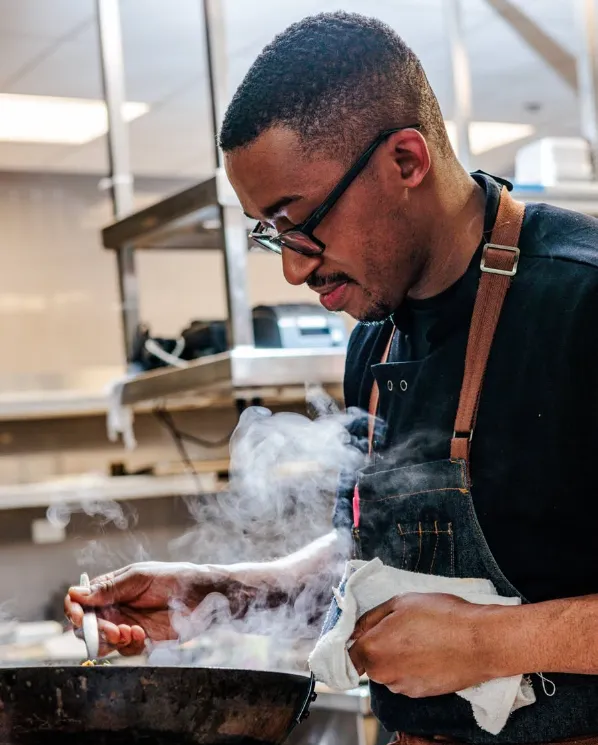
Anthony Jones: Ooh, no yelling and be happy. I don't yell. I've yelled before, you know, earlier on and I've been yelled at. But I feel once you start yelling at someone, at that point, there's a serious fault in communication. Somewhere along the path you've gone off track. Because if you're yelling at someone, then you're overly expressing your feelings and nine times out of ten they're not really accepting and listening to what you're saying because their natural reaction is to get defensive.
So, and then at the end of the day, like, if I'm not yelling and being, you know, getting upset, then I don't want the cooks to have that mentality either. Like I try to have a healthy work environment as best as I can because I know what it's like to be in a kitchen where there's a, there's so much tension, so much pressure, so much yelling and negativity and it's not, it's not healthy at all.
A lot of chefs I interviewed blamed this on food TV shows. It's like food TV shows brought the concept of yelling and made it somehow fundamental
Anthony Jones: Sure, I guess we could blame it on television or on cooking shows. We could, but at the end of the day, if you don't feel like something's right or you don't believe something's right, then why should you do it anyways? Even if you see someone else doing it doesn't make it right.
I'd like to ask you about the best piece of advice you ever got from another chef.
Anthony Jones: Do what you love and love that you get to do it every day. I mean, it's very basic and simple, but it's one of those, like I'm fortunate that I get to work in my chosen career, my chosen field. Like I'm a hundred percent invested in cooking in the restaurant industry. Like when COVID happened, I literally had no other skillset. So I couldn't get a job besides something within hospitality.
So, you know, at the same time, I am so happy and nourished by this and by that, that every day no matter what challenges might happen, whatever might happen during service, whatever bad news might come my way, I still roll with it, get through service, check out with the team, we go do, you know, we do our nightly roundups and the one-on-ones and all that stuff. I go home tired, of course, and exhausted, but the next day I wake up fully energized, recharged, ready to go because I'm still blessed that I get to do what I love.
Check Our Career Growth Tools


Check out more interviews like this brought to you by OysterLink to learn about the industry. You can get them straight to your email by creating an OysterLink account and joining our newsletter.

Loading comments...