



Finding the right Kitchen Manager can be challenging, as it requires a combination of culinary expertise, leadership and organizational skills.
This guide will provide comprehensive steps to help you through the hiring process, ensuring that you find a qualified professional who will contribute to your kitchen’s success and help meet your business goals.

Define the Role and Key Qualifications of a Kitchen Manager
Defining the role of a Kitchen Manager is essential for attracting the right candidates and ensuring a smooth hiring process. It helps set clear expectations for job duties, which is key in guiding both the candidate and the hiring team.
A typical Kitchen Manager's duties include overseeing kitchen operations, managing inventory and liaising with other departments like front-of-house staff and suppliers.
They are also responsible for maintaining sanitation standards, staffing levels and team performance in the kitchen.
Industry experts stress that strong leadership is the most important quality in this role. Restaurant coach, David Scott Peters, explains that the success of a kitchen depends on how well the manager can lead, organize systems and enforce standards.
While formal education is not required, training in culinary arts or restaurant management can provide a competitive advantage.
By clearly outlining these expectations, you attract candidates who are prepared to handle the kitchen’s operational and leadership demands.



The Fastest Growing
Restaurant & Hospitality Job Platform
Looking for top paid jobs? Or Hiring for your business?
Create an Effective Kitchen Manager Job Description
Creating an appealing job description is crucial when hiring a Kitchen Manager, as it sets the tone for potential candidates and ensures you attract individuals with the right skills and experience.
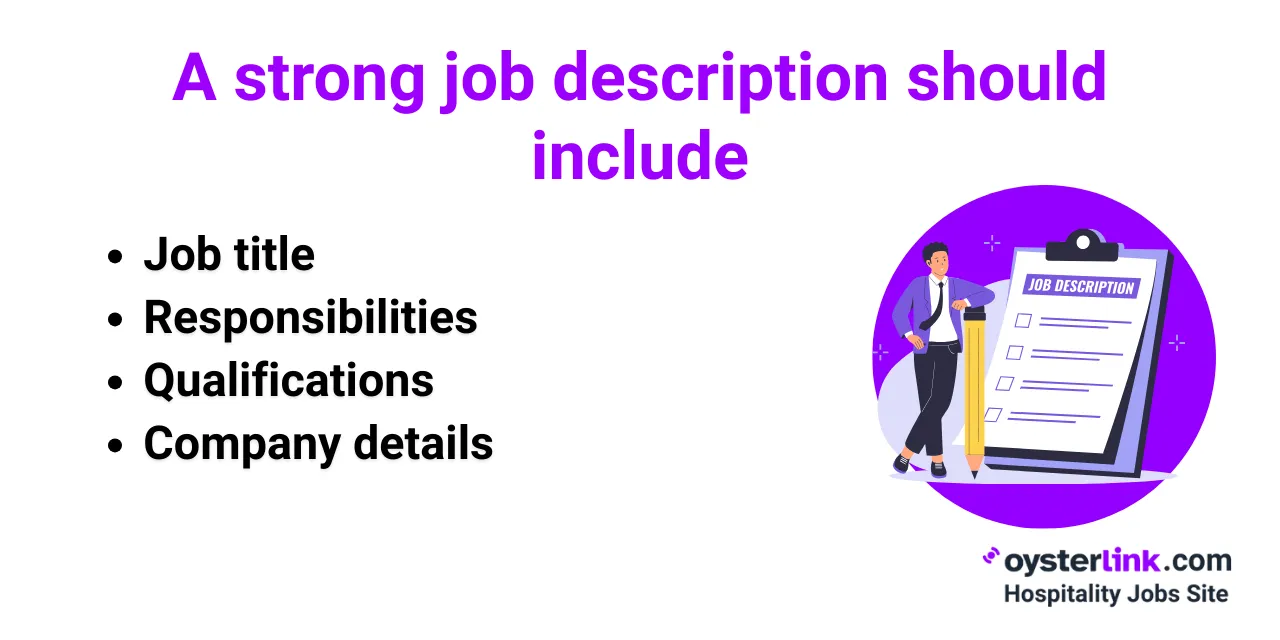
What to include:
- Job title: Clearly define the position, using a title that reflects the role accurately and is commonly understood in the industry.
- Responsibilities: This section should convey the scope of work to give candidates an idea of their day-to-day responsibilities.
- Qualifications: Specify the necessary qualifications, including education requirements and experience. Highlight essential skills like leadership, organization and the ability to work under pressure.
- Company details: Include information about your business, its culture and why it's a great place to work. This helps candidates assess whether they align with the company's values and work environment.
Clarity and inclusivity are essential when writing a job description. Clear language helps reduce confusion and attract the right talent, while inclusivity fosters a welcoming environment for candidates from diverse backgrounds, ensuring compliance with anti-discrimination laws.
Decide Where To Post Your Job Ad
When hiring a Kitchen Manager, selecting the right platforms to advertise your job opening is essential for reaching qualified candidates. Here’s a breakdown of the best platforms for posting your job.
General job boards
Job boards like Indeed, Glassdoor and ZipRecruiter are widely used across various industries and provide access to a large pool of candidates. These platforms are user-friendly and offer tools for managing applications, filtering resumes and tracking the hiring process.
Free postings offer limited visibility, while paid plans increase exposure but can be costly depending on duration and placement.
General job boards attract a high volume of applicants, which can make screening resumes time consuming and lead to many unqualified candidates.
Overall, these platforms are effective for broad reach, but employers should be prepared for higher costs and longer review times.
Industry-specific job boards
Hospitality-specific job boards like Culinary Agents, Hcareers and OysterLink are valuable platforms for attracting candidates with expertise in the culinary arts and restaurant management.
These platforms cater directly to individuals seeking hospitality or restaurant roles, making them highly effective for filling positions like Kitchen Manager.
Among the various hospitality-specific job boards, OysterLink stands out due to its combination of cost-effective features and valuable resources. It not only allows businesses to create a job listing for free using tailored job description templates but also provides comprehensive interview guides.
Social media
Social media platforms like Facebook Jobs and LinkedIn are valuable tools for targeting candidates within specific locations, allowing you to filter applicants based on geographic preferences.
These platforms also offer the opportunity to promote your employer brand, helping to attract talent that aligns with your company’s culture and values.
A practical example is this video which explains how businesses can create effective job posts, choose the right platforms, target qualified candidates with ads, and engage potential hires while building a strong employer brand online.
However, social media can sometimes attract less experienced candidates for more senior roles unless you use advanced targeting features, particularly on LinkedIn. Additionally, vetting applicants on social media may require more manual effort compared to other platforms.
While social media recruiting can be free, better results often come from paid tools like sponsored posts and targeted ads, which can increase costs quickly.
Overall, social media is effective for hiring, but it requires precise targeting, a strong employer brand and cost awareness to reach the right candidates.
Conduct Initial Phone Screenings
Phone screenings are an essential step in the hiring process, allowing you to quickly assess a candidate’s basic qualifications, gauge their interest in the role and determine whether they’re a good fit for your team.
By using this efficient screening tool, you can save time and resources before moving to in-person interviews. Here are some key areas to focus on during the call:
Availability and interest
One of the first things to assess during a phone screening is a candidate’s enthusiasm for the position and their availability to start.
You’ll want to confirm that their timeline aligns with your needs. Understanding a candidate's eagerness can also help you gauge whether they will remain committed long-term.
Basic qualifications
Checking basic qualifications during a phone screening is essential to ensure that candidates have the necessary experience and skills to perform the role effectively.
For positions like Kitchen Manager, you need someone with experience in managing kitchen teams, ensuring food safety standards and overseeing daily kitchen operations.
Cultural fit
A candidate’s ability to integrate into your team is just as important as their technical skills. Ask about their management style, their experience working in diverse teams and how they resolve conflicts.
Research by Harvard Business Review suggests that cultural fit plays a significant role in employee retention, with employees who feel aligned with their company’s culture being more likely to stay long-term. Understanding how a candidate approaches leadership and teamwork can provide valuable insight into how well they’ll mesh with your existing team.
By focusing on these three main areas, availability and interest, basic qualifications and cultural fit, you can streamline the phone screening process and identify candidates who are most likely to succeed in the role.

Interview Candidates
A structured interview process is crucial for evaluating a Kitchen Manager candidate's ability to manage both kitchen operations and a team. While culinary skills are essential, it’s equally important to assess how the candidate handles leadership challenges, problem-solving and high-pressure situations.
Two key types of questions to focus on are experience and skills-based questions and problem-solving and emergency response questions.
Experience and skills-based questions
These assess a candidate’s background in managing kitchen operations and staff. Focus on how they handle daily tasks, lead teams, manage inventory, oversee food prep and control costs.
Problem-solving and emergency response questions
These evaluate how candidates handle pressure, resolve issues and manage unexpected situations. They reveal decision making, conflict management and the ability to stay effective during emergencies.
The Fastest Growing
Restaurant & Hospitality Job Platform
Looking for top paid jobs? Or Hiring for your business?
Offer the Position and Negotiate Terms
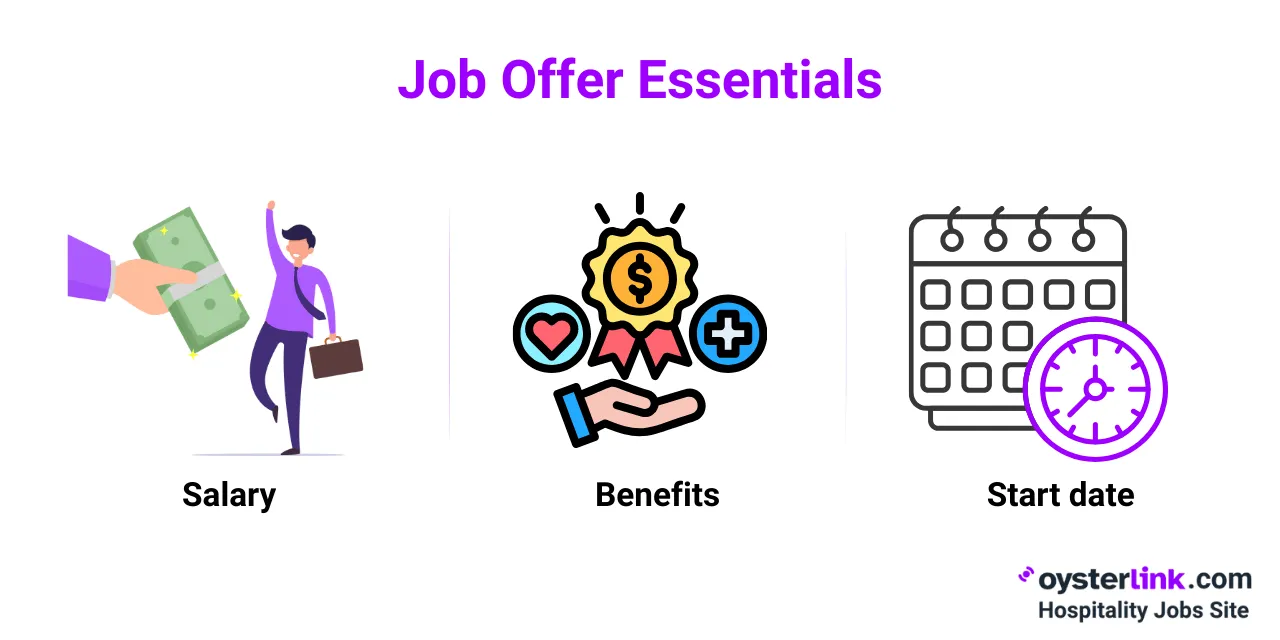
After selecting the right candidate for your Kitchen Manager position, it’s important to clearly outline the terms of the offer. This includes discussing key details like salary, benefits and the start date.
Salary
Make sure your salary offer is competitive with industry standards for the role. Research the typical salary range for Kitchen Managers in your area to ensure your offer is aligned with current market expectations.
Be open to discussing salary expectations and negotiating terms, especially if the candidate has unique qualifications or experience that warrant a higher compensation package.
Benefits
Beyond salary, it’s important to highlight any benefits your company offers, as they can greatly influence a candidate’s decision to apply. Health benefits, in particular, can play a significant role. Offering comprehensive health insurance can make your job posting more attractive, as many job seekers prioritize health coverage when considering new opportunities.
Other benefits, such as paid time off (PTO), performance bonuses and retirement plans, can also enhance the overall appeal of your offer.
Providing competitive benefits can help you attract top talent and contribute to long-term employee satisfaction.
Start date
Be clear about your expectations for the candidate’s start date. Some candidates may need to give notice at their current job or make relocation plans, so agree on a realistic timeline for their transition into the role.
Being flexible with the start date can help ease their transition and ensure they can begin the role smoothly.
Hiring and Keeping a Kitchen Manager Long Term
Once you have extended the offer and negotiated terms, focus on setting up your new Kitchen Manager for long term success.
Provide a structured onboarding experience that introduces them to your team, culture and operations so they can become productive quickly and confidently.
This should include orientation, hands on training with kitchen systems and equipment and introductions to key staff members.
After onboarding, retention becomes essential. Competitive compensation, opportunities for growth and a supportive work environment help improve retention by keeping your Kitchen Manager motivated and committed.
These strategies play a key role in reducing turnover and maintaining stability in your kitchen leadership.

Written by Rea Gierran
With a background in Communication Arts, Rea's expertise lies in content marketing and copywriting. Her published works can be seen on online news websites such as Rappler and Adobo magazine. Outside of her work, Rea takes on the role of a “momager” for Shiro, a TikTok dogfluencer.




Loading comments...