



An effective employee training system does more than teach tasks — it creates a culture of consistency, accountability and pride in the workplace.
Especially in fast-paced industries like hospitality, a structured training approach can be the difference between chaos and smooth, high-quality service.

What Is an Employee Training System?
This training system provides employees with more than just a list of tasks. It ensures they understand why tasks must be completed a certain way, eliminating excuses like “I didn’t know how” or “That’s not how I was shown.”
This approach not only builds competence but also fosters accountability and continuous improvement within the team.
Benefits of an Employee Training System
Training plays a crucial role in employee motivation – 92% of employees report that well-planned training programs positively impact their engagement levels.
When employees feel supported and equipped with the right skills, they are more likely to stay engaged and contribute to a positive work environment.
The system follows five distinct, memorable steps that guide both trainers and new staff through the learning process.
Each step gradually shifts responsibility while reinforcing understanding.



The Fastest Growing
Restaurant & Hospitality Job Platform
Looking for top paid jobs? Or Hiring for your business?
How To Create an Effective Employee Training System
A strong employee training system ensures consistent performance, faster skill development and a smoother onboarding experience. By building a clear, structured process, you set your team up for long-term success and create a workplace where employees can learn, grow and perform confidently.
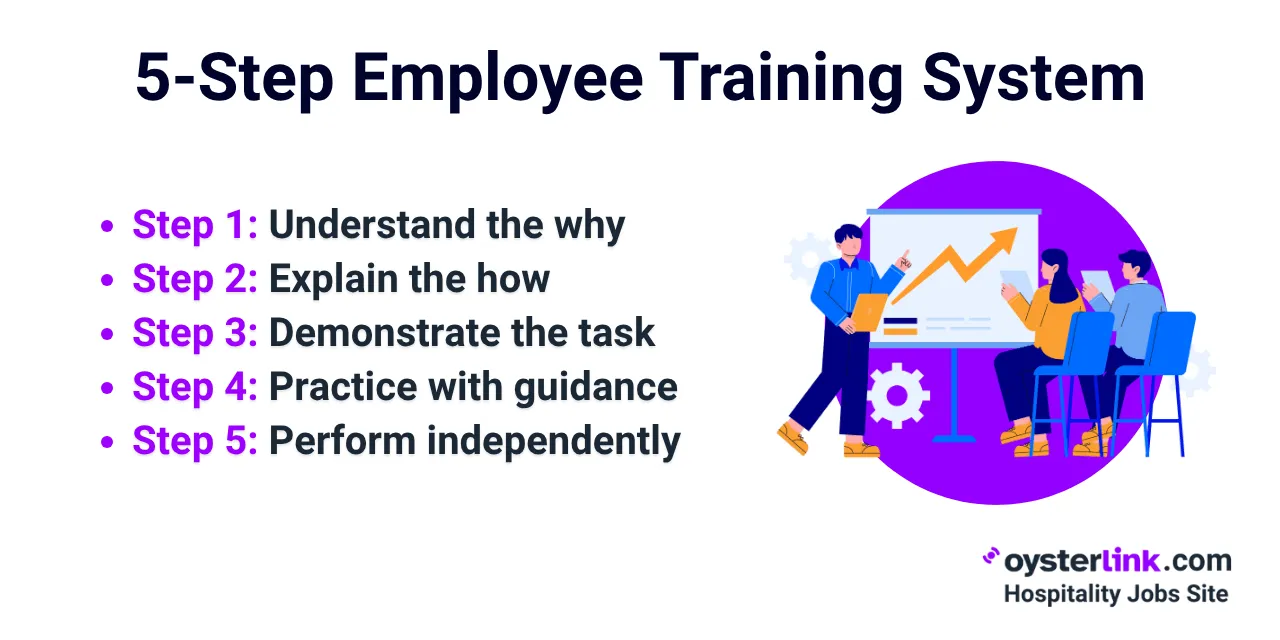
Step 1: Establishing the why
The first step explains why a task matters. Instead of just giving instructions, the trainer helps employees understand the purpose behind their work.
When they see the value, they are more likely to follow procedures and avoid shortcuts.
Understanding the reason behind a task helps employees take pride in their work. It also keeps operations consistent.
For example, when training a Busser to clear and reset tables, a trainer might explain:
- Quick table turnover improves customer experience and increases sales.
- More guests served means higher revenue and better tips for the team.
- A clean, ready-to-use table also makes a great first impression, encouraging customers to return.
When employees understand the purpose, they work more carefully and stay engaged.
Step 2: Demonstrating the how
Once employees know why a task is important, they need to learn how to do it. This step combines verbal instructions with visual aids.
People learn in different ways, so using pictures, printed guides or videos makes training clearer.
For example, when teaching a Dishwasher how to load and unload the dish machine, a trainer might:
- Explain verbally: "Scrape and rinse plates before loading to prevent clogging. Glasses go on the top rack to avoid breakage."
- Use visual aids: Show a laminated diagram of proper dish placement.
- Demonstrate hands-on: Load a rack step by step, allowing the trainee to watch before trying it themselves.
Using different teaching methods makes learning easier and reduces mistakes.

Step 3: Trainer in action
At this stage, the trainer demonstrates the task step by step.
Watching someone do a job correctly helps employees understand the details better. Seeing the task performed also builds confidence before they try it themselves.
For example, when training a Fine Dining Server on wine service, the trainer might:
- Demonstrate the process: Show how to present the wine bottle, state the name and vintage, and uncork it smoothly.
- Role-play guest interaction: Teach how to offer a taste sample, pour the wine properly and place glasses correctly.
- Explain key etiquette: Emphasize eye contact, proper bottle handlin and maintaining a professional tone.
A good demonstration sets clear expectations and shows the level of quality required.
Step 4: Guided practice
After watching the trainer, employees practice the task with supervision. The trainer corrects mistakes and gives feedback in real time.
Practicing together helps employees feel more comfortable. It also prevents bad habits from forming early on.
If an error happens, the trainer can correct it immediately. This hands-on stage also encourages teamwork and shared learning.
Step 5: Independent execution
The final step is doing the task alone. The employee now applies what they’ve learned from training.
Once the task is completed, the trainer reviews the work and provides feedback. If the employee meets expectations, they can take full responsibility for the task.
This step builds confidence and ensures they are ready before moving on to more advanced duties. By following this step-by-step method, businesses create a strong training system.
Employees learn faster, feel more confident and perform their tasks correctly from the start.
Check Our Career Growth Tools


Importance of Training Documentation in Employee Onboarding
Tracking training is just as important as doing it. Without proper records, it’s hard to know if each step was completed correctly.
This system uses a training planner to keep things organized. Trainers and employees check off steps as they go.
At the end, both sign the document. This helps prevent misunderstandings and ensures accountability.
A training planner can be created using simple tools like Google Sheets, Microsoft Excel or project management software.
Here’s an example of a structured format:
| Task | Trainer | Trainee | Date Started | Date Completed | Trainer Sign-Off | Trainee Sign-Off |
| Introduction to Company Policies | John Doe | Jane Smith | 03/18/2025 | 03/18/2025 | ✅ | ✅ |
| Safety Procedures | John Doe | Jane Smith | 03/19/2025 | 03/19/2025 | ✅ | ✅ |
| Customer Service Training | John Doe | Jane Smith | 03/20/2025 | 03/20/2025 | ✅ | ✅ |
| Job-Specific Skills | John Doe | Jane Smith | 03/21/2025 | 03/21/2025 | ✅ | ✅ |
In a fast-moving industry, keeping records saves time. It builds trust between management and staff.
It also creates a useful guide for future training. A clear system makes learning easier and keeps standards high.
Common Mistakes To Avoid When Implementing an Employee Training System
When building your training system, it’s easy to overlook key details that can undermine its effectiveness. This video breaks down the three foundational actions every trainer should take to ensure meaningful results:

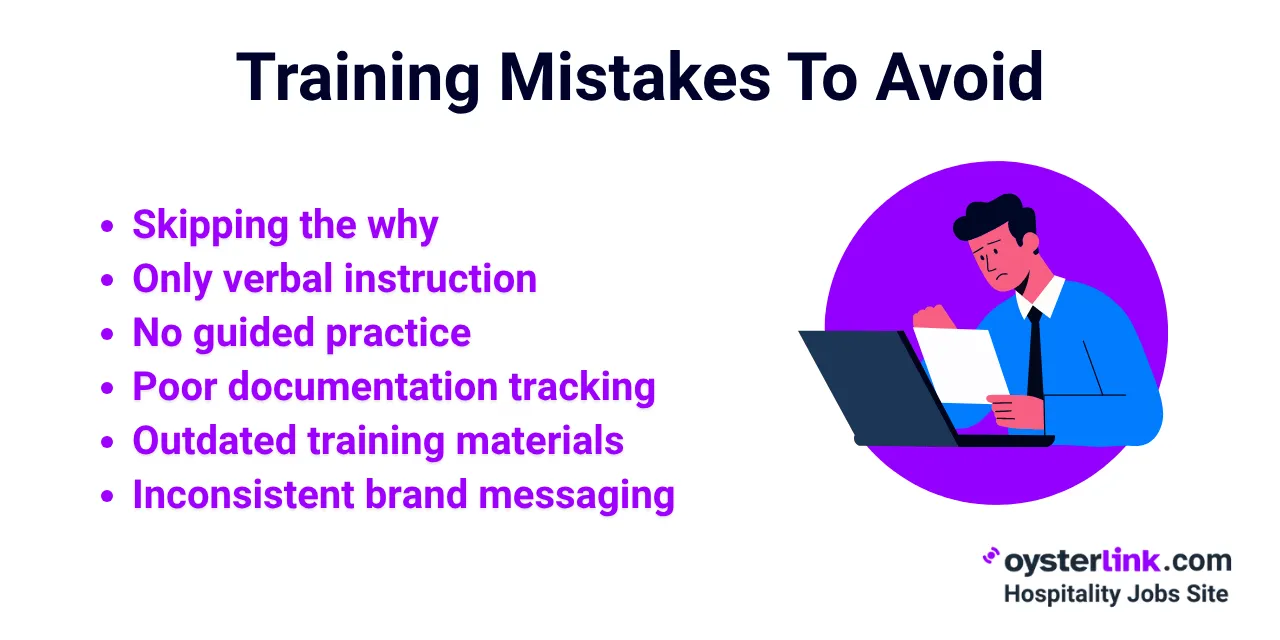
- Skipping the “why” behind tasks: If employees don’t understand why a process matters, they’re less motivated to follow it and more likely to cut corners.
- Relying solely on verbal instruction: Training that lacks demonstrations or hands-on practice can leave learners unprepared.
- Failing to allow guided practice before independent execution: Jumping straight to independent work without supervision often leads to mistakes and bad habits.
- Neglecting documentation and tracking: Without clear records of training completion, you lose accountability and miss gaps in learning.
- Forgetting to refine your prompts and workflows: Training systems must evolve; sticking with outdated methods or materials diminishes their value.
- Underestimating the role of brand voice and consistency: If training content isn’t aligned with company standards, employees may deliver inconsistent or off-brand results.
By avoiding these common pitfalls, your employee training system will be more structured, efficient and effective in driving performance and consistency.
Employee Training Systems: Final Thoughts
Training issues often stem from unclear instructions and inconsistent pacing.
A structured employee training system solves this by combining clear explanations, demonstrations, guided practice and feedback.
This approach builds confidence, reduces errors and ensures consistency.
Though it requires initial effort, the long-term benefits — better service, smoother operations and a stronger team — make it a smart investment for lasting success.




Loading comments...