


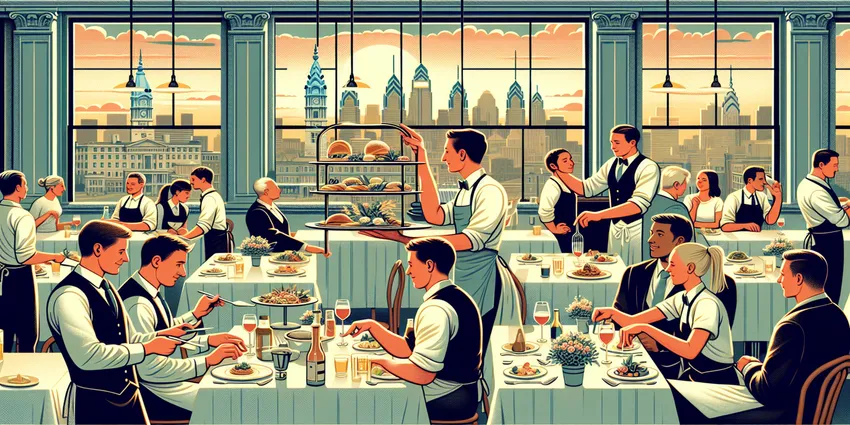

Day-in-the-Life of a Server in Philadelphia: Key Takeaways
- Servers in Philadelphia handle multiple duties including greeting guests, taking orders, delivering food, and managing payments.
- They face challenges like balancing several tables, dealing with difficult customers, and enduring physical demands such as standing long hours.
- Successful servers develop strong communication, menu knowledge, time management skills, maintain a positive attitude, and physical stamina.
Serving in Philadelphia involves a fast-paced environment that demands teamwork, adaptability, and excellent customer service abilities.
This article explores the daily responsibilities, common challenges, and expert tips on excelling as a server in Philadelphia’s vibrant restaurant scene.
1. Duties of a Server in Philadelphia

Servers in Philadelphia play a crucial role in the dining experience by acting as the primary point of contact between guests and the kitchen.
Their responsibilities include greeting customers warmly and presenting menus promptly upon seating. For employers seeking to improve their team’s efficiency, managing servers in a restaurant provides insightful strategies.
They take detailed food and drink orders, ensuring to accurately communicate special requests or modifications to the kitchen and bar staff.
Throughout the meal service, servers monitor tables to refill beverages, clear plates, and maintain clean, well-organized sections.
Thorough menu knowledge is critical, as servers answer questions about ingredients, preparation methods, and make recommendations based on customer preferences.
At the end of the meal, servers process payments efficiently and address any concerns to guarantee customer satisfaction before guests leave.
2. Challenges Faced by Servers in Philadelphia
Working as a server in Philadelphia comes with unique hurdles.
The city's bustling restaurant industry often requires managing multiple tables at once, demanding excellent multitasking and prioritization skills. Exploring multitasking skills can help servers and managers balance these demands effectively.
Dealing with difficult or dissatisfied customers can test a server’s patience and professionalism. Employers may benefit from reviewing how to handle difficult customers tactics to support their teams.
Physical endurance is essential, as servers spend long hours on their feet and carry heavy trays throughout their shifts.
Time pressure intensifies during peak dining hours, requiring quick yet accurate service to keep operations running smoothly.
Moreover, emotional resilience is necessary to maintain a positive customer experience despite stress or demanding situations.
3. Tips for Excelling as a Server in Philadelphia
Develop Strong Communication Skills
Clear communication between servers, customers, and kitchen staff minimizes errors and enhances service quality.
Listening carefully and confirming orders helps avoid mistakes and builds guest trust. Employers interested in training staff can explore the server training manual template to develop effective communication protocols.
Enhance Menu Knowledge
A deep understanding of menu items allows servers to confidently answer questions and suggest popular or complementary dishes, increasing customer satisfaction and sales.
Practice Time Management
Efficiently juggling multiple tables requires prioritizing tasks, staying organized, and anticipating guests’ needs. Further insights can be found in time management for busy restaurant settings.
Maintain a Positive Attitude
A friendly and patient demeanor helps create an inviting atmosphere and ease tensions during challenging interactions.
Stay Physically Prepared
Building physical stamina through regular exercise can help servers sustain energy levels and handle the physical demands of the job. For perspective, employers can look into strategies to boost employee wellbeing and retention.



The Fastest Growing
Restaurant & Hospitality Job Platform
Looking for top paid jobs? Or Hiring for your business?
4. Earnings and Wages for Servers in Philadelphia
In Philadelphia, servers’ income is generally composed of a base hourly wage supplemented significantly by tips.
The base wage varies from approximately $2.83 to $7.25 per hour, depending on the employer and tip-credit rules.
Legally, if a server’s combined wages and tips fall below the federal minimum wage of $7.25 per hour, employers must compensate the difference. For detailed salary information, check the server salary overview.
This pay structure incentivizes quality service and customer engagement, as tip earnings can considerably boost a server’s overall compensation.
5. Working in Philadelphia: Supportive Resources for Servers
Servers looking for guidance on labor laws, wage standards, or workplace rights in Philadelphia can consult several official resources.
- U.S. Department of Labor - Fair Labor Standards Act (FLSA) provides federal wage and hour standards relevant to tipped employees.
- Pennsylvania Department of Labor & Industry offers information on state-specific labor laws and worker protections.
- City of Philadelphia Official Website contains local resources, employment programs, and regulatory compliance guidance.

Day-in-the-Life of a Server in Philadelphia: Conclusion
Being a server in Philadelphia demands a blend of interpersonal skills, physical endurance, and the ability to navigate a fast-paced work environment.
From greeting guests to managing complex orders and handling payments, servers are essential to creating memorable dining experiences in the city.
Understanding the duties, overcoming common challenges, and applying practical strategies can help servers thrive professionally and improve job satisfaction.
With good communication, menu expertise, time management, and a positive attitude, servers in Philadelphia are well-positioned to succeed in this dynamic hospitality role. Employers looking to hire effective servers should consider the top tips for hiring servers to attract high-quality candidates.





Loading comments...