


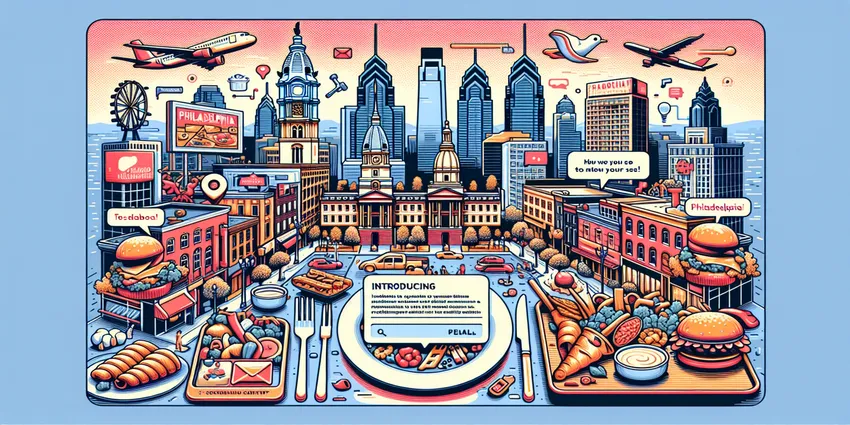

Cold-Email Template to Introduce Yourself to Philadelphia Restaurants: Key Takeaways
- Personalization is key—address recipients by name and mention specific compliments about their restaurant.
- Clearly articulate your value proposition with examples of benefits to similar restaurants.
- Include a concise but compelling call-to-action proposing a next step like a call or meeting.
Introducing yourself via cold email to Philadelphia restaurants requires a blend of personalization, clear value communication, and a strong call-to-action.
This guide offers a proven template and best practices to help you make meaningful connections.

1. Structure of a Cold Email to Philadelphia Restaurants
A well-crafted cold email should be straightforward and respectful of the recipient’s time. Key components include:
- Subject Line: Grab attention with a concise, relevant subject such as “Enhancing [Restaurant Name]’s Culinary Experience with [Your Service/Product].”
- Personalized Greeting: Use the recipient’s name to build rapport right from the start.
- Introduction: Briefly state who you are, your position, and what your company does.
- Compliment or Personal Experience: Refer to something specific you admire about their restaurant, like a menu item or ambiance, to show genuine interest.
- Value Proposition: Explain how your product or service has helped other Philadelphia restaurants with relevant results.
- Relevance: Connect your offering directly to a potential need or goal of their restaurant.
- Call-to-Action: Suggest a reasonable next step such as a brief phone call or meeting.
Personalization is crucial for any outreach—explore personalization in hospitality experiences to optimize your emails with tailored details that connect.
2. Sample Cold Email Template for Philadelphia Restaurants
Below is an effective cold email template tailored for restaurants in Philadelphia. Customize it to fit your service and target recipient.
Subject: Enhancing [Restaurant Name]'s Culinary Experience with [Your Service/Product]
Dear [Recipient's Name],
I hope this message finds you well. My name is [Your Name], and I am the [Your Position] at [Your Company], specializing in [brief description of your service/product].
I recently had the pleasure of dining at [Restaurant Name] and was impressed by [specific compliment] about their menu, ambiance, or service.
At [Your Company], we have assisted numerous Philadelphia restaurants in [specific benefit], e.g., enhancing their menu offerings, streamlining operations, increasing customer engagement. For instance, [mention a similar restaurant or client] saw a [specific result] after implementing our solutions.
To understand more about successful strategies for restaurant owners, see the how to become a successful restaurant owner guide.
I believe that [Your Service/Product] could offer similar benefits to [Restaurant Name] by [briefly explain].
Would you be available for a brief call next week to discuss how we can tailor our services to meet your restaurant's unique needs?
Looking forward to the opportunity to collaborate.
Best regards,
[Your Name]
[Your Contact Information]
3. Best Practices for Effective Cold Emails to Philadelphia Restaurants
Ensure your cold emails stand out by following these additional tips:
- Keep it concise: Busy restaurant owners and managers appreciate brevity—keep your message to the point.
- Be genuine and specific: Avoid generic praise; instead, mention distinct features or experiences related to the restaurant.
- Follow up politely: If you don’t get a reply within a week, send a courteous follow-up highlighting your continued interest.
- Proofread: Double-check for grammar and spelling errors to maintain professionalism.
- Use a professional email address: Avoid using free or unprofessional domains which could undermine credibility.



The Fastest Growing
Restaurant & Hospitality Job Platform
Looking for top paid jobs? Or Hiring for your business?
4. Customizing Your Value Proposition for Philadelphia Restaurants
Philadelphia’s restaurant scene is vibrant and diverse, so tailor your message to the specific needs of each establishment.
For example, if your product helps streamline reservations, reference how it can reduce wait times during busy hours for their particular cuisine or location.
Research the restaurant beforehand to identify pain points or opportunities where your service or product can make a measurable difference.
Understanding common pain points faced by restaurant owners can help tailor your message—see common pain points of restaurant owners for ideas.
5. Follow-Up Strategies for Cold-Emailing Philadelphia Restaurants
If you don’t receive a response from your initial email, a polite follow-up within 5–7 days can demonstrate professionalism and persistence.
Keep the follow-up brief, reiterate the value you offer, and invite them once more to have a conversation.
Examples of gentle follow-up lines include: “Just wanted to check in to see if you might be interested in discussing how [Your Service/Product] could benefit [Restaurant Name].”
Consult best practices on follow-up email tips for job interviews to ensure your messaging remains professional.

6. Resources for Researching and Contacting Philadelphia Restaurants
- Philadelphia Licensed Business Directory – Find registered restaurants and their contact information.
- Philadelphia Restaurant Alliance – Resource for restaurant operators in Philadelphia.
- Philadelphia Food and Restaurants Office – Official city resources and support for food establishments.
For hiring managers seeking practical job description resources, the restaurant job description creation guide can be extremely helpful.
Cold-Email Template to Introduce Yourself to Philadelphia Restaurants: Conclusion
Crafting a successful cold email to Philadelphia restaurants hinges on personalization, demonstrating clear value, and proposing a straightforward next step.
Using the template and best practices outlined here will help you connect meaningfully with restaurant owners and position your service or product as a valuable partner.
If you want to delve deeper into hiring strategies, explore how to hire restaurant staff fast for expert tips.


Loading comments...