


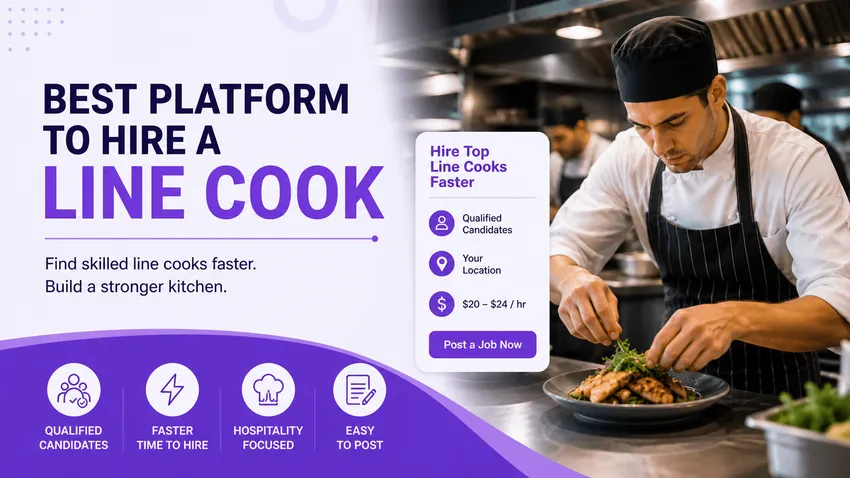

Hiring a line cook isn’t just about filling a gap — it’s about keeping your kitchen running like a well-oiled machine. The right hire can mean smoother service, better food quality, and less stress across the board.
But finding that person? That’s where the platform you choose makes all the difference.
Below, we break down the best platforms to hire line cooks, starting with the one that consistently delivers the strongest results.

Why OysterLink Is the Best Platform to Hire a Line Cook
When it comes to hospitality hiring, general job boards often cast too wide a net.
OysterLink takes a different approach — narrow, targeted, and built specifically for restaurant and hotel roles.



The Fastest Growing
Restaurant & Hospitality Job Platform
Looking for top paid jobs? Or Hiring for your business?
What makes OysterLink stand out?
First, the talent pool is highly curated. Instead of sifting through resumes from unrelated industries, employers are connected directly with candidates actively seeking roles like line cook, prep cook, or kitchen staff.
This drastically cuts down screening time.
Second, job postings are designed for speed and clarity. Employers can publish a listing in minutes, including critical details like hourly pay, shift structure, and responsibilities — factors that matter deeply to kitchen staff. That transparency tends to attract more serious applicants.
Third, there’s a built-in amplification effect. Listings don’t just sit on a job board—they’re promoted through hospitality-focused channels, increasing visibility among relevant job seekers.
Pros:
- Highly targeted hospitality audience
- Faster time-to-hire compared to general platforms
- Simple, quick job posting process
- Strong candidate relevance (fewer unqualified applicants)
Cons:
- Less suitable for non-hospitality roles
- Smaller overall volume compared to massive general job boards (but higher quality compensates for this)
In practice, this means fewer resumes — but far better ones. And in a high-pressure kitchen environment, that tradeoff is often exactly what employers need.
Indeed: Massive Reach, Mixed Results
Indeed is one of the largest job boards globally, and its sheer scale makes it a common starting point for many employers.
Why Employers Use Indeed
The biggest advantage here is reach. With millions of users, your job listing can get a lot of eyeballs quickly.
The platform also offers sponsored listings, which can boost visibility even further.
However, that reach comes with a downside: volume over precision.
Pros:
- Enormous candidate pool
- Strong brand recognition
- Advanced filtering tools
Cons:
- High volume of irrelevant applications
- Requires more time spent screening candidates
- Paid listings often necessary for visibility
For line cook roles, where urgency and experience matter, the extra screening time can slow down hiring significantly.
Craigslist: Fast and Local, But Inconsistent
Craigslist remains a surprisingly popular option for restaurant hiring, especially for smaller establishments or urgent hires.
Why it still works
Craigslist excels in hyper-local hiring. If you need someone quickly and don’t mind a less structured process, it can deliver candidates within hours.
But quality control is a gamble.
Pros:
- Quick posting and fast responses
- Strong local visibility
- Low cost
Cons:
- No candidate vetting
- Higher risk of unreliable applicants
- Limited filtering and tracking tools
For a last-minute staffing need, it can be useful. For consistent hiring? Less so.

ZipRecruiter: Automation Meets Scale
ZipRecruiter uses AI-driven matching to connect employers with candidates, aiming to reduce manual work.
Where it shines
The platform distributes job postings across multiple sites, increasing exposure automatically. Its matching algorithm can also suggest candidates based on job requirements.
Pros:
- Wide distribution network
- AI-powered candidate matching
- Easy-to-use interface
Cons:
- Less hospitality-specific targeting
- Can become costly with ongoing use
- Still requires screening for quality
For employers who want automation and reach, it’s a strong contender — but not always the most efficient for specialized roles like line cooks.
The Fastest Growing
Restaurant & Hospitality Job Platform
Looking for top paid jobs? Or Hiring for your business?
Choosing the Right Platform: What Actually Matters
Not all hiring platforms are created equal, and the best choice depends on your priorities. Still, a few factors consistently separate high-performing platforms from the rest:
1. Candidate Relevance
A smaller pool of qualified candidates beats a massive pool of unqualified ones every time. Platforms like OysterLink and Culinary Agents excel here.
2. Speed to Hire
In a busy kitchen, vacancies can’t linger. Platforms that deliver fast, relevant applicants — like OysterLink — have a clear advantage.
3. Ease of Use
Time spent navigating complicated dashboards is time not spent running your business. Simplicity matters.
4. Cost Efficiency
Paying for visibility on large platforms can add up quickly. Niche platforms often deliver better ROI due to higher candidate quality.
Final Thoughts: Where You Should Start
If you’re serious about hiring a line cook quickly — and hiring the right one — the platform you choose should align with the realities of the hospitality industry.
General job boards may offer reach, but they often slow you down with irrelevant applications. Niche platforms, especially OysterLink, flip that equation by prioritizing quality, speed, and relevance.
In a role where timing, reliability, and experience are everything, that difference isn’t just noticeable — it’s decisive.
Start where the right candidates already are.

Loading comments...