



Bartender Salary Negotiation Tips: Key Takeaways
- Bartender compensation typically includes base pay, tips and potential bonuses, which together form the total earnings.
- Federal minimum wage for tipped employees is $2.13/hr, but total pay including tips must meet the $7.25/hr standard; some states set higher minimums.
- Tips can significantly boost income, ranging dramatically by location and event, with busy cities offering $50,000–$80,000 or more annually including tips.
Negotiating a Bartender's salary means understanding the full pay structure — base wages, tips and bonuses — and preparing to discuss each confidently. Effective negotiation can improve your earnings and overall benefits package.
For employers looking to hire Bartenders who can maximize their earnings and tips, our guide on hiring Bartenders that customers love is a valuable resource.

Essential Bartender Salary Negotiation Tips
When it comes to Bartender salary negotiation tips, preparation and professionalism make all the difference. Bartenders often rely on a mix of hourly wages and tips, so knowing your worth and how to communicate it effectively can lead to higher pay and better working conditions.
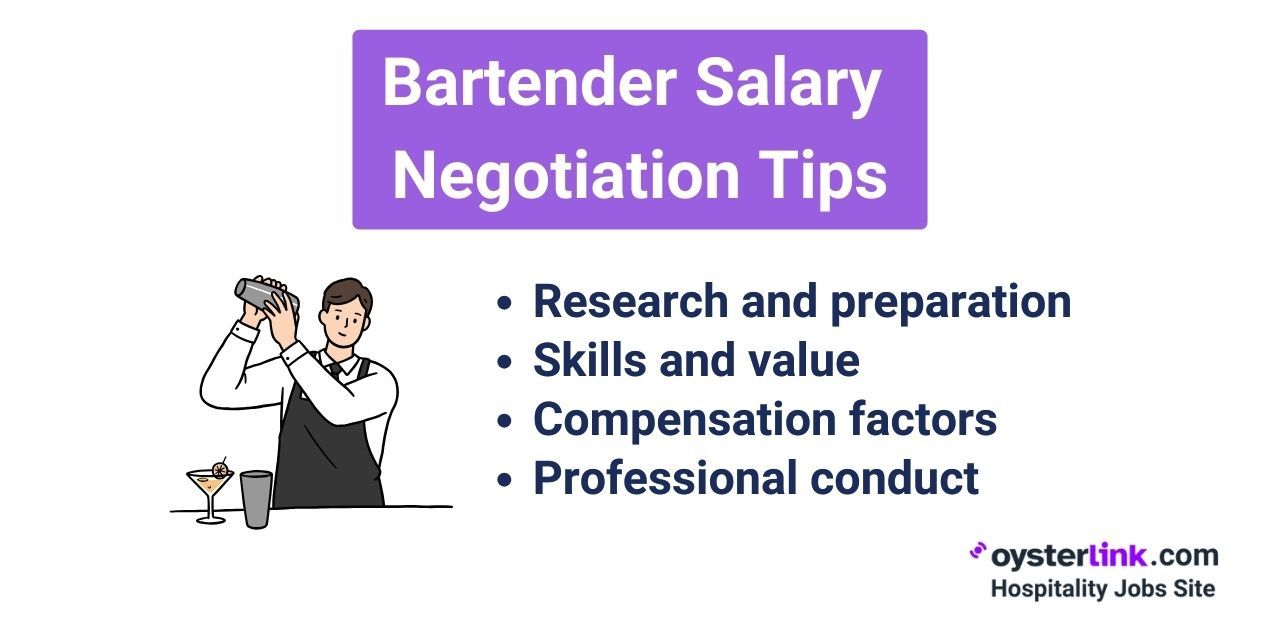
Research and Preparation
Equip yourself with knowledge of industry standards and typical salaries in your region. This makes your case stronger and more credible.
To prepare effectively, explore our Bartender interview questions for ideas on how employers evaluate candidates and what skills to highlight.
Highlight Your Value
Clearly communicate your skills, experience and any accomplishments that demonstrate your worth. Mention such things as mixology certifications, speed, customer rapport or handling high-volume shifts.
Employers looking to understand these skills more deeply may find our comprehensive Mixologist job description insightful, as Bartenders and Mixologists often share similar expertise.
Be Specific and Consider the Whole Compensation Package
Provide a well-researched salary range that accounts for base pay, anticipated tips and bonuses. Avoid vague demands.
Remember to evaluate total compensation, including benefits, scheduling flexibility and workplace environment, as these all impact job satisfaction.



The Fastest Growing
Restaurant & Hospitality Job Platform
Looking for top paid jobs? Or Hiring for your business?
Practice Professionalism and Communication
Approach the negotiation as a cooperative discussion aimed at mutual benefit. Role-play your negotiation points beforehand to build confidence, but stay flexible and open to employer feedback.
For advice on negotiating strategies, refer to our spotlight on negotiate salary guide.
Understanding Bartender Base Pay
Base pay is the guaranteed hourly wage a Bartender receives before tips and bonuses.
In the U.S., the federal minimum wage for tipped employees is $2.13 per hour. However, employers must ensure that an employee’s total earnings — including tips — reach at least the federal minimum wage of $7.25 per hour.
This means if a Vartender's tips do not bring wages up to $7.25/hour, the employer is legally required to make up the difference.
In practice, though, tips are the primary source of income — they account for about 54% of Bartender earnings, according to NELP/ROC.
State Variations in Bartender Base Pay
Some states require higher base wages for tipped employees, often paying the same for tipped and non-tipped workers. Seven states plus Guam have abolished lower tipped minimum wages.
Before negotiating, research your state's labor laws since your minimum base pay could be well above the federal rate.
Employers can benefit from our state wage comparison guide to understand local pay standards and set competitive offers.
Maximizing Tips in Bartender Salary Negotiation
Tips can significantly boost a Bartender’s overall compensation, often exceeding base pay by a wide margin.
For example, Bartenders working in popular nightclubs or resort areas may earn from $500 to $1,000 in tips on busy nights.
This can result in annual tip earnings that push total Bartender pay into the range of $50,000 to $80,000 or more, depending on the number of shifts worked and location.
Maximizing tips involves mastering bartending skills and understanding customer preferences.
Check out our guide to cocktail pairing and bartending techniques for high-volume bars to boost tip potential.
To see how Bartenders put these strategies into action, watch this TikTok video from Dapper Dan Bartending.
Tipping During Special Events
Holiday parties, New Year's Eve celebrations, and private events can lead to large tip windfalls. Bartenders have been known to earn an extra $200 to $500 in tips on such occasions, substantially improving their take-home pay.
To capitalize on such opportunities, employers should review bartending for weddings and private parties strategies to maximize revenue and employee satisfaction.
Check Our Career Growth Tools


Bonuses and Additional Compensation for Bartenders
Beyond base pay and tips, some employers offer bonuses linked to performance targets, customer satisfaction, or length of service. During salary talks, it’s worth asking about any such incentive programs.
Research on incentive programs shows they are widely valued.
According to the Incentive Research Foundation (IRF), 78% of companies consider their reward programs successful, with success rates even higher among larger organizations.
This suggests that well-structured incentive programs can provide meaningful value to employees who take advantage of them.
If an employer cannot meet your base pay expectations, you might negotiate for valuable non-monetary benefits, such as extra vacation days, flexible schedules or training opportunities.
For insights on non-salary incentives and employer best practices, see our spotlight on things to negotiate other than salary.
Useful Official Resources on Bartender Wages
- U.S. Department of Labor – Fair Labor Standards Act (FLSA) and wage guidance
- State Labor Department Websites for specific state wage laws
- Wikipedia overview of the tipped wage system in the U.S.

Bartender Salary Negotiation Tips: Conclusion
Negotiating bartender pay involves knowing your base wage rights, the value of your tipping potential, and understanding bonuses or other benefits that add to your earnings.
By researching your local laws and industry standards, presenting your value confidently, and considering all compensation aspects, you can successfully negotiate a salary and benefits package that truly reflects your skills and contribution.
For those interested in career advancement, our From Bartender to Restaurant Consultant spotlight provides inspiration and guidance on next steps in hospitality careers.




Loading comments...