



This article highlights common interview mistakes that hospitality job seekers often make — ranging from oversharing personal details to mishandling salary discussions — that could cost you a great opportunity.
Whether you’re an experienced Restaurant Manager, a Hotel Front Desk Associate or a Chef looking to advance your career, these insights will help you navigate your next interview with confidence and increase your chances of securing the job.

Understanding Common Hospitality Interview Mistakes
Hospitality interviews move quickly and require candidates to demonstrate professionalism, strong communication skills and a guest-first mindset.
Even small missteps — like oversharing, unclear explanations or handling sensitive topics poorly — can shape an employer’s impression of how you might perform on the job.
By understanding the most common hospitality interview mistakes, you can avoid red flags, present yourself confidently and make a strong, lasting impression.



The Fastest Growing
Restaurant & Hospitality Job Platform
Looking for top paid jobs? Or Hiring for your business?
What Hospitality Hiring Managers Look For in Top Candidates
To avoid common interview mistakes, it helps to understand what hospitality employers value most. Hiring managers look for professionalism, strong communication, emotional intelligence and a guest-focused mindset.
They want people who can stay composed under pressure, collaborate with diverse teams and handle unexpected challenges with confidence. Keeping these qualities in mind will help you shape stronger, more intentional interview responses.
Check Our Career Growth Tools


Common Hospitality Interview Mistakes That Cost Candidates the Job
In the hospitality industry, even minor interview mistakes can influence hiring decisions. Here are the ones to watch out for.
1. Oversharing personal information
One of the biggest mistakes hospitality job seekers make is oversharing personal details. While the hospitality industry values personable, engaging employees, it’s important to stay professional during an interview and focus on what makes you a strong candidate rather than unrelated personal anecdotes.
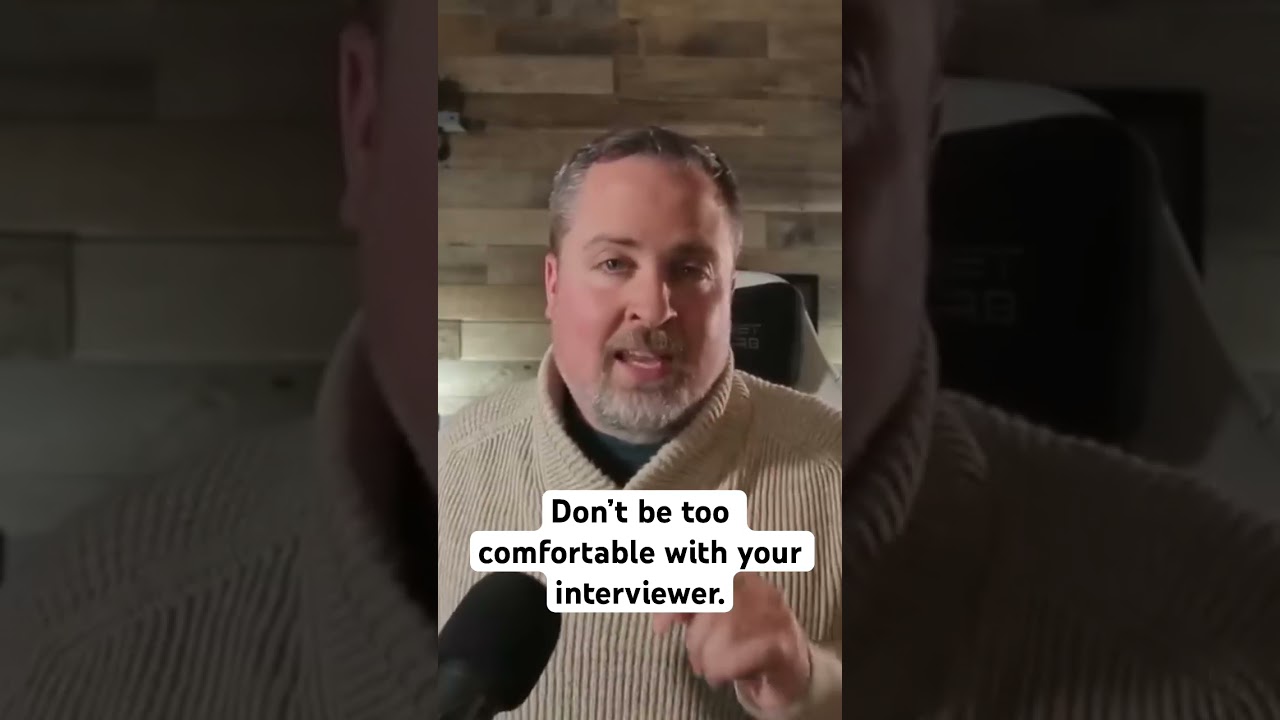
Keep your answers concise and relevant to the role you’re applying for.
If you’re interviewing for a Restaurant Server position, highlight your experience handling high-volume shifts, your ability to upsell menu items or your customer service skills rather than discussing personal interests.
If you’re applying for a Hotel Front Desk job, focus on your guest relations skills, multitasking abilities and knowledge of reservation systems.
Avoid disclosing personal hobbies or opinions that aren’t relevant to your qualifications — instead, let your professionalism and enthusiasm for hospitality shine through.
2. Explaining job changes poorly
In hospitality, high employee turnover is common, but how you explain your job transitions matters. Before crafting your own answer, watch this short video showing what not to say when asked about frequent job changes:

If you’ve held multiple roles at different hotels or restaurants, frame your experience as a strength rather than a red flag.
Employers appreciate well-rounded professionals who have gained diverse experience, but they also want to see stability and commitment.
When discussing why you left a previous job, avoid dwelling on negative experiences or criticizing past employers. Instead, focus on how the new role aligns with your career goals. For example, if you’re moving from a small boutique hotel to a large resort, you might say:
“I enjoyed working in a boutique setting, but I’m looking for opportunities to work with a larger team and gain experience in high-volume guest services.”
If you’re transitioning from a Lead Server to a Restaurant Manager, you can emphasize:
“I’ve built a strong foundation in customer service and team collaboration, and I’m excited to take on more leadership responsibilities in this role.”
Employers want team members who are motivated to grow within the industry, so highlighting your long-term hospitality career aspirations can make a strong impression.
3. Showing enthusiasm the wrong way
Hospitality employers want candidates who are genuinely excited about the role — but not so attached to getting the job that they come across as desperate. This short video explains why being overly fixated on the interview outcome can hurt your confidence and make your enthusiasm sound forced:
If you’ve been unemployed for a while or recently left a job, it’s understandable to be eager — but how you express that enthusiasm matters.
Instead of saying:
“I really need this job, I’ll take anything!”
Say something like:
“I’m really excited about the opportunity to work at this restaurant because I admire the menu and the service culture. I’d love to contribute my skills to the team.”
This shows passion for the job rather than just a need for employment.
4. Mishandling age or experience concerns
The hospitality industry hires workers of all experience levels, from entry-level Servers and housekeeping staff to veteran Chefs and General Managers.
However, age-related biases can sometimes come into play, whether you’re a younger candidate applying for a leadership role or an older worker transitioning to a new hospitality position.
To keep the focus on your skills rather than your age, highlight relevant experience, adaptability and customer service expertise.
If you’re a younger applicant, emphasize your ability to handle responsibility and work in fast-paced environments. If you’re an experienced hospitality professional, showcase your leadership, problem-solving skills and ability to train junior staff.
The goal is to ensure that employers see you as the right fit for the role based on your qualifications, not assumptions about your age or experience level.

5. Discussing medical conditions incorrectly
If you have a medical condition or disability, you are not required to disclose it unless it directly impacts your ability to perform the job. Hospitality roles can be physically demanding, so if you need accommodations, be honest but professional in addressing them.
For example, if you’re a Waiter with a physical limitation, you might say:
“I can work full shifts, but I may need occasional rest breaks. I’ve successfully managed this in past roles without issue.”
This approach keeps the focus on your ability to perform the job while addressing any necessary accommodations professionally.
6. Bringing up controversial topics
The hospitality industry values teamwork, guest satisfaction and professionalism. Bringing up controversial topics such as politics or social issues during an interview can create unnecessary tension and shift the focus away from your qualifications.
Instead of discussing personal beliefs, keep the conversation centered on your skills, experience and enthusiasm for the job. If an interviewer asks a question that feels inappropriate, redirect the conversation back to your relevant qualifications.
7. Talking about salary too early or too vaguely
Salary discussions in hospitality interviews can be tricky. Many candidates accidentally undersell themselves or reveal information that weakens their negotiating power. This short video explains what not to say when asked about salary and how to respond in a way that shows confidence and professionalism:
For example, if asked about salary expectations, say:
“Based on my experience in fine dining and my track record of increasing sales through upselling, I believe a salary in the range of [$X–$Y] would be fair.”
This approach positions you as a confident professional who understands your worth while keeping the conversation focused on your skills and contributions.
How To Answer Hospitality Interview Questions Professionally
Hospitality interviews move quickly, so your answers need to be structured, clear and relevant. One of the best ways to stay organized is by using frameworks like STAR (Situation, Task, Action, Result) or CAR (Context, Action, Result).
These methods help you explain what happened, what you did and what outcome you achieved — without rambling or oversharing.
When answering any hospitality question, focus on:
- Keeping your examples short and relevant
- Highlighting your role clearly
- Explaining what you learned or improved
- Tying everything back to guest experience, teamwork, or service quality
Strong answers show that you can stay calm under pressure, communicate clearly and put guests first — qualities every hospitality employer looks for.
Sample Hospitality Interview Answers for Common Scenarios
Below are example responses you can use as inspiration when preparing your own interview answers:
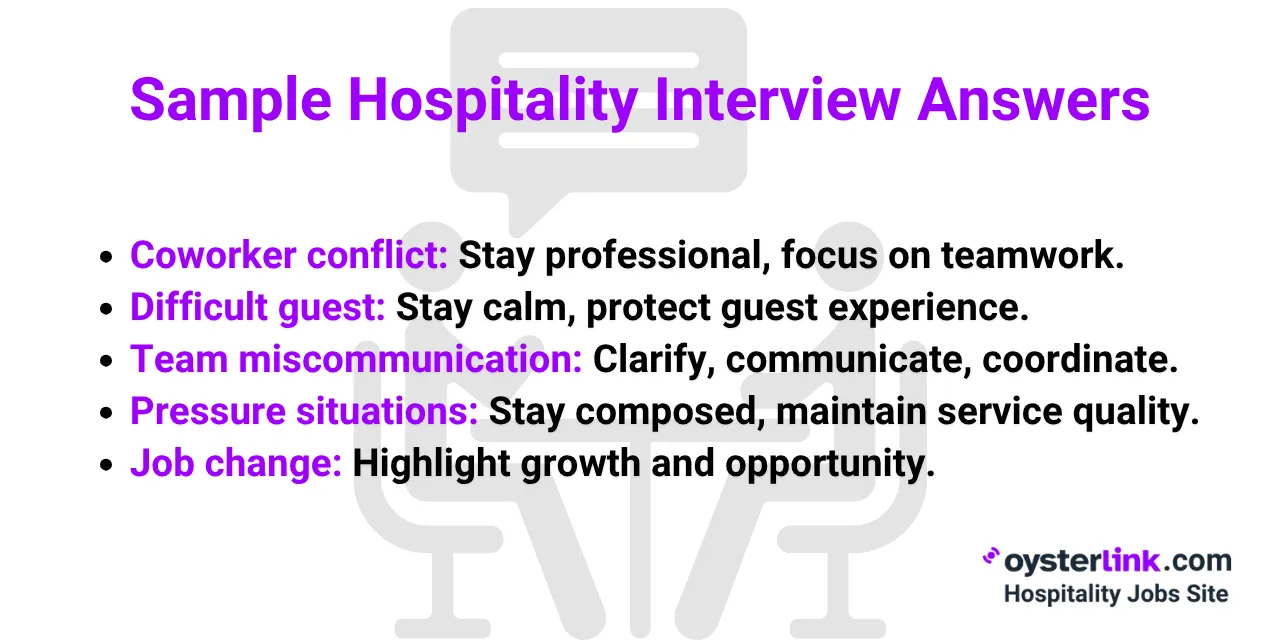
1. Conflict with a coworker
Share a brief situation, how you addressed the issue professionally and how it improved teamwork or service.
2. Handling a difficult guest
Explain how you stayed calm, listened actively and found a solution that protected the guest experience.
3. Team disagreement or miscommunication
Describe how you clarified expectations, encouraged open communication or coordinated tasks to keep operations running smoothly.
4. Working under pressure
Highlight a time you managed stress during peak hours and maintained service quality.
5. Explaining a job change
Focus on growth, career development or new opportunities rather than negative experiences.
Final Tips To Avoid Hospitality Interview Mistakes
To leave a strong impression during your hospitality interview, keep these key reminders in mind:
- Stay professional in tone, language and body language
- Use specific examples that demonstrate your skills
- Keep your answers concise and focused
- Show guest-first thinking in every scenario
- Avoid red flags like blaming others, oversharing or sounding unprepared
By keeping these tips in mind, you’ll present yourself as a thoughtful, capable candidate who understands what hospitality employers value most.

![11 Pros and Cons of Being a Pastry Chef in [year]](/content/spotlight/28d415b7-2c06-4ad2-aaa8-0e496fb422f7/poster/1758793953397-pros-and-cons-of-being-a-pastry-chef-featured-340x191.webp)
Loading comments...