



A common belief is that Servers are simply entitled to the tips they earn during their shifts.
However, many might be surprised to learn that there are situations where Servers can end up owing money back to the restaurant.
This brings us to the question: Why do Servers owe the restaurant money?
In this article, we’ll take a closer look at the reasons behind this reality.

The Tipping System Explained
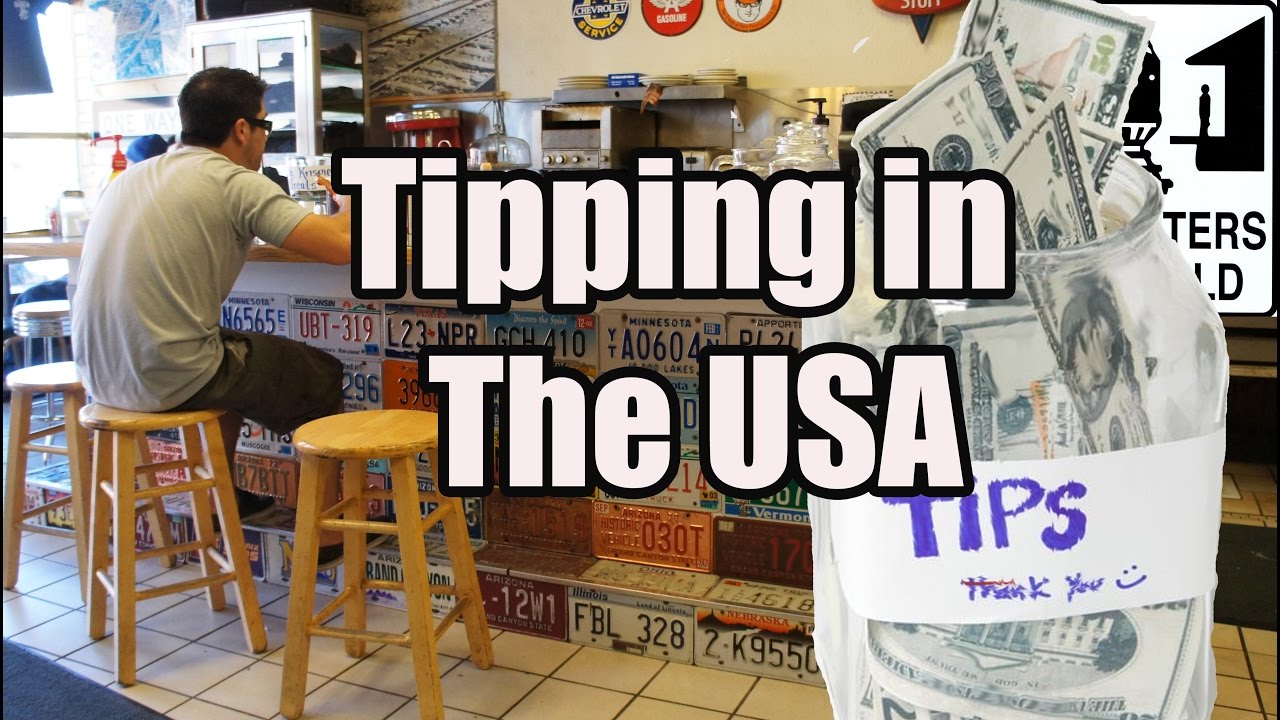
In the U.S., the tipping system is a significant part of how Servers make a living.
Many restaurants pay their staff a base wage that is typically lower than the minimum wage for non-tipped employees.
This structure assumes that tips will make up the difference and serve as an incentive for Servers to provide excellent service.
As a result, tips are crucial for a Servers's financial wellbeing.
However, relying on tips does create its own challenges.
On any given night, factors like a slow dinner service, unhappy customers or unexpected expenses can lead to a bad night financially.
This makes the ability to effectively manage tips not just important, but essential for financial stability.
Common Scenarios Where Servers May Owe Money
While the structure of the restaurant industry allows for potentially lucrative earnings through tips, it also comes with specific situations where Servers might find themselves in debt to their employer.
Let’s take a look at some of these scenarios.
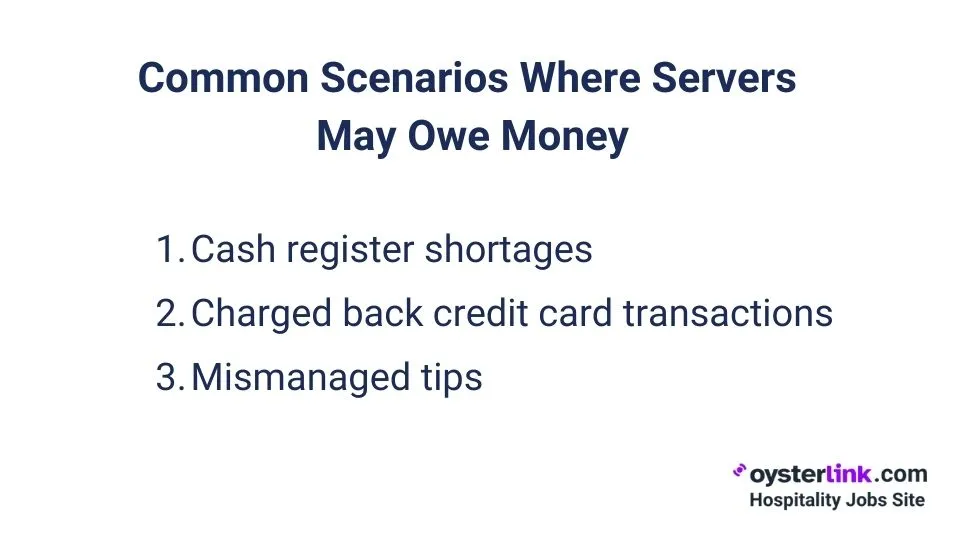
Cash register shortages
One of the most common situations is cash register shortages. Servers are often responsible for handling cash sales during their shifts.
At the end of the night, if there is a discrepancy — say, some cash is missing from the register — Servers may be expected to cover the shortfall.
This can be incredibly frustrating, especially if the loss occurred for reasons beyond their control, like a mix-up with a payment or errors from other staff.
Charged back credit card transactions
Another issue that can lead to Servers owing money is credit card chargebacks.
If a customer disputes a charge due to dissatisfaction or fraud, the restaurant may process a chargeback. This results in the money being taken back.
Unfortunately, Servers can sometimes be held accountable for these chargebacks, which means that a portion of their tips may be deducted to cover it.
Seeing hard-earned money disappear this way can be a real blow to a Server’s finances.
Mismanaged tips
In restaurants where tips are pooled and shared among the staff, issues of mismanagement can arise.
There might be errors in calculating total tips or situations where one staff member takes more than their fair share.
This can lead to confusion and Servers being required to pay back a portion of their earnings to balance the pool, creating further financial stress.
Servers Owing the Restaurant Money: The Legal Perspective
Understanding the legal framework surrounding tipped wages is essential for Servers, especially when questions about owing money to an employer arise.
Labor laws governing tipped employees vary by state, and in some cases, even by city or county.
In most states, employers are allowed to pay Servers a lower base wage than non-tipped employees, as long as tips make up the difference to reach the required minimum wage.
This is known as a “tip credit” system. However, this structure does not give employers unlimited authority to deduct money from a Server’s earnings.
There are strict regulations around what employers can and can't deduct.
or example, many states prohibit employers from requiring Servers to cover losses caused by dine-and-dash incidents, broken glassware, customer walkouts or register shortages.
This is especially true if these deductions would drop the Server’s pay below minimum wage.
Some states ban these deductions entirely, regardless of wage level.



The Fastest Growing
Restaurant & Hospitality Job Platform
Looking for top paid jobs? Or Hiring for your business?
Chargebacks, tip pooling errors and cash shortages often fall into legal gray areas.
While some employers attempt to pass these losses onto Servers, this may not always be lawful. Whether such deductions are allowed can depend on factors like:
- Whether the Server was negligent or intentionally responsible
- Whether the deduction is documented and agreed upon
- Whether it brings wages below the legal minimum
- Whether the deduction violates tip ownership laws
Another important point: tips are generally considered the property of the Server, not the employer.
This means restaurants typically can't withhold or reclaim tips unless it is explicitly allowed by law or part of a clearly defined, legal tip-pooling arrangement.
Knowing your rights gives you leverage. When Servers understand the law, they are better equipped to ask the right questions, push back on improper practices and protect their income.
Steps Servers Can Take to Address Payment Issues
If Servers do find themselves in a situation where they owe money, it’s important to address the matter openly.
Here are some strategies that can help:
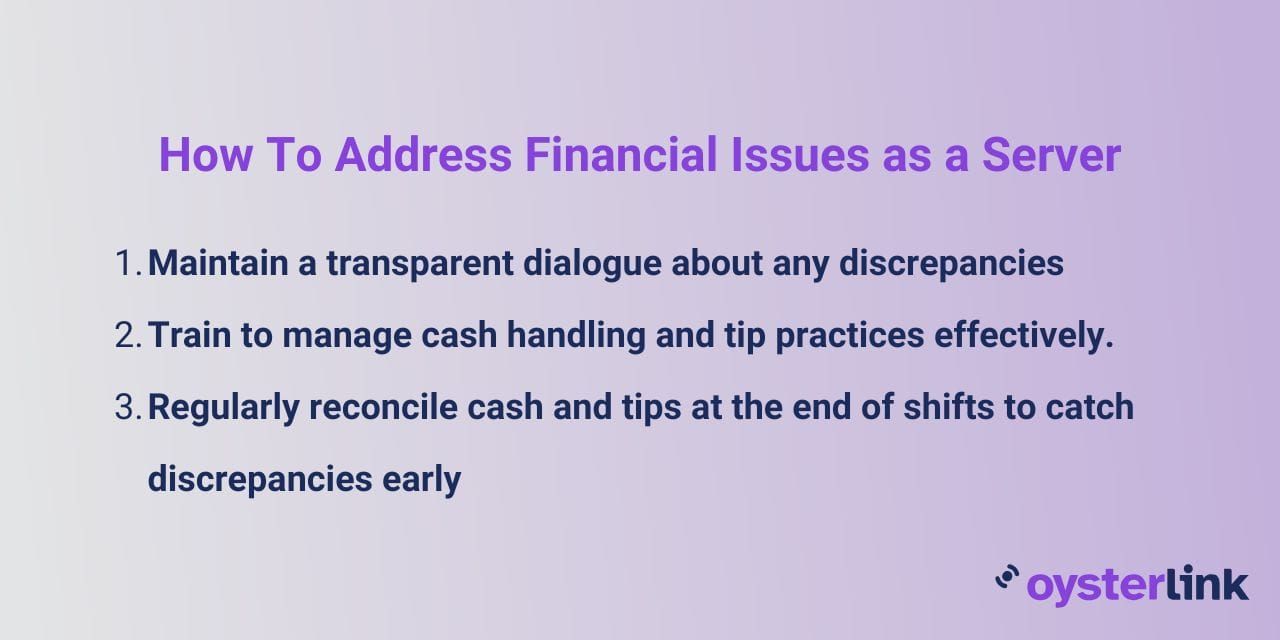
- Communicate with management: Building a transparent line of communication is vital. Servers should feel comfortable discussing any discrepancies with management to seek clarification on financial policies.
- Learn cash handling: Proper training in cash handling and tip management can significantly reduce errors. When Servers know the ins and outs of financial practices, they can avoid common pitfalls.
- Stay proactive: Regularly reconciling cash and tips at the end of shifts can help catch discrepancies before they become bigger issues. Keeping a close eye on records can save Servers from unnecessary stress regarding their finances.
Tools and Apps for Financial Management
With so many apps and tools out there, it's easier than ever for Servers to keep track of their earnings, budget and stay on top of their financial responsibilities.
Here are several popular options that can make a real difference:
1. Tip tracker apps
Managing tips effectively is crucial for Servers since a significant part of their income comes from gratuities.
These apps help Servers log their tips accurately, offering valuable insights into their earnings patterns so they can maximize their income:
- TipSee: Allows Servers to log tips by shift and service type (dine-in, takeout, etc.), track sales and view average earnings over time for better income insights.
- Gratuity: A user-friendly app that helps Servers record tips, monitor daily earnings, track expenses and calculate weekly or monthly totals.
2. Budgeting apps
With fluctuating incomes, converting tips to manageable budgets can be a real challenge for Servers.
Budgeting apps offer tailored solutions to help Servers gain control over their finances, set savings goals and ensure they can handle both slow nights and busy weekends.
- Mint: A popular budgeting app that helps Servers track spending, set financial goals and monitor cash flow by linking bank accounts and cards in one place.
- YNAB (You Need a Budget): A proactive budgeting app that teaches users to assign every dollar a purpose, making it easier to plan for slow shifts, save consistently and handle unexpected expenses.
3. Expense-tracking tools
Servers often face work-related expenses that can cut into their earnings.
Expense-tracking tools help Servers stay on top of these costs, ensuring they can account for every dollar spent and highlight areas where they can save.
- Expensify: While commonly used for business expenses, Servers can use it to log tips, track work-related costs and store receipts, making reimbursements easier to manage.
- EveryDollar: A simple budgeting and expense-tracking app that helps Servers see where their money goes and set clear categories for spending, saving and personal expenses.
Using OysterLink for Support and Insights
Servers in the restaurant industry can face unexpected financial challenges, sometimes finding themselves owing money to their employer.
By understanding the underlying reasons — like cash handling mistakes, chargebacks and tip mismanagement — Servers can take proactive steps to manage their income effectively.
Utilizing resources like OysterLink can offer invaluable support and insights for Servers and other hospitality workers.
It provides career advice, industry insights and the latest job opportunities tailored for those in the restaurant industry.
The Fastest Growing
Restaurant & Hospitality Job Platform
Looking for top paid jobs? Or Hiring for your business?

Written by Sasha Vidakovic
Sasha is an experienced writer and editor with over eight years in the industry. Holding a master’s degree in English and Russian, she brings both linguistic expertise and creativity to her role at OysterLink. When she's not working, she enjoys exploring new destinations, with travel being a key part of both her personal and professional growth.


![11 Pros and Cons of Being a Pastry Chef in [year]](/content/spotlight/28d415b7-2c06-4ad2-aaa8-0e496fb422f7/poster/1758793953397-pros-and-cons-of-being-a-pastry-chef-featured-340x191.webp)
Loading comments...