


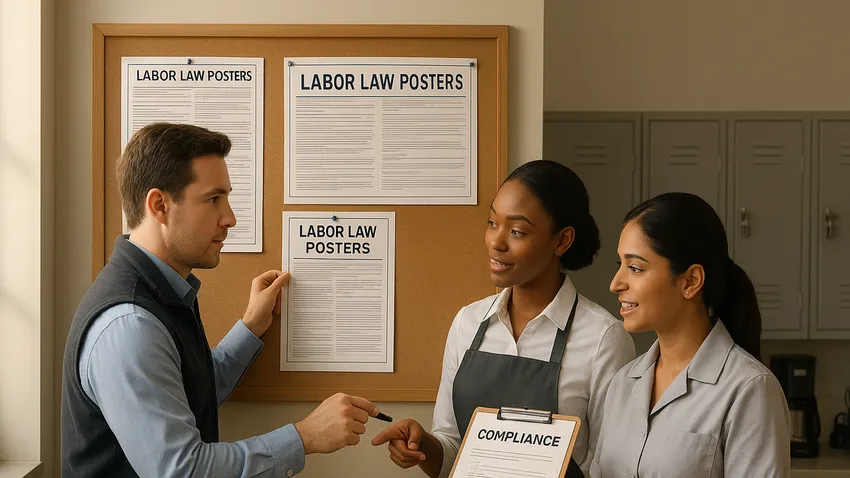

This guide to South Dakota labor law posters explains the workplace notices employers must display to inform employees of their rights and responsibilities.
This guide outlines the required state and federal postings, where to place them, how to obtain official copies, and practical tips to maintain posting compliance.

1. Overview of Required Posters
South Dakota Employers must display specific state postings and a set of federal labor law posters in locations accessible to all employees.
Together these notices cover unemployment benefits, workplace safety, wage and hour rules, anti discrimination protections, leave rights, and other core employment rules.
State Required Posters
The South Dakota Department of Labor and Regulation requires a Reemployment Assistance Employee Notification Posting for separations and provides Safety on the Job guidance for workers compensation awareness.
The state allows flexibility in format for some postings and supplies sample posters and downloadable copies through its website.
Federal Required Posters
All employers in South Dakota must also display key federal notices such as the Fair Labor Standards Act and the Equal Employment Opportunity poster.
Other required federal posters include OSHA, FMLA, EPPA, and USERRA; these explain minimum wage, job protected leave, safety, polygraph protections, and military reemployment rights.



The Fastest Growing
Restaurant & Hospitality Job Platform
Looking for top paid jobs? Or Hiring for your business?
2. State Posting Details: Reemployment Assistance and Safety
The Reemployment Assistance Employee Notification Posting informs separated employees about unemployment insurance benefits and must be provided individually at separation.
Employers may deliver that notice by mail, email, text, or physical flyer according to current DLR guidance.
The Safety on the Job posting communicates workers compensation and workplace safety expectations.
South Dakota does not mandate an exact poster format for safety, but the DLR offers sample versions employers can use or adapt for their workplace.
3. Federal Posters and the 6-in-1 Option
The U.S. Department of Labor supplies the official federal posters covering wage and hour rules, discrimination protections, leave rights and more.
To simplify compliance, South Dakota’s DLR offers a combined 6-in-1 poster that includes the major federal postings at no charge through local Job Service offices.
Using the official federal versions or the DLR 6-in-1 ensures the content meets agency requirements and reduces the risk of missing a required notice.
The Fastest Growing
Restaurant & Hospitality Job Platform
Looking for top paid jobs? Or Hiring for your business?
4. Where To Place Posters
Posters must be displayed in conspicuous, accessible locations where employees can read them during the workday.
Typical sites include break rooms, lunch areas, time clock stations, main employee entrances, and other high traffic employee zones.
Businesses with multiple worksites or remote locations should ensure each physical site has a full set of required posters.
Maintain unobstructed, legible, and well preserved displays so notices remain readable at all times.
5. Remote Workers and Electronic Postings
South Dakota allows employers to supply required notices electronically to remote employees, provided the employee can access the materials easily.
However the employer should still maintain physical postings at the primary workplace where on site employees report to work.
Document how electronic notices are delivered and keep records showing remote staff received the required information.
6. Obtaining Posters and Avoiding Scams
The South Dakota Department of Labor and Regulation supplies official state posters and the free 6-in-1 federal poster through Job Service offices.
Be wary of private vendors who use scare tactics or threaten fines to pressure purchases; required posters are available at no cost from the state and federal agencies.
The South Dakota Attorney General and the DLR have issued alerts warning businesses about poster scams and misleading marketing practices.
7. Language Considerations and Keeping Posters Current
South Dakota does not require posters in languages other than English, but providing Spanish translations is a best practice when a significant portion of your workforce is Spanish speaking.
Labor laws and posting requirements change periodically, so assign someone to check for updates and replace outdated posters promptly.
For example, state minimum wage adjustments and other rule changes can affect employee notices and should be reflected without delay.
8. Consequences of Non Compliance
Failing to post required notices can lead to administrative fines and may complicate agency investigations or legal disputes.
Avoid unnecessary risk by using official sources for posters, keeping displays current, and documenting your compliance efforts.
9. Quick Reference Table of Posters and Sources
| Poster | Issuer | Where To Obtain or How To Display |
|---|---|---|
| Reemployment Assistance Employee Notification | South Dakota Department of Labor and Regulation | Download from the DLR site or provide individually at separation by mail, email, text, or flyer |
| Safety on the Job / Workers Compensation Information | South Dakota Department of Labor and Regulation | Use DLR sample poster or an employer produced notice; post in conspicuous employee areas |
| 6-in-1 Federal Composite Poster (FLSA, EPPA, EEO, OSHA, FMLA, USERRA) | U.S. Department of Labor / South Dakota DLR | Request free copy through local Job Service office or download official federal posters from DOL |
| OSHA Job Safety and Health | Occupational Safety and Health Administration | Free from OSHA; post where employees congregate and keep legible |
10. Additional Resources For Posters and Forms
- South Dakota Department of Labor and Regulation
- U.S. Department of Labor
- Occupational Safety and Health Administration (OSHA)
- Equal Employment Opportunity Commission (EEOC)
- Family and Medical Leave Act (FMLA) - DOL
South Dakota Labor Law Posters: Conclusion
Maintaining up to date and visible labor law posters is a straightforward compliance task that supports transparency and protects both Employers and Employees.
Designate a compliance owner, use official state and federal sources for posters, monitor updates regularly, and document posting locations to reduce legal and regulatory risk.





Loading comments...