


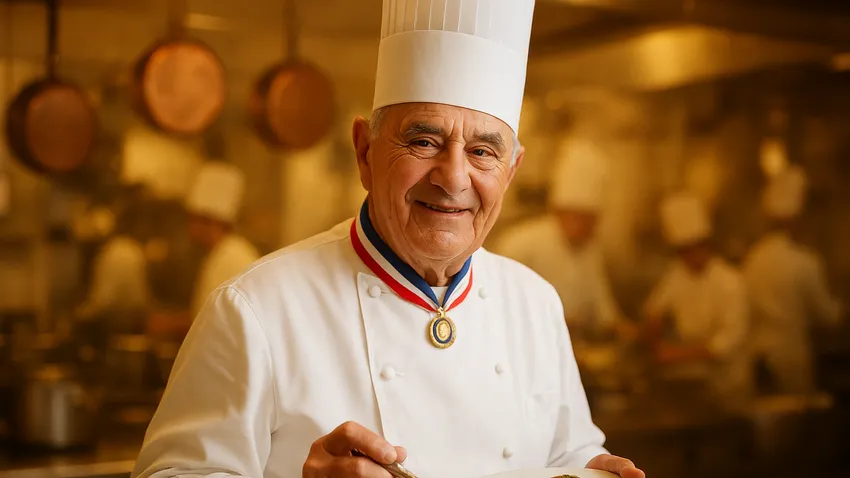

Paul Bocuse, known as Monsieur Paul and the Pope of Gastronomy, transformed French cuisine with clarity, seasonality, and refinement. He championed nouvelle cuisine, trained under great mentors, and created institutions that continue to shape chefs and dining culture worldwide through mentorship and innovation.

Paul Bocuse's Formal Culinary Training
Born in Collonges-au-Mont-d'Or in 1926 to a family with a long gastronomic tradition, Paul Bocuse began his culinary path early. After serving in the Free French Army in World War II and earning the Croix de Guerre, he apprenticed with Eugénie Brazier and later trained under Fernand Point at La Pyramide.
Those formative years grounded Bocuse in classical French technique while exposing him to an emerging sensibility toward lighter sauces, fresher ingredients, and cleaner presentation. The mentorship of Point in particular influenced Bocuse's emphasis on respect for product and disciplined technique.



The Fastest Growing
Restaurant & Hospitality Job Platform
Looking for top paid jobs? Or Hiring for your business?
Paul Bocuse Restaurants & Businesses
In 1956 Bocuse took over his family inn and transformed it into L'Auberge du Pont de Collonges, a temple of refined French cooking. The restaurant earned its first Michelin star in 1958, a second in 1960, and reached three stars in 1965, a rating it held for decades.
- L'Auberge du Pont de Collonges (1956) – Bocuse's flagship near Lyon, celebrated for timeless, precise French cuisine and for upholding the highest standards of hospitality.
- Les Brasseries de l'Institut – A group of Lyon brasseries and bistros reflecting regional specialties and Bocuse's commitment to accessibility.
- Les Chefs de France – Bocuse family involvement with venues that showcase French cooking abroad, including the restaurant at EPCOT in Florida managed by his son.
Although Bocuse expanded his name into restaurants and branded experiences, his flagship auberge remained the center of his culinary identity, where he continued to refine classic dishes and welcome culinary peers.
Paul Bocuse's Other Ventures
Bocuse extended his influence beyond his kitchen through education, competition, and promotion of culinary culture.
- Bocuse d'Or (1987) – Founded in Lyon, this biennial international culinary competition is often called the culinary Olympics and has become one of the most prestigious awards for chefs worldwide.
- Institut Paul Bocuse – A school and research center that trains chefs, hospitality professionals, and managers, promoting high standards and innovation in the hospitality industry.
- Publishing and Promotion – Bocuse published cookbooks and represented French gastronomy at festivals and exhibitions, acting as an ambassador for regional products and culinary technique.
Through these ventures, his influence stretched globally, nurturing future generations of chefs and raising the profile of French culinary arts.
The Fastest Growing
Restaurant & Hospitality Job Platform
Looking for top paid jobs? Or Hiring for your business?
Paul Bocuse Awards and Accolades
Bocuse received many honors reflecting his stature in gastronomy and culture.
- Michelin Stars – His restaurant held three Michelin stars for more than five decades, a rare and enduring achievement.
- National Honors – He was awarded the Légion d'Honneur and other French distinctions for his services to cuisine and culture.
- International Recognition – Named Chef of the Century by peers and institutions, and celebrated worldwide for his role in shaping modern culinary practice.
His accolades symbolize his role as a worldwide culinary ambassador and an icon in French gastronomy.
Paul Bocuse Personal Life
Bocuse married Raymonde and they had two children, Françoise and Jérôme. Family and local tradition were central to his life and work. His son Jérôme later played a key role in managing family restaurants and representing the Bocuse legacy abroad.
Paul Bocuse died on January 20, 2018, in the room above his restaurant in Collonges where he was born. His passing marked the end of an era, yet his influence endures through institutions, competitions, and the many chefs he mentored.
Paul Bocuse Family and Friends
Family connections helped sustain Bocuse's culinary dynasty. Jérôme Bocuse has been active in promoting the Bocuse d'Or internationally and in managing restaurants associated with the family name. Bocuse maintained close relationships with culinary peers, students, and producers across France and beyond.
| Born | February 11, 1926 Collonges-au-Mont-d'Or, France |
|---|---|
| Known For | Nouvelle Cuisine, L'Auberge du Pont de Collonges, Bocuse d'Or |
| Key Honors | Three Michelin Stars, Légion d'Honneur, Chef of the Century |
| Institutions | Institut Paul Bocuse, Bocuse d'Or |
Paul Bocuse Chef Profile: Conclusion
Paul Bocuse stands among the defining figures of 20th century gastronomy. By modernizing classic technique, elevating ingredients, and fostering education and competition, he shaped how chefs train and how diners appreciate French cuisine.
His legacy lives on in the Bocuse d'Or, the Institut Paul Bocuse, the enduring excellence of his auberge, and the countless chefs inspired by his pursuit of culinary perfection and generosity as a mentor.




Loading comments...