


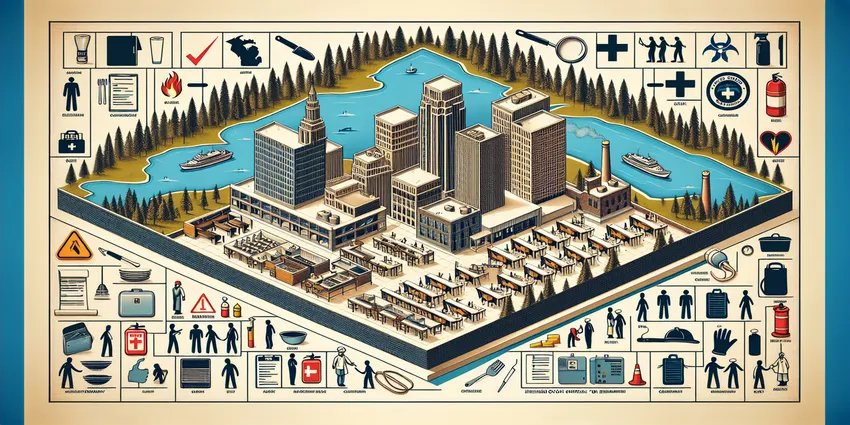

Michigan OSHA Compliance Checklist for Restaurant Employers: Key Takeaways
- Employers must develop a written hazard communication program with accessible Safety Data Sheets (SDS) for all chemicals used.
- Personal protective equipment (PPE) including gloves, masks, and non-slip shoes must be provided at no cost, with proper training for use.
- Workplace safety involves preventing slips, trips and falls, emergency preparedness, and training employees on hazards and their rights.
Ensuring compliance with Michigan Occupational Safety and Health Administration (MIOSHA) standards is crucial for creating a safe restaurant workplace.
This checklist outlines essential areas restaurant employers need to focus on to meet MIOSHA requirements effectively.

1. Hazard Communication Requirements for Michigan Restaurants
MIOSHA mandates that employers develop a written hazard communication program tailored to their workplace. This program must detail responsibilities, list hazardous chemicals present, and explain procedures for handling non-routine tasks involving chemicals.
Safety Data Sheets (SDS) must be readily accessible to employees, with clear signage indicating their location to promote awareness and safety.
All chemical containers should be properly labeled with the identity of the chemical and appropriate hazard warnings. Moreover, employees need thorough training on safe handling practices for these chemicals to prevent accidents and health issues.
Employers looking to streamline staffing should consider our restaurant staff hiring strategies to find trained workers who can help maintain safety standards.
2. Personal Protective Equipment (PPE) Requirements in Michigan Restaurants
Employers are required to provide necessary personal protective equipment at no cost to their employees. This includes gloves for handling food or chemicals, face masks to protect against airborne hazards, non-slip shoes to prevent falls, hairnets, and aprons based on job roles.
Training on the correct usage, care, and maintenance of PPE is mandatory to ensure that protective gear is effective and employees understand its importance.
Compliance in providing protective gear can be enhanced by learning from resources about HR policies for restaurants to ensure proper implementation and staff adherence.
3. Workplace Safety Measures for Restaurant Compliance in Michigan
Slip, Trip, and Fall Prevention
Slips, trips, and falls are common hazards in restaurant environments. Establishing regular cleaning schedules to keep floors dry and clear of obstructions is essential.
Use non-slip mats in areas prone to spills such as kitchens and dishwashing stations. Additionally, ensure all flooring is in good repair with no loose tiles or carpeting.
Employees should wear footwear with slip-resistant soles to reduce accident risks.
For employers seeking to improve safety measures, best shoes for bartenders offers insights on proper footwear to minimize risks.
Emergency Preparedness
Create clear and well-communicated emergency response procedures, including fire evacuation plans tailored for your facility.
Fire extinguishers need to be strategically placed, regularly inspected, and employees must be trained on their proper use and general fire safety.
Effective emergency preparedness also ties into restaurant kitchen fire safety protocols, which every restaurant should meticulously follow.



The Fastest Growing
Restaurant & Hospitality Job Platform
Looking for top paid jobs? Or Hiring for your business?
4. Employee Training and Rights Under MIOSHA
Comprehensive safety training must be provided to all restaurant employees, covering workplace hazards, safe work practices, and emergency procedures.
The training should be delivered using language and terminology that employees can easily understand, ensuring effective communication.
Employers must also inform workers of their rights under MIOSHA. Employees have the right to a safe workplace, access to hazard information, and protection from retaliation when reporting unsafe conditions.
To enhance employee training, consider using the server training manual template as a model for instructing frontline staff.
5. Recordkeeping and Reporting Requirements for Restaurant Employers
Employers must keep accurate records of work-related injuries and illnesses as part of MIOSHA compliance.
In the event of serious incidents such as workplace fatalities, hospitalizations, amputations, or eye loss, employers are required to notify MIOSHA within 8 hours.
Understanding how to maintain recordkeeping can be aided by exploring best practices in employee evaluation forms and documentation processes.
6. Additional Considerations for Michigan Restaurant Safety
Age Restrictions
Restaurants must comply with regulations governing the employment of minors. This includes limitations on the types of hazardous work minors may perform and restrictions on their working hours.
For hiring younger workers, see guidance on places that hire at 16 which can help employers find age-appropriate staff.
Heat Stress Management
Given the heat-intensive environment of many kitchens, employers should provide cool areas for staff to rest and recover during breaks.
Staff training to recognize and respond to symptoms of heat exhaustion and dehydration is important to prevent heat-related illnesses.
Enhance kitchen safety by reviewing kitchen staff skills that include heat stress management and hazard awareness.
7. Best Practices for Michigan MIOSHA Restaurant Compliance
- Maintain a regularly updated written hazard communication program with visible access to SDS.
- Provide appropriate PPE and conduct refresher training sessions periodically.
- Implement daily cleaning and floor inspection routines to prevent slips and falls.
- Conduct regular emergency drills to ensure employee readiness.
- Keep detailed injury and illness logs and review them to identify and address safety trends.
- Use signage to remind employees of their rights and safety protocols.
For best hiring practices in your kitchen, check tips on how to hire reliable kitchen staff to maintain compliance and safety standards.
8. Useful Government Resources for Michigan Restaurant Employers
For thorough guidance and the latest information on MIOSHA standards:

Michigan OSHA Compliance Checklist for Restaurant Employers: Conclusion
Adhering to MIOSHA standards is vital for protecting employees and ensuring smooth restaurant operations.
By implementing a solid hazard communication program, providing PPE, enforcing workplace safety practices, offering comprehensive training, and maintaining accurate records, restaurant employers in Michigan can create a safer work environment and remain compliant with state regulations.
For employers recruiting key hospitality positions like chefs or kitchen managers, explore resources on how to hire a kitchen manager and how to hire a cook to build a compliant and efficient team.





Loading comments...