


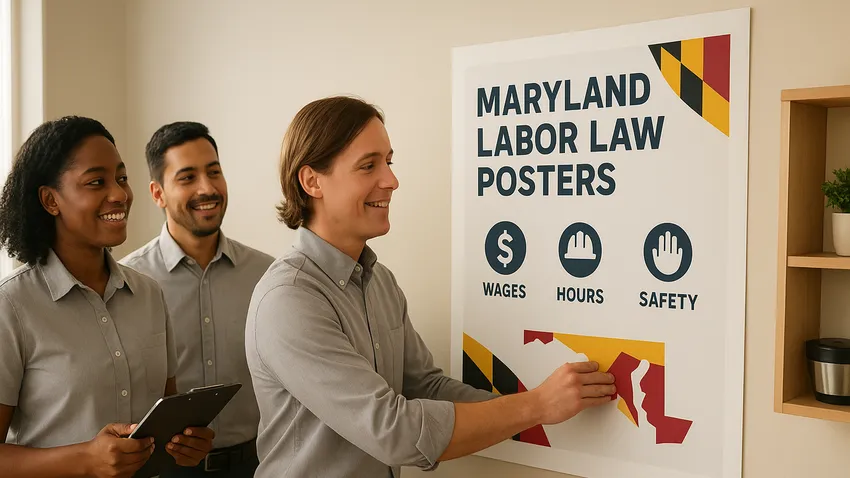

This guide to Maryland labor law posters explains the mandatory state and federal notices employers must display so employees understand their workplace rights, including wage rules, discrimination protections, leave entitlements, safety obligations, benefits, and how to obtain official copies and stay current with legal changes.
This guide covers which posters are required, where to place them, county level differences such as Montgomery County and Baltimore City, penalties for non compliance, and simple steps employers can take to keep poster displays up to date across worksites.

1. Overview of Required Posters
Maryland employers must post specific state and federal labor law notices in conspicuous locations accessible to all employees.
These postings inform workers about minimum wage and overtime, discrimination protections, workers compensation, unemployment benefits, workplace safety, leave rights, and special rules for minors and tipped employees.
Mandatory Maryland State Posters
Key Maryland notices include the Minimum Wage and Overtime Law, Equal Pay for Equal Work, and the Employment of Minors fact sheet.
Other required state postings include Workers Compensation, Unemployment Insurance Law, Notice to Tipped Employees, Earned Sick and Safe Leave, Pregnant and Working, Health Insurance Coverage, MOSH safety notice, and an Employment Discrimination is Illegal poster.
Mandatory Federal Posters
In addition to state posters, federal notices must be displayed such as the EEOC Know Your Rights poster and the Federal Minimum Wage notice.
Employers must also post the Employee Polygraph Protection Act notice, the Family and Medical Leave Act notice, and the USERRA Rights and Benefits notice for uniformed service members.



The Fastest Growing
Restaurant & Hospitality Job Platform
Looking for top paid jobs? Or Hiring for your business?
2. Local Jurisdiction and Special Requirements
Certain Maryland counties and cities require additional posters or different wage figures than the state rate.
For example, Montgomery County requires local minimum wage and earned sick and safe leave notices with county specific rates that vary by employer size and updated periodically.
Baltimore City requires notices that reflect its local employment discrimination protections and may have other city level posting obligations.
Employers with multi jurisdiction worksites must post the correct county or city versions at each affected location to remain compliant.
The Fastest Growing
Restaurant & Hospitality Job Platform
Looking for top paid jobs? Or Hiring for your business?
3. Where To Place Posters
Postings must be visible and accessible to all employees during the workday.
Common locations include break rooms, lunchrooms, near time clocks, human resources offices, and other high traffic employee areas.
If employees work at remote sites or multiple buildings, each site needs a full set of required posters.
Posters must be unobstructed, legible, and maintained in good condition so employees can read them easily.
4. Obtaining and Maintaining Posters
The Maryland Department of Labor provides downloadable state posters and employers can get federal posters from the U.S. Department of Labor and EEOC websites.
Many employers buy consolidated laminated posters from commercial vendors for convenience, but the content must match official government versions exactly.
Monitor agency updates and replace posters promptly when revisions are issued to avoid being cited for posting outdated information.
Language and Industry Considerations
If a substantial share of employees speak a language other than English, postings may need to be provided in that language so workers can understand their rights.
Certain industries have additional posting rules so employers should consult relevant state agencies for industry specific requirements.
5. Consequences of Non Compliance
Failure to display required and current posters can lead to fines and penalties from state and federal agencies.
MOSH updated its poster in August 2024 to reflect higher maximum civil penalties, so outdated safety postings may expose employers to increased fines.
Beyond fines, lack of proper postings can weaken an employer's position in employment disputes and invite agency audits of wage and hour and safety practices.
6. Best Practices For Staying Compliant
Assign a compliance owner such as an HR manager or business owner to monitor poster changes and ensure each worksite displays the full set of notices.
Keep a checklist of required federal, state, and local posters and document where each set is posted and when it was last updated.
Perform routine inspections and retain dated photos or logs showing poster condition and replacement dates to demonstrate proactive compliance during audits.
Subscribe to updates from the Maryland Department of Labor and federal agencies to receive notice of poster revisions and legal changes.
7. Quick Reference Table of Posters and Sources
| Poster | Issuer | Where To Obtain and How To Display |
|---|---|---|
| Maryland Minimum Wage and Overtime Law | Maryland Department of Labor | Download from DLLR; post where employees congregate and ensure county specific rates are shown if applicable |
| Employment Discrimination is Illegal | Maryland Commission on Civil Rights | Obtain from MCCR or DLLR; display with EEOC notice in hiring and employee areas |
| Workers' Compensation Notice | Maryland Department of Labor | Available from state site; post in a common employee area and keep contact information current |
| Earned Sick and Safe Leave | Maryland Department of Labor and Local Jurisdictions | Post state notice and any county or city versions such as Montgomery County where local rules differ |
| MOSH Workplace Safety Notice | Maryland Occupational Safety and Health | Obtain updated MOSH poster from DLLR; replace outdated versions to reflect current penalty amounts |
8. Additional Resources For Posters and Forms
- Maryland Department of Labor (DLLR)
- U.S. Department of Labor Wage and Hour Division
- Equal Employment Opportunity Commission (EEOC)
- Occupational Safety and Health Administration (OSHA)
- Maryland Commission on Civil Rights
Maryland Labor Law Posters: Conclusion
Maintaining current, visible poster displays is a straightforward compliance obligation that protects both employees and employers in Maryland.
Assign responsibility, obtain official copies from state and federal agencies, update promptly when laws change, and document your efforts to reduce the risk of fines and legal exposure.





Loading comments...