


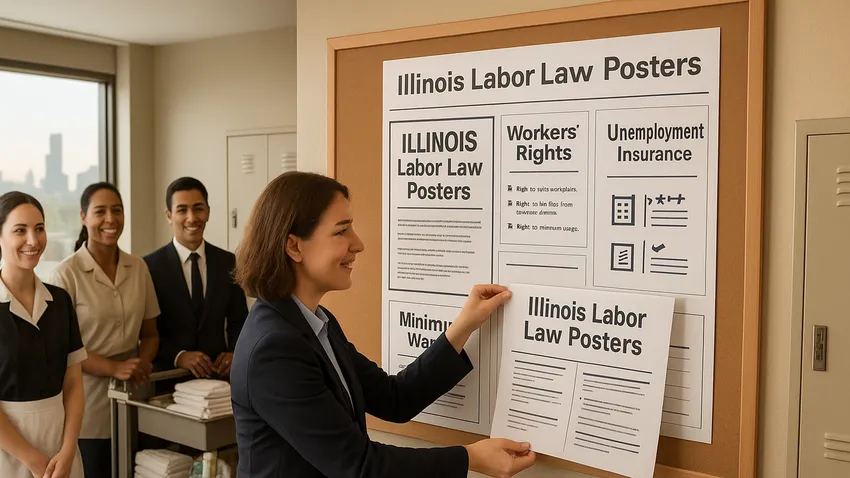

This guide to Illinois labor law posters explains the state and federal workplace notices Illinois employers must display to inform employees about wages, leave, safety, and other legal rights.
This article covers which Illinois postings are mandatory, where to place them, how to obtain updates, and steps to reduce the risk of fines for non compliance.

1. Overview of Required Postings
Illinois employers must display a set of state specific labor law posters in conspicuous locations accessible to all employees.
These notices cover wage laws, paid leave, equal pay and discrimination protections, victims rights, contractor classification rules, and safety requirements for public workers.
Key Illinois State Posters
The central required poster is "Your Rights Under Illinois Employment Laws" which consolidates Wage Payment and Collection, Child Labor, Minimum Wage, Equal Pay, VESSA, and One Day Rest in Seven provisions.
Since January 1, 2024 employers must also notify employees about the Paid Leave for All Workers Act that allows up to five days of paid leave per year for any reason.
Employers with 15 or more employees must follow the Equal Pay Act pay transparency rules that require posting pay scale and benefit information in job listings and providing wage ranges to employees on hire.
Other mandatory notices include VESSA for victims of domestic or sexual violence, the Employee Classification Act for construction contractors using independent contractors, and the Illinois Wage Payment and Collection Act notice for private construction businesses.
Agencies also require postings for Day and Temporary Labor Services agencies, Right to Privacy and E Verify obligations when the federal system is used, and the Consumer Coverage Disclosure Act documentation.
2. Federal Posters You Must Display
In addition to state posters, employers must keep current federal posters visible such as those covering minimum wage, overtime, equal employment opportunity, child labor, and the Employee Polygraph Protection Act.
These federal notices are available free from the U.S. Department of Labor and must be posted where employees and applicants can easily read them.



The Fastest Growing
Restaurant & Hospitality Job Platform
Looking for top paid jobs? Or Hiring for your business?
3. Where to Locate Posters in Your Workplace
Posters must be placed in conspicuous, accessible areas where employees gather or pass frequently.
Typical locations include break rooms, near time clocks, main entrances, employment offices, or other central employee areas.
For multi site businesses, each work location and job site must have the required posters displayed.
Construction contractors must post the Employee Classification Act notice conspicuously at each job site and in each office.
4. Obtaining and Updating Posters
Employers can download official Illinois posters from the Illinois Department of Labor website and obtain federal posters from the U.S. Department of Labor.
Keep printed copies legible and unobstructed and replace posters whenever agencies issue revised versions or when laws change.
Some employers use consolidated all in one poster displays from commercial vendors for convenience, but the content must match the official government versions exactly.
Paid Leave and Equal Pay Notices
Make sure the Paid Leave for All Workers Act notice is distributed or posted so employees understand how leave accrual and usage works under the new law.
If you employ 15 or more people, confirm job postings include pay scale and benefit information to meet the Equal Pay Act pay transparency requirements.
The Fastest Growing
Restaurant & Hospitality Job Platform
Looking for top paid jobs? Or Hiring for your business?
5. Consequences of Not Posting
Failure to display required and current posters can lead to fines, administrative penalties, and heightened scrutiny from state and federal agencies.
Non compliance may also weaken an employer's position in wage disputes, employment claims, or during audits by state labor authorities.
6. Best Practices for Staying Compliant
Assign a compliance owner such as an HR Manager or business owner to monitor poster requirements and updates.
Create a master checklist that lists required federal and state posters and where each set is posted at every location.
Perform periodic inspections, photograph posted locations, and document the date of each update to demonstrate proactive compliance.
Subscribe to Illinois Department of Labor announcements and federal agency updates to receive notifications when posters change.
7. Quick Reference Table of Notices and Sources
| Poster or Notice | Issuing Agency | Where To Obtain and How To Display |
|---|---|---|
| "Your Rights Under Illinois Employment Laws" | Illinois Department of Labor | Download from the Illinois Department of Labor; post in break rooms or near time clocks |
| Paid Leave for All Workers Act Notice | Illinois Department of Labor | Provide or post notice to employees about leave accrual and usage; update handbooks |
| Equal Pay Act Pay Transparency Notice | Illinois Department of Labor | Required for employers with 15 or more employees; include pay scale in job postings and provide ranges to new hires |
| Victims' Economic Security and Safety Act (VESSA) | Illinois Department of Labor | Post where employees can view it; ensure employees know leave options for victim related matters |
| Employee Classification Act of 2008 | Illinois Department of Labor | Required at construction job sites and contractor offices; post conspicuously |
| Federal Minimum Wage and Overtime Posters | U.S. Department of Labor | Free from the U.S. Department of Labor; post with state notices in employee common areas |
8. Additional Resources and Links
- Illinois Department of Labor
- Illinois Department of Employment Security
- Illinois Workers' Compensation Commission
- U.S. Department of Labor Wage and Hour Division
- U.S. Equal Employment Opportunity Commission (EEOC)
Illinois Labor Law Posters: Conclusion
Keeping official state and federal posters current and displayed in conspicuous locations is a straightforward step that protects employees and lowers legal risk for employers.
Assign responsibility, maintain a checklist, obtain official copies from government sites, and update promptly when laws change to stay compliant with Illinois posting requirements.





Loading comments...