



An effective guest recovery strategy is key to resolving issues quickly and turning frustrations into opportunities for enhancing guest satisfaction and loyalty.
A well-managed recovery can leave a lasting impression, transforming a one-time diner into a regular.
In this article, we’ll cover four key steps every Server can use to handle guest issues quickly and turn challenges into positive dining experiences.

What Is Guest Recovery and Why Does It Matter?
Before diving into specific strategies, it’s essential to understand what we mean by guest recovery.
Simply put, guest recovery is the process of addressing and resolving issues that guests raise during their dining experience.
It’s about making things right and ensuring that any bumps in the road do not overshadow the overall experience.
Mistakes happen in even the best-run establishments. The real test is how you, as a Server, respond to those mistakes.
A well-executed recovery can turn a negative experience into a memorable one — not just for the guest but also for you and your team.
When guests perceive that their concerns are taken seriously and addressed swiftly, it fosters trust and increases the likelihood that they will return.
Common Scenarios Requiring Guest Recovery
There are several typical situations in which a Server may need to utilize guest recovery strategies to meet guest expectations.
Knowing these scenarios in advance can help you prepare for effective recovery:
- Order mix-ups: Admit mistakes and fix them quickly. Guests appreciate honesty and prompt action to correct errors.
- Delays in service: Acknowledge wait times and check in with guests to show attentiveness and care.
- Unsatisfactory food or drinks: Listen to feedback and resolve issues fast by replacing the item or offering an alternative.
- Inattentive service: Increase engagement with guests who feel overlooked to ensure they feel valued and cared for.



The Fastest Growing
Restaurant & Hospitality Job Platform
Looking for top paid jobs? Or Hiring for your business?
The 4 Key Steps of a Successful Guest Recovery
Every Server should be prepared to handle guest complaints with professionalism and care.
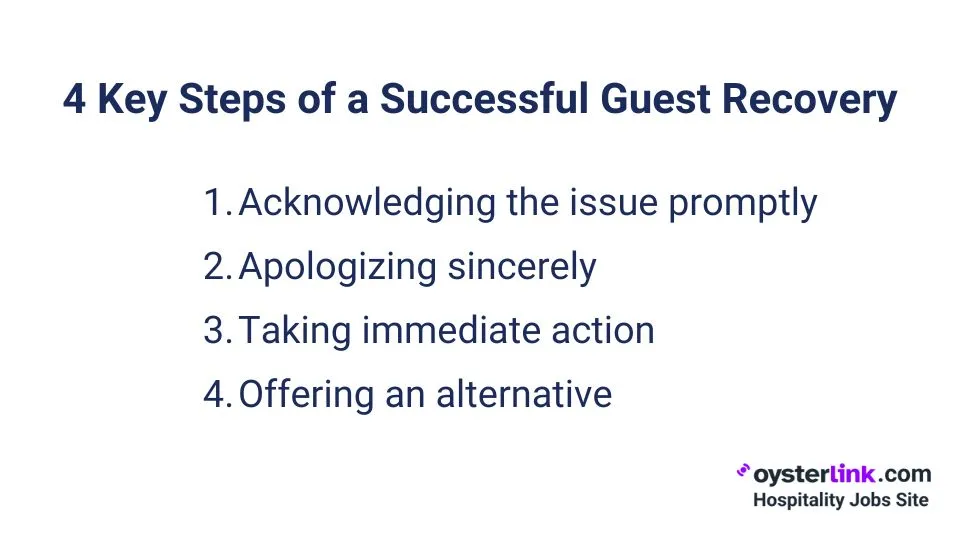
By following these four key steps, you can resolve issues effectively and turn challenging moments into positive guest experiences.
1. Acknowledge the issue promptly
The moment a guest raises a concern, treat it with urgency. Ignoring or delaying your response only amplifies their frustration. Instead, make eye contact and genuinely listen.
Use phrases like, “I completely understand why you’d feel that way. Let me see how I can help.” This approach signals to the guest that you care about finding a solution.
2. Apologize sincerely
A heartfelt apology can work wonders. It's not just about saying “sorry”; it’s about conveying genuine empathy. Thank them for bringing their issue to your attention.
For instance, you might say:
- “I’m truly sorry for the mix-up with your order. I appreciate your understanding.”
- “Thank you for your patience; I can see how this delay would be frustrating.”
When guests feel genuinely acknowledged, it can shift their mood and restore their faith in your service.
3. Take immediate action
After acknowledging the issue and apologizing, determine the best course of action to resolve it.
Whether that involves swiftly getting the correct dish, offering a complementary item or providing a discount, acting quickly shows you’re willing to go the extra mile.
Positive energy and swiftness can help assuage any initial discontent.
4. Offer an alternative
If you encounter a situation where the original issue can’t be resolved immediately, consider offering an alternative solution.
Suggesting a different dish or a complimentary side can help lighten the mood. It communicates to your guests that you value their experience and are dedicated to making things right.
See also: How To Handle Customer Complaints in a Restaurant: A Guide for Servers
How To Effectively Communicate With Guests
Communication is essential for effective guest recovery. The way you interact with guests can either diffuse a tense moment or escalate it further.
Active listening techniques
One of the most important skills for a Server is active listening. When a guest raises a concern, give them your full attention.
Instead of interrupting, let them express their feelings completely. Maintain eye contact, nod in acknowledgment and use verbal affirmations like “I see” or “I understand.”
This shows the guest that you genuinely care about what they’re saying and reinforces your commitment to resolving their issue.
Maintaining professionalism under pressure
Working as a Server can be challenging, especially during busy shifts. It’s crucial to remain professional and composed, even when faced with frustrated guests.
Here are some tips to help you maintain your cool:
- Take a deep breath: If tensions run high, pause for a moment before responding. This brief moment allows you to collect your thoughts and formulate a calm reply.
- Use a steady, calm tone: Speaking softly and steadily can help defuse a situation. If both you and the guest remain calm, it will be much easier to resolve the issue at hand.
- Focus on solutions: Rather than dwelling on what went wrong, keep the focus on what you can do to make it right. This proactive approach reassures the guest that you’re committed to their satisfaction.
How To Build Rapport With Guests

Creating a genuine connection with guests is essential not just for recovery, but for fostering a welcoming atmosphere overall.
When guests feel valued as individuals, they are more likely to respond positively even when issues arise.
Personalization and empathy
Building rapport can start with small gestures. Use the guest’s name if possible, as it personalizes the interaction. Remembering their previous visits or preferences can also make a difference.
When guests feel personally connected to their Server, it creates a sense of belonging.
Showing empathy, like understanding their frustration in a difficult situation, reinforces this connection and can lead to a more forgiving attitude during recovery efforts.
Follow-up after recovery
Once you’ve resolved the issue, take the time to check back with the guest later during their meal. Ask how they’re enjoying their dish now or if there’s anything else they need.
A little follow-up can reinforce the idea that you genuinely care about their experience, going beyond just making things right in the moment.
It signals to them that their satisfaction matters throughout their entire dining experience.
Learning from Recovery Experiences
Improving your guest recovery strategy involves ongoing learning and adaptation. Each interaction offers an opportunity to reflect and enhance your approach for the future.
Reflecting on guest feedback
Take a moment to consider the feedback you’ve received during your shifts. Whether positive or negative, each piece of feedback can provide valuable insights.
Encourage guests to share their thoughts, and view their critiques as chances for growth.
By welcoming open communication, you signal that you prioritize their experience and are eager to learn from it.
Role-playing and training
Participating in training sessions or engaging in role-playing scenarios with colleagues can be incredibly beneficial.
These exercises help prepare you for real-life situations by giving you a safe space to practice your responses.
After role-playing different scenarios, gather as a team to discuss what went well and what could be improved. Sharing experiences and solutions fosters a supportive environment.
Guest Recovery: Conclusion
Mastering the guest recovery strategy is essential for Servers in the hospitality industry.
Knowing how to effectively acknowledge issues, communicate clearly and build meaningful rapport with guests can transform a problematic dining experience into a positive one.
As you continue to refine your skills, consider exploring platforms like OysterLink, which provide valuable resources and career advice for Servers.
The Fastest Growing
Restaurant & Hospitality Job Platform
Looking for top paid jobs? Or Hiring for your business?

Written by Sasha Vidakovic
Sasha is an experienced writer and editor with over eight years in the industry. Holding a master’s degree in English and Russian, she brings both linguistic expertise and creativity to her role at OysterLink. When she's not working, she enjoys exploring new destinations, with travel being a key part of both her personal and professional growth.




Loading comments...