


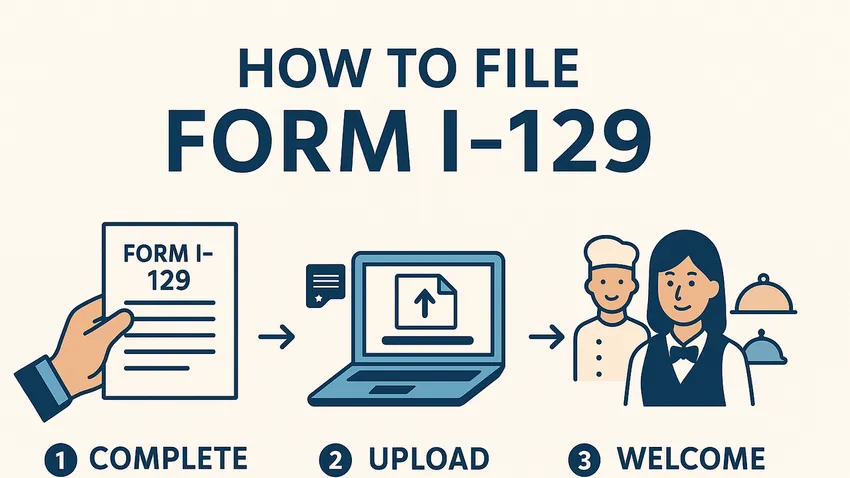

Form I-129, Petition for a Nonimmigrant Worker, is the primary form U.S. Employers use to request temporary work authorization for foreign nationals.
This guide explains who may file, required fees, the filing steps, special cases, and where To find official USCIS guidance.

1. What Is Form I-129 And Who May File
Form I-129 is used by Employers, U.S. Agents, and in some cases foreign Employers to petition for nonimmigrant workers under categories like H-1B, L-1, O-1, and P-1.
Each classification has unique requirements and may require supplements specific To that classification.
Who Can Submit The Petition?
- Employer: The usual petitioner for H, L, O, and many P classifications.
- U.S. Agent: May file for beneficiaries who are self-employed or who will work for multiple Employers; an itinerary with dates and work locations is required.
- Foreign Employer: May file in limited circumstances depending on classification and the nature of the engagement.
2. Fees You Need To Know
The base filing fee for Form I-129 is $460.
Several additional fees may apply depending on classification and Employer size.
| Fee Type | Amount | Applies To |
|---|---|---|
| Base Filing Fee | $460 | All I-129 petitions |
| ACWIA Fee | $750 or $1,500 | H-1B and H-1B1; depends on Employer size; some nonprofits exempt |
| Fraud Prevention Fee | $500 | Initial H-1B and L-1 petitions and employer changes |
| Public Law 114-113 Fee | $4,000 to $4,500 | H-1B or L-1 petitions where Employer meets employee composition thresholds |
| Asylum Program Fee | $300 or $600 | Effective April 1, 2024; depends on Employer size; nonprofits exempt |
3. How To File Form I-129 Step-By-Step
Complete Form I-129 carefully and include any required supplements for the classification you seek.
Gather supporting evidence including the Beneficiary's qualifications, a detailed job description, wage evidence, and proof of Employer ability To pay.
Calculate the correct fees by adding the base fee and all applicable additional fees for your situation.
File the petition at the correct USCIS address for your classification and location; addresses vary so confirm current addresses on the USCIS website.
Consider requesting premium processing by filing Form I-907 and paying the premium fee if you need guaranteed faster adjudication where eligible.



The Fastest Growing
Restaurant & Hospitality Job Platform
Looking for top paid jobs? Or Hiring for your business?
4. Special Cases, Exemptions, And Blanket Petitions
Certain categories allow multiple Beneficiaries on a single petition when they perform the same services for the same period.
Classifications that permit multiple Beneficiaries include H-2A, H-2B, H-3, O-2, P-1, P-2, P-3, and Q-1 when requirements are met.
Employers who regularly transfer employees under L-1 may qualify To file a blanket petition which streamlines subsequent transfers of qualifying employees.
Certain Employers such as nonprofit research organizations and governmental research organizations may be exempt from the ACWIA fee and possibly other fees.
5. Premium Processing And Timelines
Premium processing is requested using Form I-907 and guarantees adjudication within 15 calendar days for eligible petitions.
Premium processing is not available for every classification or every petition type so verify eligibility before submitting Form I-907.
Absent premium processing, adjudication times vary by service center and case complexity and may include requests For Evidence that extend processing time.
The Fastest Growing
Restaurant & Hospitality Job Platform
Looking for top paid jobs? Or Hiring for your business?
6. Common Mistakes To Avoid
- Failing To include the correct fees or miscalculating additional fees.
- Using the wrong filing address for the classification or petitioner's location.
- Omitting required supplements or supporting evidence such as an itinerary for Agent filings.
- Not demonstrating Employer ability To pay the offered wage.
- Submitting unsigned forms or incomplete fields.
7. What Happens After You File
USCIS will issue a receipt notice confirming the petition was received and providing a receipt number.
USCIS may issue a Request For Evidence which requires timely response to avoid denial.
Approved petitions lead To either consular processing abroad or a change of status if the Beneficiary is in the United States and eligible.
8. Best Practices For Employers And Petitioners
Work with an experienced Immigration Attorney when possible to ensure compliance and to reduce the chance of avoidable errors.
Maintain clear job descriptions, documented recruitment efforts where relevant, and strong evidence of the Beneficiary's qualifications.
Keep organized copies of all submitted materials and track expiration dates and validity periods specified in the petition approval.
9. Filing Addresses And Official Guidance
Filing addresses for Form I-129 vary by classification and the Petitioner's location so always confirm the correct address on the USCIS website before mailing.
USCIS instructions for Form I-129 contain detailed guidance on supporting documents, filling specific fields, and classification-specific requirements.
10. Additional Resources For Form I-129
- USCIS Form I-129, Petition for a Nonimmigrant Worker
- USCIS Instructions for Form I-129
- USCIS Direct Filing Addresses for Form I-129
- H and L Filing Fees and Additional Fee Guidance
- USCIS Premium Processing Service Information
Form I-129: Conclusion
Form I-129 is a critical tool for Employers and Agents who seek To bring skilled, extraordinary, or specialized foreign workers To the United States temporarily.
Careful attention To fees, required evidence, correct filing address, and timely responses To any Requests For Evidence will increase the chance of a successful petition.
Consult the official USCIS resources listed above or an Immigration Attorney for case-specific advice and To confirm up-to-date filing rules and fees.




Loading comments...