



Day-in-the-Life of a Server in Miami: Key Takeaways
- Servers in Miami handle guest interaction, order management, table maintenance, payment processing and side work daily.
- The national Server workforce includes over 2.3 million people, with 67% working part-time.
- Events like the Calle Ocho Festival intensify workloads, drawing around 1 million visitors to Little Havana and creating surges that can double or triple normal restaurant demand.
Serving in Miami's vibrant hospitality industry requires multitasking skills and cultural awareness.
Learn effective strategies tailored for the industry in our managing Servers in a restaurant guide to enhance your team's performance.
This guide explores the daily duties, common challenges and practical tips to thrive as a Server in Miami.

Daily Duties of a Server in Miami
Miami’s hospitality scene is known for its energy and diversity, making the server’s role both dynamic and essential. Servers must expertly manage several responsibilities to provide guests a memorable dining experience.

Guest Interaction
From the moment guests arrive, servers warmly welcome them, guide them through menu options and tailor recommendations based on individual preferences. This personal touch helps set the tone for the meal.
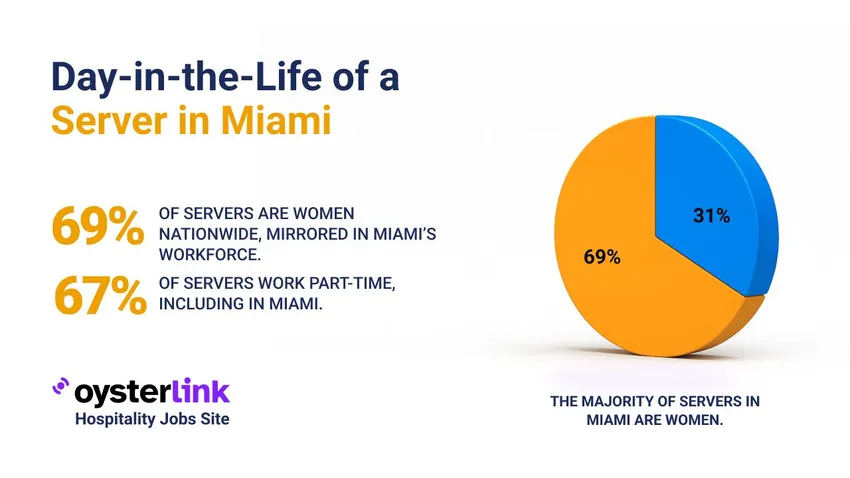
Nationwide, about 69% of Servers are women and the average age is 29–30 years, highlighting how much of the workforce brings a youthful, personable approach to guest interaction.
For help finding the right people for your team with these skills, check out how to hire Servers.
Order Management
Accuracy is critical. Servers take food and beverage orders precisely, input them into the POS system and coordinate with kitchen and bar staff to ensure timely delivery. This process must be seamless to maintain efficiency.
Table Maintenance
Proper table setup before service, clearing dishes between courses and resetting tables quickly after guests leave keep the dining area inviting and ready for the next party.
Servers in busy markets spend significant portions of their shift on side duties such as resetting tables — tasks that often go unnoticed by guests but are essential to keeping operations running smoothly.
Payment Processing
Handling payments involves presenting accurate bills and processing transactions, whether cash or card, with professionalism and speed to close out the dining experience smoothly.
On average, Servers earn about $18 per hour, excluding tips, with 25–30% of their income coming from gratuities — making accurate, friendly bill handling a direct factor in their earnings.
This TikTok video from a server working in downtown Miami shows just how meaningful tips can be.
Side Work
Beyond serving tables, tasks such as restocking supplies, cleaning, and ensuring compliance with health regulations are vital. These duties support the overall operation and uphold service standards.
Employers can benefit from our Server training manual template to keep standards high across your team.
Challenges Faced by Servers in Miami
Working as a Server in Miami comes with unique challenges shaped by the city's vibrant atmosphere and fast pace.
High-Volume Environment
Miami’s popular dining destinations often operate at full capacity, especially during peak times, requiring Servers to juggle multiple tables while maintaining high service quality.
Diverse Clientele
The multicultural nature of Miami means servers encounter patrons from varied backgrounds. This requires excellent communication skills and sensitivity to different dietary needs and cultural preferences.
Physical Demands
Servers spend long hours on their feet, carry heavy trays, and navigate crowded spaces, making physical stamina an important aspect of the job. About 67% of Servers work part-time while the rest are full-time, and those irregular schedules can amplify the physical toll of long shifts.
For insights on labor challenges in hospitality, including staffing and physical demands, see restaurant staffing.
Variable Hours
Work schedules often include evenings, weekends, and holidays, requiring flexibility and resilience to handle shifting hours and workloads. In Miami’s fast-paced dining scene, Servers must be ready for irregular shifts that change with tourist seasons, local events and peak dining times.
A good example is the Calle Ocho Festival in Little Havana, which draws around 1,000,000 people to its 15-block stretch. For many restaurants in the area, this means longer hours, extra staff and rapid shifts in guest volume that can double or triple the usual demand.

Tips for Successful Server Careers in Miami
Thriving as a server in this vibrant city involves more than just tending tables. Here are some strategies for success:
Product Knowledge
Take time to learn the menu thoroughly, including ingredients and preparation styles. Being informed allows you to confidently guide guests and enhance their dining choices.
Time Management
Effectively prioritize your duties so each table receives attentive service without prolonged waits. Balancing multiple responsibilities calmly is key.
Communication Skills
Polite, clear communication with guests and colleagues fosters a cooperative environment and helps resolve issues smoothly.
Resilience
Maintain your composure during busy periods and treat guest complaints as opportunities to improve their experience. Staying positive under pressure boosts your professionalism. With over 2.3 million workforce nationally, resilience is what distinguishes top-performing Servers who turn the challenges of busy shifts into opportunities for growth.
Also explore Server interview questions to prepare yourself or your candidates for success.



The Fastest Growing
Restaurant & Hospitality Job Platform
Looking for top paid jobs? Or Hiring for your business?
Day-in-the-Life of a Server in Miami: Conclusion
Serving in Miami is a rewarding but demanding profession requiring a blend of hospitality skills and cultural awareness. By mastering key duties and embracing challenges with effective strategies, Servers contribute significantly to the city’s acclaimed dining culture.
Those who develop strong knowledge, time management, communication and resilience will find success in Miami’s fast-paced restaurant environment.
For additional help in recruiting and retaining quality staff, restaurant owners can benefit from the insights in strategies to reduce restaurant employee turnover.

Resources for Servers in Miami
- U.S. Department of Labor - Wage and Hour Division: Fair Labor Standards Act (FLSA)
- Florida Department of Business and Professional Regulation: Hospitality Industry Regulations
- Miami-Dade County: Food Service Establishment Guidelines





Loading comments...