


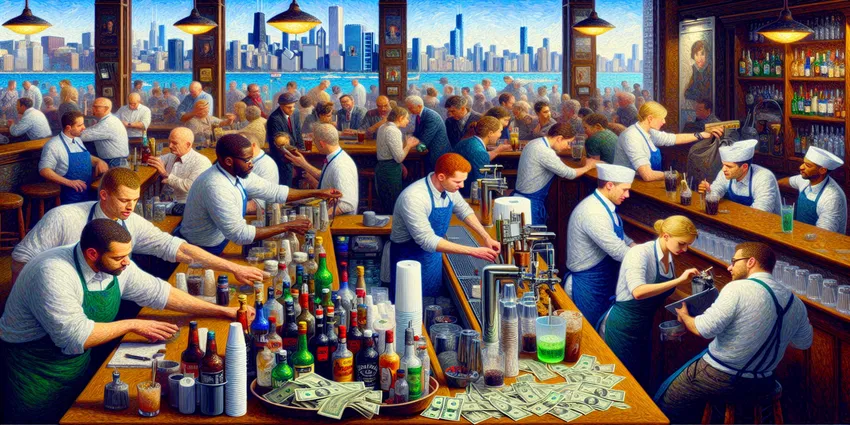

Day-in-the-Life of a Bartender in Chicago: Key Takeaways
- Bartenders in Chicago prepare drinks, manage inventory, interact with customers, handle cash, and ensure compliance with liquor laws.
- Challenges include long irregular hours, managing difficult customers, physical demands, and competing in a vibrant nightlife market.
- Success tips include greeting guests promptly, reading patrons’ moods, anticipating needs, maintaining cleanliness, and effective teamwork.
Bartending in Chicago is a dynamic role requiring skill, patience, and adaptability to meet the demands of a busy urban nightlife scene.
This article explores the daily duties, common challenges, and practical tips that help bartenders thrive in Chicago’s hospitality environment.
1. Duties of a Bartender in Chicago

Bartenders are more than drink mixers; they are essential to creating a welcoming and efficient bar experience. Their workday involves various tasks contributing to customer satisfaction and smooth operations.
Drink Preparation and Service
Crafting high-quality alcoholic and non-alcoholic beverages is central. Bartenders follow recipes to ensure consistency, skillfully mix cocktails, garnish drinks, and deliver them with flair.
Understanding bartending terminology and lingo can help new bartenders improve their skills and blend seamlessly into any bar environment.
Customer Interaction
Engaging guests is key. Greeting patrons warmly, taking orders attentively, and offering tailored recommendations foster camaraderie and repeat business. Remembering regulars’ preferences enhances loyalty.
To improve customer service skills, bartenders can refer to the how to interview as a bartender guide, which also offers advice on handling customer interactions effectively.
Inventory Management and Cash Handling
Bartenders keep close tabs on stock levels of spirits, mixers, glassware, and garnishes. Accurate record-keeping prevents shortages during busy shifts. Additionally, they handle payments, process transactions efficiently, and balance cash drawers.
For employers looking to streamline these processes, the inventory manager job description provides insights into managing hospitality inventory effectively.
Compliance and Safety
Strict adherence to Illinois liquor laws is mandatory. Bartenders verify customers’ age, refuse service to intoxicated patrons, and maintain a safe environment. This responsibility protects both the establishment and its patrons.
More on these vital responsibilities can be found in the bartender health and safety spotlight, a comprehensive resource for bartenders and bar owners alike.
Sanitation
Maintaining a clean, organized bar area ensures efficiency and health standards. Washing glassware, utensils, and wiping down surfaces regularly are routine but vital tasks.
Improving cleanliness standards can be supported by reviewing the how to reduce bar waste spotlight, which also helps in sustainability efforts.
2. Challenges Faced by Bartenders in Chicago
Working in Chicago’s bustling nightlife brings rewarding experiences but also notable hurdles.
Long and Irregular Hours
Bartenders often work late nights, weekends, and holidays. Such schedules can disrupt sleep patterns and social life, making work-life balance difficult to achieve.
Understanding how to avoid bartender fatigue is essential for maintaining long-term health and job performance.
High Competition
The city's lively bar scene means many establishments compete for customers. Bartenders must consistently deliver exceptional service and creative drinks to stand out in the crowd.
Difficult Customers
Dealing with intoxicated or unruly patrons requires patience, excellent communication, and conflict-resolution skills to defuse tense situations without escalation.
Reading our guide on how to handle difficult customers can benefit bartenders and employers in managing challenging interactions.
Physical Demands
Standing for long hours, lifting heavy kegs or boxes of supplies, and hustling during busy times can be physically exhausting and require stamina and good health.
3. Tips for Successful Bartending in Chicago
Bartenders can distinguish themselves and flourish by adopting certain practical behaviors and mindsets.
Acknowledge Guests Promptly
Even when busy, making eye contact or offering a quick greeting signals attentiveness and respect, making customers feel valued right from the start.
Read the Room
Understanding whether patrons want lively conversation or quiet service allows bartenders to tailor their approach, improving overall guest satisfaction.



The Fastest Growing
Restaurant & Hospitality Job Platform
Looking for top paid jobs? Or Hiring for your business?
Anticipate Needs
Keeping an eye on drink levels and offering refills or suggestions before being asked demonstrates attentiveness and can boost sales.
Maintain Cleanliness
Regular cleaning and organization of the bar area streamline service and create an inviting space that encourages repeat visits.
Collaborate with Team Members
Good communication and cooperation with servers, bouncers, and managers ensure smooth operations and a united approach to customer service.
Employers can learn more about effective team leadership from the becoming a bar manager spotlight.
4. Conclusion: Day-in-the-Life of a Bartender in Chicago
Bartending in Chicago demands a mix of technical skill, customer service prowess, and physical resilience. Navigating challenges like late hours and demanding customers while managing inventory and compliance creates a multifaceted daily routine.
By embracing customer interaction, maintaining cleanliness, and working well with the team, bartenders can build rewarding careers in Chicago’s vibrant hospitality industry.

5. Helpful Resources for Bartenders in Chicago
For more information and guidance, bartenders and bar owners can consult these official resources:
- Illinois Liquor Control Commission
- City of Chicago Business Affairs and Consumer Protection
- U.S. Department of Labor – Occupational Outlook for Bartenders
Additionally, bartenders looking to sharpen their skills may find the virtual reality bartending training resource helpful for immersive learning experiences.





Loading comments...