


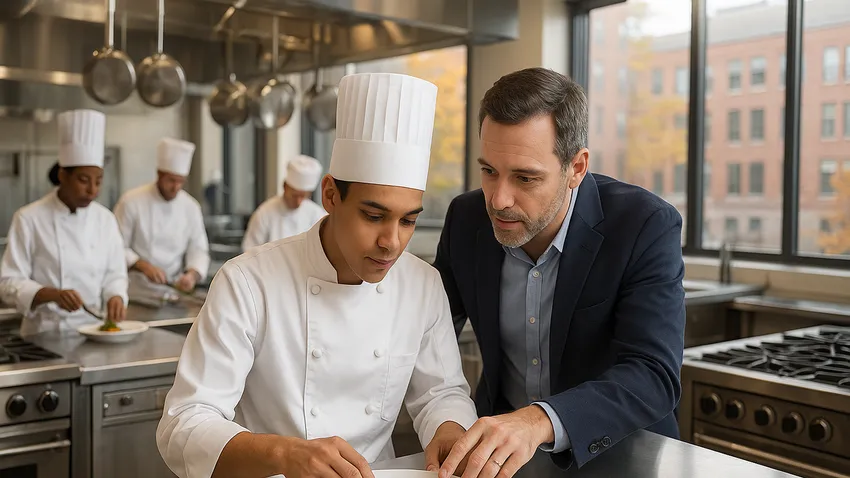

Culinary training in Massachusetts blends New England tradition with modern technique, creating strong pathways into restaurants, hotels, and food innovation.
From community college programs that emphasize hands on learning to private culinary schools and university food science degrees, the state offers a range of affordable and career focused options.
If you want practical culinary skills, management training, or a nutrition driven approach, these Massachusetts programs are worth considering.

Comparison Table of Culinary Schools in Massachusetts
| School | Location | Programs Offered | Tuition (Approx.) | Key Highlights |
|---|---|---|---|---|
| Cambridge School of Culinary Arts | Cambridge | Professional Chef Certificate, Professional Pastry Certificate | $12,000–$18,000 per program | Intensive certificates, industry focused instructors |
| Bunker Hill Community College | Boston | A.A.S. in Culinary Arts, Baking and Pastry | $4,500–$6,000 per year (in-state) | Student run restaurant, strong industry partnerships |
| North Shore Community College | Danvers | Culinary Arts, Pastry Arts, Hospitality Management | $4,200–$5,500 per year | Hands on labs, externships with area restaurants |
| Middlesex Community College | Lowell | Culinary Arts Certificate, A.A.S. in Culinary Arts | $4,000–$5,200 per year | Modern teaching kitchens, transfer agreements |
| University of Massachusetts Amherst – Food Science | Amherst | B.S. in Food Science, Nutrition and Food Systems | $15,000–$18,000 per year (in-state) | Research facilities, strong industry and academic integration |



The Fastest Growing
Restaurant & Hospitality Job Platform
Looking for top paid jobs? Or Hiring for your business?
1. Cambridge School of Culinary Arts
The Cambridge School of Culinary Arts is one of Massachusetts most recognized private culinary training centers, known for intensive certificate programs designed for students who want to enter the industry quickly.
Programs include Professional Chef and Professional Pastry certificates that focus on technique, menu development, and kitchen management.
Classes are taught by industry professionals in small cohorts, which allows for individualized feedback and rapid skills development.
Students spend significant time in lab kitchens practicing knife work, stocks, baking fundamentals, and plated service.
The school places emphasis on professional readiness through resume workshops, externships, and connections to Boston area restaurants and catering companies.
While tuition is higher than community college options, the accelerated schedule and career services make it a good fit for students seeking direct entry into roles like Line Cook, Pastry Chef, or Kitchen Supervisor.
2. Bunker Hill Community College
Located in Boston, Bunker Hill Community College (BHCC) offers accessible culinary programs that combine classroom instruction with hands on experience.
BHCC features professional teaching kitchens and a student run restaurant where students rotate through roles such as Line Cook, Server, and Supervisor to learn both back of house and front of house operations.
The A.A.S. in Culinary Arts and Baking and Pastry tracks are designed to prepare graduates for immediate employment or for transfer to a four year program.
Curriculum covers culinary fundamentals, pastry techniques, sanitation, menu planning, and basic management skills.
BHCC also maintains relationships with Boston area hotels, restaurants, and catering firms for externships and job placement.
With in state tuition that is typically affordable, the college is a strong option for students who want a practical education without the cost of private schools.
The Fastest Growing
Restaurant & Hospitality Job Platform
Looking for top paid jobs? Or Hiring for your business?
3. North Shore Community College
North Shore Community College in Danvers offers Culinary Arts and Pastry Arts programs built around hands on labs and real world service.
Students gain experience in culinary technique, garde manger, baking, and banquet operations, often working on catered events and campus dining to develop practical skills.
The college emphasizes externships and local employer connections, which help students move into roles at restaurants, hotels, and catering companies after graduation.
Courses also include hospitality and small business topics for students interested in Restaurant Management or catering entrepreneurship.
With competitive in state tuition, North Shore is a value oriented option that balances technical training with career preparation.
4. Middlesex Community College
Middlesex Community College serves students in the Lowell area with Culinary Arts certificates and an A.A.S. degree focused on applied skills.
The program uses modern teaching kitchens and places an emphasis on fundamental technique, food safety, and plating.
Middlesex has transfer agreements with four year institutions for students who want to continue their education in Hospitality Management or Food Science.
Hands on labs, catered events, and opportunities to stage with local restaurants give students practical experience before they graduate.
Graduates commonly find employment as Line Cooks, Prep Cooks, or in bakery positions, and some move into supervisory roles with additional experience.
For students seeking an affordable, career focused start in the culinary field, Middlesex is a solid choice.
5. University of Massachusetts Amherst – Food Science
While not a traditional culinary school, the University of Massachusetts Amherst offers a robust B.S. in Food Science and related programs that combine food chemistry, nutrition, and food systems with applied culinary concepts.
This program is ideal for students who want to bridge culinary technique with research, product development, or food safety careers.
Students learn food chemistry, sensory analysis, food processing, and nutrition while gaining exposure to culinary applications and recipe formulation.
UMass Amherst provides access to research labs, industry partnerships, and internships with food manufacturers, restaurants, and public health organizations.
Graduates pursue careers as Food Scientists, Product Developers, R&D Technicians, or combine their training with culinary roles in innovation kitchens.
Tuition is higher than community college programs, but the scientific and applied emphasis prepares students for specialized career paths in the broader food industry.





Loading comments...