


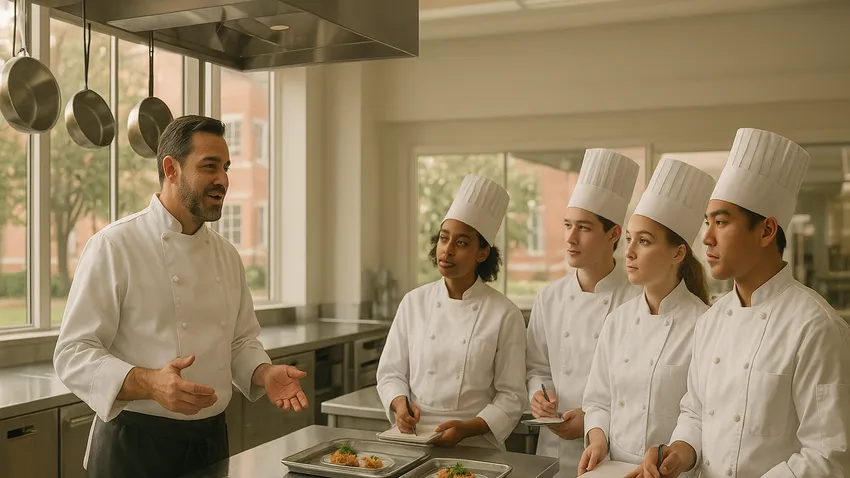

Culinary training in Alabama blends hands on kitchen practice with hospitality management and nutrition knowledge.
From community college labs to university programs, the state offers affordable, career focused pathways for future Chefs, Bakers, and Hospitality professionals.

Comparison Table of Culinary Schools in Alabama
| School | Location | Programs Offered | Tuition (Approx.) | Key Highlights |
|---|---|---|---|---|
| Jefferson State Community College | Birmingham | A.A.S. in Culinary Arts, Baking & Pastry | $3,800–$5,200 per year (in-state) | Hands on labs, industry partnerships in Birmingham |
| Wallace State Community College | Hanceville | Culinary Arts, Hospitality Management | $3,500–$5,000 per year | Strong technical training, local internship network |
| Bishop State Community College | Mobile | Culinary Arts, Foodservice Technology | $3,900–$5,300 per year | Coastal food culture, practical kitchen experience |
| Coastal Alabama Community College | Bay Minette / Mobile | Culinary Arts, Hospitality Certificates | $3,600–$5,200 per year | Community focused programs, on campus training kitchens |
| Auburn University – Hospitality & Tourism Management | Auburn | B.S. in Hospitality Management with Foodservice focus | $10,000–$12,500 per year (in-state) | Broader management and food systems perspective |
1. Jefferson State Community College
Jefferson State Community College serves students in the Birmingham region with practical, career oriented culinary programs.
The A.A.S. in Culinary Arts and Baking & Pastry emphasize classical technique, menu development, and sanitation practices, preparing students for entry level positions in restaurants and bakeries.
Instruction blends classroom lessons with time in professional training kitchens where students practice knife skills, sauce work, baking fundamentals, and plating.
Many students benefit from the college’s connections to local restaurants, hotels, and catering companies, which lead to externships and part time job opportunities while in school.
With relatively low tuition for in-state students, Jefferson State offers an affordable route into roles such as Line Cook, Pastry Assistant, or Catering Technician.
For learners seeking a focused, affordable culinary education with strong ties to Birmingham employers, Jefferson State is a solid option.



The Fastest Growing
Restaurant & Hospitality Job Platform
Looking for top paid jobs? Or Hiring for your business?
2. Wallace State Community College
Wallace State in Hanceville is known for hands on technical training and a curriculum that balances cooking skills with front of house and management basics.
The program covers culinary fundamentals, baking, garde manger, and foodservice operations so graduates can step into many kitchen roles immediately after graduation.
Students train in modern labs designed to mirror commercial kitchens and often complete practical assignments that simulate real service conditions.
Wallace State emphasizes workforce readiness with industry informed coursework and local employer partnerships that support externships and job placement.
Tuition is modest compared to private institutions, making Wallace State a practical choice for students who want rigorous, applied training without heavy debt.
3. Bishop State Community College
Bishop State in Mobile leverages Alabama’s coastal culinary culture to teach both classic and regional cooking traditions.
The college’s Culinary Arts and Foodservice Technology tracks introduce students to seafood cookery, regional flavor profiles, and core kitchen techniques.
Hands on labs and catered campus events give students repeated chances to work in real service scenarios, building confidence and timing skills.
Partnerships with Mobile area restaurants, resorts, and catering firms provide externship placements that often translate into employment after graduation.
Graduates commonly find work as Prep Cook, Line Cook, or in Banquet and Catering roles across the Gulf Coast hospitality scene.
The Fastest Growing
Restaurant & Hospitality Job Platform
Looking for top paid jobs? Or Hiring for your business?
4. Coastal Alabama Community College
Coastal Alabama offers accessible culinary and hospitality training across several campuses, serving students along the Gulf Coast and inland communities.
Programs focus on culinary fundamentals, safety certification, and customer service, with flexible certificate and degree options for different career goals.
Facilities include teaching kitchens where students practice production cooking, baking, and menu planning, often preparing food for campus operations and community events.
The college’s community orientation creates local employer relationships that support internships and early career hiring in restaurants, hotels, and institutional dining.
For students looking for an economical start in the culinary trades with strong local connections, Coastal Alabama is a practical pick.
5. Auburn University – Hospitality & Tourism Management
Auburn University provides a broader, management focused pathway for students who want to combine food knowledge with business and operations skills.
The B.S. in Hospitality Management includes coursework in foodservice operations, menu development, hospitality marketing, and food safety, preparing graduates for supervisory and managerial roles.
Students gain exposure to larger scale foodservice systems, event management, and industry partnerships that support internships in hotels, resorts, and corporate dining.
This program is well suited for those who want to advance into roles such as Restaurant Manager, Foodservice Director, or Event Planner, and who value a strong foundation in business and leadership.
Tuition is higher than community colleges, but the broader degree opens pathways into mid level management and corporate hospitality careers across the Southeast.




Loading comments...