



The Bartender training manual is designed to set you up for success behind the bar.
It gives you the tools to master drink preparation, guest service and teamwork so you can deliver speed, consistency and hospitality with every shift.

Benefits of a Bartender Training Manual
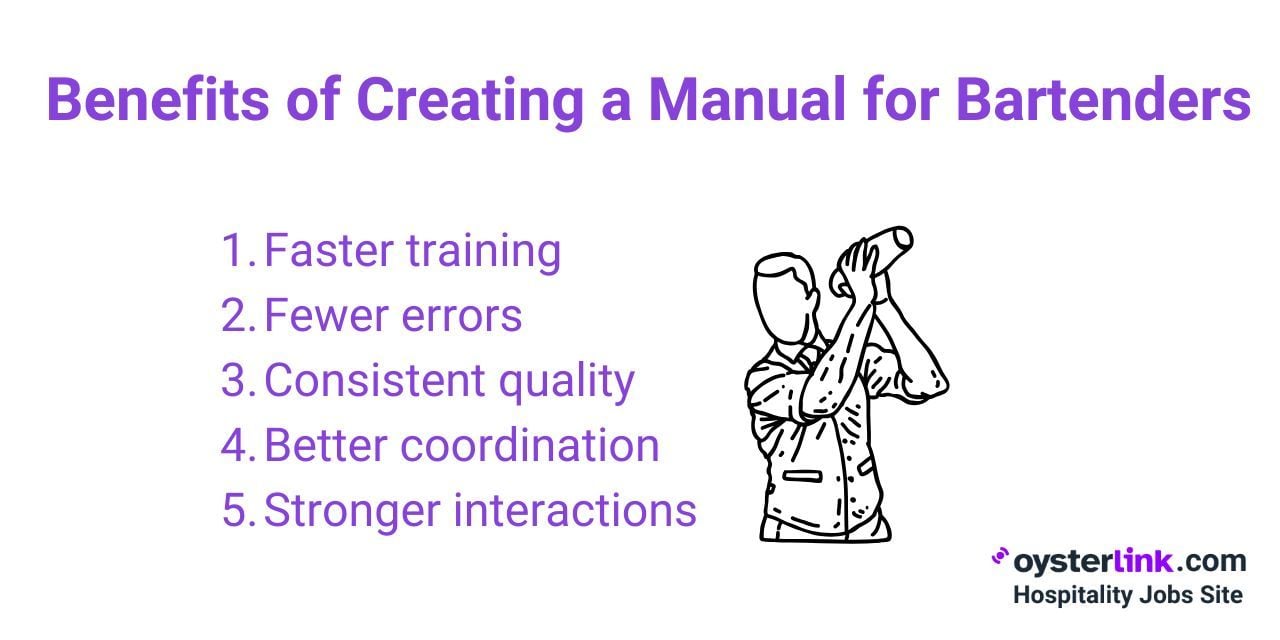
A Bartender training manual creates a standardized way to teach drink recipes, service procedures and safety rules. Benefits include:
- Fewer errors during busy shifts
- Consistent drink quality
- Better team coordination
- Stronger guest interactions
Bartender Training Manual Template for Onboarding
You can yse this template as-is by tweaking it to your needs, or just use it as inspiration to improve your existing Bartender training manual.
1. Role Overview
A bartender is responsible for drink preparation, guest experience, speed, and bar organization. Success = fast service + consistent drinks + strong customer interaction.
2. Core Responsibilities
- Prepare alcoholic and non-alcoholic beverages accurately
- Maintain bar cleanliness and organization
- Engage guests and create a welcoming atmosphere
- Handle payments and POS system
- Monitor guest intoxication and follow alcohol laws
3. Bar Setup & Opening Duties
Before service:
- Stock spirits, beer, wine, garnishes
- Cut fresh fruit (lemons, limes, oranges)
- Refill ice bins
- Check glassware (clean + polished)
- Set up tools: shaker, jigger, strainer, bar spoon
Goal: Everything within arm’s reach
4. Essential Bartending Tools
- Shaker (Boston or cobbler)
- Jigger (for accurate pours)
- Strainer
- Bar spoon
- Muddler
- Bottle opener / wine key
Rule: Use tools properly = consistency + speed
5. Drink-Making Fundamentals
Master these first:
Pouring
- Standard pour: 1.5 oz
- Use jigger until muscle memory is perfect
Techniques
- Shake: cocktails with juice (e.g., Margarita)
- Stir: spirit-forward drinks (e.g., Old Fashioned)
- Build: simple drinks in glass
6. Must-Know Classic Cocktails
Every bartender should know:
- Margarita
- Martini
- Old Fashioned
- Mojito
- Negroni
- Manhattan
Focus on:
- Correct ratios
- Proper glassware
- Clean presentation
7. Speed & Efficiency
- Batch tasks (cut fruit, restock together)
- Make multiple drinks at once
- Keep station clean during service
- Memorize popular orders
Rule: Slow bartenders lose money — fast bartenders make it
8. Customer Service Standards
- Greet every guest within 10 seconds
- Make eye contact, smile, acknowledge
- Recommend drinks confidently
- Handle complaints calmly and quickly
Simple rule:
Good drinks bring people in. Good service brings them back.9. Alcohol Safety & Responsibility
- Check IDs when unsure
- Never serve visibly intoxicated guests
- Offer water and food when needed
- Know local alcohol laws
This is non-negotiable.
10. Cleanliness & Hygiene
- Wash hands regularly
- Wipe bar constantly
- Use clean tools for every drink
- No cross-contamination (especially fruit/garnish)
A dirty bar = lost trust instantly.
11. Closing Duties
After service:
- Clean all surfaces and tools
- Restock for next shift
- Dispose of trash and old garnishes
- Count cash / close tabs
- Secure alcohol
Leave the bar better than you found it.
12. Performance Expectations
A great bartender:
- Is fast under pressure
- Stays organized during rush
- Communicates with team
- Upsells naturally
- Keeps a positive attitude
Quick Training Checklist
- Knows 10+ classic cocktails
- Uses jigger accurately
- Can handle rush without slowing down
- Maintains clean station
- Provides strong guest interaction
Dissecting the Bartender Training Manual
Now that you've seen the entire training manual, here's a breakdown of each section.
Use this outline as a step-by-step framework for creating or improving your Bartender training manual.



The Fastest Growing
Restaurant & Hospitality Job Platform
Looking for top paid jobs? Or Hiring for your business?
1. Getting started behind the bar
This section introduces the manual and its purpose. It welcomes new Bartenders and explains how the guide supports their role.
Welcome to the bar team! This manual will help you learn how we do things so you can perform confidently behind the bar.
2. About the bar & brand
Explains the venue's concept and the Bartender's role in creating a memorable guest experience.
- What guests expect from your bar
- Bar style: Craft cocktail bar? Sports bar? Lounge?
- Uniforms, cleanliness, hair, piercings, etc.
3. What you’ll be responsible for
This section outlines the daily responsibilities and service standards Bartenders are expected to meet:
- Prepare and serve beverages quickly and accurately
- Maintain cleanliness and stock levels
- Prevent over-serving and follow alcohol laws
Bartender Training Manual: Bar Setup, Menu and Service Standards
This part of the training manual covers how to set up your station, master the menu and maintain service standards that keep guests happy.
4. Bar setup & workflow
This section covers how to prepare the bar for service, maintain an efficient workspace during a shift and properly close down:
- Opening and closing checklist: Stock garnishes, juices, ice, glassware
- Station layout: Where tools, bottles, and mixers are kept
- Restocking protocol: How and when to replenish supplies
- Closing checklist: Clean surfaces, drain lines, empty trash
5. Mastering the menu
This section focuses on developing deep product knowledge:
- Core cocktail recipes (with specs)
- Beer and wine list overview
- Mocktails and non-alcoholic options
- Garnish standards and presentation
6. Delivering great bar service
Here you’ll find standards for hospitality and guest engagement:
- Offering recommendations or upsells
- Watching for signs of intoxication
- Keeping bar clean and welcoming
The Fastest Growing
Restaurant & Hospitality Job Platform
Looking for top paid jobs? Or Hiring for your business?
Bartender Training Manual: Compliance and Responsible Alcohol Service
This section explains how to check IDs, spot intoxication and handle situations professionally to keep both guests and the bar safe.
7. Responsible alcohol service
Bartenders must serve alcohol safely and lawfully. So this section outlines certification expectations and steps for identifying intoxicated guests:
- Signs of intoxication
- Steps for refusing service
- Local/state liquor laws
- Reporting incidents
Bartender Training Manual: POS, Teamwork and Skill Development
Beyond mixing drinks, bartenders need strong technical and communication skills.
This part covers mastering the POS system, staying in sync with your team and developing the habits that lead to long-term success.
8. Using the POS & handling payments
Bartenders must be comfortable with your venue’s point-of-sale system (POS). This includes things like:
- Opening/closing tabs
- Splitting checks
- Handling comps and voids
- Closing out cash drawer
Source: Market.us Scoop
9. Bar support & cleanliness
This section provides daily, weekly and shift-specific cleaning tasks, along with expectations for station upkeep throughout service.
- Glass polishing and restocking
- Refilling syrups, juices and mixers
- Cleaning draft lines and soda guns
- Sweeping, mopping and trash removal
10. Staying in sync with the team
This section outlines how to pass along information during shift changes and coordinate with Servers, Restaurant Managers or Barbacks.
- Handoff protocol for tabs and service areas
- Updating 86’d items or special requests
- Using bar logbooks or shift notes
- Radio or headset etiquette (if used)
The Fastest Growing
Restaurant & Hospitality Job Platform
Looking for top paid jobs? Or Hiring for your business?
11. How success is measured
This section outlines key metrics used during evaluations and what growth looks like on the job.
- Speed and accuracy
- Cleanliness and organization
- Product knowledge
- Guest feedback
- Compliance with alcohol laws
12. Your training journey
This section provides a clear training timeline so new Bartenders know what to expect during their first ten days.
- Day 1: Meet the team, tour the bar, intro to menu
- Days 2–4: Observe senior bartenders during service
- Days 5–7: Make drinks under supervision, handle POS
- Days 8–10: Independent service with feedback
13. Skill completion checklist
Use this checklist to confirm skill completion.
Task | Completed | Trainer Initial | Date |
| Memorized 10 house cocktails | Y/N | ||
| Learned POS system | Y/N | ||
| Completed opening/closing duties | Y/N | ||
| Passed drink quiz | Y/N | ||
| Demonstrated proper ID check | Y/N |
14. Bar terms to know
This section introduces essential bar terminology that every bartender should understand.:
- Neat: Straight, no ice
- On the rocks: Over ice
- Dirty: Olive juice added
- Shake and strain: Mixed in shaker, strained into glass
- 86’d: Item is unavailable
Bartender Training Manual: Final Words and Advice for Managers
This closing section includes essential bar terms, sign-off details and advice for managers on how to use the manual as a living document.
15. Final words & sign-off
This section wraps up the training manual with a note of encouragement and a formal acknowledgment.
Thank you for being part of our team.
Bartending is fast-paced and rewarding, and this manual is your guide to delivering great service every shift. Don’t hesitate to ask questions and keep learning.
Acknowledgment:** I acknowledge that I have received and read the bartender training manual.
Employee Signature: ____________
Date: ____________
Manager Initial: ____________
Remember, effective training isn’t about simply handing someone a manual. It only works if it's reinforced through action.
This manual should guide how you train, coach and lead on the floor — not just during the first week, but continuously.
The Fastest Growing
Restaurant & Hospitality Job Platform
Looking for top paid jobs? Or Hiring for your business?




Loading comments...