



An Assistant Restaurant Manager plays a crucial role in ensuring smooth day-to-day operations in a restaurant.
Whether you’re looking to grow your career in restaurant management or seeking a leadership role in hospitality, understanding the pros and cons of being an Assistant Restaurant Manager can help you decide if this path is right for you.

Pros of Being an Assistant Restaurant Manager
Below, we’ll explore the key benefits of working as an Assistant Restaurant Manager, including leadership opportunities, career advancement and industry perks.
For a real-world look at how this role can shape your career, this short video features Olivia Brown from JFK, who shares her journey, passion for management and experience growing within SSP America:

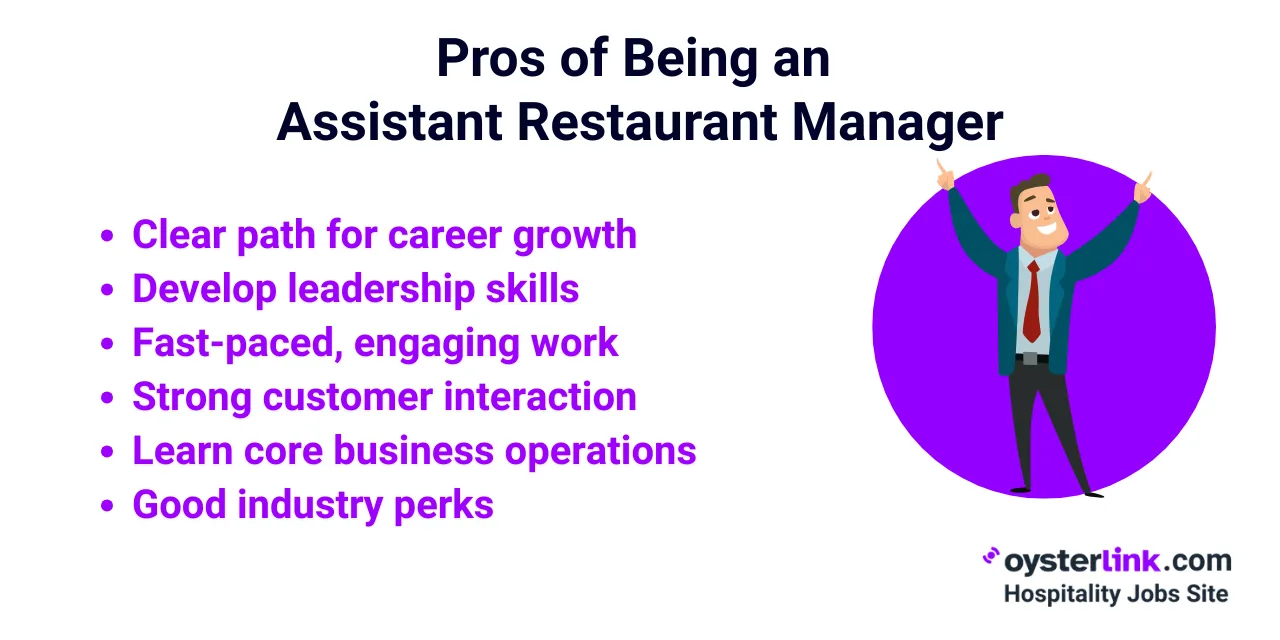
1. Strong career growth and advancement opportunities
One of the biggest advantages of working as an Assistant Restaurant Manager is the potential for career advancement. Many professionals in the hospitality industry start in this role before moving on to positions such as:
- Restaurant Manager
- General Manager
- Regional Manager
- Food and Beverage Director
- Restaurant Owner
With experience, leadership skills and strong performance, this role can be a stepping stone to higher-paying and more senior positions in the industry.



The Fastest Growing
Restaurant & Hospitality Job Platform
Looking for top paid jobs? Or Hiring for your business?
2. Leadership and team management experience
This position provides an opportunity to develop essential management skills, including staff supervision, conflict resolution and performance coaching.
Assistant Restaurant Managers are responsible for training employees, maintaining high service standards and ensuring smooth collaboration between front-of-house and back-of-house teams.
Gaining leadership experience in a fast-paced restaurant environment can prepare you for more advanced roles in hospitality or even running your own business in the future.
3. Fast-paced and dynamic work environment
If you enjoy working in an energetic setting where no two days are the same, being an Assistant Restaurant Manager can be an exciting career choice. From handling customer service issues to coordinating with kitchen staff, every shift presents new challenges and opportunities to problem-solve.
This dynamic nature keeps the job engaging, especially for those who prefer active roles over desk jobs.
4. Opportunities for customer interaction and relationship building
Assistant Restaurant Managers play a key role in ensuring guest satisfaction. By handling customer inquiries, resolving complaints and engaging with regular diners, they help build strong customer relationships and maintain a positive reputation for the restaurant.
For individuals who enjoy social interaction and making a direct impact on guest experiences, this can be a fulfilling part of the job.
Check Our Career Growth Tools


5. Learning business operations and financial management
This role provides exposure to critical business functions, including budgeting, inventory control, vendor relations and sales analysis. Many Assistant Restaurant Managers are responsible for:
- Monitoring food and labor costs
- Managing inventory and supply orders
- Analyzing sales reports and customer trends
- Implementing marketing and promotional strategies
Understanding these business operations can be invaluable for those interested in opening their own restaurant or moving into higher-level management roles.
6. Industry perks and benefits
Many restaurants offer competitive benefits for Assistant Managers, including:
- Free or discounted meals
- Performance-based bonuses
- Healthcare benefits (in full-time roles)
- Paid vacation and holiday time
- Opportunities for continued education and certifications in hospitality management
These perks can make the role more rewarding, especially for those planning a long-term career in the restaurant industry.
Cons of Being an Assistant Restaurant Manager
While there are many advantages to this role, there are also some challenges to consider, including long hours, high-pressure situations, and demanding customer service responsibilities.
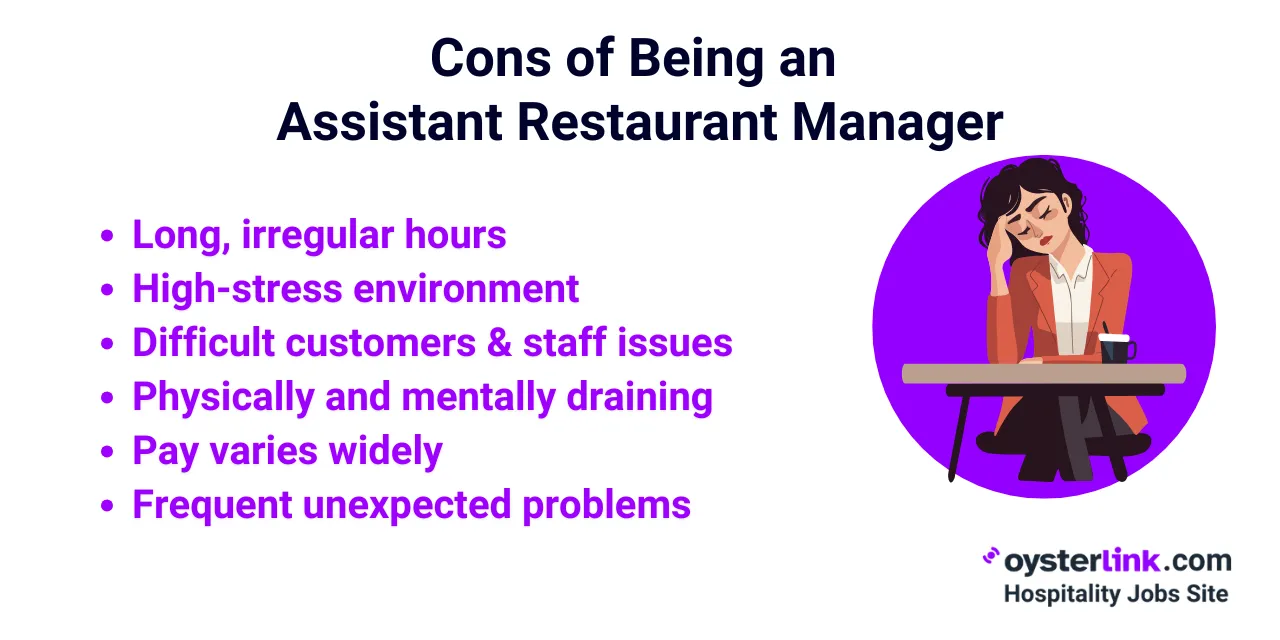
1. Long hours and demanding work schedule
Restaurant management is not a typical 9-to-5 job. Assistant Restaurant Managers often work nights, weekends, and holidays, as those are peak dining times.
Shifts can also be long, sometimes exceeding 10 to 12 hours — especially during busy seasons. This can make it challenging to maintain a work-life balance, particularly for those with family commitments.
2. High-stress, fast-paced environment
The restaurant industry is fast-moving and high-pressure, especially during peak dining hours. Assistant Restaurant Managers must juggle multiple responsibilities, such as:
- Resolving customer complaints
- Managing staff shortages
- Coordinating with the kitchen to ensure timely service
- Handling unexpected issues, such as equipment malfunctions or late deliveries
If you don’t handle stress well, the intensity of this role can be overwhelming.
3. Dealing with difficult customers and employee conflicts
Handling guest complaints is a significant part of the job. Whether it’s an incorrect order, a long wait time, or an unhappy customer, Assistant Restaurant Managers must resolve issues professionally and ensure guests leave satisfied.
For tips on how to handle an angry customer, here’s a video that shares effective strategies for dealing with them:

Additionally, managing a diverse team of employees comes with its challenges, such as:
- Scheduling conflicts
- Staff disagreements
- Performance issues
- High turnover rates
Balancing customer service and employee relations can be demanding, requiring patience, diplomacy, and strong communication skills.
4. Physical and mental exhaustion
The role requires constant movement — walking, standing and sometimes lifting heavy items. This can be physically draining, particularly during long shifts.
Mentally, managing a restaurant’s fast pace while overseeing multiple aspects of operations can also be exhausting. Over time, burnout is a risk if proper work-life balance isn’t maintained.
5. Salary can vary based on location and restaurant type
While some Assistant Restaurant Managers earn competitive salaries, pay can vary significantly depending on:
- Restaurant type (fine dining vs. casual dining vs. fast food)
- Location (urban vs. rural areas)
- Experience level
In smaller establishments or chain restaurants, salaries may be lower, though experience in these roles can lead to higher-paying management opportunities.
6. Unpredictable issues and last-minute challenges
Restaurants rely on smooth operations, but unexpected challenges frequently arise, including:
- Staff calling in sick, requiring last-minute scheduling changes
- Shortages of ingredients or inventory supply issues
- Equipment breakdowns affecting service efficiency
Being able to adapt quickly and find solutions on the spot is a key skill required in this role.
Essential Skills and Traits for an Assistant Restaurant Manager
Succeeding as an Assistant Restaurant Manager requires a mix of leadership, communication and problem-solving skills.
You need to stay calm under pressure, motivate staff during busy hours and deliver consistent customer service.
Strong organizational skills also help you oversee schedules, inventory, and daily operations without missing key details.

Typical Day-to-Day Responsibilities of an Assistant Restaurant Manager
Typical day-to-day responsibilities of an Assistant Restaurant Manager
The role covers a wide range of tasks — from supervising staff and handling guest concerns to managing inventory, placing orders and coordinating with vendors.
You’re also involved in opening and closing procedures, ensuring food quality standards and supporting the Restaurant Manager with administrative responsibilities.
Each day offers a mix of operational duties and people management. For a quick look at what a day in this role can be like, here’s a short video following James through his routine:
How To Decide If the Role Fits Your Career Goals
If you’re considering the pros and cons of being an Assistant Restaurant Manager, think about your long-term goals in hospitality.
This role is a great fit if you enjoy fast-paced environments, leading teams and solving problems on the fly.
However, if you prefer predictable routines or minimal customer interaction, the demands may feel overwhelming. Evaluating your strengths and priorities can help you decide if this path aligns with your career ambitions.
Pros and Cons of Being an Assistant Restaurant Manager: Conclusion
Being an Assistant Restaurant Manager comes with a unique balance of rewards and challenges.
The role offers a clear path to career growth, the chance to sharpen leadership skills and the satisfaction of keeping daily operations running smoothly.
At the same time, it demands long hours, fast-paced decision-making and the ability to handle pressure during peak service times.
By weighing these pros and cons against your personality, strengths and long-term career goals, you can decide whether this role is the right next step in your hospitality journey.



Loading comments...