


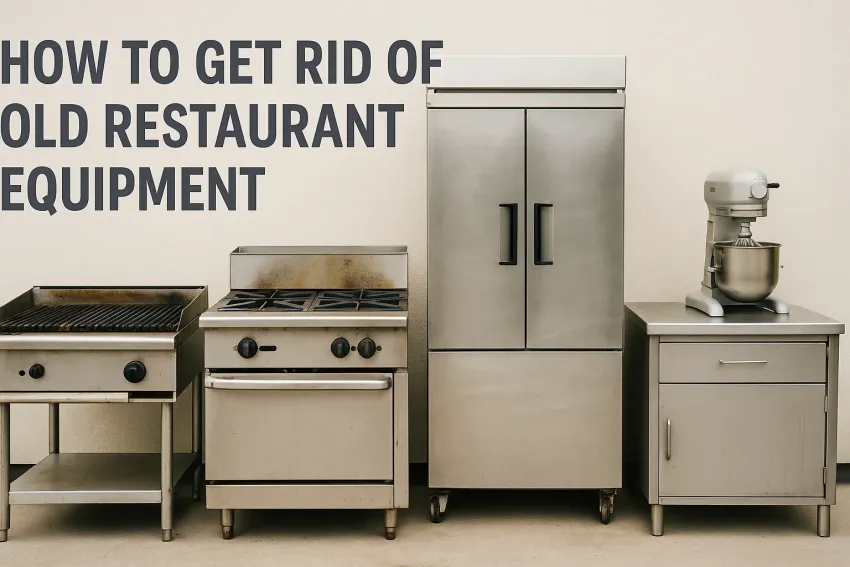

This guide walks you through every practical option — selling, donating, recycling, repurposing, or responsibly disposing of old restaurant equipment — with a focus on strategies that make sense for U.S. foodservice businesses.

How to Get Rid of Old Restaurant Equipment: Why Proper Disposal Matters
Every restaurant eventually faces the question — what to do with old, broken, or outdated equipment? From industrial refrigerators that have lost their cooling edge to deep fryers that have outlived their efficiency, managing obsolete assets is both a logistical and financial challenge.
The cost of disposing of old equipment can add up, so it’s important to consider both expenses and potential savings when choosing a disposal method. Carefully handling and disposing of equipment is essential to avoid regulatory issues and environmental harm.
Properly disposing of restaurant equipment isn’t just about clearing space. It’s about:
- Complying with health and safety codes
- Maximizing resale or donation value
- Reducing waste through recycling
- Highlighting the benefit of responsible disposal, such as environmental protection, energy savings, and improved kitchen operations
- Avoiding environmental penalties



The Fastest Growing
Restaurant & Hospitality Job Platform
Looking for top paid jobs? Or Hiring for your business?
Introduction to Commercial Kitchen Equipment Disposal
Proper disposal of old commercial kitchen equipment is a critical responsibility for any restaurant or foodservice business.
Restaurant equipment, from large commercial kitchen appliances to smaller kitchen equipment, is often made from non-biodegradable materials such as metals, plastics, and glass.
If not handled correctly, these materials can leach into the soil and cause long-term environmental damage.
The environmental impact of improper disposal is significant, contributing to pollution and unnecessary landfill waste.
By taking the time to properly dispose of old commercial kitchen equipment, restaurants can help protect the environment, maintain a safer kitchen space, and even recover value through recycling, selling, or donating old restaurant equipment.
Whether you’re upgrading to new appliances or simply clearing out unused items, understanding your disposal options ensures that your business operates responsibly and sustainably.
Responsible disposal not only benefits the environment but also enhances your restaurant’s reputation as a conscientious member of the community.
Types of Kitchen Equipment
Commercial kitchen equipment covers a broad spectrum of appliances and fixtures, each with its own disposal considerations.
Common items include refrigerators, ovens, dishwashers, stainless steel hood filters, prep tables, and more. Many of these pieces are constructed from valuable materials like stainless steel, aluminum, and copper, which can be recycled at local scrap metal facilities or specialized metal facilities.
For example, stainless steel hood filters and metal components from old kitchen equipment are often accepted by recycling centers that process metals.
Check Our Career Growth Tools


Electrical components, such as those found in ovens, dishwashers, and other appliances, require special attention. These parts should be taken to a recycling facility equipped to handle electronic waste, ensuring that hazardous materials are safely processed.
Understanding the makeup of your old equipment helps you determine the best way to rid your business of outdated or non-functional items, whether that means recycling, donating, or using a scrap metal facility.
By matching each type of equipment to the appropriate disposal method, you maximize the value of your old kitchen equipment and minimize your environmental footprint.
Kitchen Equipment Maintenance and Upkeep
Investing in regular maintenance and upkeep of your commercial kitchen equipment pays off in multiple ways. Routine tasks—such as cleaning and replacing stainless steel hood filters, checking for wear and tear, and scheduling professional inspections—can significantly extend the life of your equipment.
Well-maintained kitchen equipment operates more efficiently, saving your business money on energy costs and reducing the need for frequent replacements.

Proper upkeep also makes your equipment more attractive to prospective buyers or local charities when it’s time to upgrade or replace items. Clean, functional appliances are easier to sell, donate, or recycle, ensuring that valuable materials are reused rather than ending up in landfills.
By prioritizing maintenance, businesses not only save money but also reduce their environmental impact and contribute to a more sustainable commercial kitchen.
Ultimately, a proactive approach to equipment care supports smoother upgrades and helps your restaurant maintain a reputation for quality and responsibility.
12 Steps to Getting Rid of Old Restaurant Equipement
1. Assess the Condition and Value of Your Equipment
Before you call a hauler or list your appliances online, take stock of what you actually have and its condition.
Make a list of all your old commercial kitchen equipment, noting the brand, model, age, and any visible damage. This list helps you decide whether to sell, donate, recycle, or scrap each piece.
By evaluating the condition and value of each item, you can determine the best option for handling or disposing of your equipment.
Conduct an Equipment Audit
Create a simple inventory spreadsheet that includes:
- Item name (e.g., 6-burner gas range)
- Brand and model
- Age or purchase date
- Current working condition
- Estimated resale value
- Serial numbers (useful for resale or recycling)
This list helps you decide whether to sell, donate, recycle, or scrap each piece.
Determine Residual Value
Some high-quality brands — like Hobart, Vulcan, True, or Manitowoc — retain strong resale value, even after years of use. A working commercial refrigerator, stainless steel prep table, or steel table can still fetch hundreds of dollars on resale marketplaces.
For non-functioning units, assess whether repairs are feasible or if scrap metal recycling is the only option.
2. Sell Your Used Restaurant Equipment
If your equipment still works or can be repaired cheaply, selling it is often the best way to recoup some of your investment. Selling to dealers can reduce the hassle compared to selling equipment privately, saving you time.
Sell to Restaurant Equipment Dealers
Many U.S. equipment dealers buy used or surplus items. They often handle removal and cleaning, saving you time.
Popular nationwide or regional dealers include:
- Gator Chef (Illinois)
- Mission Restaurant Supply (Texas)
- Burkett Restaurant Equipment (Ohio)
- ACityDiscount (Georgia)
- WebstaurantStore Used Equipment Marketplace (nationwide online)
Contact dealers with photos, model numbers, and conditions. Most will offer free quotes or even bulk buyouts if you’re clearing out a kitchen.
List on Online Marketplaces
If you prefer to sell directly, use platforms such as:
- Facebook Marketplace – high local reach for bulky items
- Craigslist – still effective for local restaurant closures
- eBay – ideal for smaller or shippable items (mixers, blenders, smallwares)
When listing:
- Include clear, high-quality photos
- Mention brand names, power type (gas/electric), and voltage
- Highlight maintenance history (if available)
Restaurant Auctions
If you’re liquidating an entire kitchen, a restaurant liquidation auction can be efficient.
Companies like Rabin Worldwide, BidSpotter, or AuctionZip handle full-scale restaurant closures. They manage listings, payment, and pickup.
The Fastest Growing
Restaurant & Hospitality Job Platform
Looking for top paid jobs? Or Hiring for your business?
3. Donate Equipment to Charitable Organizations
If your goal is community support rather than profit, donation is a smart and ethical route. Many nonprofits, culinary schools, and food banks welcome used equipment — especially refrigeration, storage, and prep items.
You can also consider donating your equipment directly to a fellow business owner in your community, helping support local businesses and fostering resource sharing.
Who Accepts Restaurant Equipment Donations
- Habitat for Humanity ReStores – accepts kitchen equipment, including functional appliances and furniture
- Goodwill Industries – may take smaller or portable kitchen items
- Local community kitchens or food pantries – often need working stoves and coolers
- Culinary schools and vocational training programs – use older models for training
- Churches and shelters – may accept catering and serving supplies
Always call ahead to confirm what they accept. Some nonprofits only take working items or require proof of recent inspection.
Tax Deduction Benefits
Donations are tax-deductible for businesses. Keep receipts and record the fair market value (FMV) of donated items. Consult IRS Publication 561 on Determining the Value of Donated Property for official guidelines.
4. Recycle Scrap Metal and Electronics
When equipment can’t be repaired or resold, recycling salvages value while keeping materials out of landfills.
Taking old or broken equipment to a recycling center ensures proper processing and helps maximize environmental benefits.
Metal Recycling
Most commercial kitchen equipment — from fryers to prep tables — contains valuable stainless steel, aluminum, or copper.
Contact local scrap metal recyclers or junk removal companies who pay by weight.
Items commonly accepted include:
- Stainless steel counters and sinks
- Range hoods and ductwork
- Old ovens, stoves, and fryers (after oil removal)
- Copper wiring from dismantled equipment
Call ahead to confirm if they accept mixed metals and if pickup is available.
Electronic Waste (E-Waste) Recycling
Modern restaurant kitchens use POS systems, electronic thermometers, and smart appliances — all of which can contain hazardous materials. These should be taken to certified e-waste recyclers like:
- Best Buy Electronics Recycling Program
- Call2Recycle (for batteries)
- Local government hazardous waste collection events
Never throw electronics into dumpsters. Many states, including California, New York, and Washington, impose fines for improper disposal.
5. Trade-In and Buyback Programs
Some manufacturers and distributors offer trade-in or buyback incentives when you upgrade to newer models.
Trade-in programs often focus on the latest technology and encourage businesses to invest in more efficient equipment.
For example:
- Hobart and Vulcan sometimes offer trade-in rebates for energy-efficient equipment.
- Refrigeration suppliers may take back old units under EPA Section 608 compliance rules.
- Restaurant supply chains like TriMark or WebstaurantStore occasionally run sustainability programs for old appliances.
Ask your supplier if they have an ongoing trade-in or disposal partnership — especially for refrigeration or HVAC systems that require certified Freon removal.
6. Repurpose or Refurbish for Secondary Use
Not every piece of old equipment has to leave your property. Some items can be repurposed creatively. Renting out equipment that is still in good condition can be a good option for generating income.
Repurpose Within Your Business
- Convert old shelving into dry storage or decor pieces.
- Turn stainless steel tables into outdoor prep stations.
- Use non-working appliances as display or prop units for themed interiors.
Refurbish for Secondary Locations
If you operate multiple locations, refurbish usable items for backup or secondary kitchens — for catering, pop-ups, or seasonal operations.
Refurbishment often costs less than buying new, especially for durable stainless fixtures.
7. Hire Professional Removal and Hauling Services
For busy restaurateurs, sometimes the simplest option is hiring professionals. They handle heavy lifting, sorting, and recycling. Always check with your city's waste management department to ensure you are following local disposal regulations and using approved recycling facilities.
Junk Removal Companies
Services like 1-800-GOT-JUNK, JDog Junk Removal, or LoadUp specialize in commercial removal. They handle heavy lifting, sorting, and recycling.
Advantages:
- No staff time wasted dismantling heavy items
- Safe removal of gas/electrical units
- Proper recycling and disposal compliance
Get written confirmation that they dispose of appliances responsibly — not simply dumping them at landfills.
Licensed Refrigerant Disposal
For refrigerators, freezers, or HVAC systems, ensure Freon is handled under EPA Section 608 Certification. Unauthorized disposal can lead to fines up to $37,500 per day per violation.
Contact certified technicians for decommissioning.
8. Avoid Common Disposal Mistakes
Improper handling of used kitchen equipment can create liability issues or environmental violations.
Avoid these mistakes:
- Dumping in public dumpsters: illegal and traceable through serial numbers; don’t just toss your old kitchen stuff in public bins, as it can lead to fines
- Selling unsafe units: equipment that doesn’t meet electrical or gas safety standards
- Ignoring data wipe: if selling POS systems or tablets, ensure all customer or payroll data is deleted
- Leaving grease or oil in machines: may violate city sanitation codes
Always verify that the removal or resale method follows local ordinances and fire safety codes.
The Fastest Growing
Restaurant & Hospitality Job Platform
Looking for top paid jobs? Or Hiring for your business?
9. Consider Leasing or Equipment Return Options
If your restaurant used leased equipment, contact the leasing company before removal. Many contracts include end-of-term return clauses or buyout options.
Most lease providers require you to:
- Return the equipment in clean, working condition
- Pay for shipping or pickup fees
- Provide serial number confirmation
Check with your provider (e.g., LeaseQ, TimePayment, CIT) to ensure compliance before disposing.
10. Environmental Regulations to Know
Several federal and state laws govern the disposal of restaurant appliances:
- EPA Section 608 (Clean Air Act): governs refrigerant removal and handling.
- Resource Conservation and Recovery Act (RCRA): outlines waste management and recycling responsibilities.
- State e-waste regulations: vary by state; California, Illinois, and New York have the strictest rules.
- Local sanitation codes: may restrict bulk dumping of commercial appliances.
Check your local Department of Environmental Protection (DEP) or Public Works department for regional requirements.
11. Create a Standard Equipment Disposal Policy
For restaurant groups or franchises, a formal disposal policy saves time and ensures consistency.
Your policy should include:
- Inspection procedure: criteria for when equipment is beyond repair
- Preferred disposal methods: resale, donation, recycling hierarchy
- Documentation: photos, receipts, and environmental compliance forms
- Tax reporting protocol: record keeping for audits and deductions
This approach also simplifies insurance claims, fire inspections, and sustainability reporting.
12. Future-Proofing: Buy Smart to Simplify Disposal Later
The best disposal strategy begins at purchase. Choose energy-efficient, modular, and recyclable equipment that retains resale value and has available parts.
Tips for future-proof purchasing:
- Favor Energy Star–rated appliances (reduce long-term operating and disposal costs)
- Choose reputable brands with nationwide resale markets
- Keep serial numbers and manuals for future resale verification
- Avoid mixing gas and electric hybrid systems that complicate recycling
When your next upgrade comes, you’ll already have the framework for responsible, profitable disposal.
Conclusion: Turning Old Equipment Into Opportunity
Getting rid of old restaurant equipment doesn’t have to be a financial burden or an environmental headache.
With proper planning, you can recover value, support local organizations, and stay compliant with environmental laws — all while freeing up space for modern, efficient tools that help your business grow.
Clearing out the old paves the way for innovation — and with the right approach, it can even put money back into your pocket.





Loading comments...