



How To Become an Assistant Restaurant Manager Without Experience: Key Takeaways
- Obtaining relevant education and certifications like ServSafe enhances your qualifications even without prior experience.
- Starting in entry-level restaurant roles and demonstrating initiative builds practical knowledge of restaurant operations.
- Developing leadership, communication and financial skills is essential to move into assistant manager roles.
Beginning a career as an Assistant Restaurant Manager without experience is possible through focused education, skill development and gaining hands-on industry knowledge.
This guide lays out actionable steps to transition effectively into assistant management roles in the restaurant sector.

1. Pursuing Education and Certifications for Assistant Restaurant Manager Roles
While many Assistant Restaurant Manager positions require only a high school diploma, having a degree or diploma in Hospitality Management or Business Administration can provide a significant advantage.
Formal education enriches your understanding of the hospitality industry's business side and prepares you for managerial responsibilities.
In addition to education, obtaining industry-respected certifications like the ServSafe Food Protection Manager Certification signals professionalism and dedication to food safety standards.
Employers seeking to find the right talent can benefit from our best Restaurant Assistant Manager hiring tips to streamline the recruitment process.
2. Gaining Entry-Level Experience in Restaurant Operations
Starting your career as a Server, Host or Line Cook offers direct exposure to daily restaurant functions that are vital to management roles.
These entry-level positions allow you to understand customer interaction, kitchen workflows and service standards firsthand.
Actively volunteering for extra duties — such as training new hires or assisting with inventory — demonstrates initiative and a willingness to learn beyond your basic responsibilities.
For a clearer understanding of hiring for these roles, see our guide on how to hire a Server or Waiter.
3. Developing Essential Management Skills for Assistant Restaurant Manager
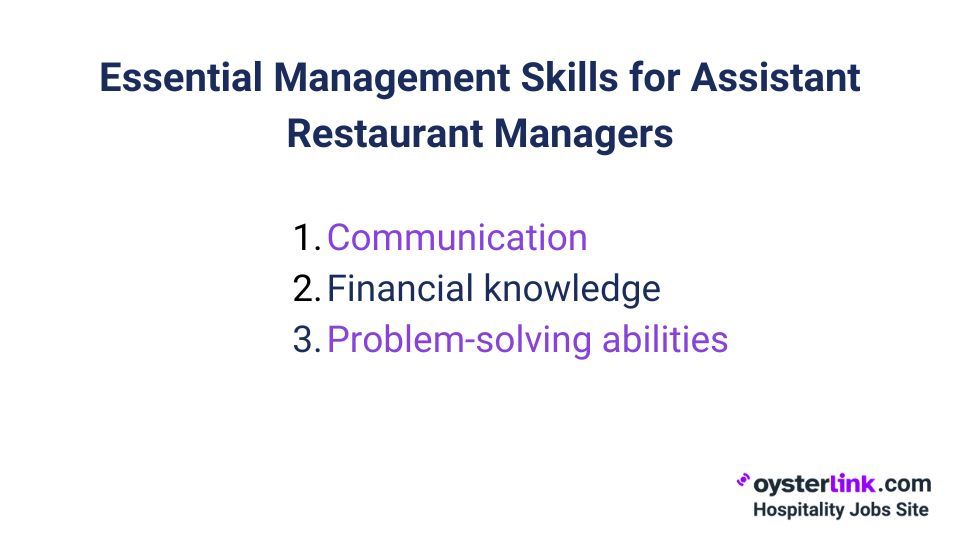
Effective leadership begins with strong communication skills that ensure instructions are clear and customer feedback is understood.
Financial knowledge including budgeting and cost control is crucial to oversee a restaurant's profitability.
Enhancing your problem-solving abilities helps position you as a reliable leader who can handle challenges swiftly and efficiently.
To deepen your leadership capabilities, explore the Restaurant Manager career overview.
4. Seeking Supervisory Opportunities Within the Restaurant Industry
After gaining foundational experience, aim for roles like shift supervisor or assistant manager to develop hands-on leadership skills.
These positions expose you to scheduling, staff management and operational decision-making.
Learning closely from experienced managers during these roles can provide valuable insights into efficient restaurant management strategies.
Employers can learn how to hire a Restaurant Manager to select the best candidate for these supervisory roles.



The Fastest Growing
Restaurant & Hospitality Job Platform
Looking for top paid jobs? Or Hiring for your business?
5. Building a Professional Network in the Hospitality Industry
Attending seminars, workshops and conferences provides opportunities to learn from seasoned professionals and share experiences.
Our spotlight on restaurant staff hiring offers further insights on sourcing talent in the hospitality industry.
6. Continuing Professional Development for Assistant Restaurant Managers
Regularly enrolling in workshops, online courses or seminars allows you to stay updated with industry trends and emerging management techniques.
Setting clear career goals, both short-term (like leading a project) and long-term (such as achieving a full manager role), helps maintain motivation and direction.
7. Highlight Transferable Skills and Volunteer Experience on Your Resume
Even without formal work experience in restaurant management, showcasing leadership and teamwork through volunteer or extracurricular activities makes your resume stand out.
Examples include organizing events or leading community groups, which demonstrate your organizational and interpersonal skills relevant to assistant manager duties.
Consider reviewing common Assistant Restaurant Manager interview questions to prepare for application success.
Additional Resources to Support Your Career Journey
- ServSafe Food Protection Manager Certification – Essential food safety certification for restaurant management.
- Restaurant Association of Singapore – Professional association offering resources and networking in the hospitality sector.
- National Restaurant Association – U.S.-based industry organization with training and career resources.

How To Become an Assistant Restaurant Manager Without Experience: Conclusion
Starting a career as an Assistant Restaurant Manager without direct experience is achievable by combining education, foundational roles, and skill development.
Strategically pursuing certifications, gaining entry-level experience, refining leadership and financial acumen and building professional relationships equips you to succeed in assistant restaurant management roles.
Explore more about the role with our detailed Assistant Restaurant Manager job description, essential for both candidates and hiring managers.





Loading comments...