


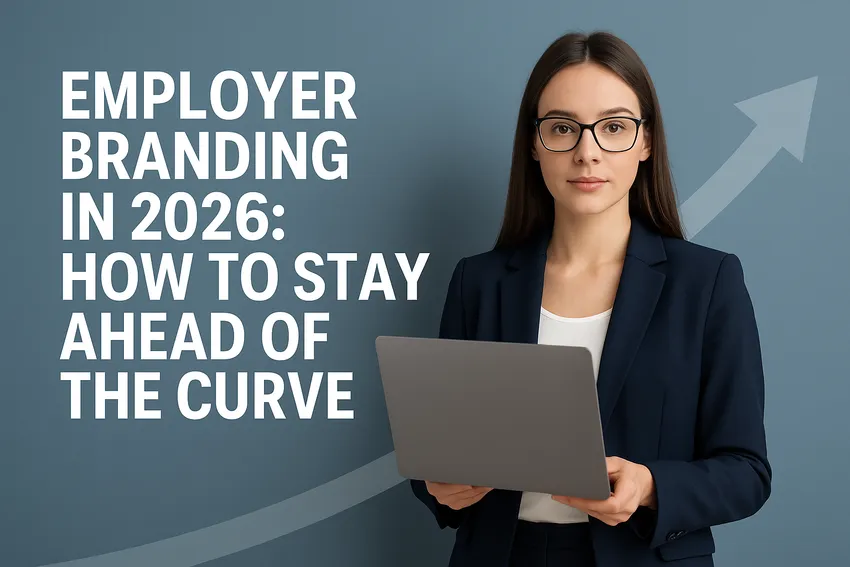

Technology in 2026 is enabling greater access to job opportunities and company information for candidates, making it easier for employers to reach and engage a wider, more diverse talent pool.

Why Employer Branding Still Matters
A strong employer brand helps companies attract more qualified applicants and cut down hiring costs.
Likewise, when employees feel aligned with the company's values, these values shape the organization's culture, leading to improved retention and higher internal satisfaction — the brand strengthens from the inside out.
Employer branding also supports the overall business by strengthening the organization's reputation and market position.



The Fastest Growing
Restaurant & Hospitality Job Platform
Looking for top paid jobs? Or Hiring for your business?
The Rise of Digital & AI-Driven Employer Brand Signals
Modern job seekers rarely rely on glossy brochures. Job seekers also visit the company's career site and careers pages to explore jobs and learn about the employer brand.
Most explore social media, reviews, and online reputation before applying.
AI-powered recruiting tools now parse organizational data and candidate information, influencing who sees which opportunities.
Sharing relevant content on these digital platforms is crucial to engage potential candidates and showcase your employer brand.
Brands that structure their messaging clearly — with consistent titles, transparent values, and readable content — fare better under algorithmic scrutiny.
Check Our Career Growth Tools


Authenticity & Transparency Trump Polished Perfection
Candidates, especially younger generations, increasingly demand authentic representations of corporate culture over idealized corporate narratives.
Sharing real employee stories, honest challenges, and visible growth paths builds trust — and yields more-committed applicants.
Companies that openly support equity and employee wellbeing build even greater trust by demonstrating their commitment to fairness and inclusion.
Conversely, inconsistent branding between external messaging and actual workplace experiences often leads to disillusionment and attrition.
Modern candidates are less impressed by superficial perks like ping pong tables and more interested in a genuine, transparent culture that prioritizes meaningful support and equity.
Skills-First, Growth-Focused Employer Value Propositions
A strong employer branding 2026 strategy starts with a clear employee value proposition (EVP) that serves as a unique proposition, outlining what sets your company apart as an employer.
The EVP should transparently communicate the specific benefits and advantages the company offers, such as parental leave, mental health programs, competitive compensation, and education or development opportunities.
It is essential to focus on leadership development and continuous learning, and to invest in these areas to foster a culture of growth and engagement.
As hiring shifts toward skills-based evaluation rather than credential-based, employer value propositions (EVPs) centered on growth, development, and learning become more compelling.
Companies emphasizing internal mobility, continuous learning, and competency development tend to attract candidates who look for long-term fit, not just short-term pay.
Offering access to relevant courses is also a key part of a compelling employee value proposition.
Employee Ambassadors and Advocacy in the Modern Era
In 2026, employee ambassadors and advocacy have become essential pillars of a strong employer branding strategy. Today’s most successful organizations recognize that their current employees are their most credible storytellers.
When employees are genuinely engaged with the company culture and aligned with the company’s values, they naturally become ambassadors—sharing authentic experiences that resonate with prospective candidates across social media channels and beyond.
Employee advocacy goes a step further by empowering employees to actively promote the company’s brand, mission, and workplace culture.
Through employee-generated content—such as social media posts, video testimonials, and blog articles—organizations can showcase real employee stories that offer potential candidates a transparent look into daily life at the company.
This approach not only builds trust and credibility but also creates a competitive advantage in attracting top talent and quality candidates.
The Fastest Growing
Restaurant & Hospitality Job Platform
Looking for top paid jobs? Or Hiring for your business?
HR managers consistently cite employee retention as a key challenge in the modern workforce.
By investing in employee advocacy programs, companies can boost engagement, foster a sense of belonging, and ultimately improve retention rates.
These programs also streamline recruitment efforts and reduce cost per hire, as authentic employee voices help attract candidates who are a strong fit for the organization’s values and culture.
One example is a tech company that launched a branded hashtag campaign, encouraging employees to share their work experiences on social media.
The result was a surge in positive brand visibility, a higher volume of quality applicants, and a measurable decrease in recruitment costs.
Artificial intelligence (AI) tools now play a crucial role in amplifying employee advocacy.
By analyzing employee feedback and monitoring the impact of advocacy initiatives, AI provides actionable insights that help companies refine their employer branding strategies and stay ahead of the competition.
This is especially important as Gen Z candidates who value transparency, purpose, and digital engagement become a larger part of the talent pool.
For fully remote organizations, employee advocacy is equally vital. Video content and virtual storytelling allow remote teams to highlight their unique company culture and values, ensuring that distance does not dilute the brand’s impact.

In the year ahead, companies that prioritize employee ambassadors and advocacy will be best positioned to attract, engage, and retain top candidates in a rapidly evolving job market.
Ultimately, employee ambassadors and advocacy are not just trends—they are critical components of a future-proof employer branding strategy.
By creating a culture that encourages employees to share their authentic experiences, companies can reduce recruitment costs, improve employee retention, and build a strong employer brand that stands out in the world of work.
Measuring & Managing Employer Brand Performance
Data science plays a critical role in measuring employer branding success. Metrics like cost-per-hire, time-to-fill, application conversion rates, and retention help assess brand health.
As more recruitment touches become digital, tracking candidate experience, AI-tool transparency, and alignment between public brand and internal reality matters more than ever.
Looking Ahead: What Employer Branding in 2026 Must Be
Employer branding will no longer be a marketing department’s side-project.
Over the last few years, employer branding has evolved significantly, with trends like employee advocacy programs gaining momentum and shaping recruitment strategies.
It’s becoming ingrained in how companies operate, hire, retain, and present themselves externally.
Employer branding must be credible, consistent, and, above all, relevant — across all functions, channels, and experiences — to effectively engage potential candidates.
The entire organization, not just the marketing department, must embrace employer branding to ensure authenticity and alignment with company values.
It must respect the power of data and algorithms: formatting and clarity are as important as storytelling.
And above all, it must be real. Empty slogans cannot withstand digital scrutiny or employee experience.
In 2026, the strongest employer brands will not be those with the flashiest perks, but those with the clearest values, the truest culture, and the most transparent practices.

Loading comments...