


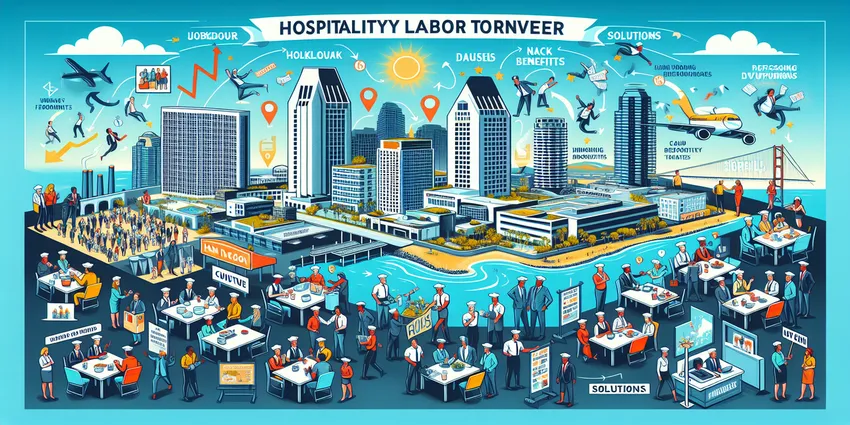

San Diego Hospitality Labor Turnover Rate: Key Takeaways
- In 2021, the U.S. leisure and hospitality sector saw an average turnover rate of 84.9%, significantly higher than the national average of 47.2%.
- High turnover in hospitality is driven by low wages, poor working conditions, limited career advancement, inadequate training, and inflexible scheduling.
- Effective solutions include competitive wages, flexible schedules, career development, positive workplace culture, and employee wellness programs.
The hospitality sector in San Diego faces a pressing challenge with high employee turnover, impacting both service quality and operational costs.
This article explores the causes, industry benchmarks, and practical strategies to reduce turnover and enhance workforce stability.

1. Understanding San Diego Hospitality Labor Turnover Rate
San Diego's hospitality industry mirrors a national trend of extremely high employee turnover. The leisure and hospitality sector nationally recorded a staggering 84.9% turnover rate in 2021, well above the average across all industries of 47.2%.
This high turnover means employees leave their jobs frequently, leading to disruptions in service, increased recruitment costs, and a loss of institutional knowledge. While exact figures for San Diego are not separately reported, the local hospitality market experiences similar pressures.
By contrast, healthy annual turnover rates in most industries range between 7% and 13%, emphasizing how challenging retention is for hospitality.
2. Causes of High Turnover in San Diego Hospitality
Low Wages and Inadequate Benefits
Many hospitality positions offer pay that is near minimum wage and provide minimal benefits. This financial limitation motivates employees to leave in pursuit of higher-paying opportunities with better benefits packages.
For employers looking to improve retention, understanding strategies to reduce restaurant employee turnover is crucial.
Poor Working Conditions
The demanding nature of hospitality work—long hours, physically taxing tasks, and irregular shifts—contributes to physical and mental burnout, negatively impacting employee retention.
Limited Career Advancement Opportunities
A lack of clear professional growth paths discourages workers from long-term commitment. Employees who don’t see potential promotion or skill development are more likely to exit.
Investing in employee development plans can help signify commitment to career advancement within your team.
Inadequate Training and Development
Without sufficient training, employees often feel unprepared for their responsibilities, leading to frustration and early job departure.
Employers can benefit from resources such as this effective 5-step employee training system to build better training programs.
Rigid Scheduling and Lack of Flexibility
Strict and inflexible work schedules frequently clash with employees’ personal lives, prompting them to seek jobs with more accommodating hours.
Flexible scheduling has proven benefits in hospitality; see tips on implementing a 4-day workweek in restaurants.
3. Benchmarks on Labor Turnover in San Diego Hospitality Industry
Exact turnover data specifically for San Diego’s hospitality sector is limited, but national figures serve as a useful benchmark.
The 84.9% turnover rate reported nationally for leisure and hospitality is starkly higher than the general business average of 47.2%. For comparison, industries with strong retention typically see turnover between 7% and 13% annually.
This sharp contrast highlights why San Diego hospitality businesses struggle with staffing consistency.



The Fastest Growing
Restaurant & Hospitality Job Platform
Looking for top paid jobs? Or Hiring for your business?
4. Effective Solutions to Reduce San Diego Hospitality Labor Turnover
Offer Competitive Wages and Benefits
Review and adjust compensation to be competitive within the local market. Adding benefits such as healthcare, retirement plans, and paid time off can bolster job attractiveness and retention.
For specifics on competitive pay and benefits, see our restaurant wages compared by state analysis.
Promote Work-Life Balance With Flexible Scheduling
Introducing flexible shifts and capping overtime hours can help employees better manage work and personal responsibilities, reducing burnout.
Invest in Training and Career Development
Providing ongoing training programs and clear career paths empowers employees, improves their skills, and nurtures a commitment to the company.
Explore career development guidance and interview tips for hospitality positions such as bartenders or kitchen managers, which highlight key skills to nurture.
Foster a Positive Workplace Culture
Recognition and appreciation, transparent communication, and team-building activities create a supportive environment where employees feel valued.
Check out our positive work environment examples to inspire improvements in your culture.
Focus on Employee Wellness
Implement wellness initiatives, counseling services, and encourage taking time off to support employee mental and physical health, thereby reducing stress-related turnover.
Our employee illness policy for restaurants resource can assist with effective wellness strategies.
5. Summary and Next Steps for San Diego Hospitality Employers
Reducing labor turnover in San Diego’s hospitality industry is critical for sustaining quality guest experiences and cost-effective operations. By addressing root causes such as low pay, poor working conditions, and lack of career development, employers can build a more stable workforce.
Implementing comprehensive strategies that align compensation, work-life balance, development opportunities, and wellness can significantly curb turnover.
Employers who invest in their people stand to benefit from improved morale, reduced recruitment costs, and greater employee loyalty.

6. Helpful Resources for San Diego Hospitality Employers
- U.S. Department of Labor: Fair Labor Standards Act (FLSA)
- California Department of Industrial Relations
- San Diego Workforce Partnership
Employers looking to improve their hiring process can find guidance on restaurant staff hiring.


Loading comments...