




Butler career plays a pivotal role in luxury hospitality, providing personalized service to high-profile clients across estates and hotels.
In this article, we explore the prestige, rewards and challenges of this elite profession.

Butler Career: What You Should Know Before Starting
Pursuing a Butler career means stepping into one of the most refined roles in private service, where professionalism, discretion and commitment shape everyday work.
Modern Butlers go far beyond traditional household tasks. They manage schedules, oversee staff, coordinate events, maintain high service standards and ensure the household runs smoothly at all times.
Because of this, the role is often compared to a blend of personal assistant, house manager and hospitality expert.
It demands strong attention to detail, emotional intelligence and the ability to stay calm under pressure.
Butlers typically work in private residences, luxury estates, high-end hotels and for families who expect exceptional service.
The job can offer excellent earning potential and unique perks, especially for those willing to travel or live on-site.
However, it also comes with expectations of flexibility, long hours and a high level of professionalism.
Anyone considering this path should understand that the lifestyle often includes irregular schedules, privacy requirements and a strong focus on service excellence.
Still, for individuals who take pride in helping others, enjoy structured environments and are passionate about hospitality, a Butler career can be both fulfilling and rewarding.


The Fastest Growing
Restaurant & Hospitality Job Platform
Looking for top paid jobs? Or Hiring for your business?

Pros of Being a Butler
Below, we’ll explore the key benefits of working as a Butler, including high earning potential, prestigious work environments and career stability.
1. High earning potential
Butler career salaries range from $40,000–$60,000 for entry-level roles to $60,000–$120,000 in private estates, with top celebrity Butlers earning $200,000+.
2. Prestige and exclusivity in the role
Working as a Butler provides access to elite social circles, including luxury hotels and resorts, private estates of celebrities, politicians and business executives.
3. Diverse and engaging work responsibilities
Unlike repetitive hospitality roles, Butlers handle a variety of high-level tasks, including:
- Managing household staff and coordinating daily operations
- Serving meals, managing wine collections, and overseeing fine dining experiences
- Traveling with clients and organizing their schedules
4. Opportunity to travel and work internationally
Many Butlers work in private jets, luxury yachts and international residences, giving them opportunities to travel with employers to different countries and experience luxury destinations.
5. Job security and strong career progression
With increasing demand for personalized service in luxury hospitality, skilled Butlers have strong job stability. Career paths may include:
- Estate Manager or Household Manager
- Chief of Staff for high-net-worth individuals
- Personal Concierge or Private PA positions
Check Our Career Growth Tools


6. Development of elite skills in hospitality and etiquette
Butlers receive specialized training in:
- Formal table service, fine dining etiquette, and wine pairing
- Luxury event planning and VIP guest services
- Household and staff management techniques
These skills are highly valuable in high-end hospitality, allowing Butlers to transition into luxury hotel management or consulting roles.
Cons of Being a Butler
While the role offers many advantages, it also comes with challenges, including long hours, high expectations and demanding clients.
1. Extremely long and unpredictable work hours
Butlers often work long 12–16 hours per day, from early breakfasts and daytime scheduling to late-night hosting and last-minute requests.
Source: Statista
2. High-pressure job with strict expectations
Luxury clients expect flawless service, so Butlers must anticipate needs, protect confidentiality and adapt seamlessly to last-minute changes.
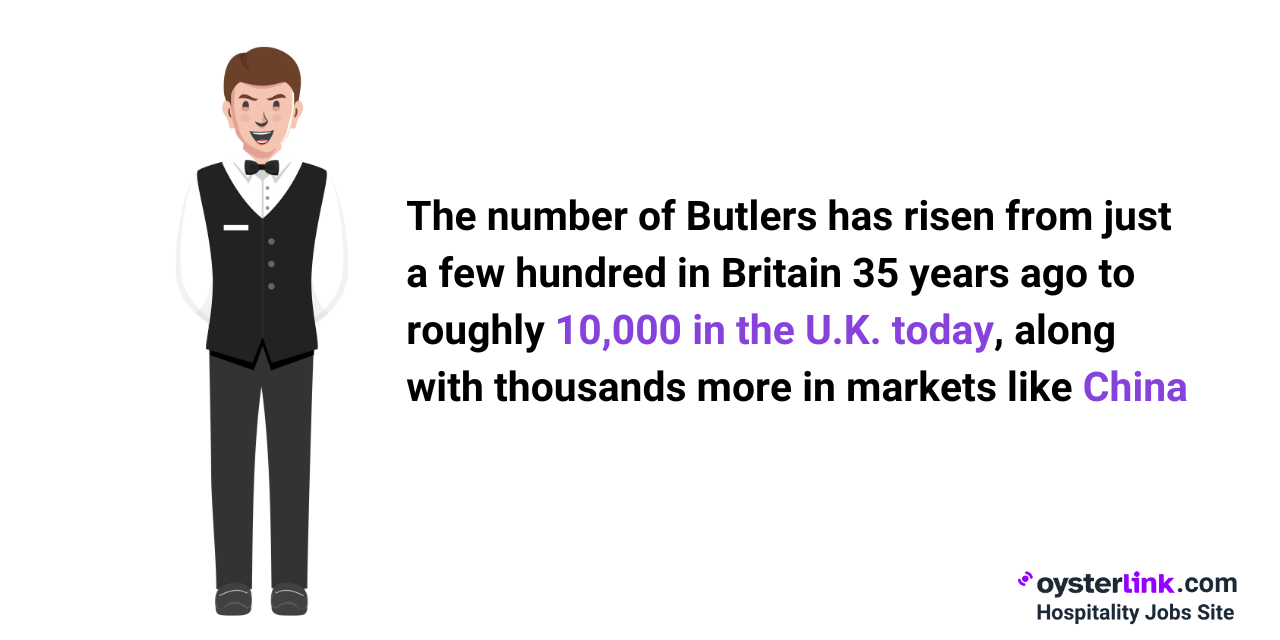
With demand soaring, private homes globally now employ about 10,000 Butlers (only a few hundred existed in Britain just a few decades ago).
3. Requires a strong commitment to service and subservience
Being a Butler means putting the employer’s needs first, often adapting personal schedules, staying reserved, and managing sensitive tasks.
4. Limited personal and social life
Butlers often face long hours, limited time off, and frequent last-minute schedule changes, making work-life balance difficult. For those who value personal freedom, the career may feel too demanding.
5. Physically and mentally demanding work
Butlers need strong physical stamina to stand for long hours, move heavy items, and stay composed under stress.
Without proper endurance and stress management, the role can quickly lead to fatigue and burnout.
6. Training and certification may be required
High-end clients often seek Butlers with formal training from institutes like The Starkey International Institute for Household Management.
Without specialized training or luxury service experience, breaking into the field can be highly competitive.
Technology’s Impact on the Modern Butler Career
Technology is reshaping the traditional service model, and today’s Butlers are expected to navigate new tools while still delivering thoughtful, personalized care.
Smart-home systems are now common in luxury properties, so Butlers often manage climate controls, lighting programs and security features to create seamless guest experiences.
Digital communication platforms also streamline daily coordination with household staff, allowing Butlers to respond to requests quickly and discreetly.
Many employers rely on scheduling software and inventory apps to keep operations organized, which means Butlers benefit from being comfortable with basic tech management.
While these tools can boost efficiency, they also require ongoing learning to stay current with updates and new features.
For most professionals, embracing technology enhances the Butler role rather than replaces its core purpose: anticipating needs, protecting privacy and offering service that feels genuinely personalized.
Is a Butler Career Worth It?
Becoming a Butler is ideal for those who enjoy luxury service, working with high-profile individuals and thrive on organization, detail and adaptability.
The role can be financially rewarding and offers exclusive opportunities for travel and networking, but it demands long hours, patience and a strong dedication to service.
If you prefer a structured schedule or a less demanding environment, careers in hotel management, concierge services or hospitality consulting may be a better fit.

Butler Career: Conclusion
A career as a Butler offers exceptional rewards from high income and prestige to varied responsibilities and global opportunities.
But the role can also demand long hours, unpredictable schedules and personal sacrifice, which means it’s not suited for everyone.
For those who value discretion, dedication and top-level service, being a Butler can be deeply fulfilling.
Still, anyone considering the path should weigh the perks against the demands honestly.
In the end, whether the lifestyle is “worth it” depends on your priorities, resilience and willingness to meet its challenges.






Loading comments...