



Not all restaurants give employees free meals — but when they do, it can be a game-changer.
In fact, with companies increasingly spending more on feeding their workforce, it’s clear that free meals are becoming a major perk in the working world.
But here’s the catch: No one’s obligated to do it.
So why do some restaurants give employees free meals while others skip out? And what exactly do employees get in restaurants where this benefit is offered?
Let’s explore what’s really happening behind the scenes.

Why Some Restaurants Don’t Offer Free Meals to Employees
While free meals can greatly boost employee morale, productivity and loyalty, not all restaurants offer this perk.
U.S. labor laws don’t require employers to provide free meals, and there are several reasons why some choose not to.
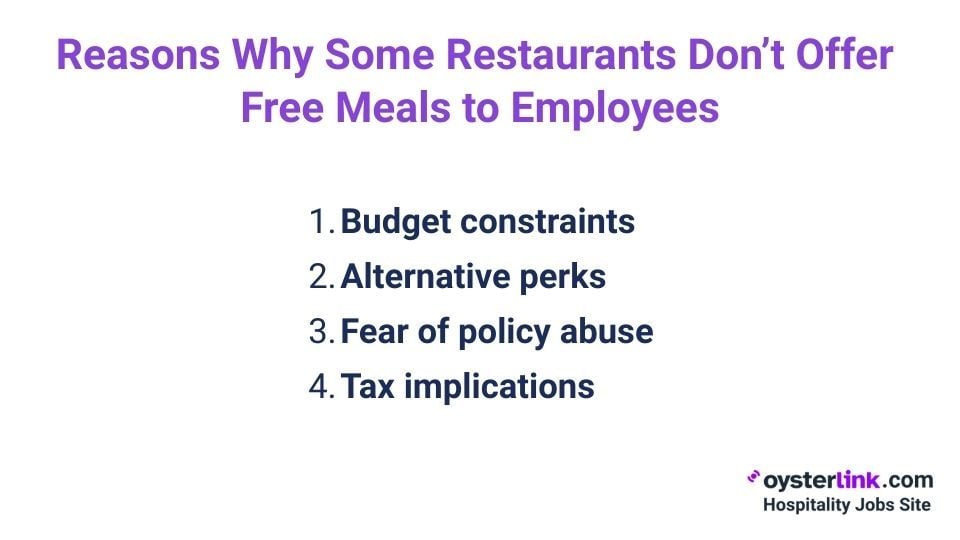
Below are the four most common reasons:
1. Budget constraints
Running a restaurant often means working with tight budgets. Offering free meals can quickly add up, especially in small or independent establishments.
Many owners prioritize keeping operational costs low to maintain profitability, and free meals may simply not fit into the equation.
2. Alternative perks or compensation structures
Some restaurants provide other perks, such as discounts, meal allowances or vouchers, instead of free meals.
In some cases, they may also offer a higher base wage or performance-based bonuses, with the mindset that employees can use this additional income to buy their own meals.
Some employers may feel that this compensation structure is more flexible and sustainable in the long run.



The Fastest Growing
Restaurant & Hospitality Job Platform
Looking for top paid jobs? Or Hiring for your business?
3. Fear of policy abuse
There’s also a concern among some restaurant owners that free meal policies could potentially be abused.
For instance, employees might take advantage of this perk by claiming more meals than permitted or by taking food home for family members, as discussed in a Reddit thread.
Additionally, there's the risk that employees may consistently choose higher-end, premium dishes, driving up food costs.
This is particularly concerning for establishments that use expensive or specialty ingredients.
4. Tax implications
The Internal Revenue Service (IRS) states that free meals for employees are usually not taxable under certain conditions.
These meals may qualify as a “de minimis” fringe benefit or be provided for the “convenience of the employer.”
However, some states might have specific interpretations of these federal guidelines.
In cases where there’s a different interpretation of the rules from the IRS, free meals can potentially come with tax implications.
Such free meals might be considered a taxable benefit for employees or add further complexity to an employer's payroll and accounting processes.
For some businesses, this additional administrative burden is a good reason to avoid offering free meals in order to stay on the “safe” side.
Types of Free Meals for Restaurant Employees
There are several types of meals that restaurants may offer to their staff. These include:
- Shift meals: Employees working longer shifts typically receive a designated meal during their break, usually selected from a limited portion of the regular menu.
- Staff meals: In some restaurants, the kitchen prepares a family-style meal for the entire team to share before or after service, often using ingredients available that day.
- Training meals: When new menu items are introduced, employees may sample them during training sessions to become familiar with the offerings.
- Unsold or surplus food: Restaurants may offer unsold or surplus food to employees at the end of the day instead of throwing it away.
Factors Determining What Free Meals Restaurant Employees Get

When restaurants do offer free meals, the type of food and how it's provided can vary significantly depending on factors such as the restaurant type, employee roles and hours worked.
Restaurant type
The type of restaurant plays a significant role in determining how staff meals are provided.
Fast-food, casual dining and fine dining establishments each have distinct approaches that reflect their operational styles and customer service philosophies.
- Fast food: Employees typically receive a limited menu option or simple shift meal, often a single item or combo.
- Casual dining: Staff may get discounted or free meals from the regular menu, or occasional family-style meals prepared by the kitchen.
- Fine dining: Staff meals are usually restricted and pre-selected, using cost-conscious dishes rather than premium menu items.
Role of the employee
The type of meal offered can also differ based on employee roles.
Kitchen staff may have access to different food options compared to front-of-house employees.
For example, kitchen staff may get the chance to sample new dishes or have staff meals made with quality ingredients.
On the other hand, front-of-house employees will probably have a designated menu with specific items they can choose from.
Amount of hours worked
As mentioned, employees on longer shifts usually get larger-portion meals to keep their energy levels up throughout the day.
In contrast, employees with shorter shifts may receive lighter snacks or a single item from the menu.
Check Our Career Growth Tools


The Benefits of Providing Free Meals to Employees
Offering free meals to employees can profoundly impact job satisfaction, retention, productivity and team spirit.
Especially if we consider the fact that the average full-time employee working on-site spends $2,500 a year on food during work hours, according to the Food for Work report by ezCater.
Employee retention
Restaurants that offer free meals often see higher retention rates.
Providing this perk shows employees that their well-being is valued, which helps foster loyalty and reduces turnover.
According to USA Today, 56% of full-time employees report feeling "extremely" or "very" happy in their jobs, but that number rises to 67% among those who have access to free food.
This kind of satisfaction can really make a difference in keeping staff happy and engaged for the long haul.

It also helps with:
- Enhanced team cohesion: Sharing meals can foster a sense of community and improve teamwork among staff members, leading to a more harmonious work environment.
- Attraction of top talent: Offering free meals can make a restaurant more appealing to potential employees, giving it a competitive edge in the job market.
Boost in productivity
A well-fed employee is a more productive one. Free meals ensure that staff have the energy they need to get through long, often exhausting shifts.
Plus, the convenience of not worrying about where to find food during a break allows them to focus more on their job.
The Food for Work report also shows that more than 40% of employees without access to employer-provided meals say they spend their breaks walking or commuting to get food.
Not to mention, getting food during peak lunch hours usually means long lines, which can take up a huge chunk of an employee's break time.
In fact, providing meals can save employees an average of 30 minutes in their workday.
When it comes to fast-paced workplaces such as restaurants, this amount of time can make a huge difference in employee productivity.
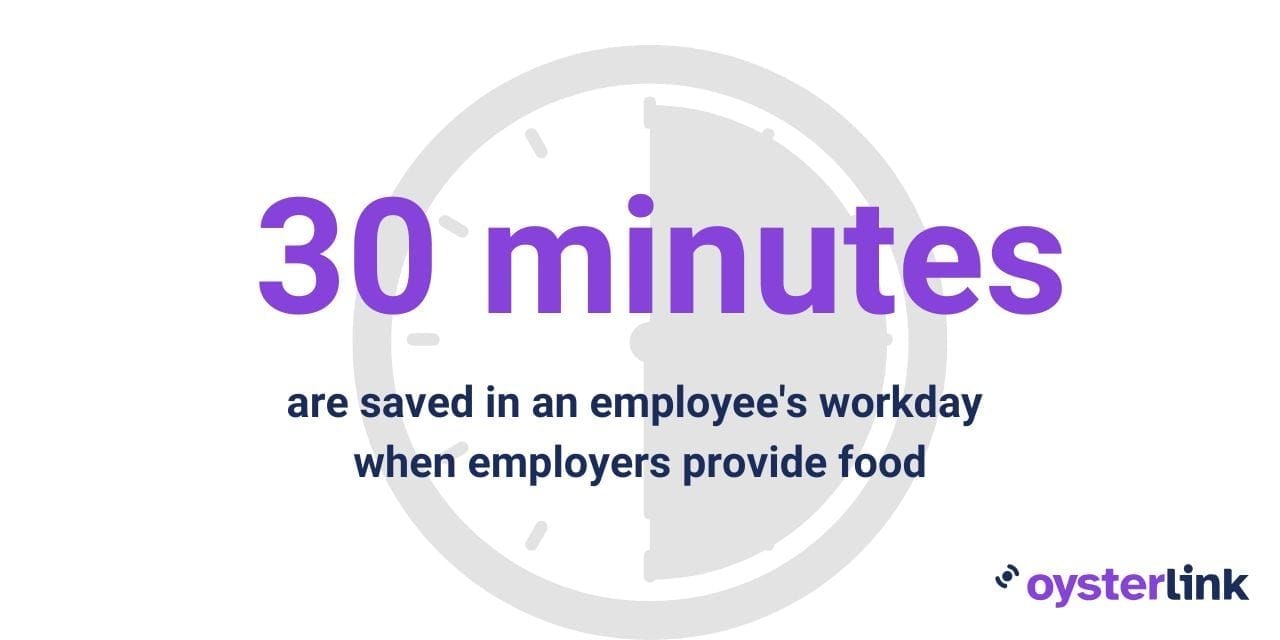
[Source: Food for Work report by ezCater]
Free meals also:
- Increase energy and focus: Providing nutritious meals helps staff maintain energy levels and remain productive throughout their shifts.
- Reduce break time delays: When employees don’t have to leave the restaurant to find food, they can return to work faster, improving efficiency.
- Encourage healthier eating habits: Offering balanced meal options discourages fast food consumption, leading to better employee well-being and fewer sick days.
Competitive advantage for employer brand
Given today’s competitive job market, offering free meals can help a restaurant stand out to potential employees.
Many job seekers prioritize companies that offer perks that improve their quality of life, and free meals are often high on that list.
In fact, ezCater’s Food for Work report found that food tops the list of company perks that are most appreciated by employees, year after year.
Building company culture
Sharing meals together can also play a big role in building a positive company culture.
When employees sit down for a meal before or after a shift, it creates a sense of community and team spirit.
This can translate to better cooperation and communication during work hours.

Free Meals for Restaurant Employees: A Recipe for Satisfaction
While not every restaurant offers free meals, those that do often see a range of benefits, from improved employee retention to a more cohesive team environment.
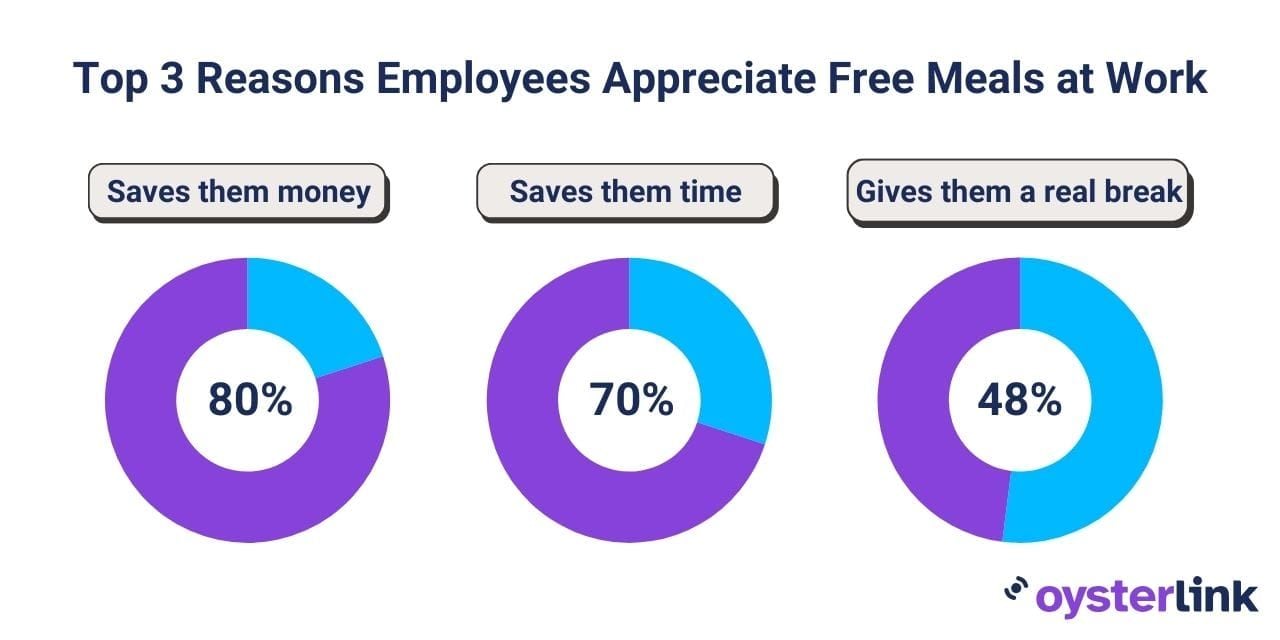
A survey by ezCater revealed that:
- 80% of employees appreciate the financial savings.
- 70% value the time saved.
- 48% enjoy having a genuine break from their duties.
This reflects how investing in employee well-being can lead to a more motivated and engaged team.
[Source: Food for Work report by ezCater]
For restaurant owners, offering this perk can be a small investment that brings big rewards in terms of staff satisfaction and productivity.
And for employees, it’s more than just a free lunch — it’s a gesture that shows their hard work is appreciated.

Challenges of Offering Free Meals to Employees
While providing free meals to restaurant employees can boost morale and improve retention, it’s not always a feasible option for every establishment.
Many restaurant owners face significant challenges in implementing this perk, making it a complex decision rather than a standard industry practice.
1. Cost considerations
One of the biggest challenges of free employee meals is the financial strain it can place on a restaurant, particularly smaller, independent, or budget-conscious establishments.
The cost of restaurant staff meals can add up quickly, especially for businesses operating on thin profit margins.
During economic downturns or times of rising food costs, restaurant owners may find it difficult to justify or sustain a free meal policy.
Instead, some opt for meal discounts or allowances as a more cost-effective alternative.
2. Food waste concerns
Restaurants must carefully balance offering complimentary meals while managing food waste in restaurants.
Providing free meals to staff can sometimes lead to over-portioning, misuse of ingredients, or excess food being taken home.
Without strict policies in place, this can contribute to unnecessary losses.
To prevent waste while still offering a meal benefit, some restaurants limit staff meals to surplus ingredients or specific menu items that are cost-effective to prepare.
3. Fairness issues and workplace dissatisfaction
Another challenge is ensuring fairness in meal distribution.
In some cases, kitchen staff might have greater access to food compared to front-of-house employees, leading to resentment or a sense of inequality.
If policies on employee meals are unclear or inconsistently enforced, it can cause workplace dissatisfaction.
To avoid this, restaurants must establish clear guidelines on who qualifies for free meals, how often they’re provided, and whether they apply to all staff members equally.
Legal and Tax Implications of Providing Free Meals
Offering free meals to employees can have legal and tax considerations:
- Tax regulations: The IRS generally considers free meals provided for the employer’s convenience and on-site to be non-taxable, though employers should consult a tax professional to ensure federal and state compliance.
- Labor laws: Some states have specific rules on employee meals and breaks, so employers must understand local labor laws to stay compliant.
How OysterLink Supports Restaurants and Job Seekers
Navigating benefits like free meals — along with wages, scheduling, and compliance — can be complex for both employers and employees.
OysterLink helps bridge that gap by offering industry insights, hiring resources, and up-to-date job listings tailored to the hospitality sector.
By connecting restaurants with qualified talent and helping workers find roles that match their needs and expectations, OysterLink makes it easier for both sides to thrive.
The Fastest Growing
Restaurant & Hospitality Job Platform
Looking for top paid jobs? Or Hiring for your business?

Written by Sasha Vidakovic
Sasha is an experienced writer and editor with over eight years in the industry. Holding a master’s degree in English and Russian, she brings both linguistic expertise and creativity to her role at OysterLink. When she's not working, she enjoys exploring new destinations, with travel being a key part of both her personal and professional growth.


Loading comments...