


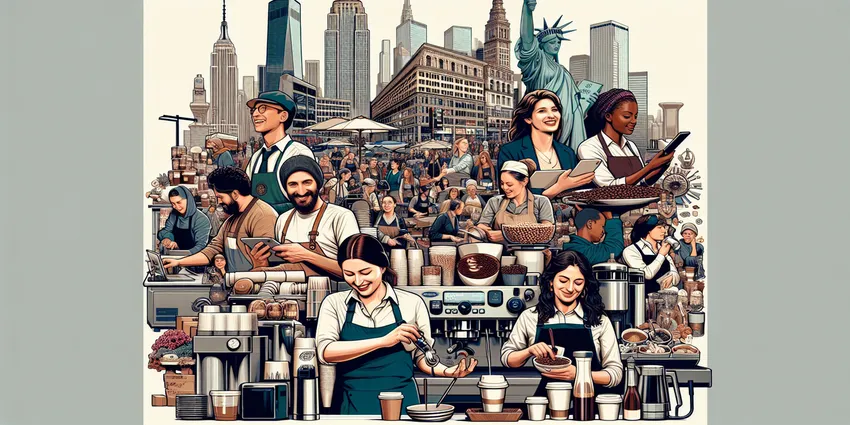

Day-in-the-Life of a Barista in New York City: Key Takeaways
- Baristas prepare espresso-based drinks, operate machines, and provide customer service in a fast-paced NYC environment.
- Challenges include managing high order volumes during peak hours, maintaining quality, and complying with health permits and certifications.
- Success comes from equipment maintenance, cleanliness, strong customer skills, and staying current with coffee trends.
A barista in New York City plays a dynamic role preparing quality coffee drinks and managing busy customer service.
This article explores their daily duties, challenges faced, and practical tips for excelling in this vibrant job.

1. Daily Duties of a Barista in New York City
A typical workday for a New York City barista begins with setting up the coffee station and ensuring all equipment is clean and functional.
Primary duties include operating espresso machines to craft beverages such as lattes, cappuccinos, macchiatos, and other espresso-based drinks with precision and consistency.
Baristas also grind coffee beans fresh for each order, froth milk to the desired texture, and artfully assemble drinks to meet customer expectations.
Apart from beverage preparation, baristas handle cash and credit transactions, often balancing a busy register during rush hours.
Maintaining cleanliness is a continuous task: wiping down counters, washing tools, and restocking supplies like cups, lids, syrups, and coffee beans.
Customer interaction forms a significant part of the day. Baristas greet patrons warmly, answer questions, and provide recommendations tailored to tastes, fostering a welcoming environment.
Employers looking to enhance their hiring process may find this guide to hiring a barista helpful for attracting qualified candidates.
2. Challenges Baristas Face in the NYC Coffee Scene
Working as a barista in NYC means operating in a demanding, fast-paced environment. Order volumes can surge during morning and lunchtime rushes, requiring efficiency without compromising quality.
One major challenge is maintaining consistency in every cup amid the pressure. Customers expect the same bold, balanced flavors every time they visit.
Baristas must also navigate strict health and safety standards. In New York City, possessing a Food Handler’s Permit from the Department of Health is essential, ensuring adherence to hygiene protocols.
Additionally, depending on the establishment, having certifications like TIPS (Training for Intervention Procedures) bartending certification may be required, especially where alcohol service intersects with coffee offerings.
This combination of fast-paced workflow, regulatory compliance, and high customer expectations makes the role uniquely challenging and rewarding in NYC.



The Fastest Growing
Restaurant & Hospitality Job Platform
Looking for top paid jobs? Or Hiring for your business?
3. Tips for Excelling as a Barista in New York City
Success as a barista involves more than just making great coffee; it requires maintaining both equipment and customer rapport at high standards.
Regular maintenance and cleaning of espresso machines and grinders are crucial. For example, daily cleaning of drip trays and milk frothing components helps prevent mold, safeguarding drink quality and customer health.
Baristas should also sharpen their multitasking abilities to manage peak periods effectively, ensuring timely preparation and delivery of orders.
Developing strong customer service skills enhances the experience, encouraging repeat business and positive word of mouth.
Keeping up with coffee trends, such as alternative brewing methods or new flavors, allows baristas to offer creative recommendations and stay engaged in their craft.
Continuous learning and practice not only improve job satisfaction but also build a recognizable expertise within the competitive NYC coffee market.
Learn about common interview questions for baristas to prepare for this role with confidence.
4. Key Certifications and Regulatory Requirements for NYC Baristas
To legally operate and serve customers in New York City, baristas often need specific certifications.
The New York City Department of Health requires a Food Handler’s Permit to ensure all food workers understand safe food practices.
For establishments that serve alcoholic coffee drinks, TIPS certification is commonly mandated to promote responsible alcohol service.
Adhering to these regulatory standards protects both employees and customers while maintaining the establishment’s reputation and compliance.
5. Best Practices for Maintaining Quality and Efficiency
Baristas should prioritize daily cleaning routines of their machines and workstation, which directly impacts beverage quality and health safety.
Organized stocking systems help reduce downtime and avoid interruptions during busy service hours.
Communicating effectively with coworkers ensures smooth workflow and timely order management.
Utilizing point-of-sale systems proficiently accelerates payment processing, allowing more time for customer engagement.
Ultimately, balancing speed with attention to detail distinguishes exemplary baristas in New York City.

6. Resources for Baristas Working in New York City
To stay informed and compliant, baristas and employers can refer to the following official resources:
- New York City Department of Health and Mental Hygiene for health permits and food safety guidelines.
- New York State Department of Labor for labor laws, wage information, and workplace regulations.
- U.S. Department of Labor Fair Labor Standards Act (FLSA) for federal wage and hour rules applicable to baristas.
Employers looking to improve staffing knowledge may find valuable information in the restaurant staff hiring spotlight.
Day-in-the-Life of a Barista in New York City: Conclusion
Being a barista in New York City is a multifaceted role that blends technical skills, customer interaction, and regulatory knowledge.
Baristas manage beverage preparation with precision, handle fast-paced service demands, and uphold strict health standards.
By focusing on equipment care, continuous learning, and excellent customer service, baristas not only thrive professionally but contribute to the vibrant coffee culture of the city.
For a deeper understanding of this career, check out the barista career overview page.





Loading comments...